.svg)
.svg)


App Development and E-learning: Emerging Trends for 2025

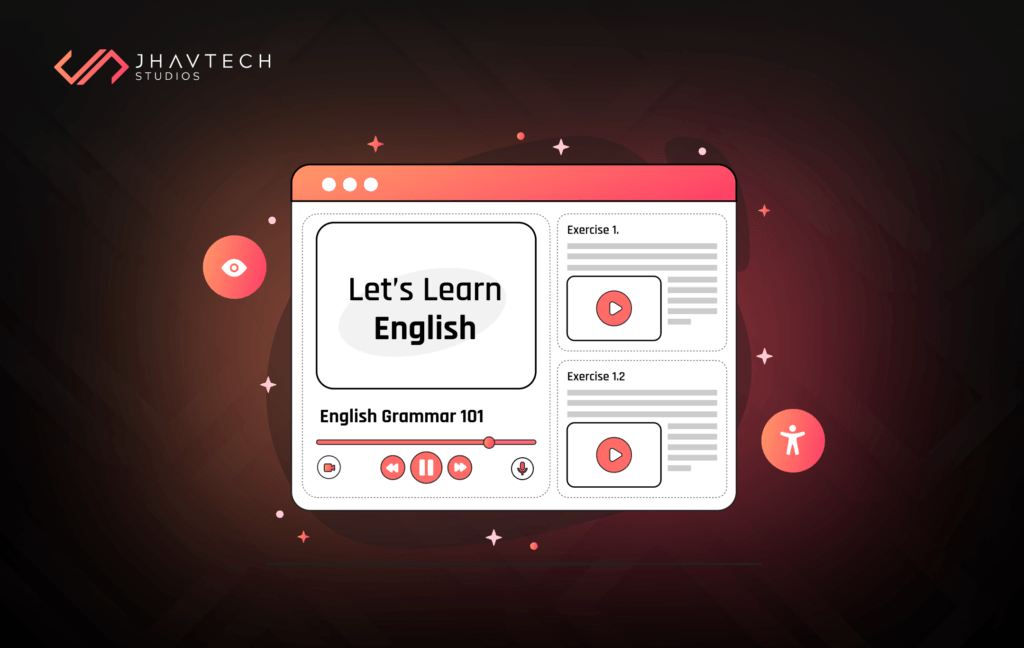
The e-learning industry has undergone a transformative shift in recent years, and app development has played a pivotal role in driving its evolution. As we step into 2025, the synergy between e-learning and app development continues to redefine how we access, consume, and engage with educational content. This blog delves into seven major trends shaping the future of e-learning, powered by innovative development strategies.
Personalised Learning Through AI-Driven Apps
Personalization is revolutionizing the way we learn, and app development is central to this transformation. AI-powered e-learning apps analyse user behavior, preferences, and progress to create tailored learning experiences. For example, platforms like Duolingo adapt their language lessons in real-time to match each user's unique learning pace.
According to a report by eLearning Industry, 77% of educators believe AI significantly enhances student performance. These apps can identify areas where learners struggle and suggest supplementary materials or exercises to address their specific needs. Beyond language learning, AI-driven personalisation is expanding into fields like coding, healthcare training, and even arts education, ensuring that learners across diverse disciplines benefit from this trend.
Immersive Learning with AR and VR
Augmented Reality (AR) and Virtual Reality (VR) are redefining experiential learning. App development in this area focuses on creating interactive and immersive environments for users. For instance, medical students can practice surgeries in a simulated operating room through apps like Touch Surgery, significantly reducing the risk of real-world errors. The global market for AR and VR in education is projected to grow to $20.8 billion by 2025, underscoring their growing importance.
In corporate training, VR simulations are used to train employees in scenarios like customer service or emergency response, making complex and high-stakes situations accessible in a controlled environment. These technologies allow learners to grasp complex concepts through hands-on experiences that traditional methods cannot provide, transforming theoretical knowledge into practical skills.
Gamification for Enhanced Engagement
The concept behind gamification is a powerful strategy for fostering motivation and retention in learners. App developers are integrating game-like elements such as points, leaderboards, and rewards into e-learning platforms. Kahoot!, for example, uses interactive quizzes to make learning engaging and competitive. Research shows that gamified e-learning platforms can improve retention rates by up to 30%. By tapping into the human desire for achievement and competition, gamification transforms the learning experience into an enjoyable journey.
App development is pivotal in designing these gamified solutions, ensuring that the user interface and experience are intuitive and engaging. Beyond traditional education, gamification is making waves in corporate training and compliance programs, where employees engage more actively with required learning modules. Companies using gamified apps report higher completion rates and better knowledge retention among their teams.

Microlearning and Bite-Sized Content
The demand for microlearning—delivering content in small, digestible segments—has surged. Application development enables the creation of focused and accessible modules that cater to busy learners. Apps like Blinkist distill books into 15-minute summaries, allowing users to gain knowledge quickly.
A study by Software Advice found that 58% of employees prefer learning in shorter segments, making microlearning an effective approach for modern learners. This trend aligns with the fast-paced lifestyles of today’s users, offering flexibility and convenience. Moreover, microlearning is proving valuable in skill-based learning, such as coding, digital marketing, or language acquisition, where users can progress incrementally and revisit specific topics as needed.
Social Learning Through Collaborative Apps
Social learning leverages collaboration to enhance educational outcomes. App development now integrates features such as discussion boards, peer reviews, and group projects to foster interaction. Google Classroom exemplifies this trend by enabling seamless collaboration between teachers and students.
According to EdTech Magazine, collaborative tools have increased classroom engagement by 50%. Social learning empowers users to share insights and build knowledge collectively, making education a more dynamic and inclusive experience. In professional settings, apps like Slack and Microsoft Teams incorporate e-learning modules that allow teams to share ideas, provide feedback, and collectively solve problems, bridging the gap between formal education and workplace learning.
Accessibility and Inclusivity in App Design
Ensuring accessibility for all learners is a critical focus in e-learning app development. Developers are designing apps that accommodate diverse needs, including those of individuals with disabilities. Microsoft’s Immersive Reader, for instance, offers text-to-speech and customisable font options to support different learning styles. UI/UX design plays a crucial role in this effort, as creating an intuitive and user-friendly interface ensures that all learners can navigate the platform with ease.
By prioritising inclusivity, e-learning apps are breaking down barriers and fostering equitable access to education. In 2023, 15% of platforms adopted accessibility-first designs, and this number continues to grow. Features like voice commands, closed captioning, and screen readers are becoming standard, ensuring that apps cater to learners with visual, auditory, or motor impairments. By embracing universal design principles, app developers are creating tools that serve a broader audience effectively, while leveraging UI/UX best practices to enhance usability for all.
Blockchain for Secure Credentialing
Verifying credentials in a digital learning environment is a growing challenge, and blockchain technology offers a robust solution. E-learning apps are increasingly using blockchain to create secure and tamper-proof records of achievements. Platforms like Coursera and Accredible utilise blockchain to issue digital certificates that can be easily verified by employers. The blockchain in education market is projected to reach $3 billion by 2025, highlighting its potential to revolutionise credentialing and validation in e-learning. Beyond certifications, blockchain can track and store comprehensive learning histories, enabling users to showcase a lifelong portfolio of skills and achievements. This transparency benefits both learners and organisations, as it simplifies the recruitment and assessment processes.
Final Thoughts…
The intersection of e-learning and app development is reshaping the educational landscape. These seven trends—from AI-driven personalisation to blockchain credentialing—underscore the transformative potential of app development in creating engaging, accessible, and effective learning experiences. As we move into 2025, staying ahead of these trends will be crucial for organizations and developers aiming to make a meaningful impact in the e-learning industry.
By embracing these innovations, we can unlock new opportunities for learners and educators alike, setting the stage for a brighter future in education. If you're looking to bring cutting-edge app development expertise to your e-learning projects, reach out to Jhavtech Studios and let us help you make your vision a reality.






.webp)
.webp)
.webp)
.webp)
.webp)
.webp)
.webp)

.webp)
.webp)







.png)
.png)
.png)
.png)
.png)
.png)


.png)
.png)
.png)
.png)
.png)
.png)
.png)

.png)
.png)
.png)



.png)
.png)
.png)
.png)
.png)
.png)
.png)
.png)
.png)
.png)
.png)

.png)

.png)

.png)
.png)
.png)
.png)
.png)
.png)
.png)




.png)
.png)
.png)
.png)
.png)
.png)
.png)
.png)
.png)
.png)

.png)
.png)
.png)

.png)