.svg)
.svg)


What Happens When Startups Skip Product Discovery
.webp)
Skipping the product discovery process is the single most expensive shortcut a startup can take. According to a CB Insights analysis of 431 VC-backed companies that shut down since 2023, poor product-market fit was behind 43% of the failures. Running out of capital showed up in 70% of cases, but that is the ending, not the cause.
What you will learn in this article:
- What the product discovery process actually involves, and what it is not
- The five predictable things that go wrong when teams skip it
- What discovery costs versus what rework costs
- A 10-point checklist you can run before your next build
- The warning signs that your current project skipped discovery
Who this is for: Founders, product owners, and SME decision makers who are about to commission software, or who are already six months into a build that feels wrong.
What Is the Product Discovery Process, Exactly?
Product discovery is the structured 2-to-6-week process conducted before software development begins to validate market demand, test assumptions, and confirm that the problem is worth solving.
A full discovery engagement covers six things: problem framing, customer validation, competitive review, solution prototyping, technical feasibility, and scope definition. At Jhavtech Studios, we run this as a fixed-timebox sprint that ends in a go/no-go decision, because open-ended discovery is its own kind of failure.
Here is what it is not. It is not a brainstorming workshop with sticky notes. It is not a market research report you commission and then file. It is not a delay tactic your development partner uses to pad an invoice.
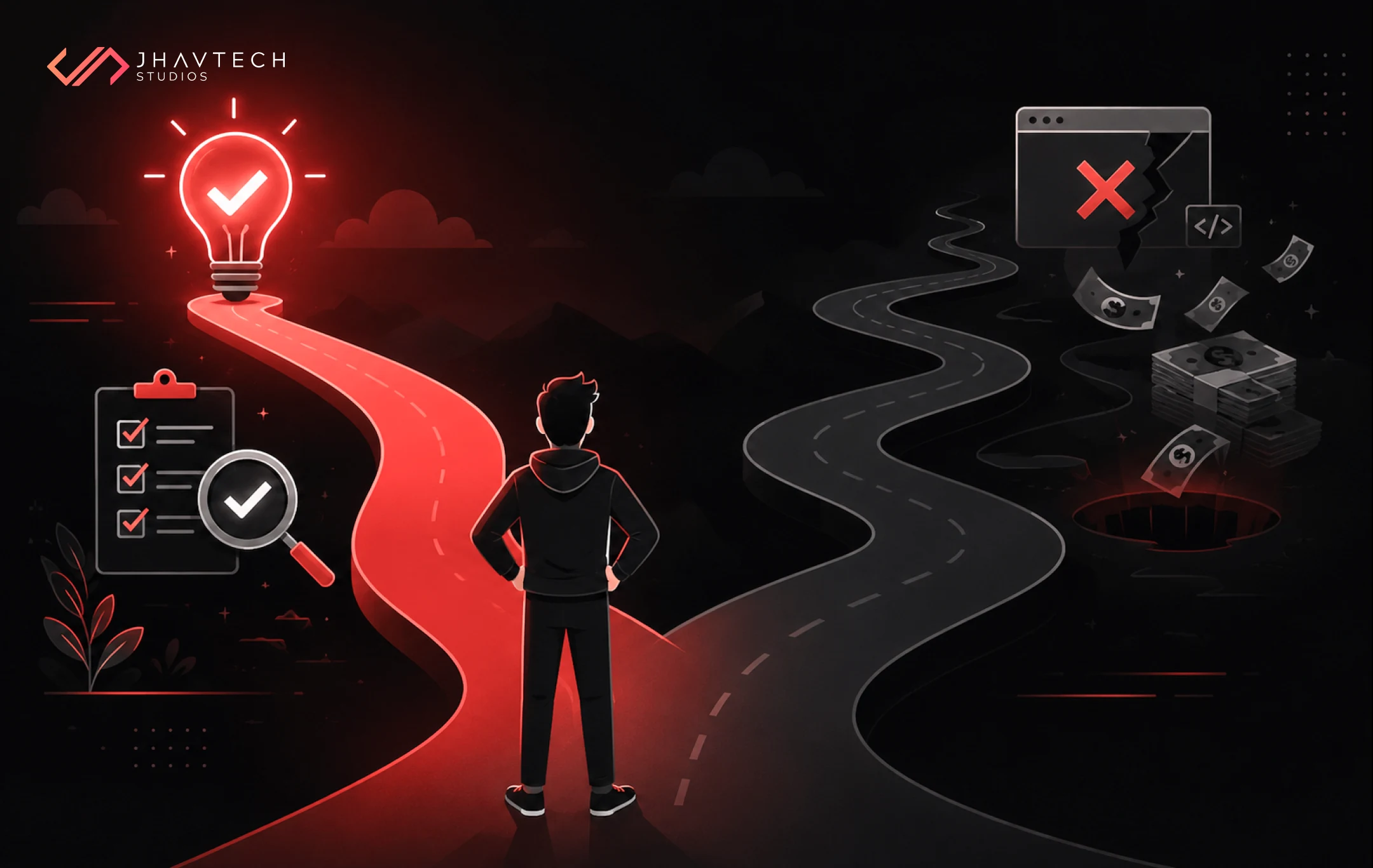
Discovery is decision-making with evidence attached. At the end of it, you either have a validated build plan with a defensible scope, or you have saved yourself six figures and eight months. Both outcomes are wins. Founders only ever regret the second one for about a week.
Why Founders Skip Discovery (And Why the Logic Feels Airtight)
Nobody skips discovery out of laziness. They skip it for reasons that sound completely sensible in the moment:
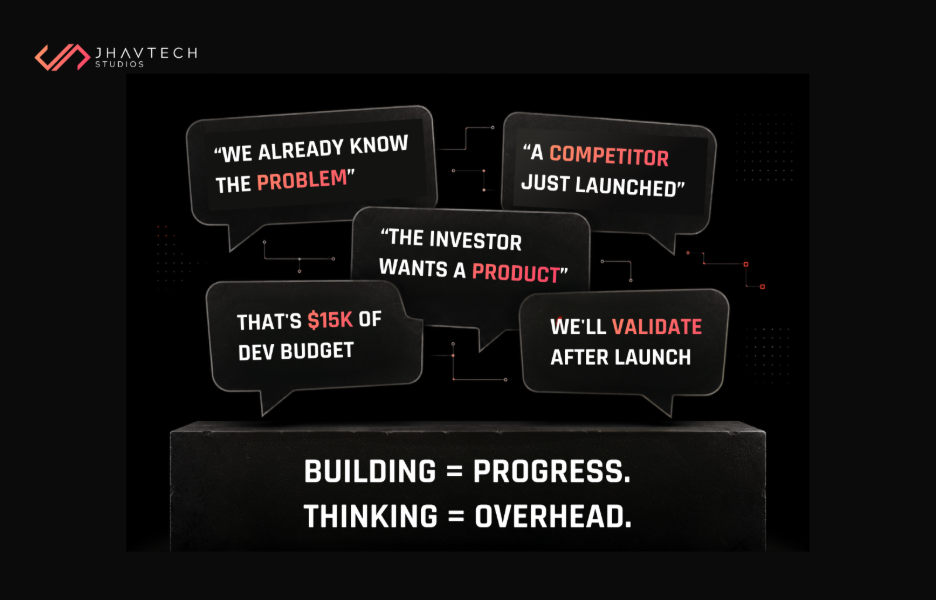
- "We already know the problem." You have lived it for years. That is real insight, but your experience is a sample size of one.
- "A competitor just launched." Speed feels like the only lever you control.
- "The investor wants to see a product." So you build the demo instead of the business case.
- "Discovery is $15k we could spend on development." True. It is also $15k that decides whether the other $200k gets spent well.
- "We'll validate after launch." This is the one that hurts most. Post-launch validation is just market research with a wrecked balance sheet attached.
The common thread is a belief that building is progress and thinking is overhead. In software, the opposite is usually true. Code is the most expensive way to test an assumption.
What Actually Happens When You Skip It: Five Predictable Outcomes
1. You ship features nobody opens
According to Pendo's feature adoption benchmarking research, the median product has a feature adoption rate of 6.4%. For every 100 features a team scopes, builds, tests, and ships, roughly six of them drive 80% of click volume. Even top-decile products only reach 15.6%, according to the same Pendo dataset.
Read that again as a budget line. If your MVP has 40 features and 34 of them go untouched, you did not build an MVP. You built a museum. Discovery does not guarantee every feature lands. It does mean the ones you fund first are the ones customers described in their own words, unprompted, before you paid a developer.
2. Your burn rate outruns your learning rate
According to the CB Insights 2026 startup failure analysis, those 431 startups raised a combined $17.5 billion before dying, with a median raise of $11 million. The same CB Insights research puts the median time from final fundraise to shutdown at 22 months.
Twenty-two months is roughly the length of one full build-and-relaunch cycle. Teams that skip discovery tend to spend that entire window building, then discover the market problem in month 20, with no runway left to act on it. Teams that spend the first four weeks on discovery still have 21 months, and they spend them building the right thing.
3. Scope creep replaces strategy
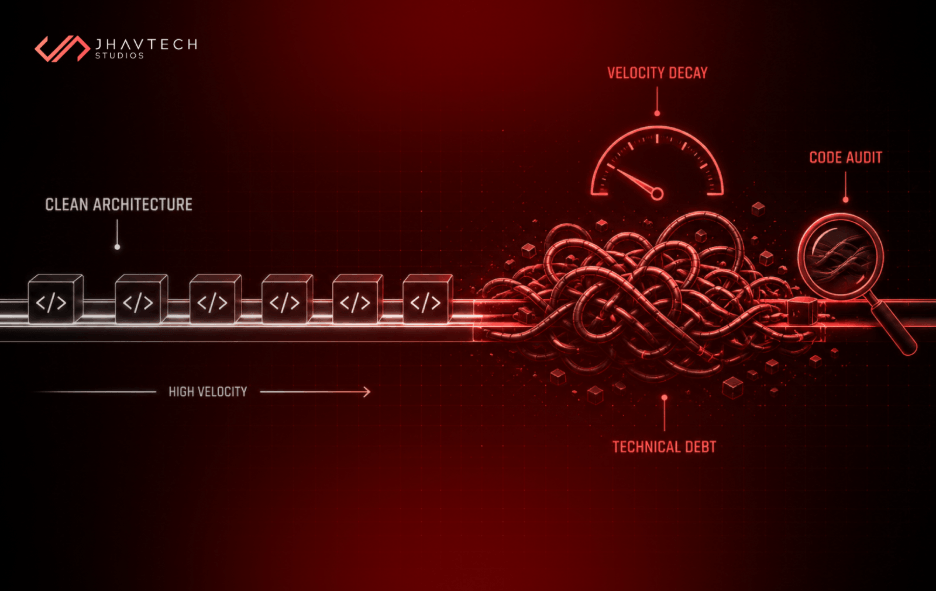
Without a validated scope, every stakeholder opinion carries equal weight. The CEO wants a dashboard. Sales wants a referral engine. The lead developer wants to refactor the auth layer. There is no evidence to adjudicate between them, so the loudest voice wins, then the next loudest, then the one who escalated.
At Jhavtech Studios, this is the most common software planning mistake we find when we take over a stalled build. The backlog is not too big because the team is undisciplined. It is too big because nothing was ever ruled out on purpose, and without validated evidence there is no principled way to say no.
4. Your launch metrics look like a cliff
Retention is where skipped discovery becomes visible to everyone, including your board. According to Business of Apps retention data sourced from AppsFlyer, average iOS app retention sits at 25.4% on day one and drops to 5.3% by day 30. Android is lower again, at 20.2% on day one and 3.8% by day 30.
Those are averages across apps that mostly did some homework. Failed app launches rarely fail loudly. They fail quietly, in a retention curve that flattens near zero while your acquisition spend keeps climbing. And no amount of onboarding polish rescues a product that solves a problem people do not have.
5. You end up paying twice
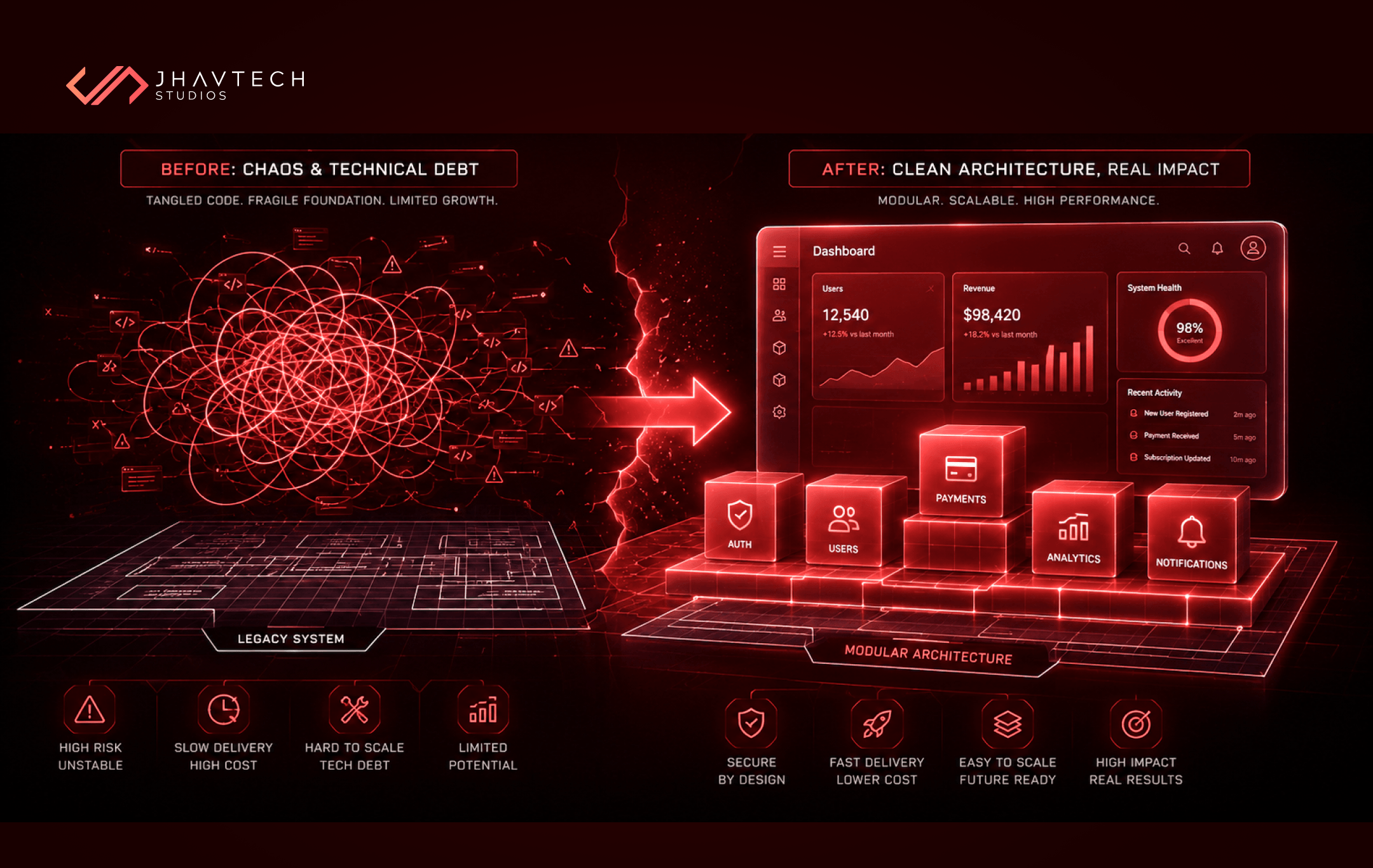
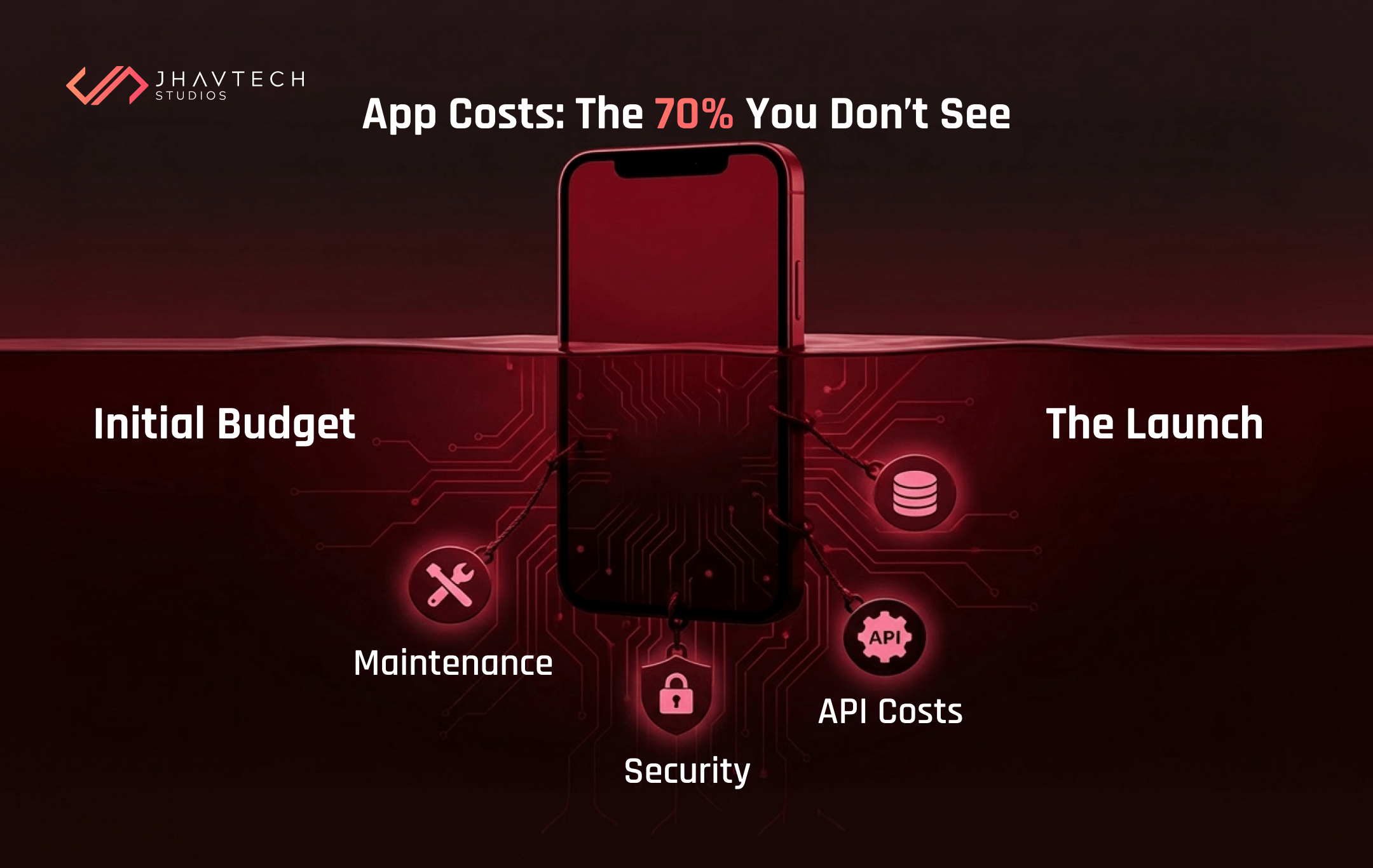
The rebuild is the part founders never budget for. You pay once to build the wrong thing, then again to unpick it. Architecture decisions made for the wrong use case become the constraint on the right one. Data models built around assumed workflows do not bend to real ones.
At Jhavtech Studios, when we help founders rescue stalled software projects, the architecture is rarely the original sin. It is the fossil record of a decision made before anyone confirmed who the product was for. We covered the compounding version of this in why poor software architecture creates long-term business risks. Discovery is where most of those risks get priced in or designed out, months before anyone opens an IDE.
Discovery-First vs Build-First: A Side-by-Side
The gap between a discovery-first startup and a build-first one is not effort, budget, or engineering talent. It comes down to the order of operations, and that single choice ends up changing almost every number a founder eventually reports to a board. Here is how the same project tends to play out under each approach.
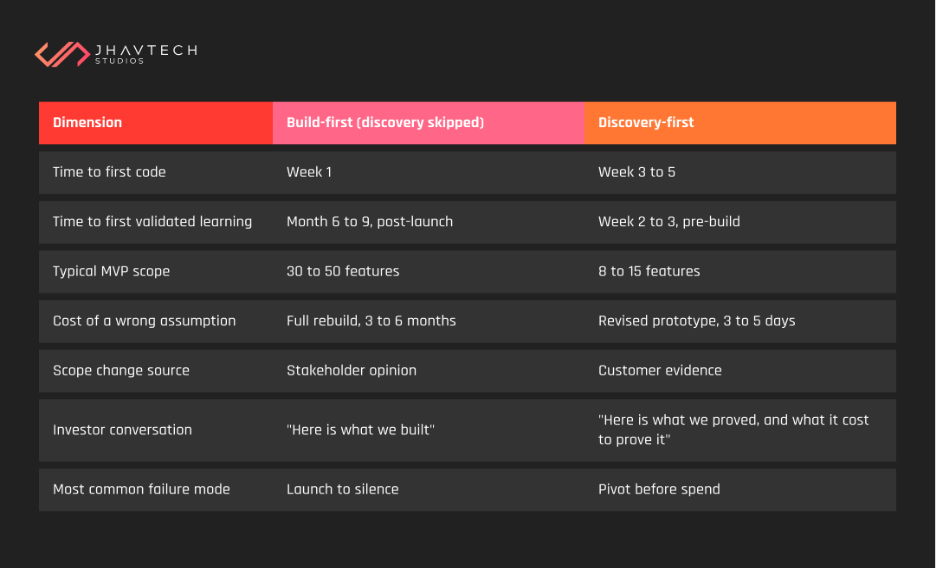
The right-hand column is not slower. It reaches a working, wanted product sooner, because it spends less time building things that get deleted.
What Does a Real Product Discovery Process Look Like?
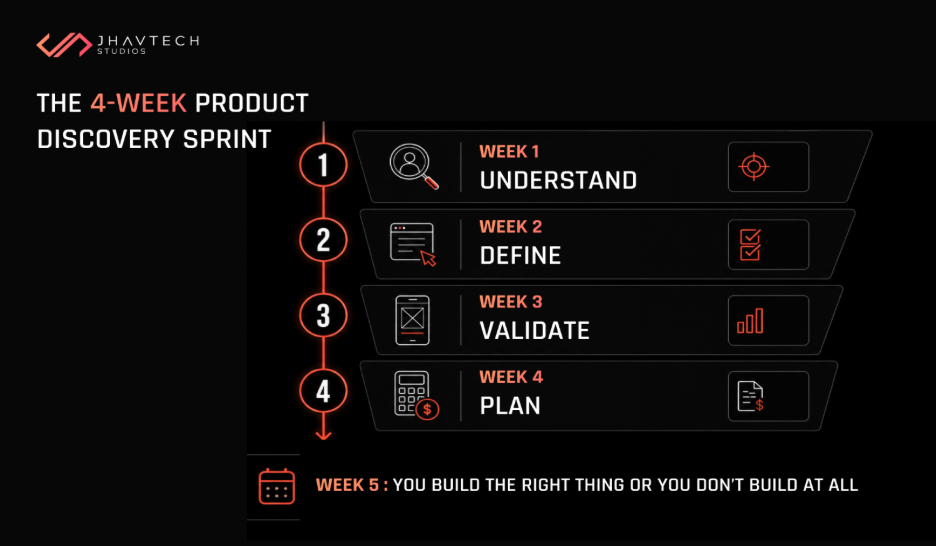
Discovery should have a fixed timebox, named deliverables, and a go/no-go decision at the end. Here is the shape of the four-week engagement Jhavtech Studios runs with founders before a single line of production code gets written.
Week 1: Problem framing and assumption mapping
You list every belief your startup product strategy depends on, then rank them by "how badly does this hurt if it is wrong." Most teams find between 12 and 20 load-bearing assumptions. Usually two or three are genuinely fatal if false. Those get tested first.
Week 2: Customer validation
Eight to fifteen structured interviews with people who match your target segment and are not your friends. The goal is not to ask whether they like your idea, because they will say yes. The goal is to map how they solve the problem today, what that workaround costs them, and whether they have ever paid to fix it.
Customer validation only counts when the answer could have been no. If your questions cannot produce a no, you are collecting compliments.
Week 3: Solution shaping and prototype testing
Clickable prototype, not code. Put it in front of the same people. Watch where they hesitate. Silence and confusion are the two most valuable signals in the entire process, and they are free at this stage. In production they cost a sprint each.
Week 4: Feasibility, architecture, and scope lock
Now the engineering conversation happens: integrations, data model, compliance, platform choice, and a realistic build estimate. You leave with a prioritised scope, a technical approach, and a number you can take to a board.
If you want a faster, leaner version of this for a software idea specifically, our guide on the fastest way to validate a SaaS idea without wasting money covers the compressed two-week variant.
The 10-Point Product Discovery Checklist
Run this before you approve a build budget. If you cannot tick at least eight, you are not ready to write code.
Print it. Take it to your next stakeholder meeting. Watch how quickly the room finds out which assumptions were never checked.
Warning Signs Your Project Skipped Discovery
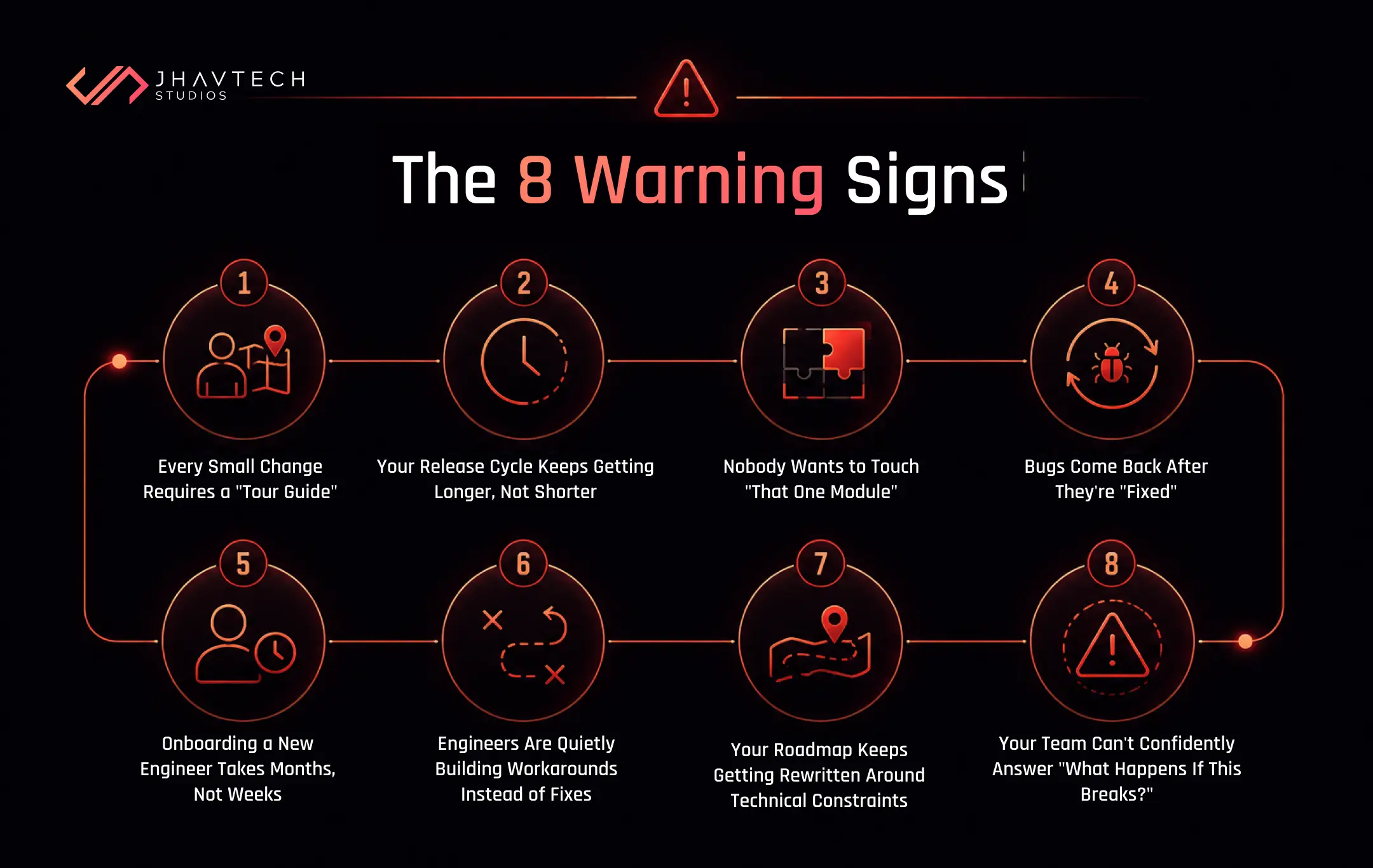
Sometimes you inherit the problem. If any of these sound familiar, discovery was skipped or rushed:
- The backlog grows faster than it shrinks, sprint after sprint
- Nobody can explain why a feature is being built without referencing a person's job title
- The definition of "done" for v1 has moved three or more times
- Your developers are asking business questions the business has not answered
- Launch keeps slipping, but no one can name the blocking feature
- Post-launch, activation looks fine and retention looks terrible
That last one is the clearest tell. Good marketing gets people in the door. Only a validated product keeps them there.
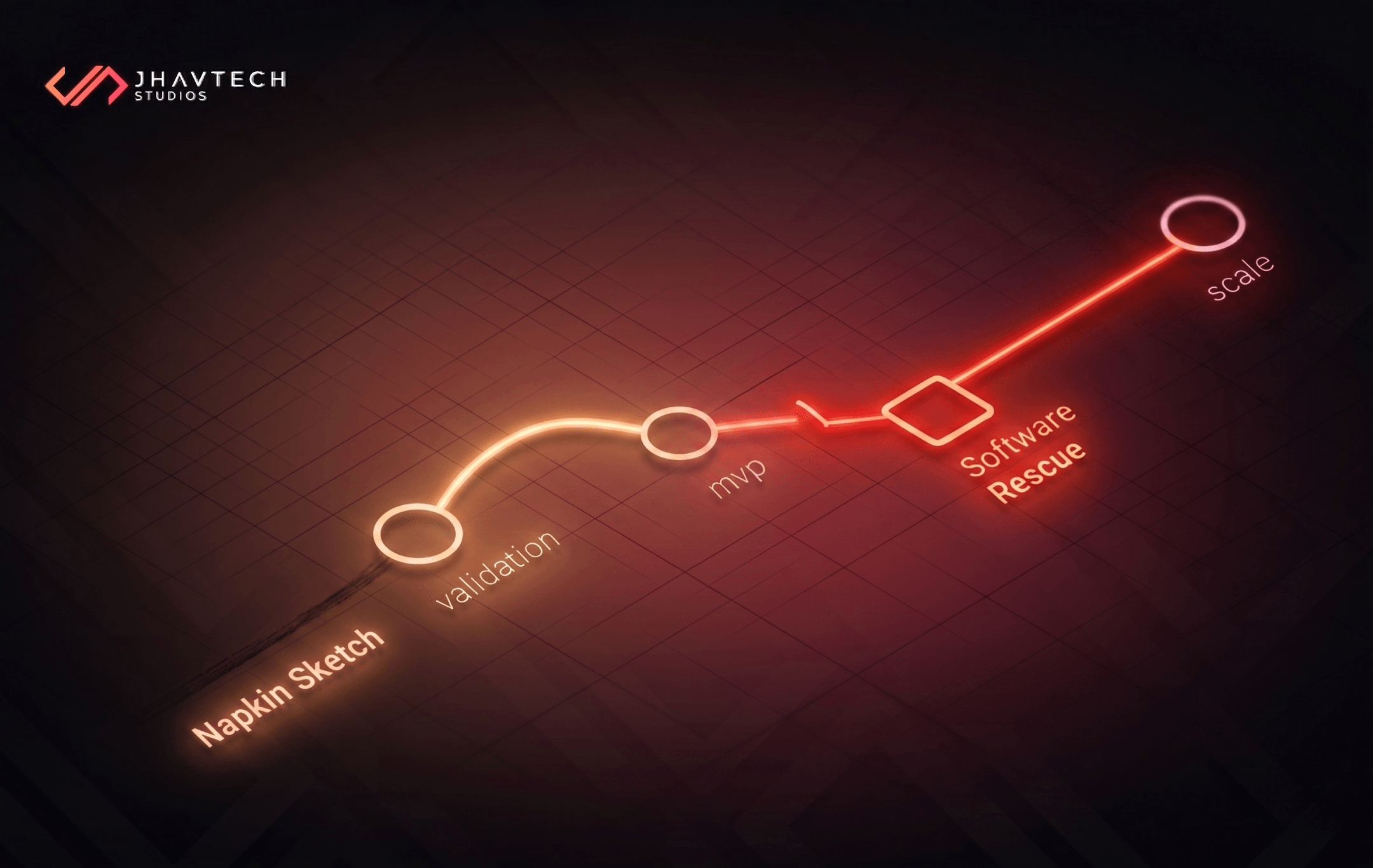
If your build is already mid-flight and showing these symptoms, a structured rescue of a stalled software project usually starts with retrospective discovery: working out what should have been asked, then re-scoping around the answers. It is not as clean as doing it first, but it beats shipping into silence. A free code review is a fast, low-commitment way to see how much of the existing build is salvageable.
Discovery Is Not a Delay. It Is Insurance.
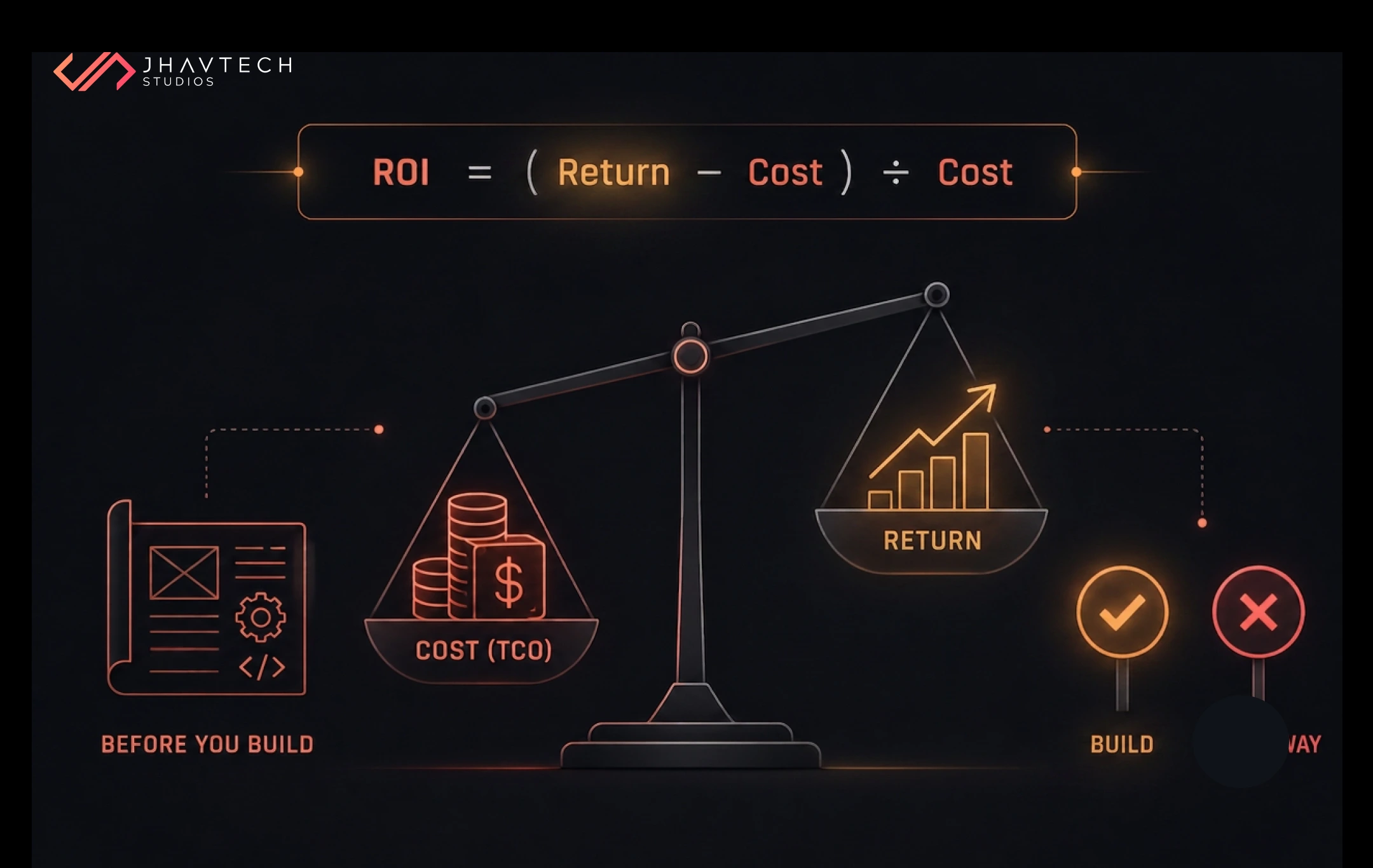
The cost argument against discovery collapses under scrutiny. Discovery is typically 5% to 10% of a build budget. A rebuild is 60% to 100% of it, plus the months. And unlike a rebuild, discovery has a positive outcome even when the answer is no, because a validated no is a preserved runway.
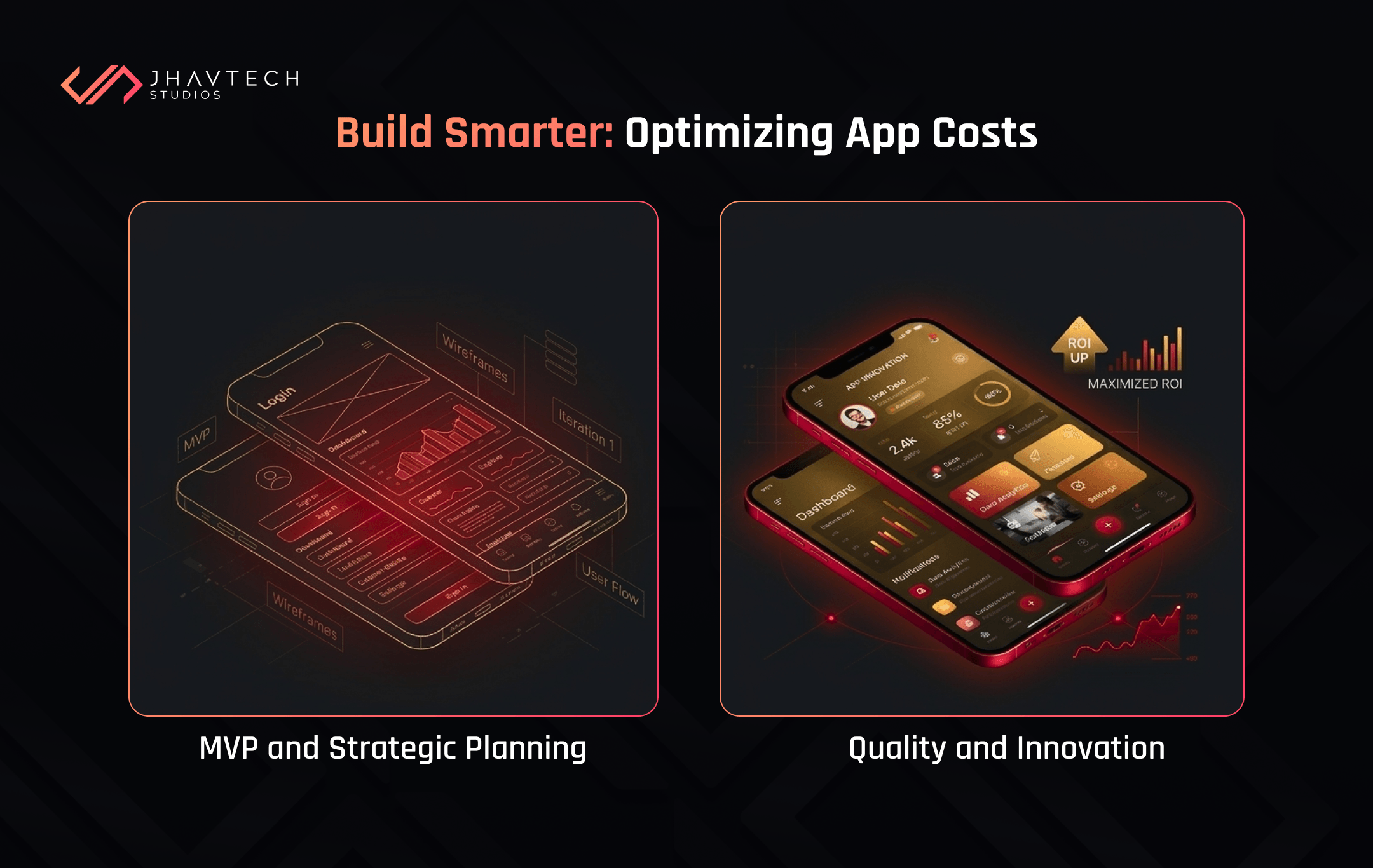
Founders who have been through one failed launch never skip it again. That lesson costs about $250,000 and a year. It is available for considerably less if you learn it from someone else's post-mortem. If cost is the pressure point, our breakdown of how to reduce app development costs without sacrificing quality shows where the savings actually live, and discovery is at the top of that list.
Jhavtech Studios has been building and rescuing commercial software since 2011, for clients including the University of Melbourne, Janison, and MedicineWise. The pattern holds across all of them: the projects that go smoothly are not the ones with the best developers. They are the ones where somebody did the unglamorous work of confirming the problem first.
Once discovery is done and the scope is defensible, the build itself becomes the easy part. That is when turning a validated concept into a shipping product stops being a gamble and starts being execution.
Frequently Asked Questions
.webp)
.webp)

.webp)
.webp)
.webp)

.webp)

.webp)
.webp)



.png)
.png)
.png)
.png)
.png)
.png)
.png)
.png)
.png)
.png)
.png)
.png)
.png)
.png)
.png)
.png)


.png)
.png)
.png)
.png)
.png)
.png)
.png)
.png)
.png)
.png)
.png)
.png)
.png)
.png)
.png)
.png)
.png)
.png)
.png)
.png)
.png)
.png)
.png)
.png)
.png)
.png)
.png)
.png)
.png)
.png)

.png)
.png)
.png)

.png)