.svg)
.svg)


Technical Debt: 7 Ways It Can Drain Your Development Budget

A founder once asked us why changing the colour of a checkout button needed a three-week estimate.
The answer wasn't lazy developers or a padded quote. That button lived inside a 4,000-line file that also handled payments, discounts and email receipts. Touching one part meant retesting all of them. A five-minute design tweak had turned into a three-week risk.
If you've ever stared at an estimate and thought "surely that can't take so long," you've met technical debt.
Summary: What You Need to Know
- Technical debt is the extra cost you pay later for shortcuts taken in your code today. Like financial debt, it gathers interest.
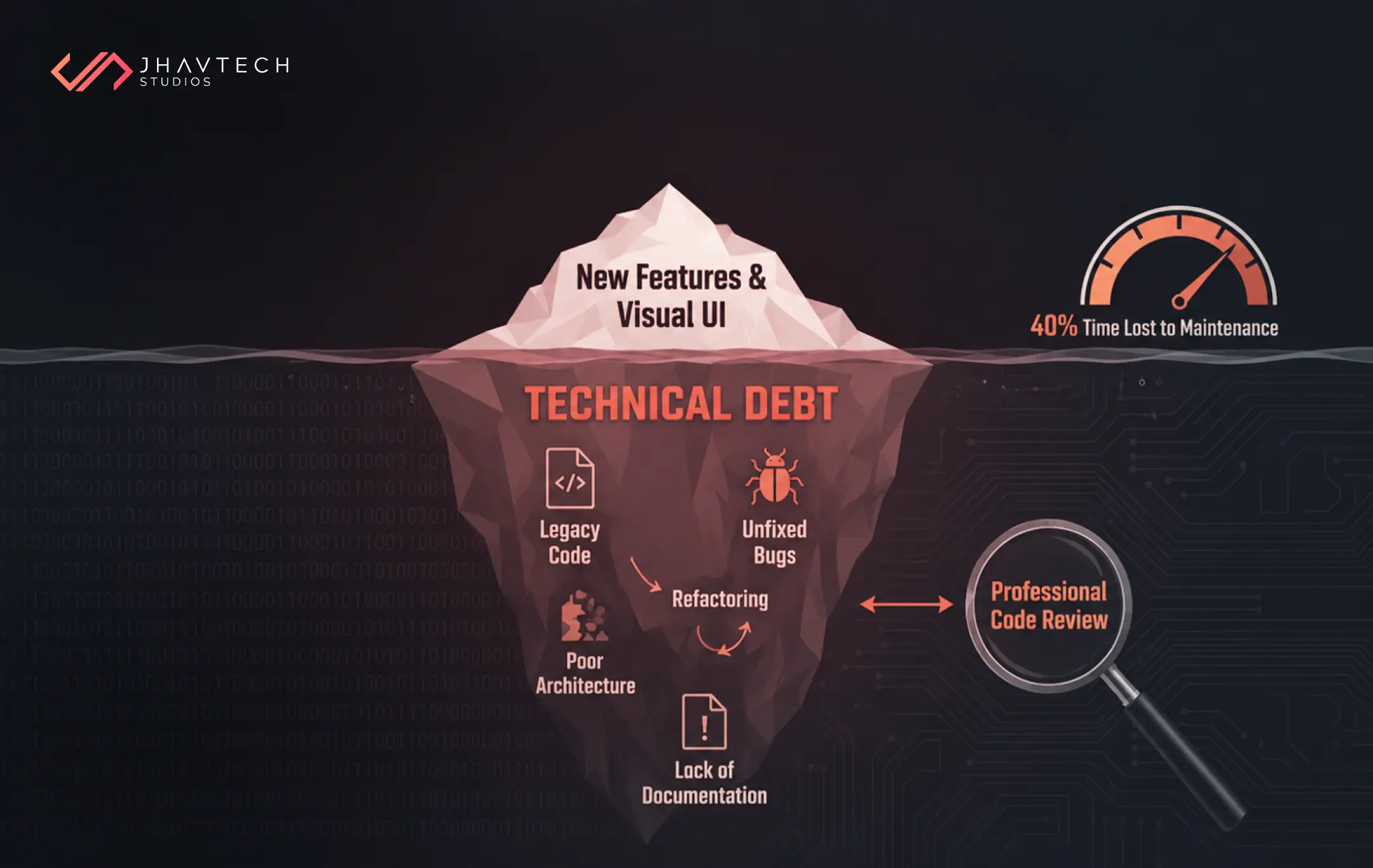
- Research from Chalmers University found developers lose around 23% of their working time to it.
- CIOs surveyed by McKinsey said 10 to 20% of the budget meant for new products gets diverted to fixing tech debt problems.
- The seven biggest drains are slower delivery, diverted feature budgets, rising bug costs, slow onboarding, staff turnover, security exposure and forced rewrites.
- The fix is to measure the debt, set aside regular capacity to pay it down, and get an independent code review before it compounds.
Technical debt rarely appears on a balance sheet, but it still shows up in your budget. It shows up as blown timelines, extra contractor hours, and a product roadmap that never quite gets delivered. If you run a startup or an SME, you can't afford to lose money in places you can't see. So, let's make those places visible.
What Is Technical Debt? (A Plain-English Definition)
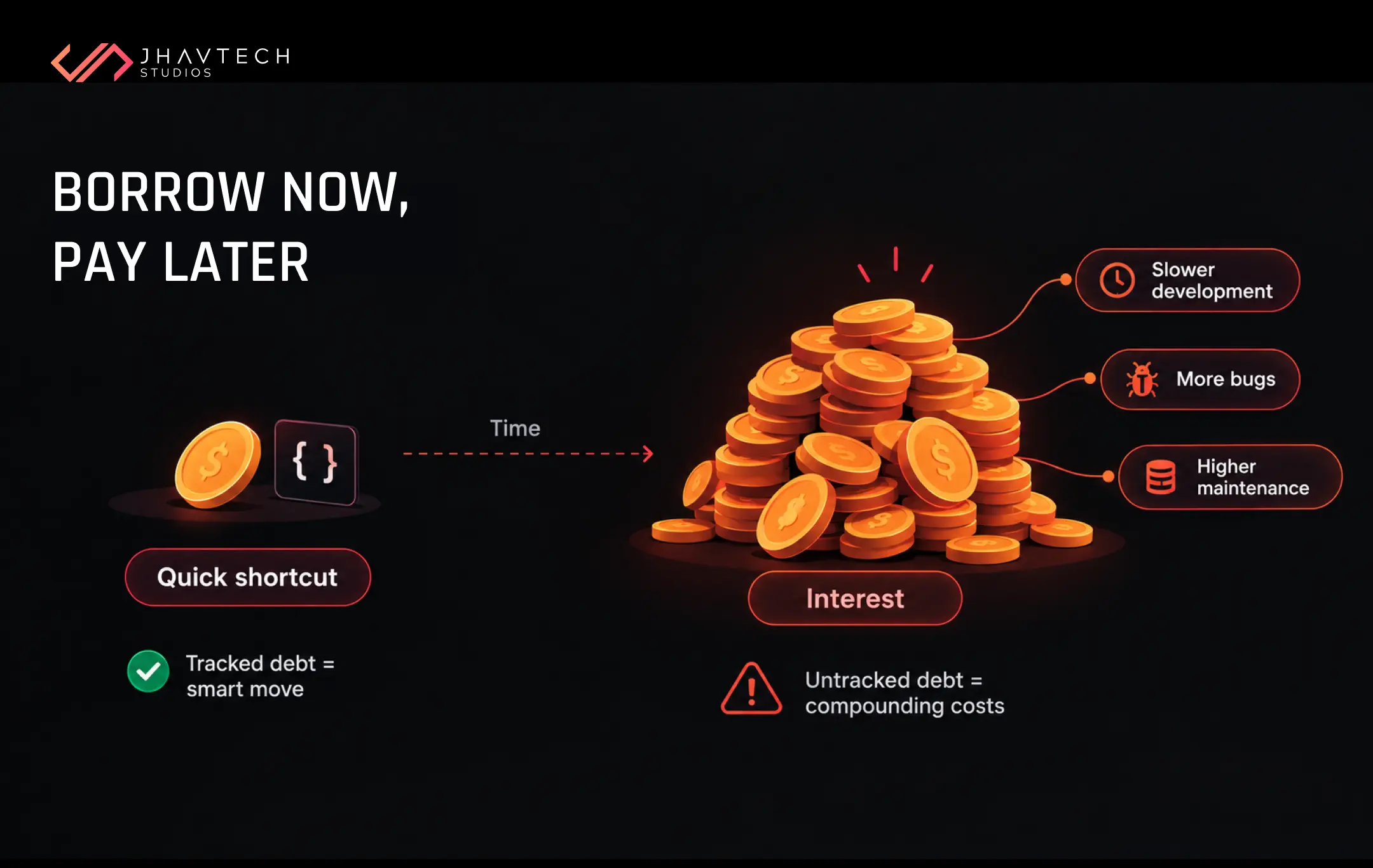
Technical debt is the accumulated cost of choosing a quick solution over a better one in software development. Every shortcut, skipped test, or "we'll clean it up later" decision adds to the balance. You repay it through slower development, more bugs, and higher maintenance costs until the code is properly fixed.
Not all debt is bad. Shipping a scrappy MVP to test the market is often the right call. The trouble starts when nobody tracks what was borrowed, and the interest quietly compounds for years. If you're at the early stage now, building your app on a clean, scalable foundation from day one keeps that borrowing under control.
7 Ways Technical Debt Drains Your Development Budget
1. Your Developers Spend a Quarter of Their Week Fighting the Code
This one is the biggest and the easiest to underestimate. A longitudinal study by researchers at Chalmers University of Technology and the University of Oslo tracked developers over time and found that, on average, they wasted 23% of their working hours because of technical debt (Besker, Martini & Bosch, Journal of Systems and Software, 2019).
Now run that against your own payroll. Say you have five developers, each costing you about AUD $140,000 a year once super, leave and overheads are included. That is $700,000 in engineering spend. Lose 23% of it and roughly $161,000 a year goes into working around old problems instead of building new value.
Nobody sends you an invoice for that. It hides inside "the sprint slipped again."
2. Money Meant for New Features Quietly Pays for Old Mistakes
Most founders set a budget for growth: a new integration, a customer portal, the AI feature your investors keep asking about. Technical debt takes a cut before any of that gets built.
In a McKinsey survey, CIOs said that 10 to 20 percent of the technology budget set aside for new products ends up diverted to resolving tech debt issues, and they estimated the debt itself was worth 20 to 40 percent of their entire technology estate (McKinsey, Tech debt: Reclaiming tech equity).
For a large enterprise, that hurts. For a startup with 14 months of runway, it can decide whether the next funding round happens at all. Every dollar diverted is a feature your competitors ship first.
3. Bugs Multiply and Testing Costs Climb
Messy code is fragile code. When modules are tightly tangled together, a fix in one place breaks something in another, and your team ends up testing everything, every time.
The same Chalmers study found the most common way that wasted time gets spent is on additional testing. That tracks with what we see in real projects: long manual regression cycles, hotfixes pushed on Friday nights, and releases delayed because nobody is confident about what might break.
The costs spread well beyond engineering. Support tickets pile up. Customers churn after the third crash. Your sales team starts avoiding demos of certain features. Poor code maintainability turns every release into a gamble, and gambling is an expensive way to run a product.
4. Every New Hire Takes Longer to Pay Off
When a codebase has no documentation, inconsistent patterns and clever workarounds, new developers need weeks or months before they can contribute safely. You are paying a full salary for someone who is still learning where the landmines are buried.
It gets worse when only one person truly understands a critical part of the system. If that person goes on leave or resigns, work in that area stalls. Engineers call this a low "bus factor," and it is a genuine business risk.
This also matters when you bring in outside help. Our guide to vetting mobile and web app developers includes the questions that reveal whether a team prioritises code maintainability or just ships fast.
5. Your Best Engineers Start Updating Their LinkedIn Profiles
Good developers want to build things. Spending their days patching brittle code wears them down, and the people with the most options leave first.
Researchers have looked at this as well. Besker and colleagues published a 2020 paper in the Journal of Systems and Software on how technical debt influences software developer morale, adding to a growing body of evidence that bad code is a retention problem as well as a technical one.
Replacing a mid-level developer in Australia means recruiter fees, weeks of lost output, and another slow onboarding period (see point 4). So, your debt costs you twice: once when the engineer leaves, and again while the replacement gets up to speed.
6. Security Gaps and Compliance Risks Get Expensive Fast
Outdated libraries, unpatched frameworks, and hard-coded credentials are all forms of technical debt. They are also open doors.
The scale of the problem is hard to ignore. The Consortium for Information & Software Quality estimated that poor software quality cost the US at least $2.41 trillion, with accumulated technical debt reaching roughly $1.52 trillion (CISQ, The Cost of Poor Software Quality in the US: A 2022 Report). The same report singled out technical debt as the largest obstacle organisations face when they try to change existing codebases.
For Australian businesses, a breach involving personal information can also trigger obligations under the Notifiable Data Breaches scheme. Legal advice, customer notifications and reputational damage will cost far more than keeping dependencies up to date ever would.
7. Scaling Turns into a Rewrite You Didn't Budget For
Here's the scenario that keeps CFOs awake. The product finally gains traction, user numbers jump, and the system starts buckling. Pages time out. Cloud bills spike because inefficient queries need bigger servers to cope. The team says the architecture "wasn't built for this."
At that point you face two painful options: an expensive, staged refactor or a full rebuild. Either way, refactoring costs at this stage are many times higher than they would have been if the problems had been tackled early. You pay for the rework, and you also pay for the months your roadmap sits frozen while it happens.
We unpacked the warning signs in our guide on how to fix an app that won't scale.
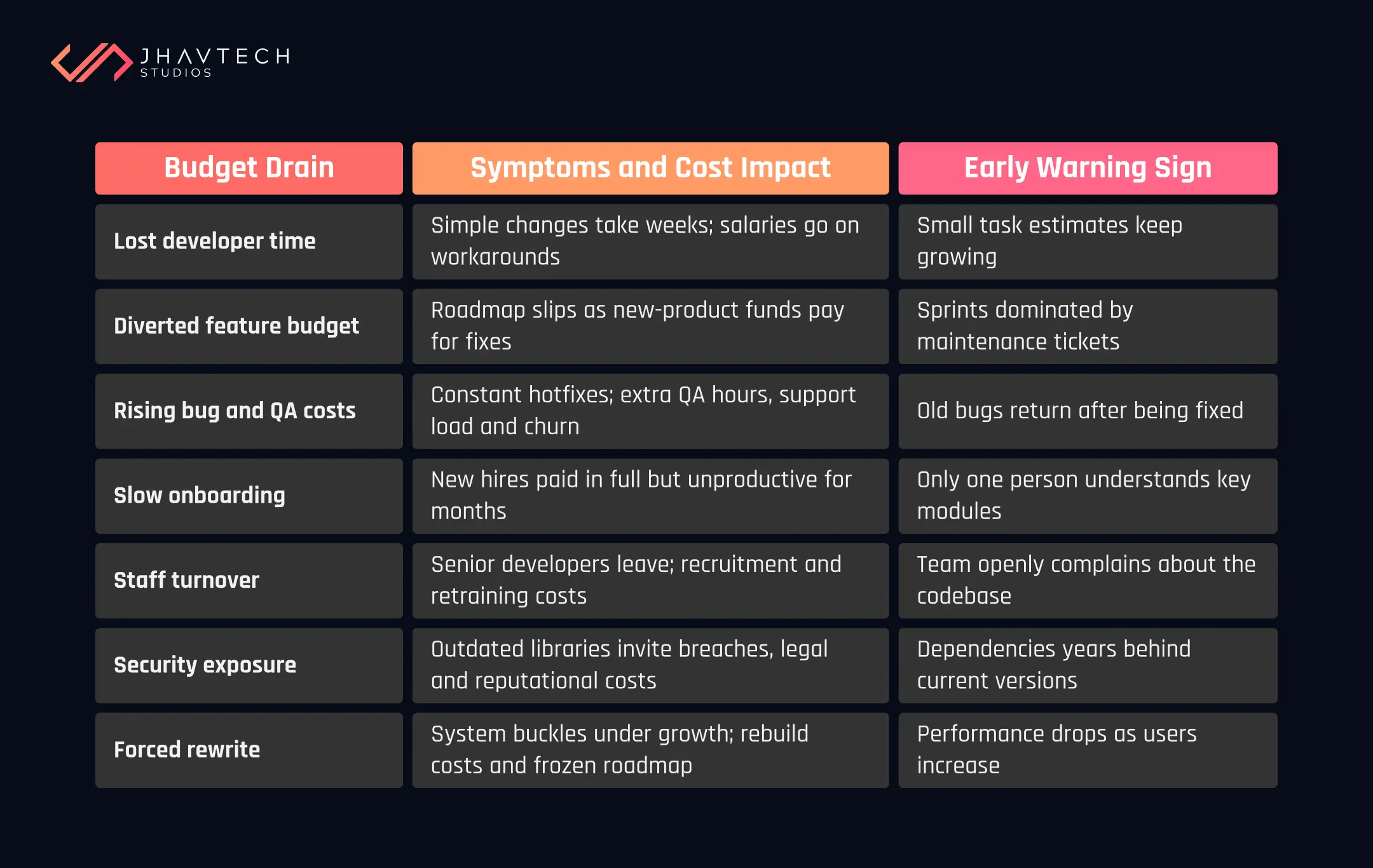
The Hidden Cost of Technical Debt at a Glance
A 2026 Wrinkle: AI Coding Tools Can Pile on Debt Faster
AI coding assistants are now part of most development workflows, and they are genuinely useful. They also make it very easy to generate a lot of code quickly. Code that nobody fully reviews, understands or tests is still debt, even if it arrived in seconds.
We are seeing more projects where the codebase grew fast but inconsistently, with duplicated logic and patterns that don't match. Speed at the keyboard is not the same as speed to market. If your team uses AI tools heavily, human code review becomes more important, not less, for protecting long-term code quality.
How to Stop Technical Debt from Eating Your Budget
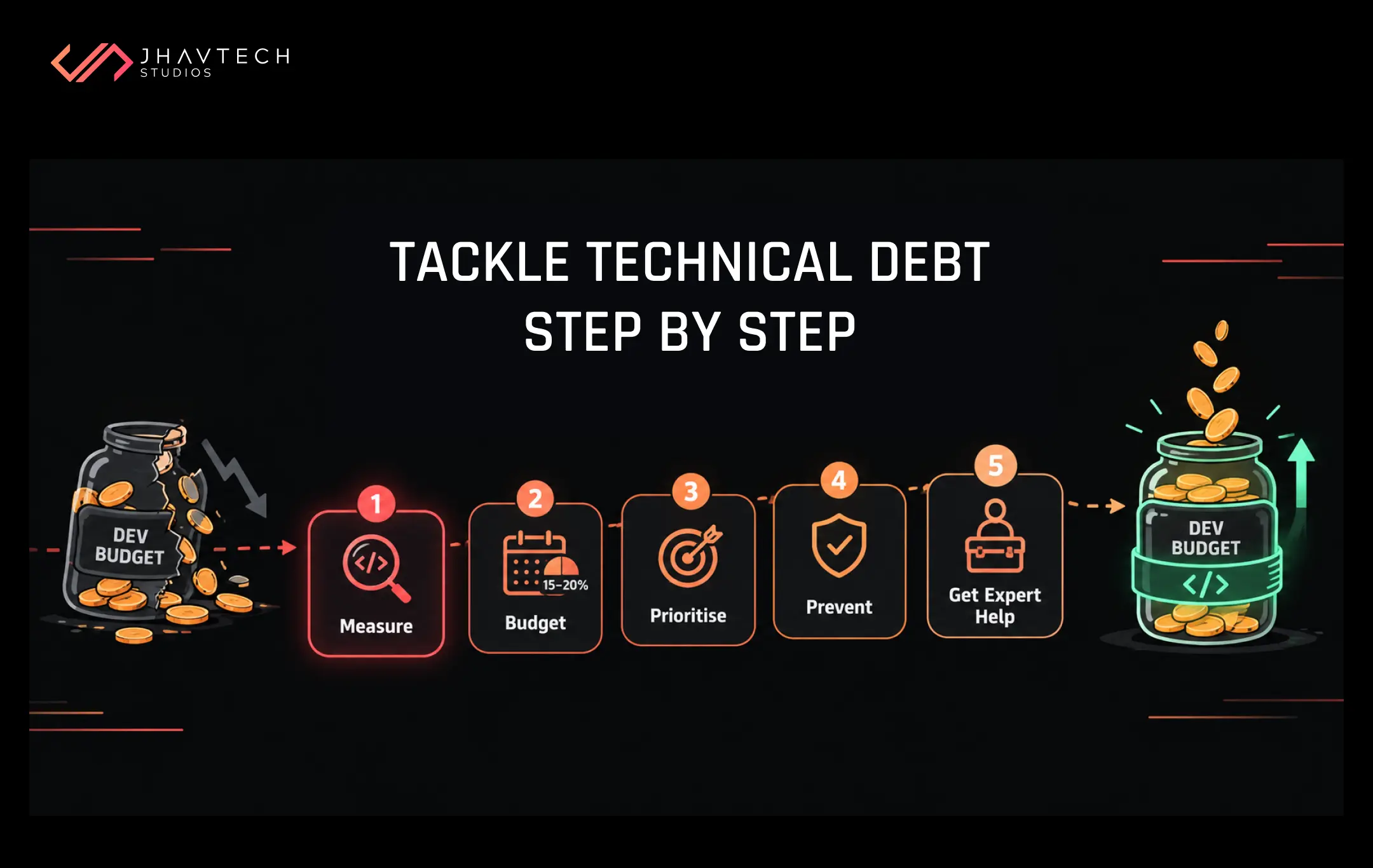
You don't need to freeze development for six months to fix this. Most of the gains come from making the debt visible and paying it down steadily.
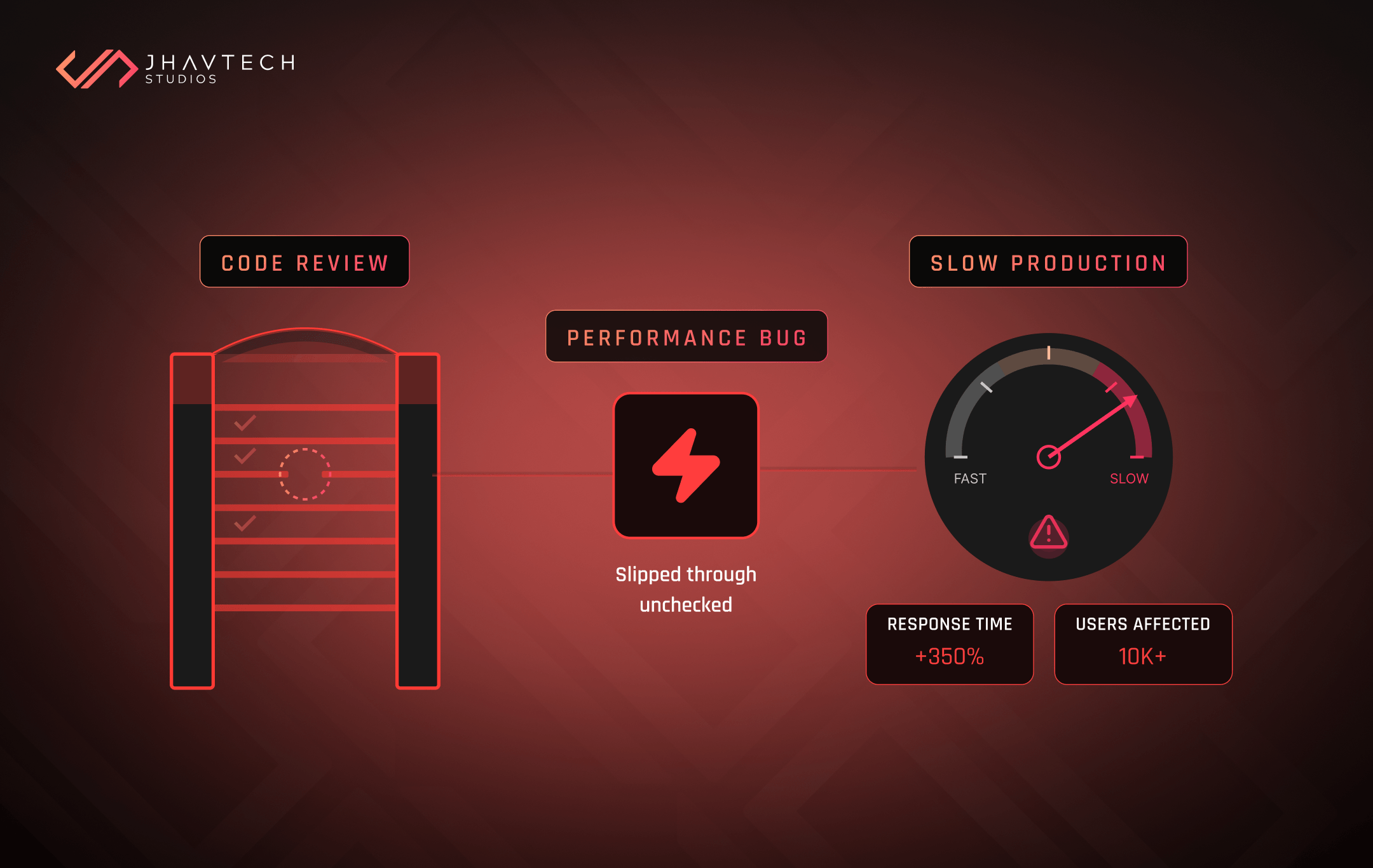
Measure it first. Get an honest assessment of where the worst problems are. An outside review helps because your own team is often too close to the code, or too polite to say how bad it is. Our free, no-obligation code health check is a good starting point.
Budget for repayment. Many teams reserve 15 to 20% of each sprint for refactoring, test coverage, and dependency updates. Treat it like a loan repayment rather than an optional extra.
Prioritise by business impact. Fix the debt that sits in your most frequently changed or revenue-critical areas first. A messy admin screen nobody touches can wait.
Watch for team habits that create new debt. Our post on the 7 signs your development team is creating technical debt covers the behaviours to look out for.
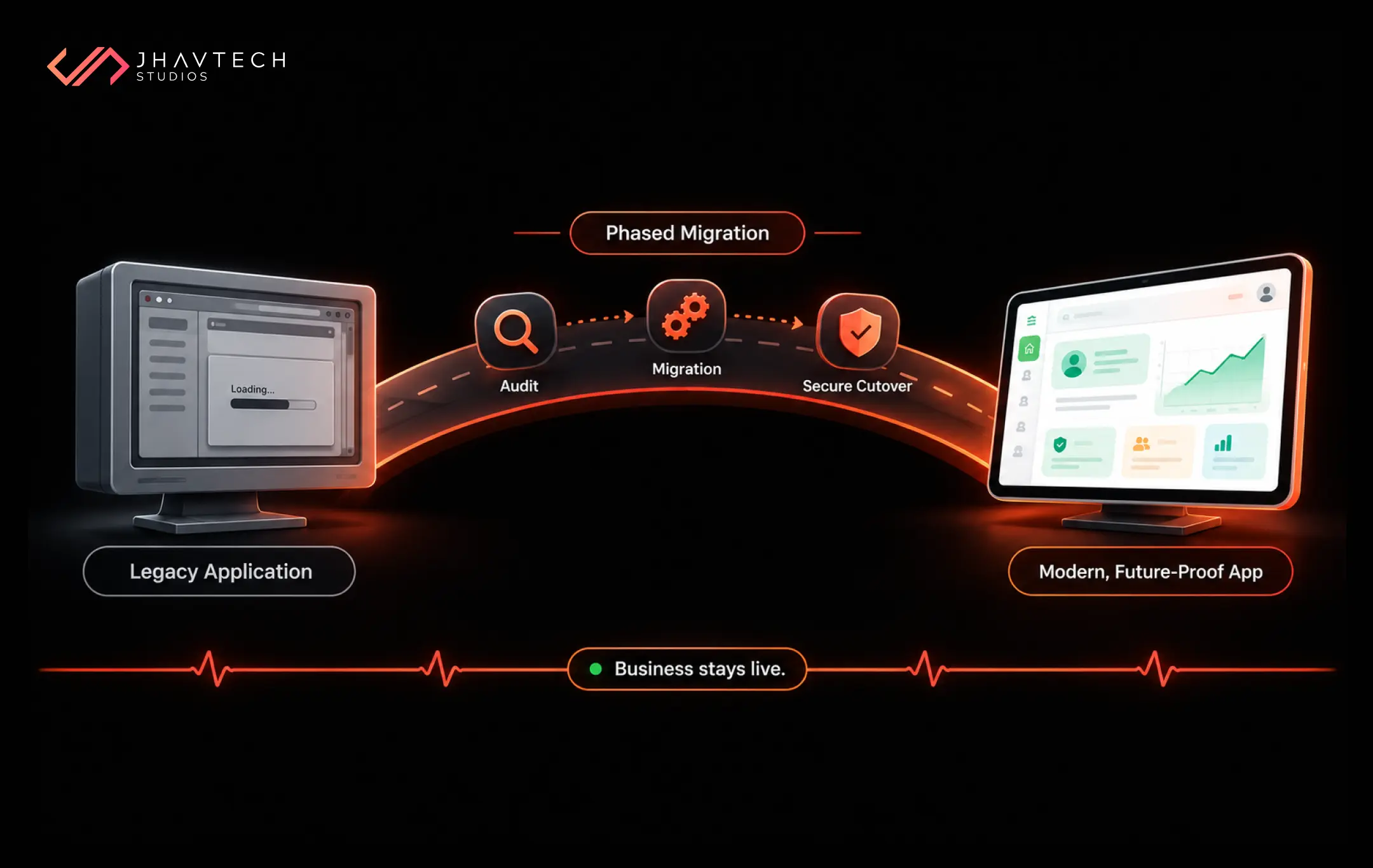
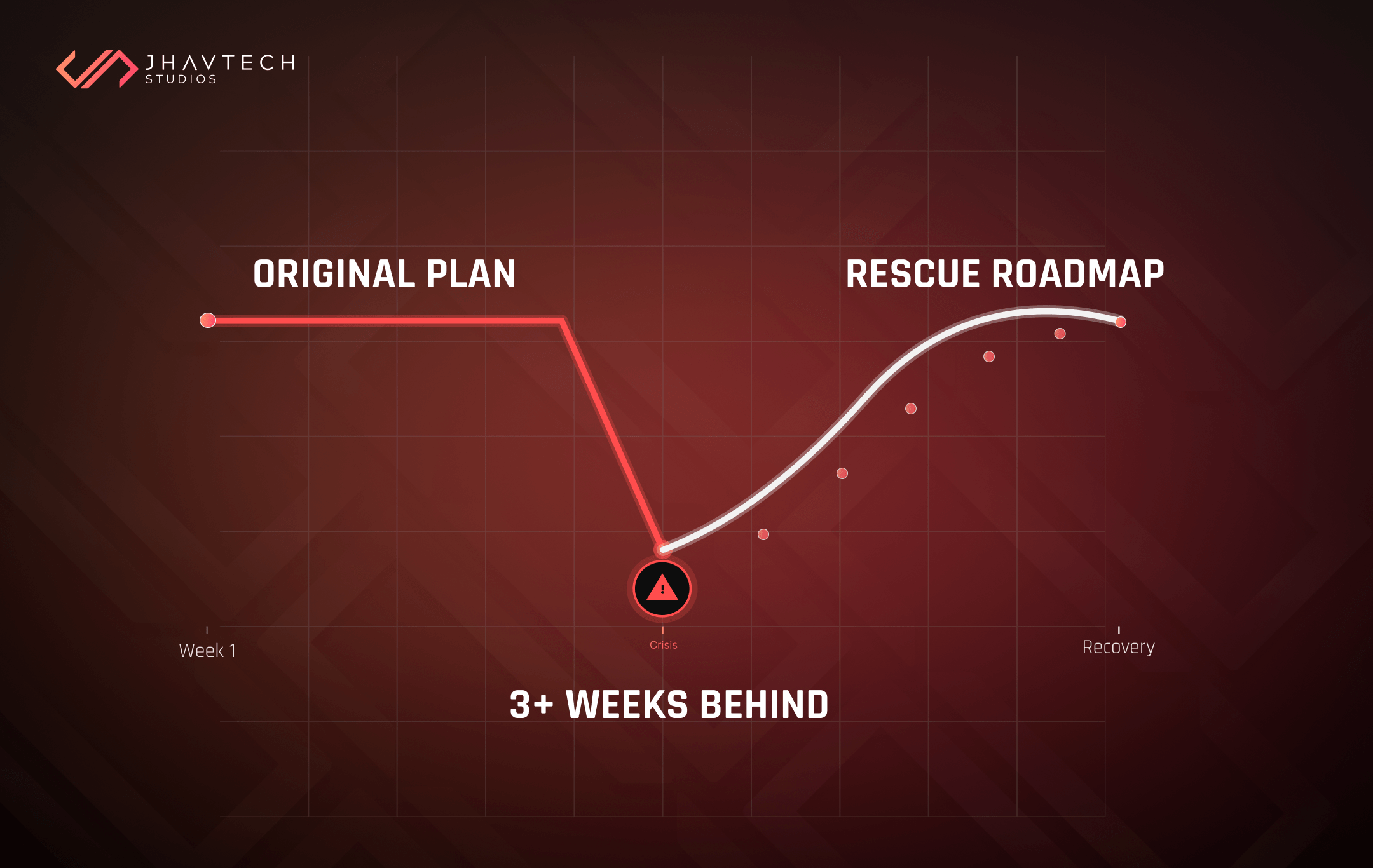
Know when to call in reinforcements. If deadlines are consistently missed and the codebase feels too fragile to touch, it may be time to bring in specialists who turn struggling software projects around. Rescuing a project early costs far less than rebuilding it later.
Technical Debt Health Checklist for Founders and Managers
Tick every statement that applies to your product. Three or more ticks mean it's time for a proper review.
☐ Small feature requests routinely take longer than a week
☐ The same types of bugs keep coming back
☐ One or two developers are the only ones who understand critical parts of the system
☐ New developers take more than a month to ship meaningful work
☐ Your core frameworks or libraries are more than two major versions behind
☐ There are few or no automated tests
☐ Your team avoids touching certain files or modules
☐ Cloud hosting costs are rising faster than your user base
☐ Releases regularly need emergency hotfixes
☐ Nobody tracks or estimates technical debt in sprint planning
The Bottom Line on Technical Debt
Technical debt is rarely a single disaster. It behaves more like a slow leak in your engineering budget, draining a bit from every sprint, every hire and every release until the costs are too big to ignore. The businesses that stay ahead treat software development inefficiencies as a financial issue as well as a technical one, and they deal with them while the fixes are still affordable.
Pay it down early, and your development budget goes back to building the product your customers are waiting for.
Frequently Asked Questions











.webp)
.webp)
.webp)
.webp)
.webp)
.webp)
.webp)

.webp)
.webp)






.png)
.png)
.png)
.png)
.png)
.png)

.png)
.png)
.png)
.png)
.png)
.png)
.png)



.png)

.png)


.png)





.png)
.png)
.png)
.png)
.png)
.png)
.png)
.png)
.png)
.png)
.png)

.png)

.png)

.png)
.png)
.png)
.png)
.png)
.png)
.png)



.png)
.png)
.png)
.png)
.png)
.png)
.png)
.png)
.png)
.png)

.png)