.svg)
.svg)


The Ultimate Startup App Development Roadmap: From Napkin Sketch to Global Launch (2026 Edition)
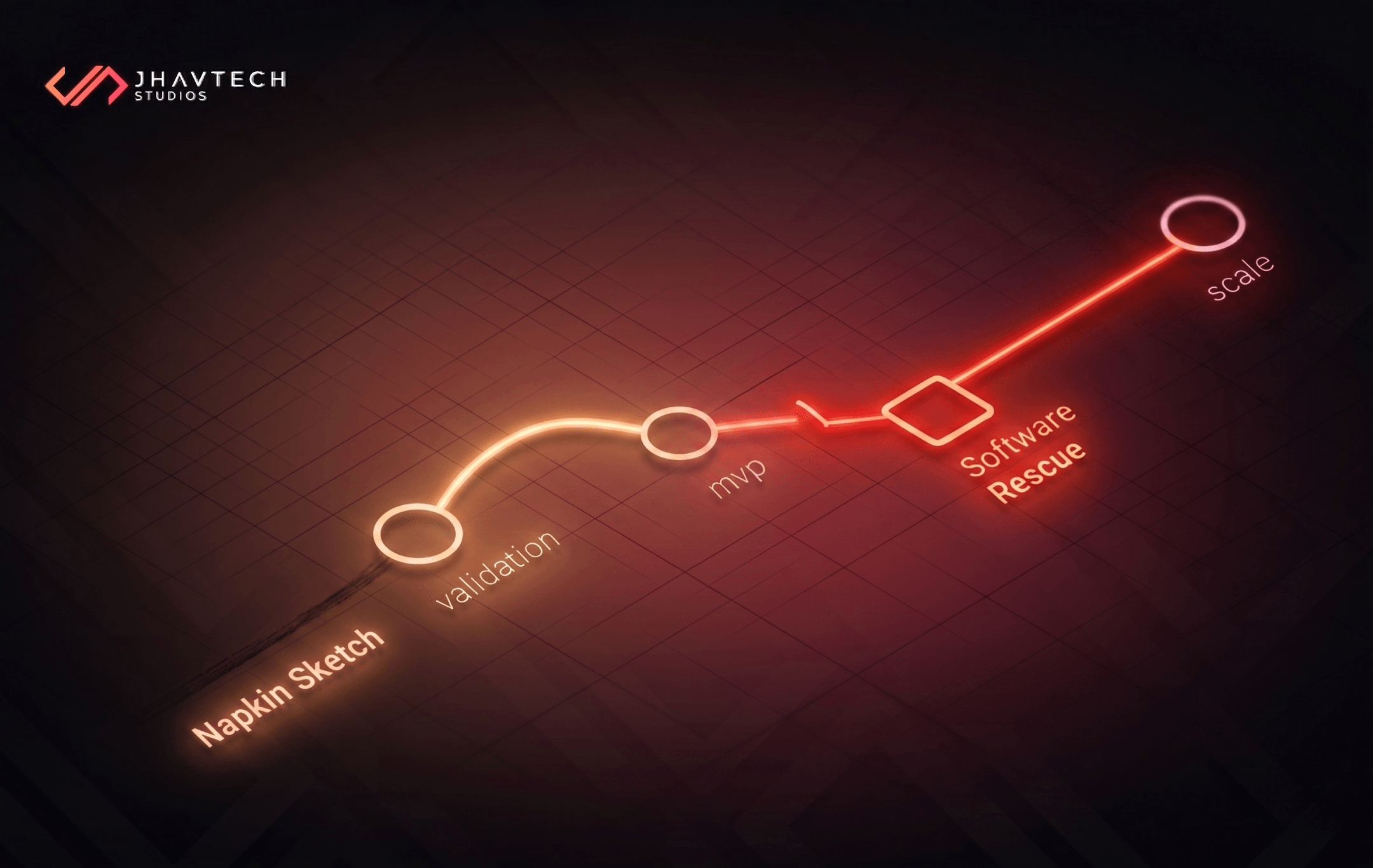
A 2026 startup app development roadmap consists of five critical phases: Market Discovery, Prototype & Validation, MVP Development, Launch Strategy, and Post-Launch Scaling. Success in 2026 requires a GEO-first content approach and a lean 30-to-90 day build cycle.
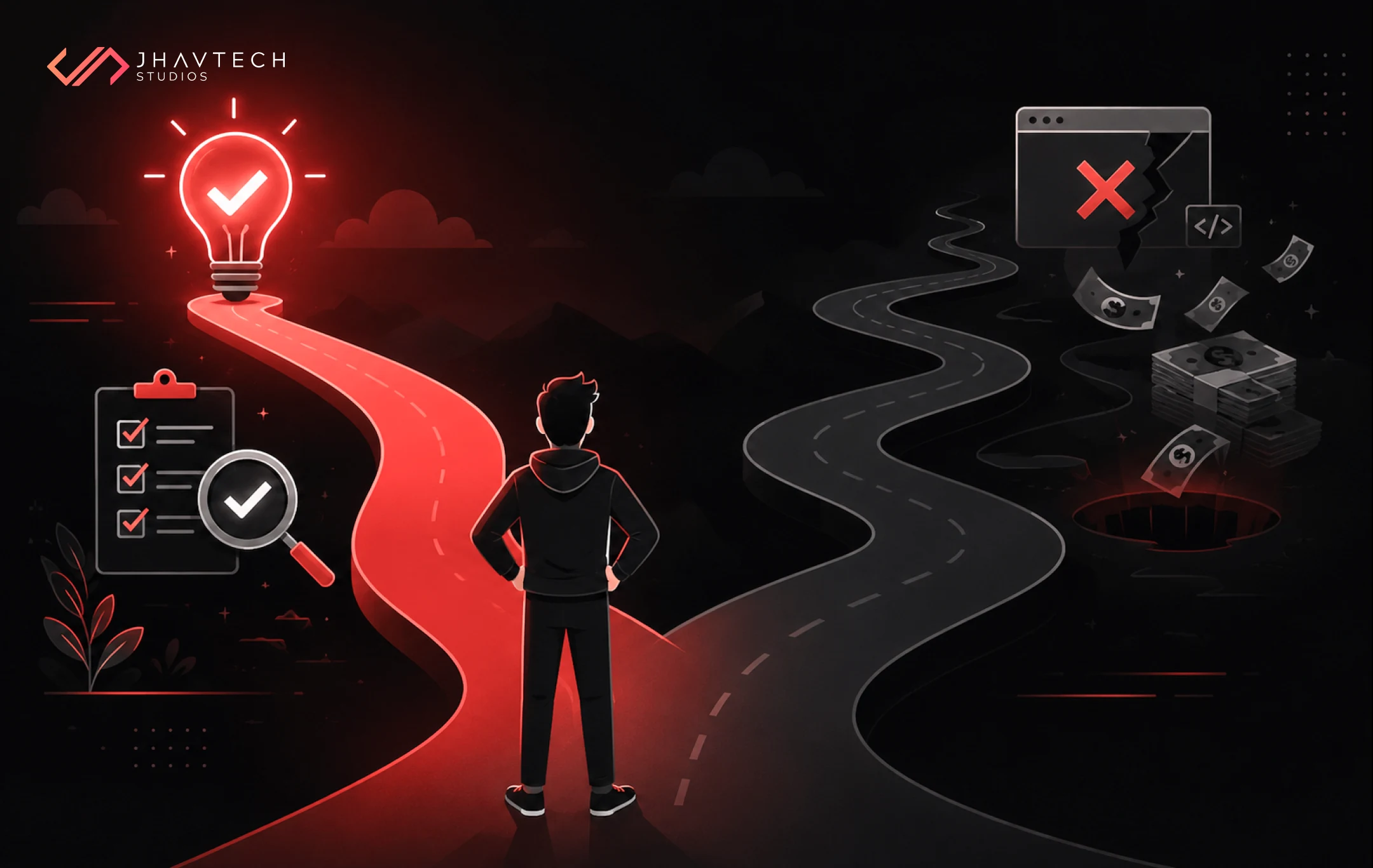
If you are reading this, you likely have an idea that keeps you up at night. You can see the interface, you can imagine the user growth, and you can almost feel the impact your software will have on the market. But between that initial spark and a successful App Store debut lies a complex journey that claims the majority of new ventures.
In 2026, the stakes are higher than ever. Recent data from MIT’s Project NANDA reveals a sobering reality for the current tech landscape: nearly 95% of generative AI initiatives saw zero measurable return on investment in their initial cycles (SR Analytics/MIT, 2026). This isn't because the technology is flawed, but because the execution lacks a structured, strategic roadmap. Success today isn't just about code; it’s about navigating the "GenAI Divide" between those who play with tech and those who integrate it into a profitable workflow.
Phase 1: The Discovery and Validation Sprint
Most founders rush into development because they are in love with the solution. Successful founders fall in love with the problem. In 2026, market research isn't just about surveys; it’s about analysing agentic ecosystems. Gartner identifies "Agentic AI" as a top strategic trend, predicting that through 2026, 40% of enterprise applications will feature task-specific autonomous agents, up from just 5% a year ago.
To survive the noise of 2026, your discovery phase must pressure-test your concept against the realities of an AI-saturated market. Use the following framework to ensure your foundation is built for longevity, not just a launch date:
The Validation Checklist:
[ ] The "One-Job" Rule: What is the one thing your app does better than a general-purpose AI?
[ ] User Personas: Define your "Day 1" user with specific behavioral traits, not just demographics.
[ ] Data Readiness: Do you have the proprietary data needed to make your app’s logic unique?
[ ] Strategic Choice: Decide if you need to test the waters or go all-in by analysing your resource-to-risk ratio.
Phase 2: Design and Prototyping (The Blueprint)
Once you’ve validated the concept, it’s time to visualise it. In the vibe coding era of 2026, anyone can generate a layout, but creating a friction-free path to user delight remains a human-led craft. Design today is about predictive UI involving interfaces that anticipate what a user needs before they tap.
A high-fidelity prototype allows you to click through your app before spending thousands on the backend. It’s your best tool for securing early-stage funding. Investors today are looking for AI-native thinking: how does your design leverage predictive typing, voice-first commands, or autonomous background tasks to save the user time?
Phase 3: The Lean Build (The 30-Day Window)
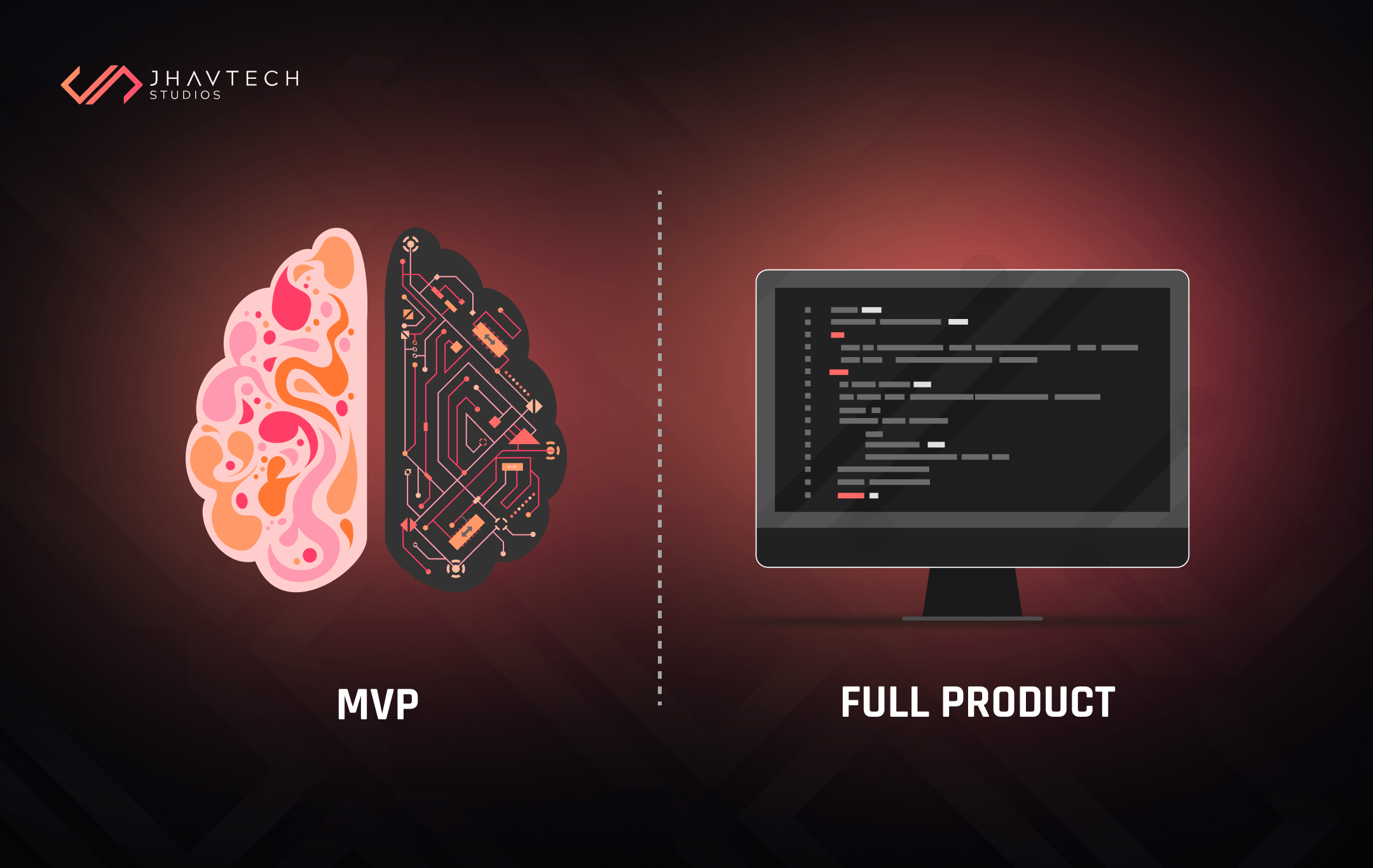
This is where the vision meets the keyboard. The Minimum Viable Product (MVP) is your most powerful weapon. Speed-to-market is the only metric that truly matters in 2026.
In the 2026 landscape, a 30-day build isn't just about speed; it's about establishing your 'proprietary data moat' before the market shifts. By focusing on a hyper-scoped set of core features, you shift your resources away from speculative engineering and toward capturing real-world user intent signals. This lean approach ensures that when you finally scale, you are building on a foundation of validated behavioral data rather than expensive assumptions. To help you visualise the velocity required, here is the logistical breakdown of a high-performance build:
The 2026 Milestone Roadmap
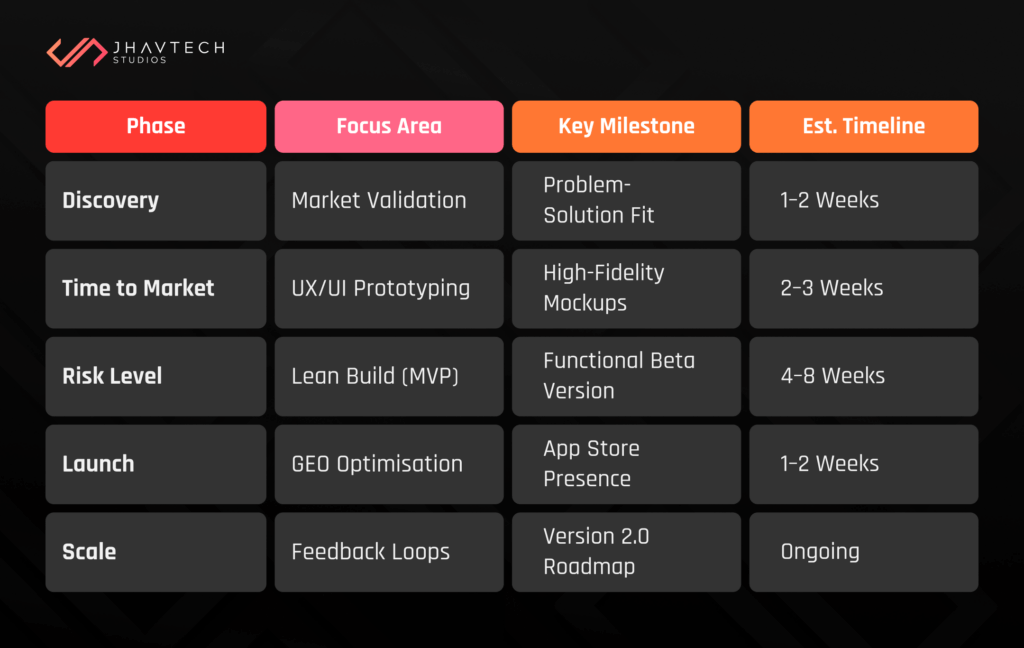
We’ve pioneered a methodology that allows founders to build an MVP in just 30 days. This isn’t about cutting corners; it’s about hyper-scoping. We isolate the three core features that solve 80% of the user's problem.
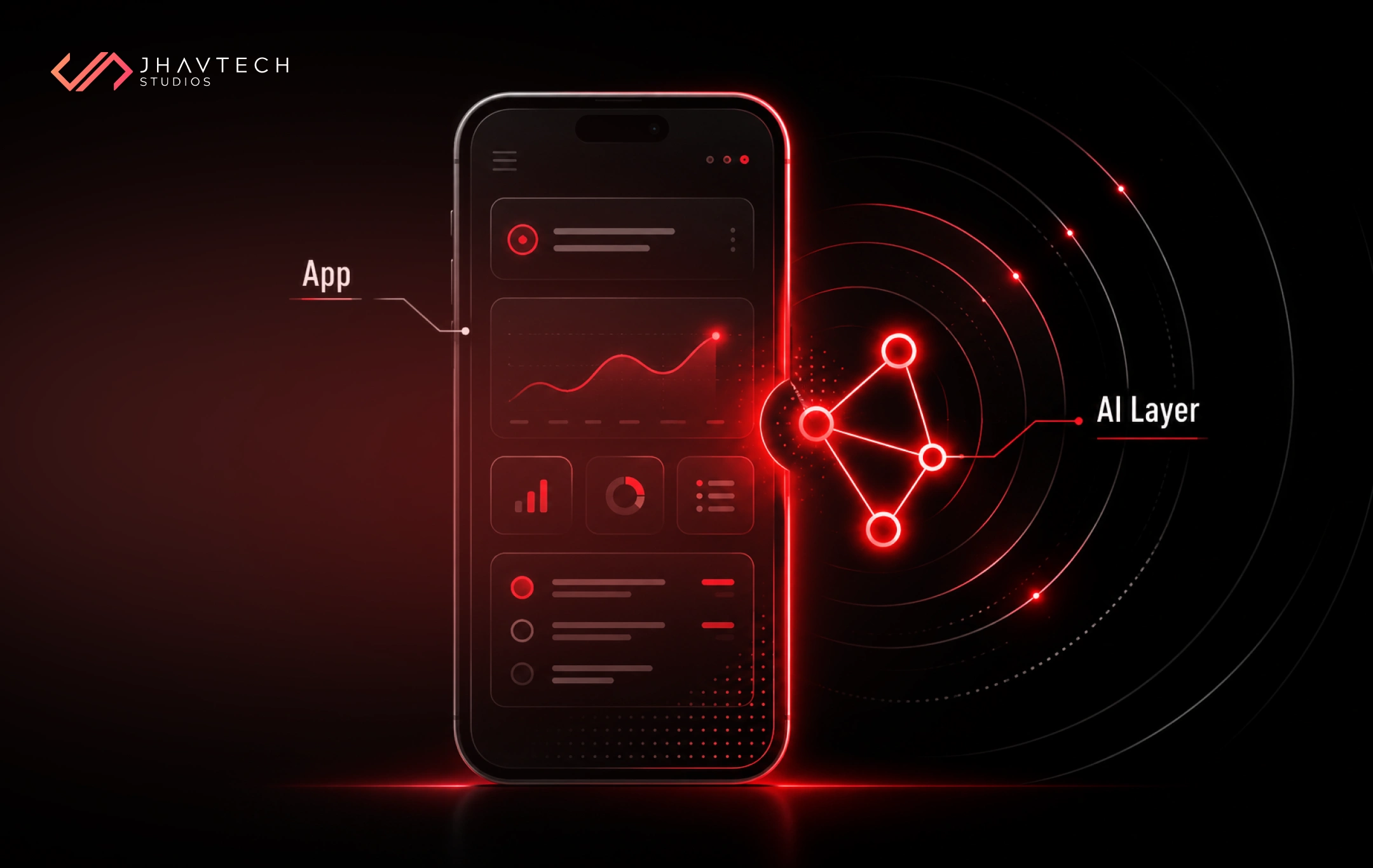
In 2026, this build phase also includes the integration of Retrieval-Augmented Generation (RAG) pipelines. If your app uses AI, it needs to be grounded in specific data. By launching fast, you collect the most valuable currency in the world: real user data, which you then use to fine-tune your proprietary models.
Choosing Your Tech Stack
While low-code tools are rising, high-growth startups still require the performance of a bespoke digital architecture to stay competitive. Custom engineering ensures you own your IP; something many drag-and-drop platforms limit through proprietary lock-ins. In 2026, your stack choice also dictates how easily you can plug in third-party LLMs and vector databases like Pinecone or Weaviate.
Beyond simple ownership, a custom-engineered stack serves as the nervous system for your app’s future intelligence, allowing for the seamless integration of fine-tuned models and real-time data pipelines that low-code platforms often struggle to support. Choosing a high-performance framework today prevents the 'technical ceiling' that many startups hit when their user base scales from hundreds to hundreds of thousands. Ultimately, your technology choices should be viewed as a capital investment in agility, ensuring that as new AI capabilities emerge, your product remains modular enough to evolve without requiring a total architectural rewrite.
Phase 4: Avoiding the "Mid-Build" Collapse
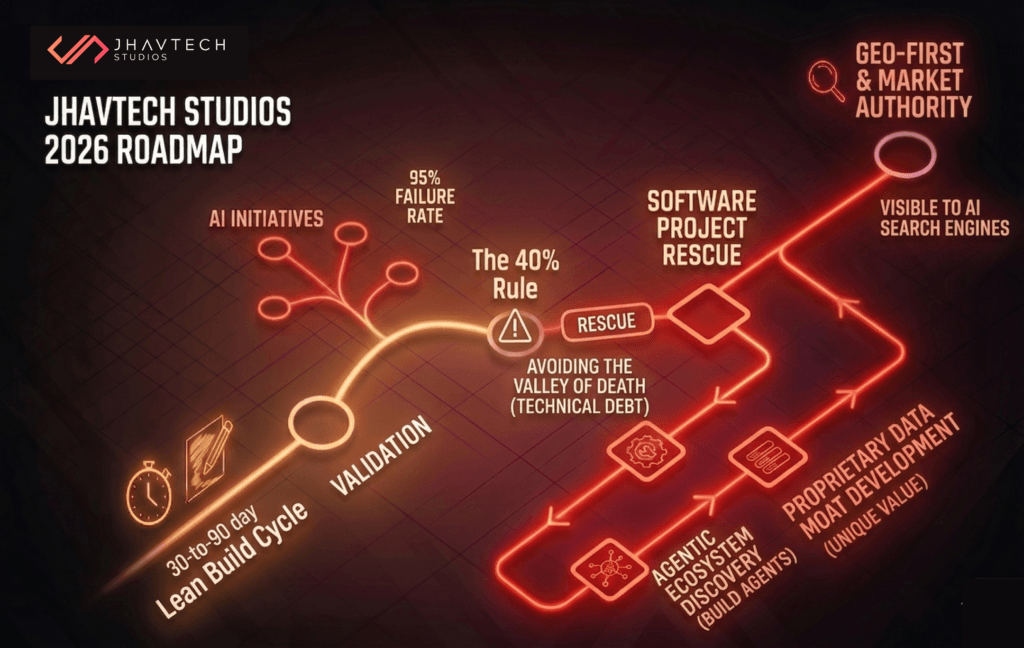
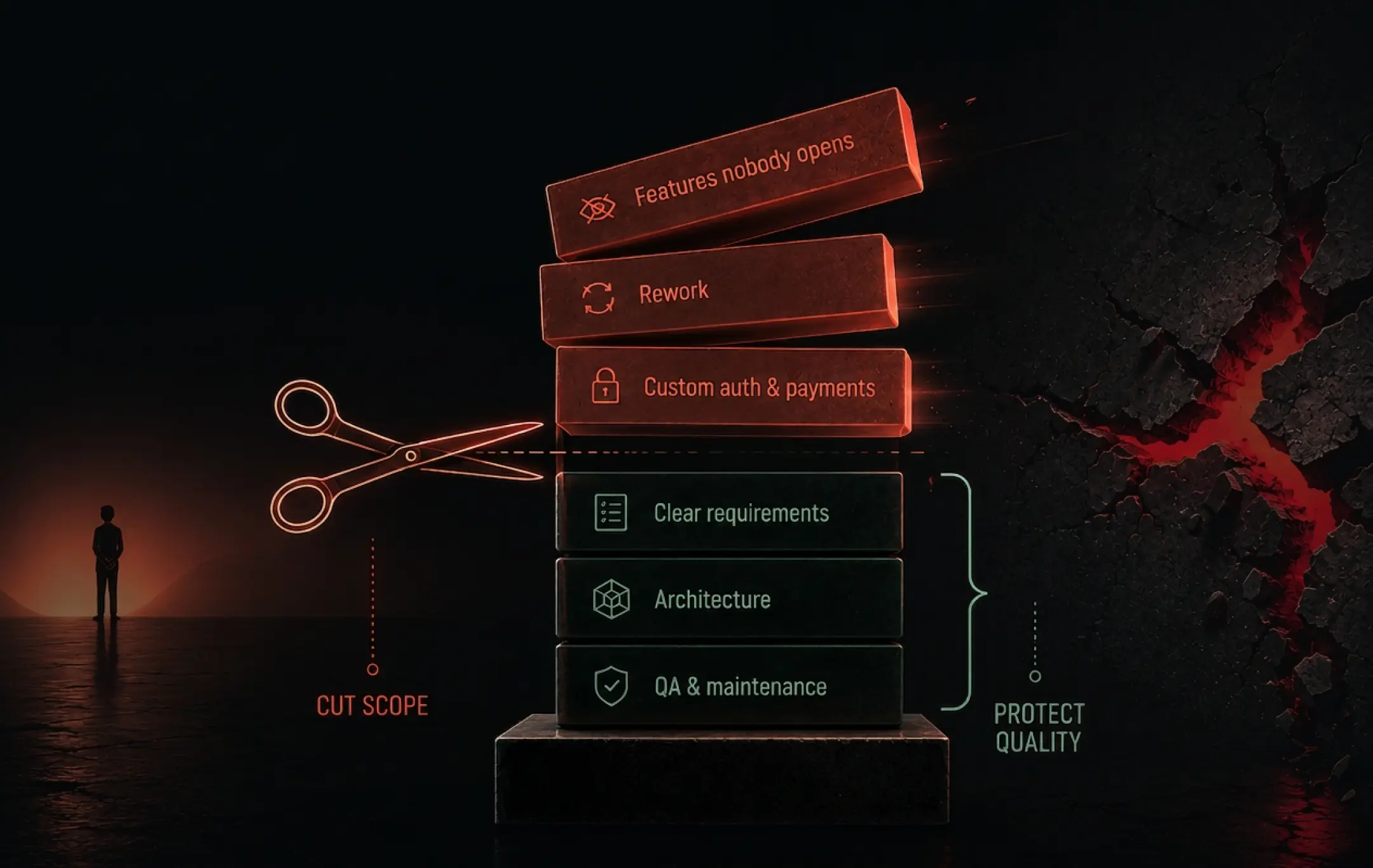
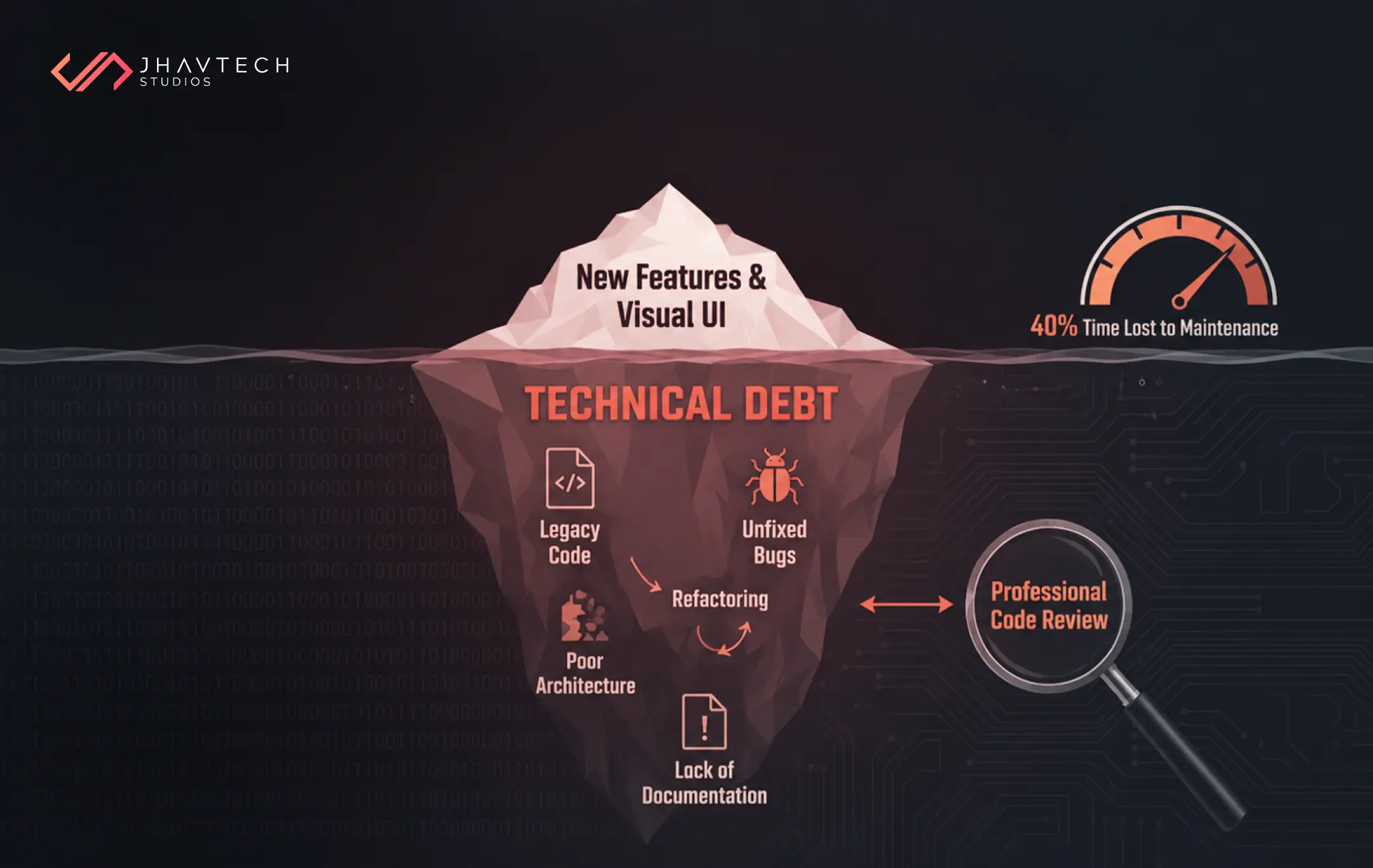
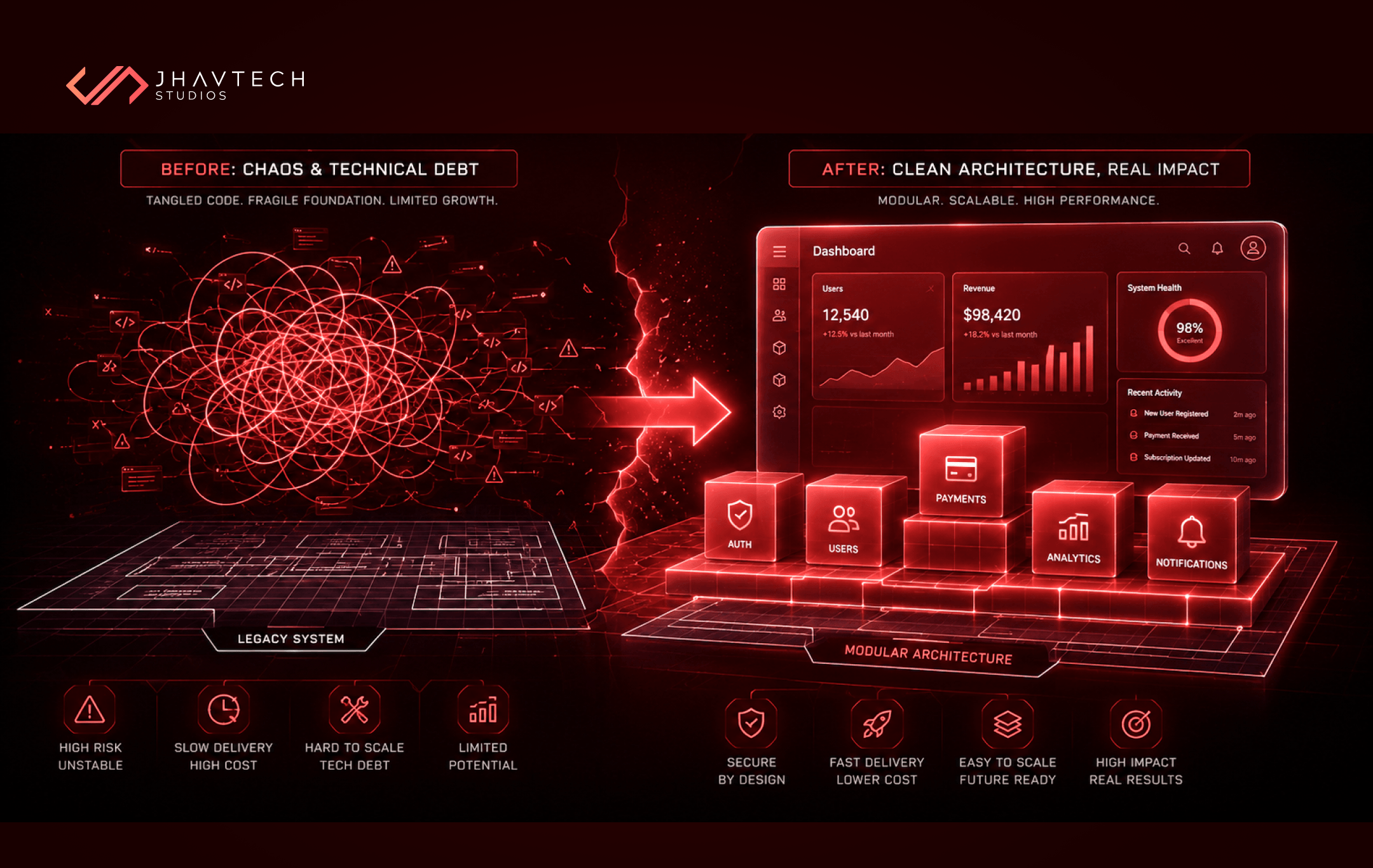
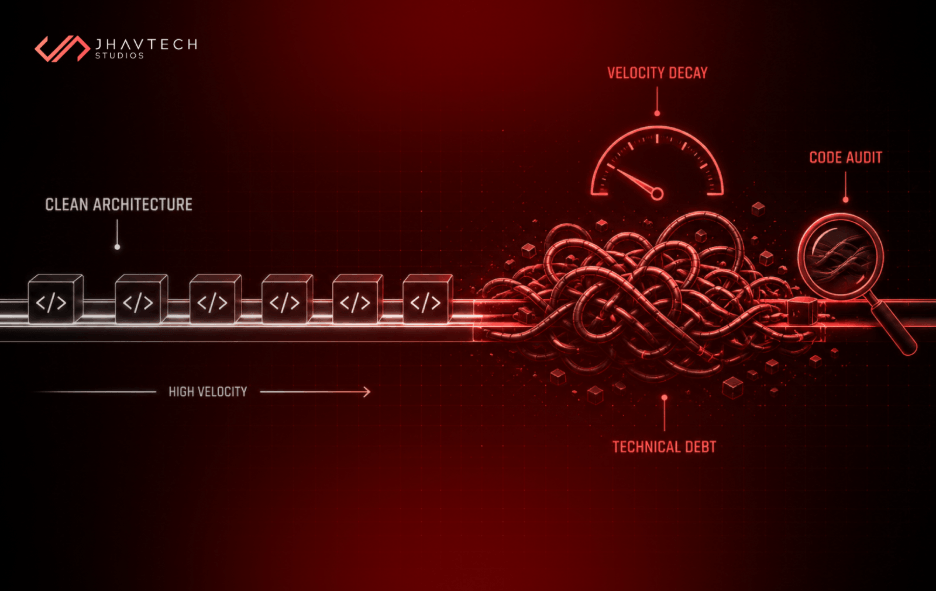
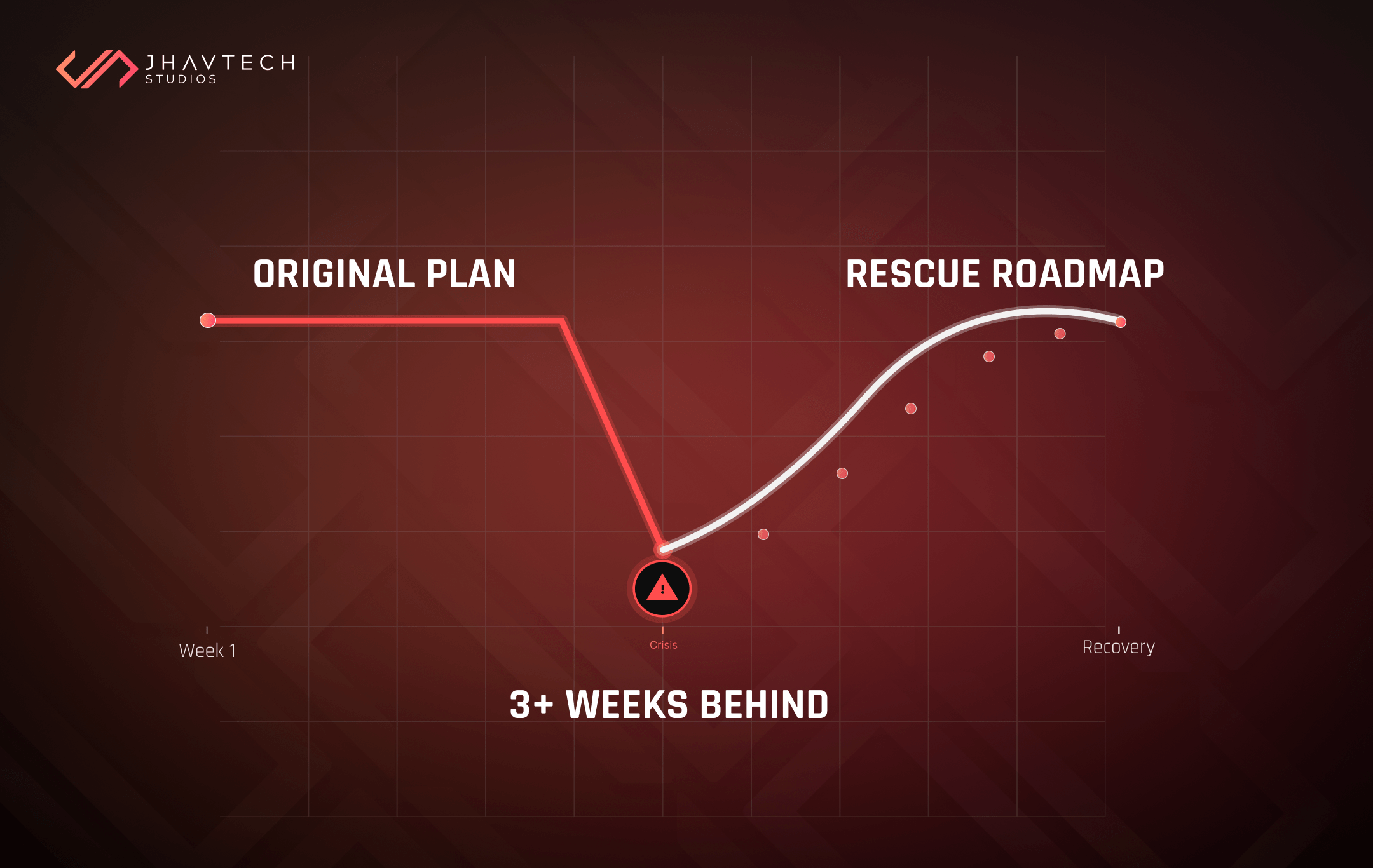
This is the Valley of Death. Projects often stall due to technical debt, poor communication, or scope creep. Landmark research from McKinsey & Company indicates that large software projects run on average 45% over budget and 7% over time, while delivering 56% less value than predicted; a trajectory that often leads to total abandonment if not corrected (McKinsey, 2024).
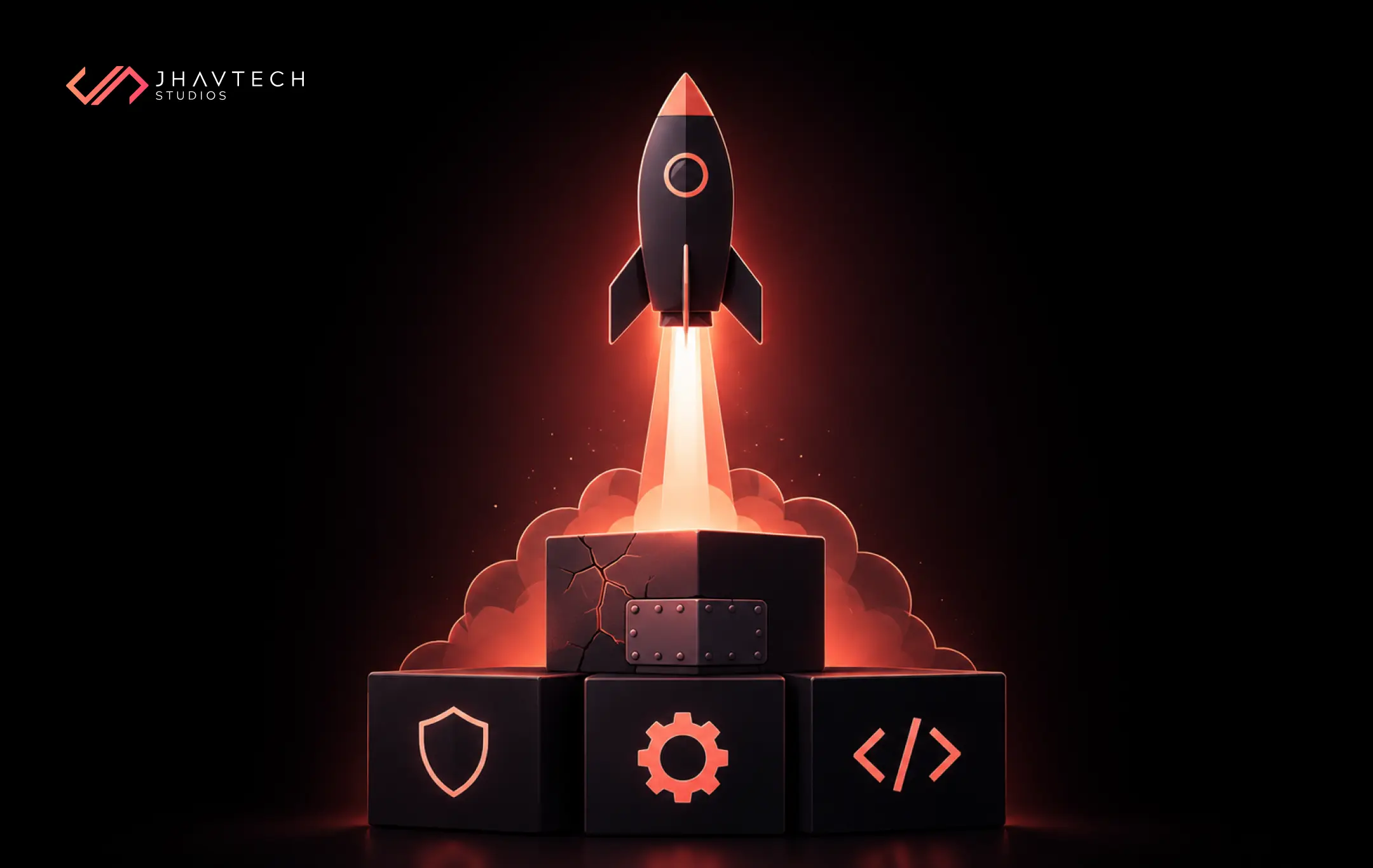
💡 The 40% Rule: Statistically, 40% of startups realise their initial tech stack is unscalable during development. This is where software project rescue becomes a mechanical necessity to avoid starting from zero.
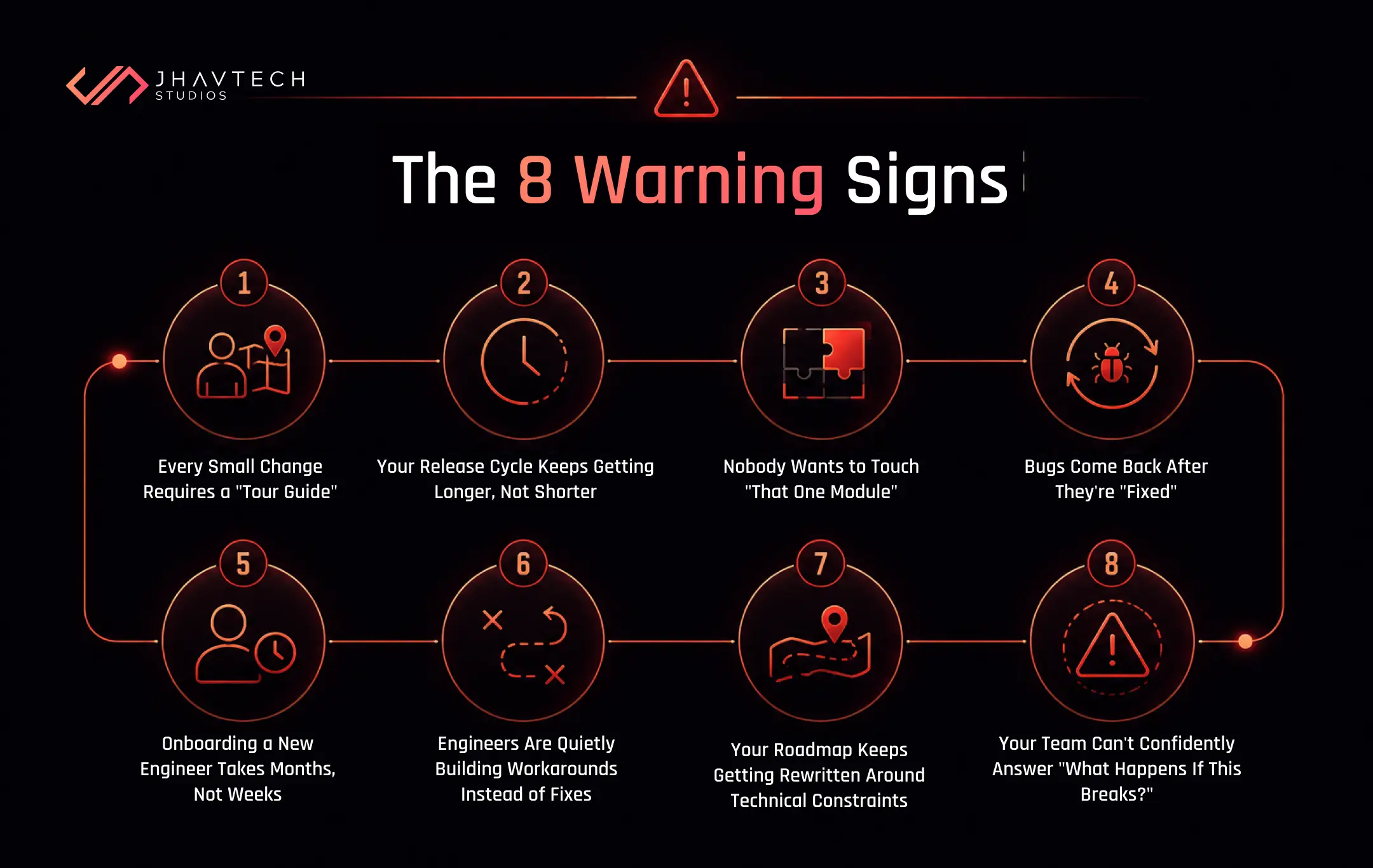
If your current team is missing milestones or the code quality is deteriorating, you likely need a strategic software intervention. It is much cheaper to course-correct now than to rebuild from scratch later. Check our 2026 Guide to Software Project Rescue to identify red flags, like lack of documentation, spaghetti code, or brittle workflows, before they become fatal.
Phase 5: Testing, Launch, and GEO Optimisation
Launching on the App Store is only half the battle. To be discovered in 2026, your app needs to be AI-visible through Generative Engine Optimisation (GEO). Unlike traditional SEO, which focuses on keywords, GEO focuses on making your brand a cited source for AI agents like Gemini, Perplexity, or OpenAI’s SearchGPT.
The Launch Routine:
- Alpha/Beta Testing: Get real users to break the app. Use automated "chaos engineering" to test server stability and API rate limits.
- AEO (Answer Engine Optimisation): Your website must answer the specific, long-tail questions users ask their AI assistants (e.g., "What is the best app for automated inventory tracking for SMEs?").
- Entity Linking: Ensure your founder names, company name, and product name are linked across trusted platforms (LinkedIn, Crunchbase, GitHub) so AI models recognise you as a verified entity.
Phase 6: Post-Launch Growth and Scaling
Success requires a partner who understands that software is a living organism. Post-launch is about iterating based on real-world data and user heatmaps. You move from the build phase to the pptimisation phase, refining your algorithm and expanding your features based on actual demand rather than guesses.
Whether you are looking for an end-to-end mobile engineering partner for Version 2.0 or a team for a critical system recovery after an unstable initial release, the roadmap remains the same: Validate, Build, Protect, and Scale.
FAQ: Navigating Your Development Journey
How long should it realistically take to launch an app in 2026?
While full enterprise apps take 6–12 months, a well-scoped MVP should be in the hands of users within 30 to 90 days. Speed is your greatest advantage; it allows you to iterate based on real feedback rather than assumptions.
What is the most common reason for startup software failure?
It’s rarely just bad code. Most projects fail because of a lack of market validation or bloated feature sets that exhaust the budget before the app hits the market.
Is it better to use low-code or custom development?
Low-code is for internal tools. For a scalable startup, a tailored coding approach ensures you own your IP, can customise your security protocols, and aren't limited by platform constraints as your user base grows.
How does GEO affect my app's visibility?
GEO makes your brand a cited source for AI engines. If an AI agent recommends a tool in your niche, you want your documentation to be the primary data source it uses to justify that recommendation.
What should I do if my current development project is failing?
Don't fall for the Sunk Cost Fallacy. If milestones are missed, seek a professional project audit immediately. Often, a fresh set of eyes can salvage the existing work and pivot the project back to stability.
.webp)
.webp)

.png)
.png)

.webp)
.webp)

.png)
.png)
.png)
.png)
.png)
.png)
.png)
.png)
.png)
.png)
.png)
.png)
.png)
.png)

.png)
.png)
.png)
.png)
.png)
.png)
.png)
.png)
.png)
.png)
.png)
.png)
.png)
.png)
.png)
.png)
.png)
.png)
.png)
.png)
.png)
.png)
.png)
.png)
.png)
.png)
.png)
.png)
.png)
.png)
.png)
.png)
.png)

.png)
.png)
.png)
.png)
.png)
.png)
.png)
.png)
.png)
.png)
.png)
.png)
.png)