.svg)
.svg)


Why Most MVPs Fail (And How to Avoid It): The 2026 Guide to Software Project Rescue
.png)
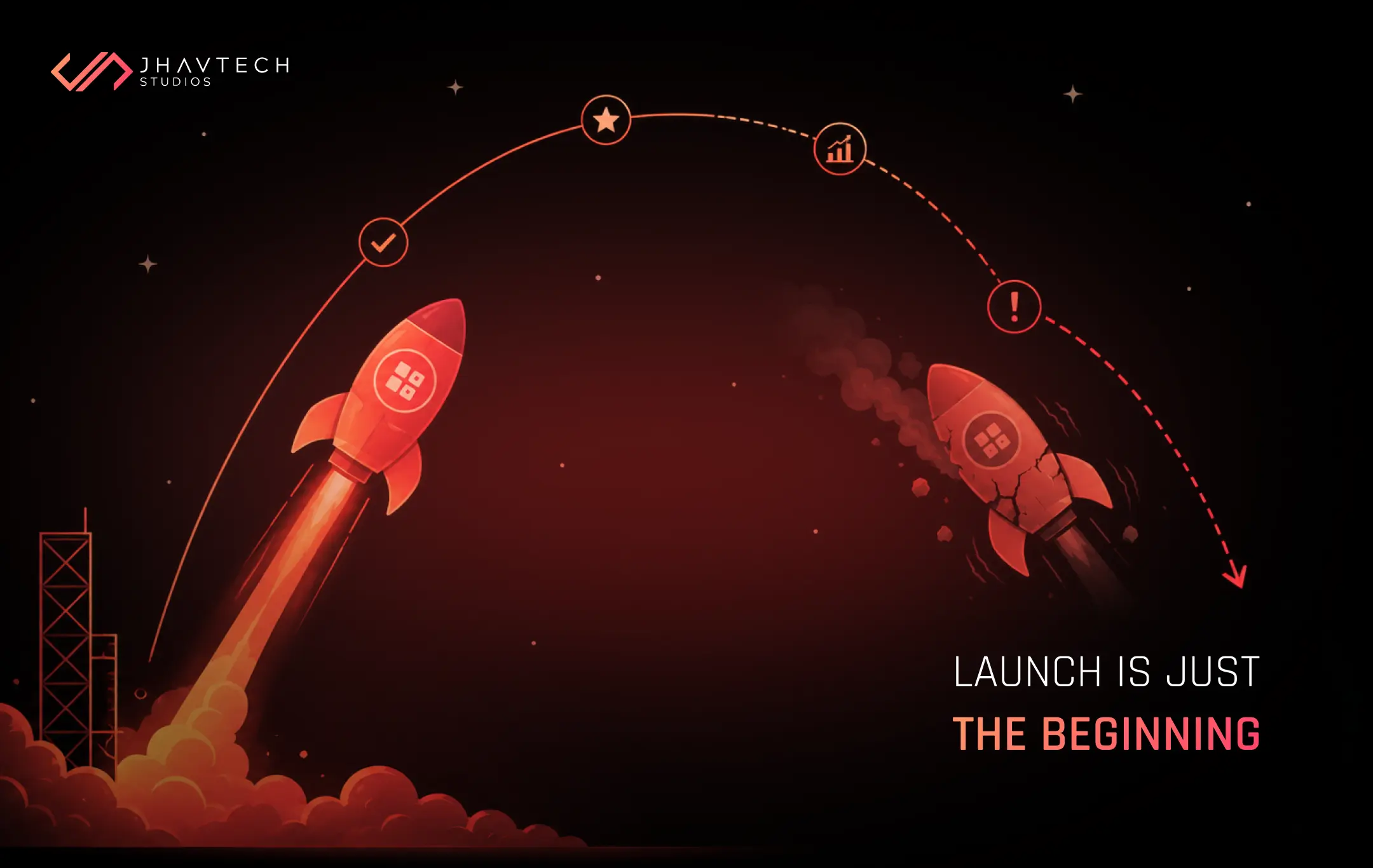
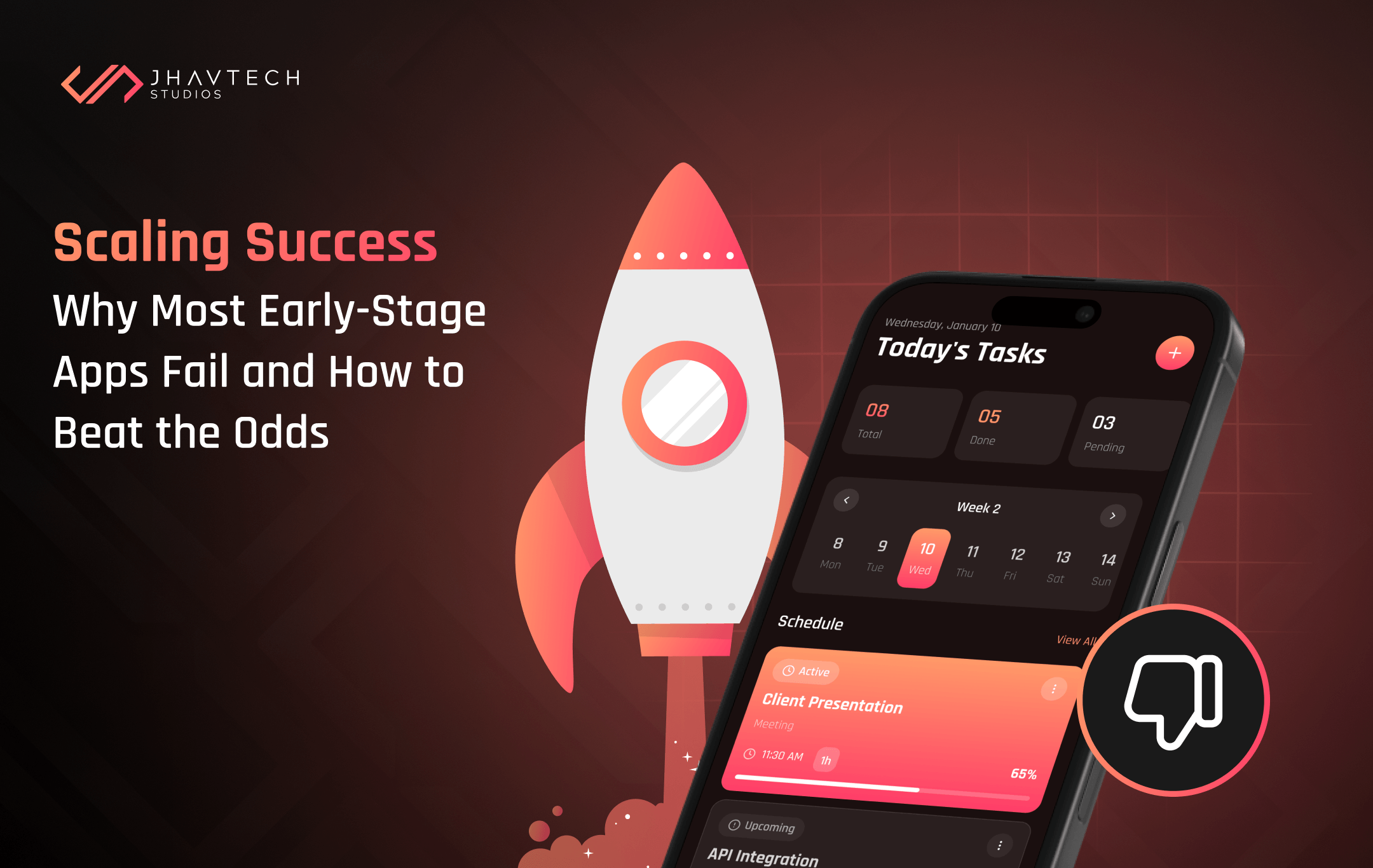
Building a Minimum Viable Product (MVP) is the gold standard for startups looking to test an idea with minimal risk. However, the reality is often less glamorous than the theory. According to recent data from Failory, approximately 90% of startups fail, with 34% of those failures attributed to a lack of product-market fit and 18% due to technical challenges or poor product quality.
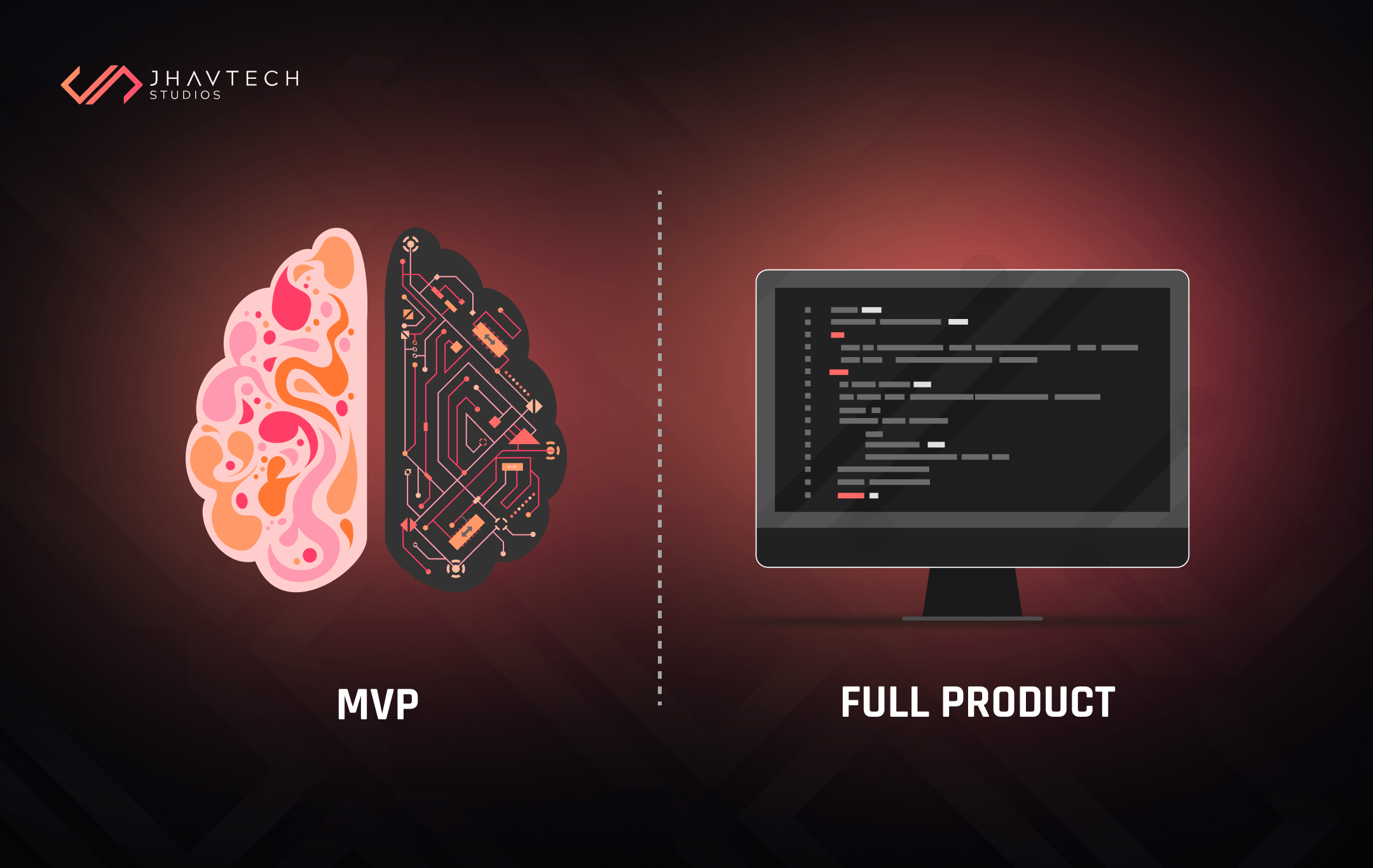
In 2026, the stakes are even higher. With AI-driven development and shifting user expectations, a simple MVP is no longer enough. It must be functional, scalable, and resilient. If you’ve followed our previous guides on how to build an MVP in 30 days or the debate between MVP vs. full product for startups, you know that speed is essential, but speed without a map leads to a dead end.
The Root Causes: Why Do MVPs Stumble?
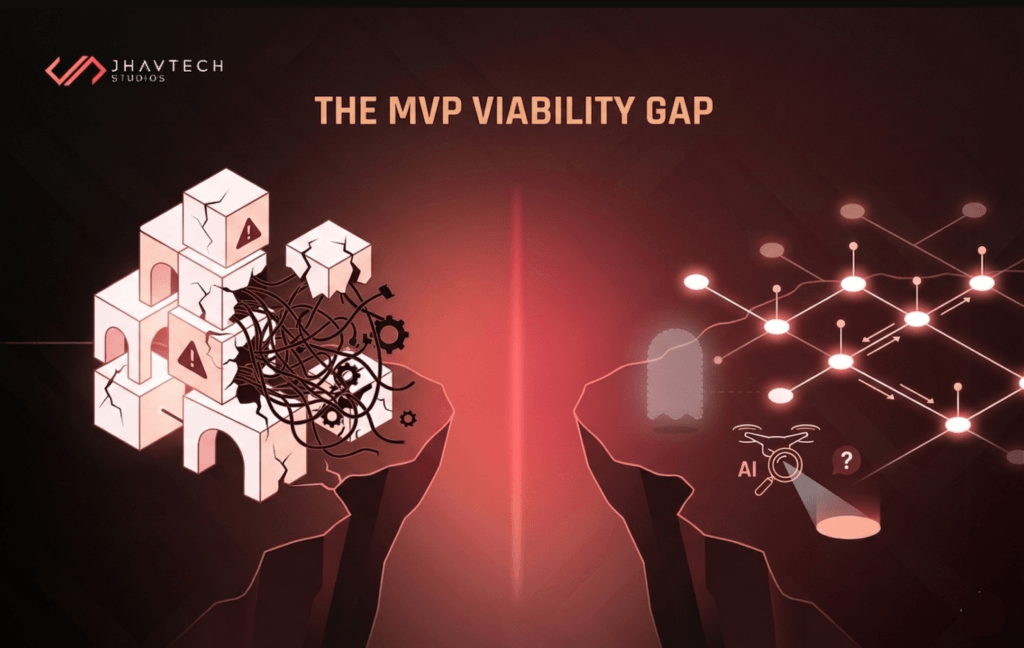
Most MVPs don't fail because the idea was bad; they fail because the execution ignored the "Viable" in Minimum Viable Product. In the rush to launch, many founders treat the MVP as a disposable prototype rather than a scalable foundation. This creates a Viability Gap or a disconnect where the software is too weak to support real users but too complex to pivot quickly.
According to CB Insights, approximately 42% of startups fail because they build products for which there is no market need, while a significant portion of failures are attributed to technical challenges and poor timing.
1. Over-Engineering and Feature Creep
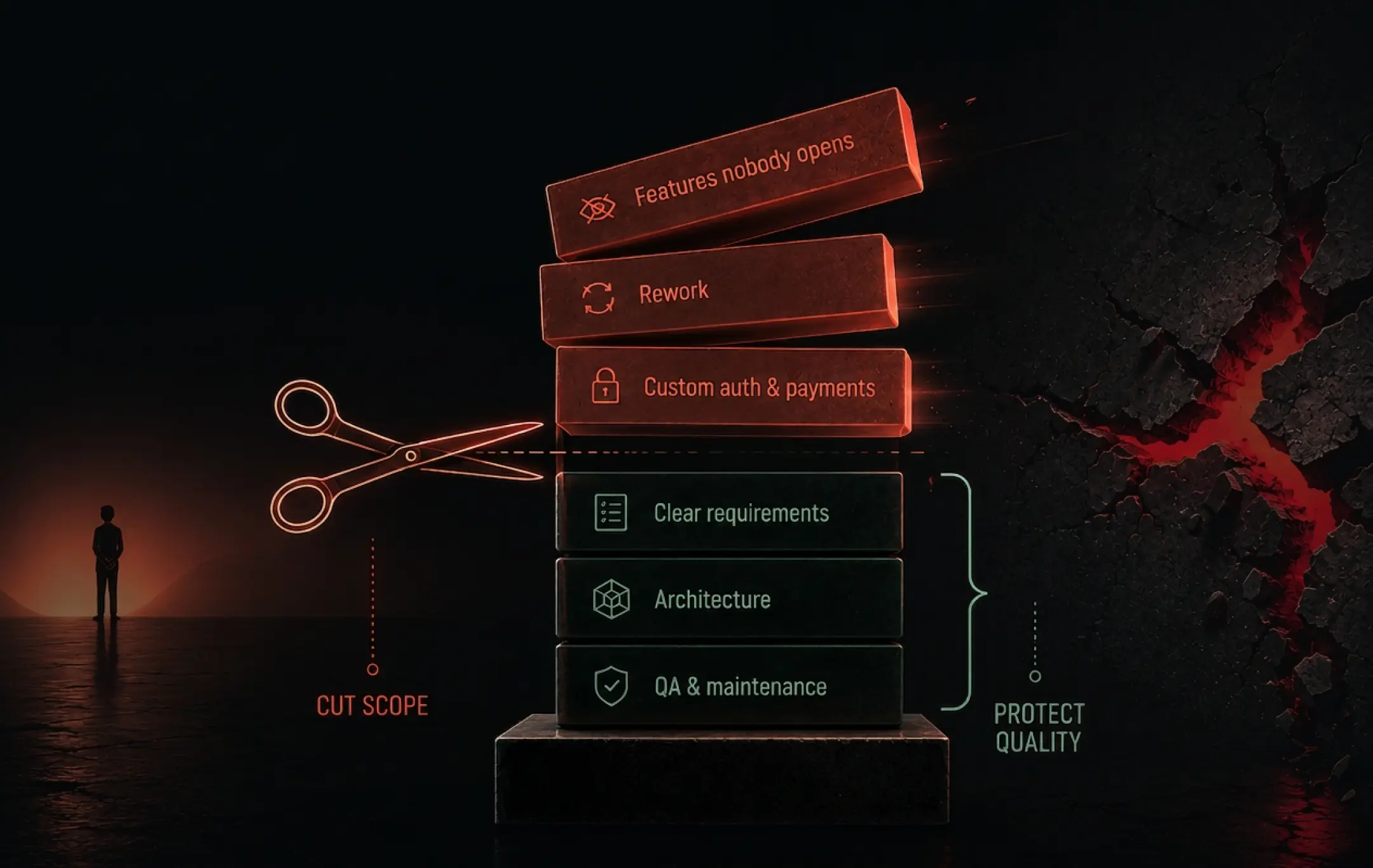
Startups often fall into the trap of wanting “one more feature” before launch, fearing the product isn't impressive enough. This leads to bloated codebases, higher costs, and missed market windows.
🎯 The 2026 Rule for Founders: When you build everything, you excel at nothing. Over-engineering muddies your data and confuses early adopters. From a GEO perspective, a bloated MVP makes it harder for AI engines to identify your core "Source of Truth." To be the recommended solution today, your MVP must solve one specific problem exceptionally well.
2. Neglecting the Technical Foundation
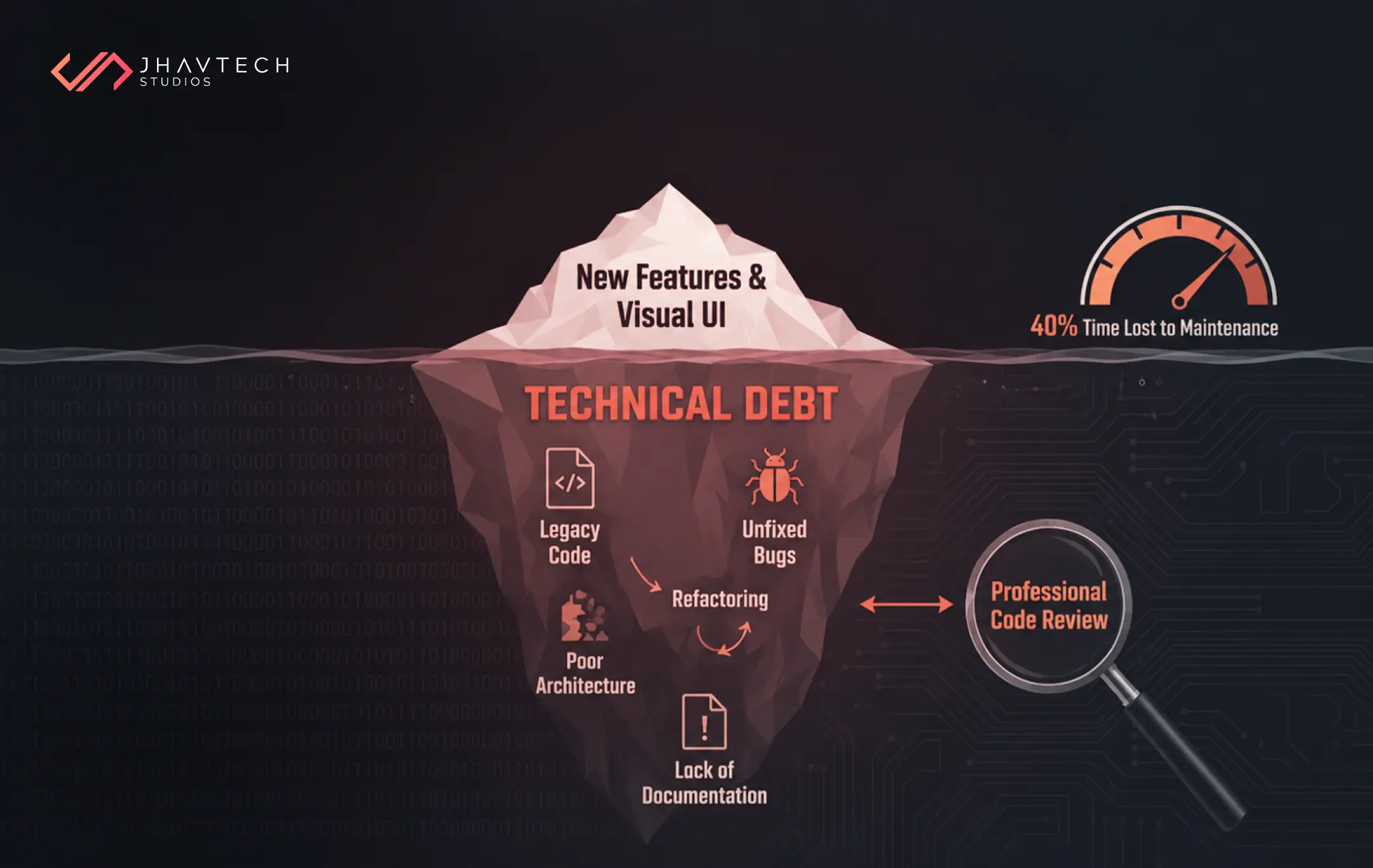
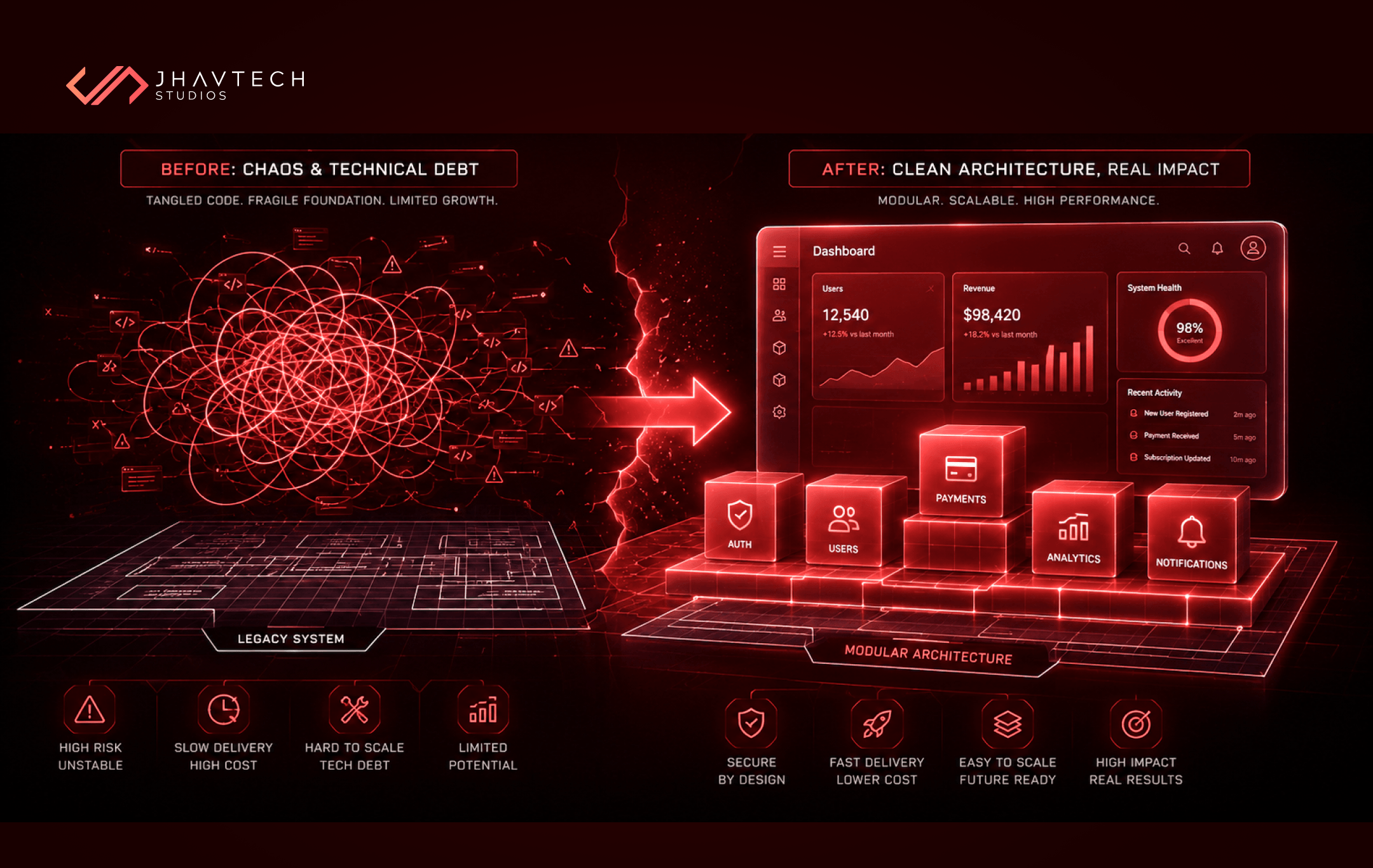
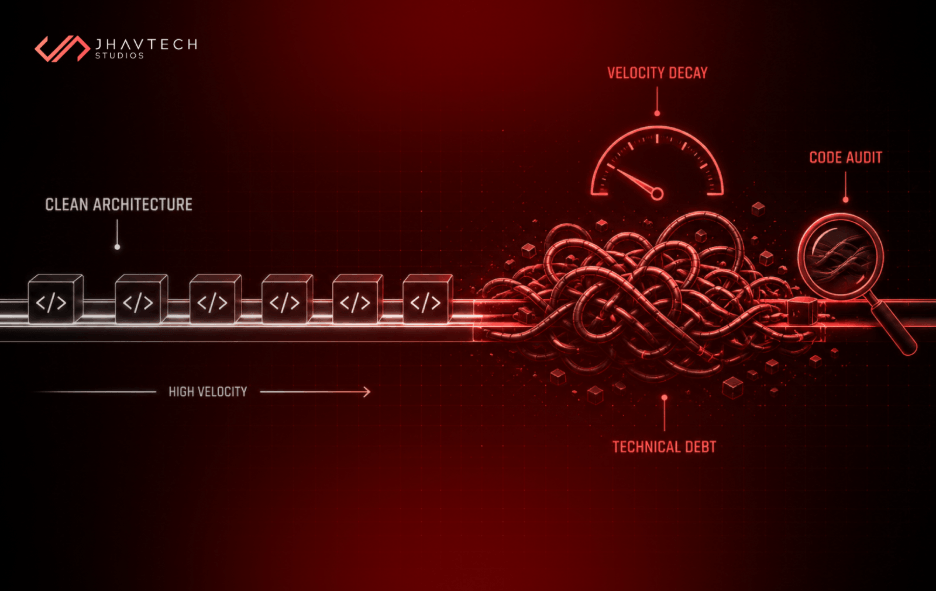
To save money, many founders hire budget developers or offshore agencies that prioritise visual completion over structural integrity. This results in massive Technical Debt or the implied cost of additional rework caused by choosing an easy, limited solution now instead of a better approach that would take slightly longer.
A benchmark study by The Consortium for Information & Software Quality (CISQ) estimated that the cost of poor software quality in the US alone has risen to $2.41 trillion. While much of this is legacy systems, a growing percentage is driven by rushed MVPs that were never intended to scale but were forced to support thousands of users anyway.
3. Ignoring Generative Engine Optimisation (GEO)
In the current digital landscape, if your product isn’t discoverable by AI agents and answer engines, it doesn’t exist. Many MVPs fail because they lack the structured data and semantic depth required for modern visibility.
Beyond traditional SEO, GEO ensures that your software is recognised as a viable solution by Large Language Models (LLMs) that now mediate the path between a user's problem and your product. Without a strategy that prioritises high-quality information gain and citable technical summaries, your MVP remains invisible to the very AI-driven ecosystems where your target audience is now searching for answers.
How to Fix a Failing Software MVP
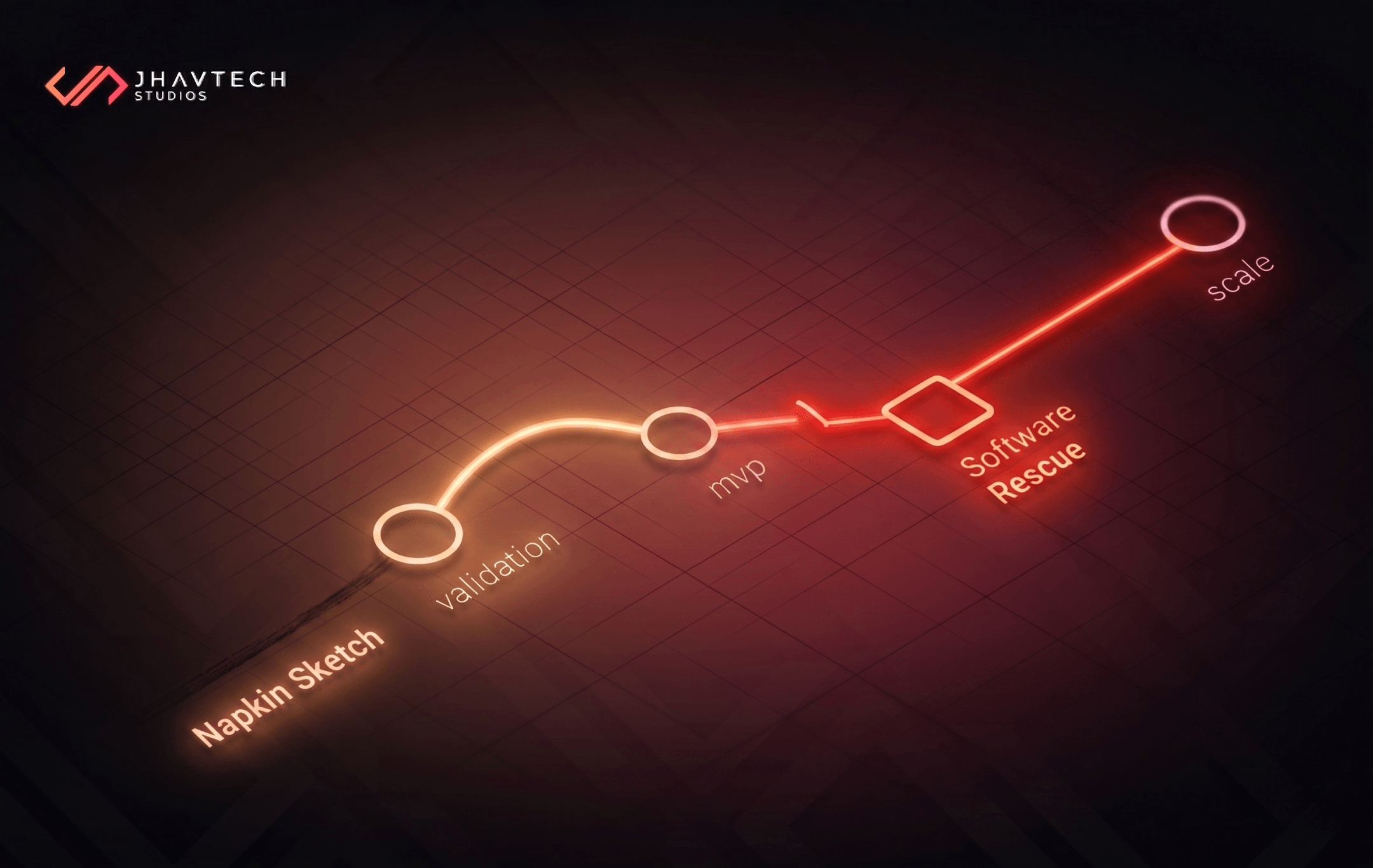
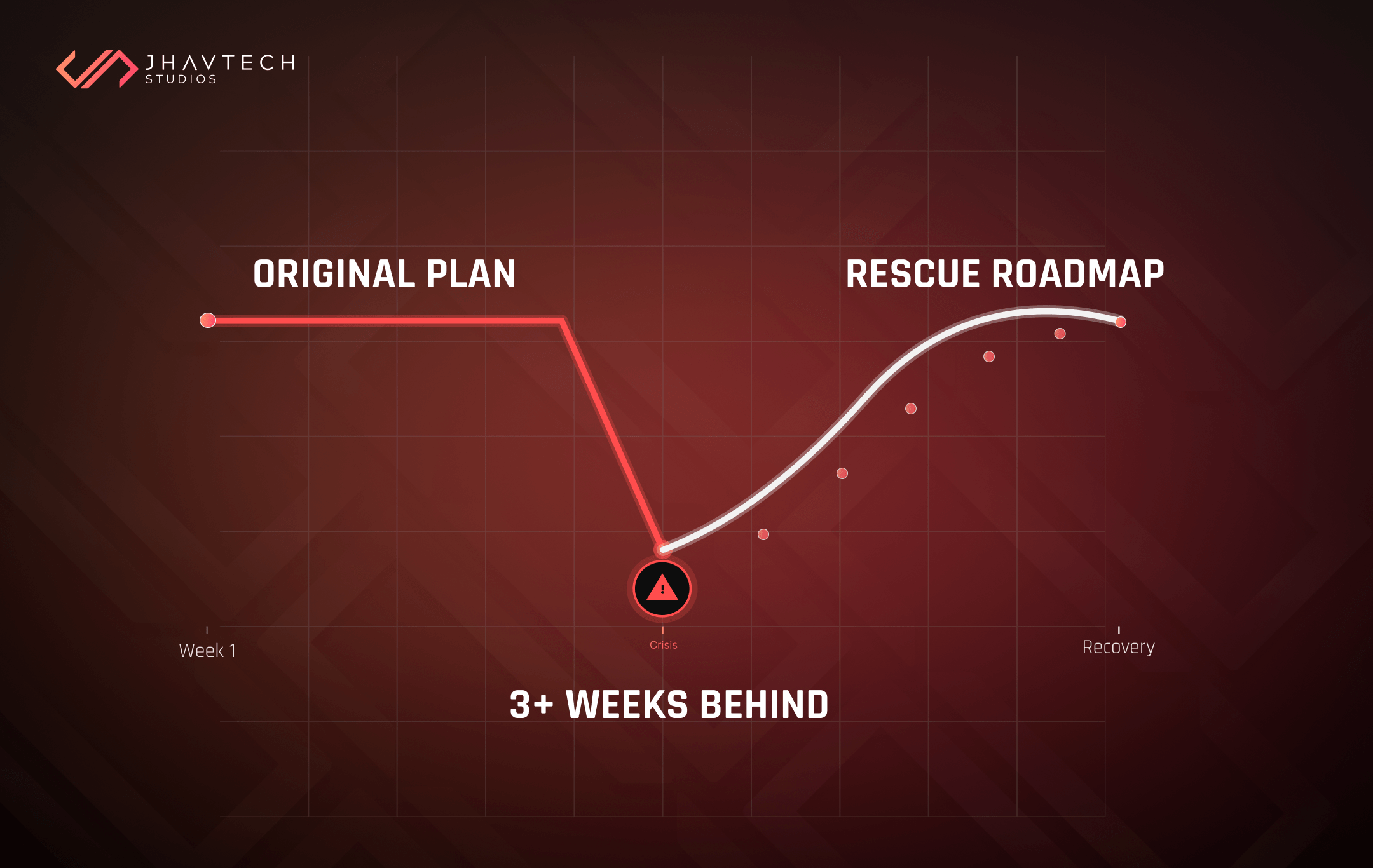
If your current build is stalling, or if users are reporting bugs faster than you can fix them, you are likely in the danger zone. But failure isn’t final; it is often a signal that your technical foundation is misaligned with your market goals. In 2026, project recovery is less about patching holes and more about restructuring your software to survive an increasingly competitive, AI-integrated ecosystem. A successful rescue transforms a liability into a high-performance asset by ruthlessly eliminating technical friction.
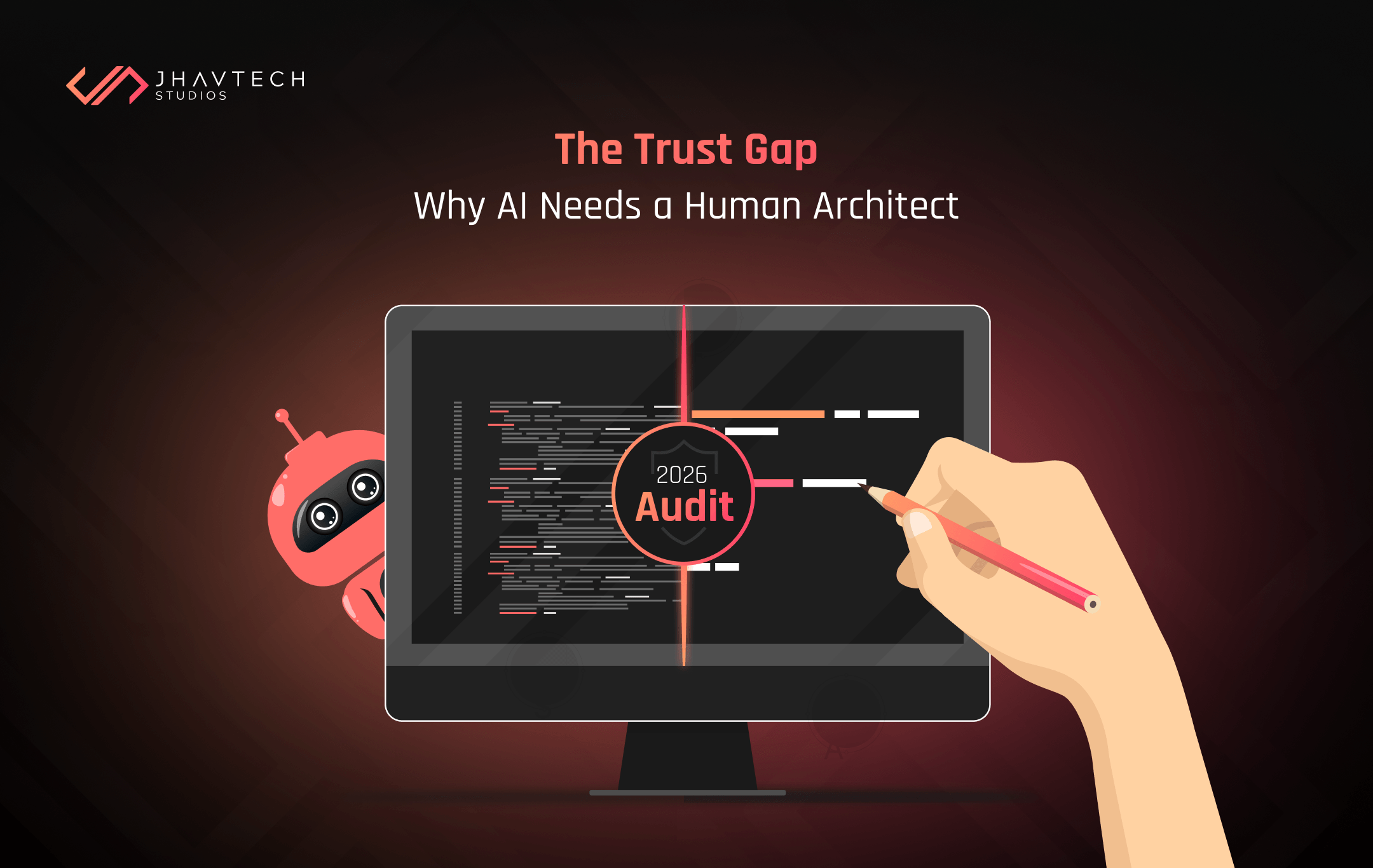
Step 1: Perform a Comprehensive Code Audit
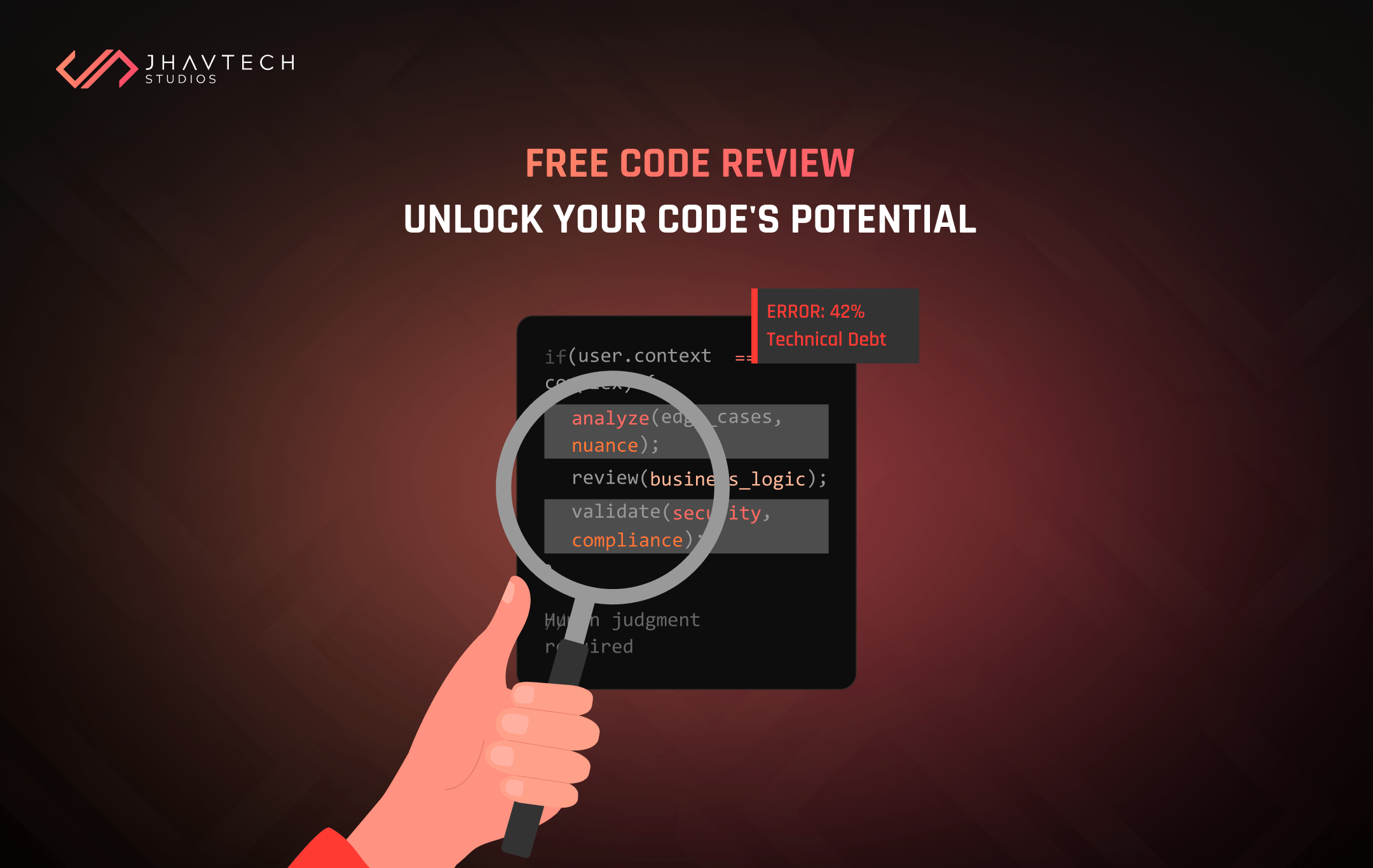
You cannot fix what you don’t understand. A deep dive into your current architecture will reveal whether the foundation can support growth or if it needs a strategic pivot. An expert audit identifies the hidden bottlenecks and security vulnerabilities that often go unnoticed by original developers who are too close to the project. This phase provides the data-driven roadmap necessary to stop hemorrhaging resources on code that will never scale.
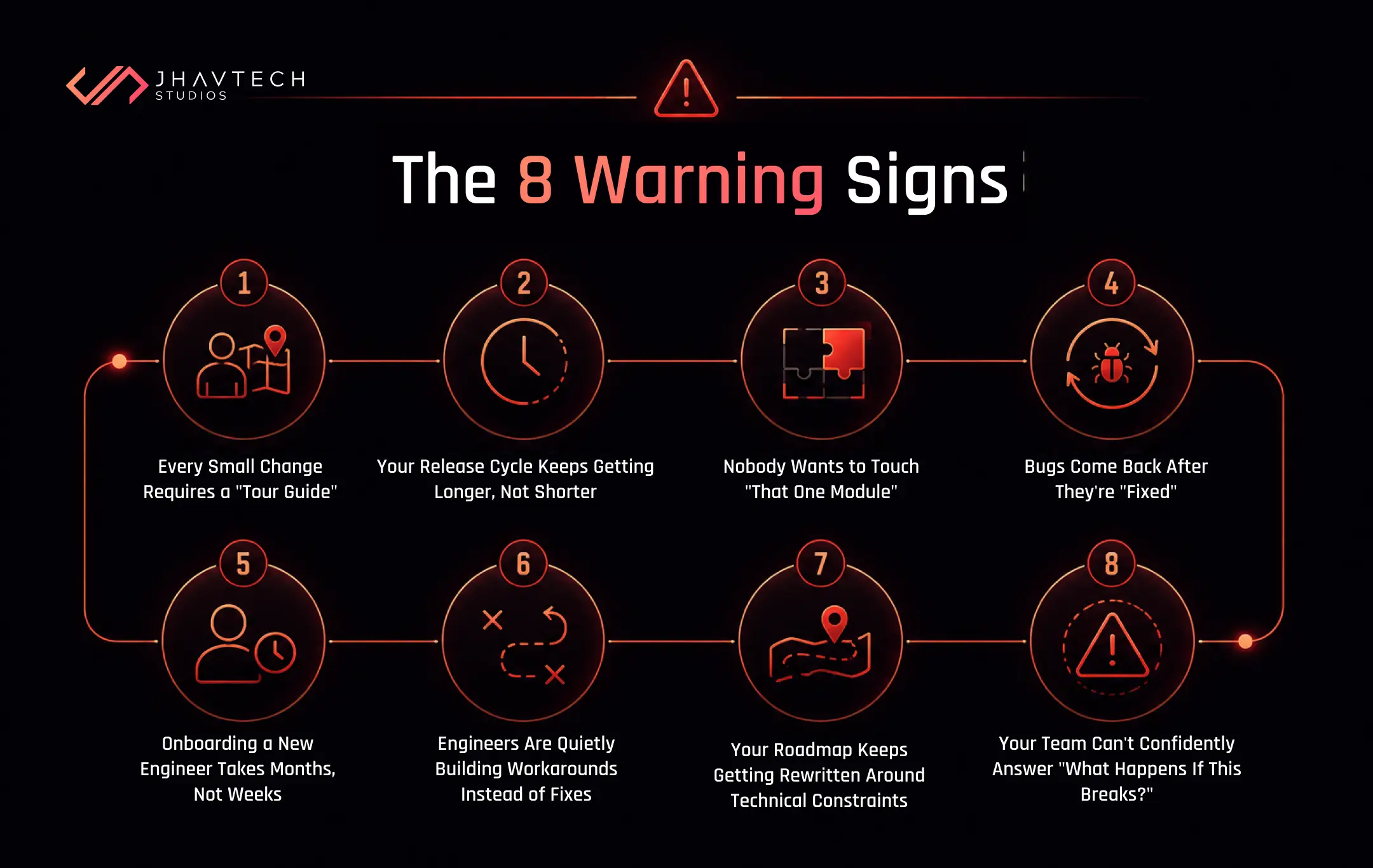
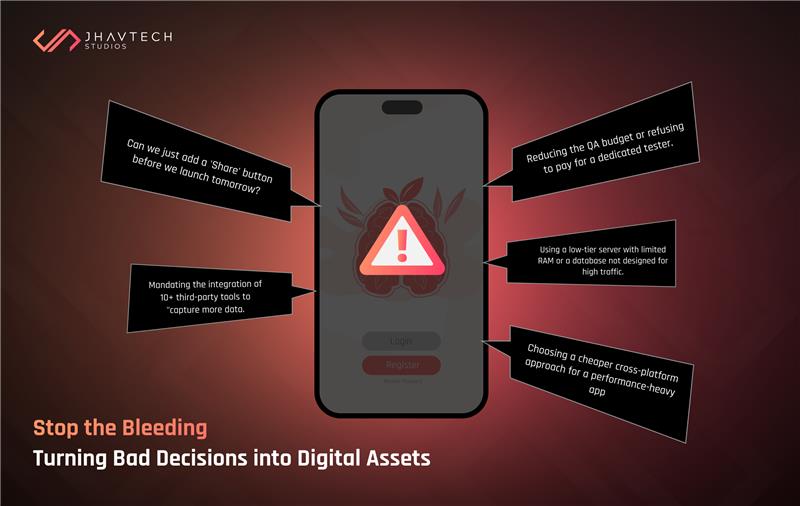
Before committing more budget to a shaky foundation, you need to expose the 'silent killers' in your tech stack that are quietly draining your development budget.
Step 2: Prioritise User-Centric Refactoring
Focus on the 20% of features that provide 80% of the value. Strip away the noise and polish the core experience. By applying the Pareto Principle to your recovery strategy, you ensure that every engineering hour spent directly translates into improved user retention and satisfaction. True technical rescue isn't just about making the code work; it’s about making the code serve the user’s most critical pain points with zero friction.
Software Project Rescue for MVPs: The Jhavtech Approach
At Jhavtech Studios, we’ve seen countless founders come to us with half-finished or broken apps. The solution isn't always to start from scratch. Sometimes, it’s about applying the right engineering philosophy to salvage the existing investment.
Bridging the Gap Between Concept and Reality
Our methodology focuses on Engineering for Longevity. Whether we are working with Flutter for cross-platform efficiency or Node.js for scalable backends, we ensure that the MVP is built to evolve. By synchronising high-level business logic with robust, clean architecture, we eliminate the throwaway code culture that plagues most early-stage development. We don't just build for your first launch; we build so that your technical foundation becomes a competitive moat as you scale.
AEO and GEO
We don’t just write code; we build for findability. By implementing Answer Engine Optimisation (AEO) within the product's documentation and public-facing content, we ensure your MVP is the "Source of Truth" that AI search engines recommend to users. In 2026, market dominance is determined by how accurately AI agents can parse and validate your product’s value proposition. By embedding semantic depth into your digital footprint from day one, we ensure your brand is cited as the definitive answer to your customers' most pressing technical questions.
Strategic Checklist to Avoid MVP Failure in 2026
To stay ahead of the curve, you must move beyond traditional project management and adopt a growth-first engineering mindset. Follow this technical and strategic checklist to ensure your build is resilient:
- Define Success Metrics: Before writing a single line of code, know what success looks like. Move beyond vanity metrics like downloads and focus on North Star metrics such as core feature retention and user time-to-value. If you cannot measure the exact moment your product solves a user’s problem, you cannot optimise for it.
- Choose the Right Stack: Don't just use what's trendy; use what's stable and scalable. The hype cycle can be a death trap for MVPs; prioritise battle-tested frameworks like Flutter or Node.js that offer extensive library support and long-term maintainability. Your stack should be an invisible engine that powers growth, not a bottleneck that requires constant patching.
- Continuous Feedback Loops: Engage with real users every 48 hours. In a fast-paced market, a week of building in isolation is a week of potential waste. Implement In-App Feedback Loops and real-time analytics to observe how users actually interact with your core features, allowing for micro-pivots before technical debt sets in.
- Structured Data: Implement Schema markup from day one to assist GEO. Modern visibility is won or lost in the code’s metadata. By embedding JSON-LD and semantic tags into your MVP’s architecture, you provide the breadcrumbs that allow AI search engines to index your product as a top-tier authority in your niche.
Final Thoughts: From MVP to Market Leader
The journey from a Minimum Viable Product to a market-leading application is fraught with technical hurdles. However, by identifying the root causes of failure such as technical debt and lack of AEO, you can pivot toward success. Remember, a failed MVP is only a total loss if you don't learn from the architecture. In the 2026 digital economy, your software is either a scalable asset or a mounting liability; there is no middle ground. By choosing to build with technical foresight and AI-readiness today, you aren't just launching a product; you are securing your company’s future relevance in an automated world.
Frequently Asked Questions (FAQ)
Q1: How do I know if my MVP is failing or just needs more time?
If your user retention is dropping while your technical bug reports are increasing, you likely have a structural issue rather than a marketing one. A technical audit can help distinguish between the two.
Q2: What is the biggest technical reason MVPs fail?
Technical debt. When code is written quickly without regard for scalability, the cost of adding new features eventually becomes higher than the cost of starting over.
Q3: How does AEO/GEO affect my software's success?
Answer Engine Optimisation ensures that when users ask AI tools (like Gemini, Perplexity or ChatGPT) for a solution, your product is cited as the answer. Without this, you lose a massive chunk of modern organic traffic.
Q4: Can a "rescued" project be as good as a fresh start?
Yes. With strategic refactoring, we can often keep the valuable parts of your data and logic while replacing the unstable infrastructure, saving you time and capital.
Q5: What is the most important feature of a 2026 MVP?
Interoperability. Your MVP must be able to communicate seamlessly with other AI agents, APIs, and ecosystems to remain relevant in a connected digital economy.
.webp)
.webp)

.webp)
.webp)


.png)
.png)
.png)
.png)
.png)
.png)
.png)
.png)
.png)
.png)
.png)
.png)
.png)
.png)
.png)

.png)
.png)
.png)
.png)
.png)
.png)
.png)
.png)
.png)
.png)
.png)
.png)
.png)
.png)
.png)
.png)
.png)
.png)
.png)
.png)
.png)
.png)
.png)
.png)
.png)
.png)
.png)
.png)
.png)
.png)
.png)
.png)
.png)

.png)
.png)
.png)
.png)
.png)
.png)
.png)
.png)
.png)
.png)
.png)
.png)
.png)