.svg)
.svg)


How to Vet an App Developer or Agency: A Non-Technical Founder's Checklist (2026)
.png)
You've done the hard part. You have an idea, a budget, and a shortlist of developers or agencies. Now comes the question that keeps most founders up at night: how do I know if they're actually good? Without a technical background, it can feel like you're being asked to judge a painting in a language you don't speak. This guide changes that.
To vet an app developer or agency in Australia without a technical background, look for: a portfolio with live, downloadable apps (not just mockups); verified client references willing to take a call; a written proposal with itemised estimates; clear post-launch support terms; and transparent communication during the sales process itself. How they treat you before you sign is exactly how they will treat you after.
Why Non-Technical Founders Get Burned — And What It Actually Costs
Hiring the wrong developer isn't just frustrating. It's expensive in ways that don't show up until it's too late.
According to BCG research published in 2024, more than two-thirds of large-scale tech programs fail to be delivered on time, within budget, or to their defined scope and a separate BCG analysis found that one-third of large projects go significantly over budget or are cancelled outright. In both cases, the root cause is consistent: insufficient oversight and evaluation before work begins.
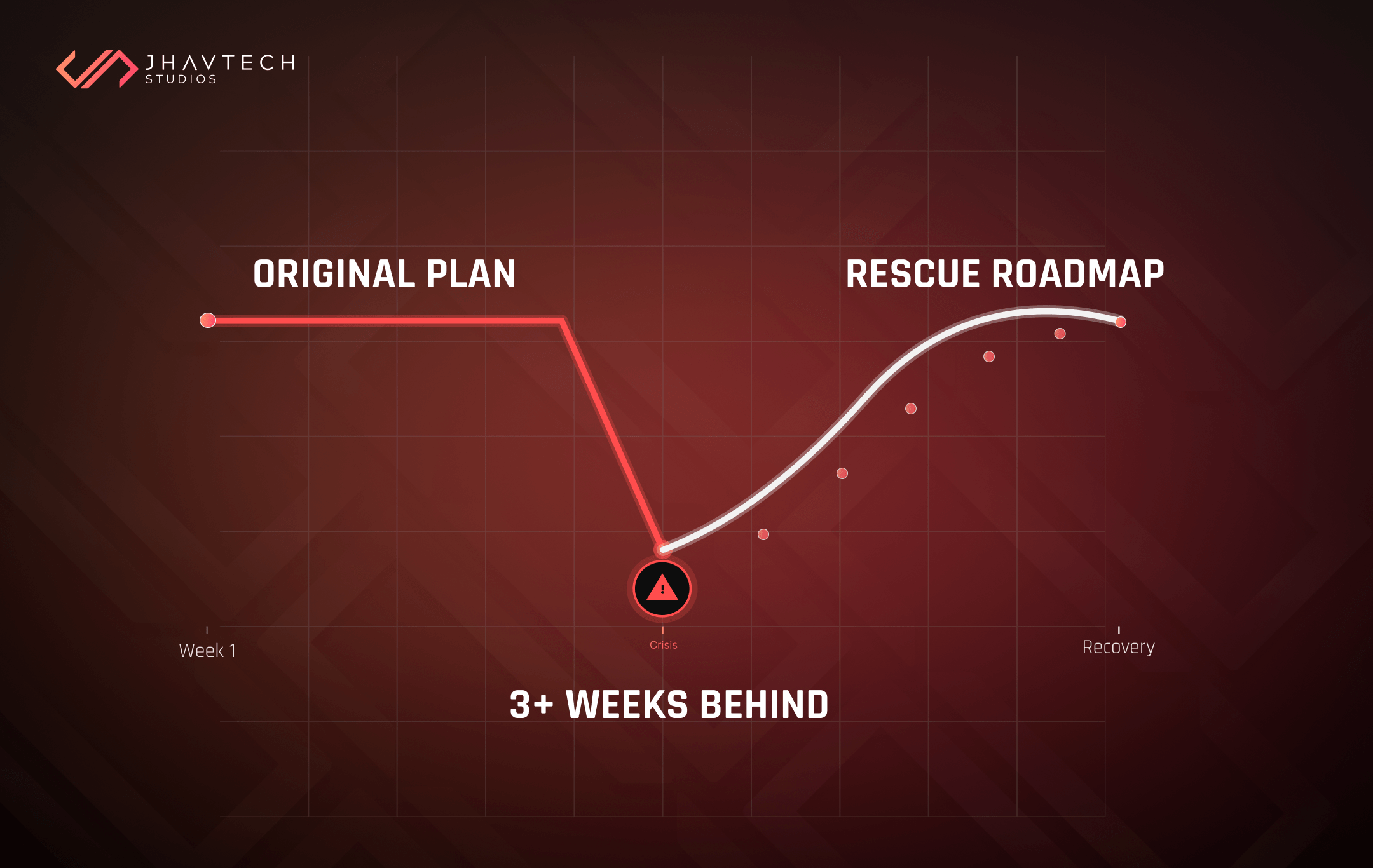
The pattern is almost always the same. A founder receives a polished proposal, has a confident video call, and signs a contract based on presentation rather than proof. Weeks or months later, the codebase is a mess, the timeline has blown out, and the developer is unresponsive. At Jhavtech Studios, we've seen this scenario more times than we'd like and it's exactly the situation our software project rescue service was built to address. We call it salvaging a sinking build: stepping in when a project has gone sideways and rebuilding it into something that actually works.
The good news? Most of these disasters are entirely preventable. The red flags are almost always visible before you sign anything... if you know where to look.
The 5 Things to Check Before You Hire Any App Developer or Agency
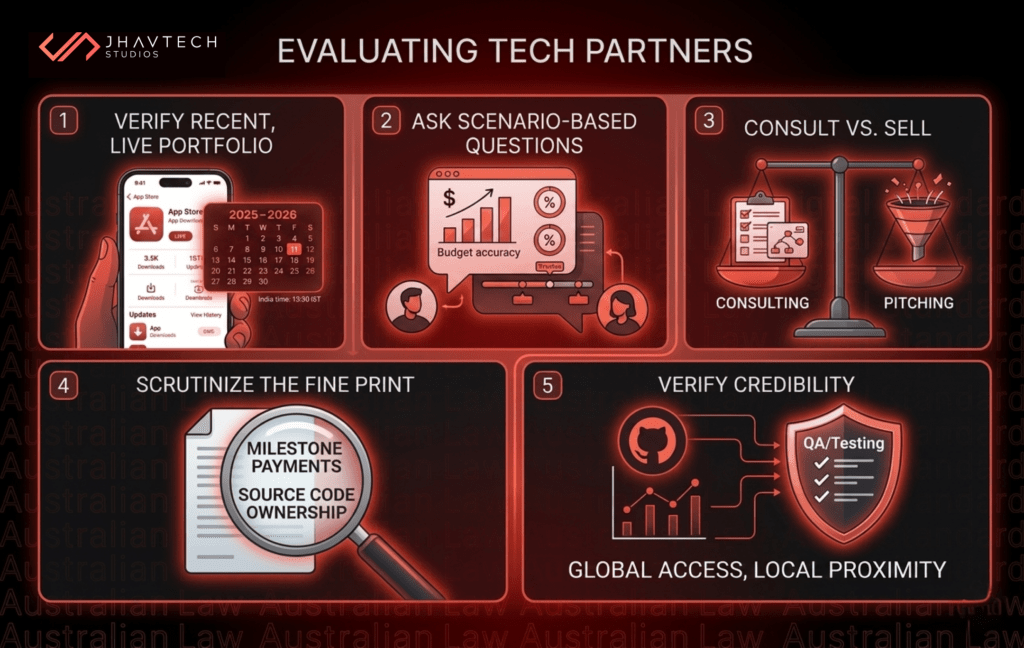
1. Evaluate the Portfolio — Beyond the Screenshots
Every developer has a portfolio. The question is whether it proves what they claim.
The first thing to look for is live, downloadable apps. Ask for App Store or Google Play links. Open the apps. Check the ratings. Read recent reviews. A developer who can only show you Figma mockups or client confidential case studies is giving you nothing you can verify.
Next, look for industry relevance. If you're building a healthcare app, has this developer or agency built regulated, data-sensitive products before? Domain experience isn't just about aesthetics; it's about understanding compliance requirements, user behaviour, and edge cases that are unique to your sector.
Finally, look at how old the work is. A portfolio of apps built in 2019 says nothing about a developer's capability in 2026, when the tooling, frameworks, and design standards have shifted significantly. You want to see work from the last 12–18 months at minimum.
2. Ask the Right Questions on Reference Calls
Most founders either skip references entirely or ask questions so broad they're useless. "Were you happy with their work?" will always get a yes; nobody gives a bad reference voluntarily.
Instead, ask specific, scenario-based questions:
- "Was the final cost within 20% of the original estimate?" This surfaces whether the developer scopes accurately or quotes low to win work.
- "How did they handle a major problem or setback mid-project?" This reveals process maturity and communication under pressure.
- "Did they explain technical decisions in plain English?" This tells you whether they're equipped to work with a non-technical founder.
- "Would you hire them again for a larger or more complex project?" This is the most honest signal of all.
If a developer or agency cannot provide two or three references willing to take an actual phone call, that is a significant red flag. Email testimonials on their own website prove nothing.
3. Read the Discovery Call as a Signal
The way a developer or agency behaves during the sales process is the clearest preview of how they will behave during the actual project. Pay close attention.
Green flags: They ask about your users before they ask about your features. They push back on unrealistic timelines or scope. They admit when something is outside their expertise. They provide a clear agenda for the call in advance.
Red flags: They promise everything and never say no. They give you a price within minutes of hearing your idea. They talk mostly about their own capabilities rather than your problem. They use technical jargon without checking for comprehension.
A trustworthy development partner at this stage doesn't just sell — they consult. If the discovery call feels like a pitch rather than a conversation, that instinct is worth trusting.
4. Scrutinise the Proposal — Line by Line
A good proposal is not a one-page summary with a total price at the bottom. It is a structured document that breaks the project into phases, lists deliverables for each phase, assigns time estimates per task, and specifies what is and is not included in scope.
Specifically, check for:
- Itemised estimates (design, development, QA, project management listed separately)
- Milestone-based payment terms (not 50% upfront, 50% on delivery — that structure leaves you with no leverage)
- A defined revision and change-request process (scope creep is the #1 cause of budget overruns)
- Explicit ownership clauses (you should own the source code from day one, not upon final payment)
- Post-launch support terms (what happens if a bug surfaces two weeks after launch?)
Vague proposals with large lump-sum quotes are not a pricing style... they are a warning sign.
5. Verify Technical Credibility Without Being Technical
You don't need to understand code to assess technical credibility. Here are three proxy tests that work for non-technical founders:
Ask them to recommend a tech stack and explain why. A skilled developer will walk you through the options, explain the trade-offs, and make a recommendation based on your specific needs and not their preferred tools. An under-skilled or dishonest developer will name a stack without context. For reference, if you're building a cross-platform app, asking whether Flutter or React Native better suits your product is a legitimate test question. The answer should be nuanced, not instant.
Ask about testing and QA process. A serious developer or agency has a defined testing protocol. If they struggle to describe it, assume it doesn't exist.
Ask about version control and documentation. Your codebase should be managed in a version control system (GitHub or Bitbucket) and properly documented. If they're not sure what you mean, walk away.
Does the Vetting Process Change for Freelancers vs Agencies?
Yes, and the differences matter.
When vetting a freelancer, your focus should be almost entirely on individual capability and availability. The key questions are: Are they working multiple projects simultaneously? What happens to your build if they're unavailable? Do they have a reliable backup process for their own infrastructure (backups, version control)? Freelancers can be exceptional for well-defined, contained work, but the thinner their team, the more your vetting needs to compensate.
When vetting an agency, your focus shifts to process and accountability. Individual developers may rotate in and out of your project; what stays constant is the agency's system. Ask how they onboard new team members mid-project, how they handle handovers, and who your escalation point is above the project manager. An agency that can't answer these questions clearly hasn't built the internal processes that justify their higher price point.
For a deeper look at how these two models compare on cost, scalability, and risk, our post on choosing between a freelancer and a development agency in 2026 covers the full decision matrix.
Technical Questions Any Founder Can Ask — Without Being a Developer
You don't need a computer science degree to ask smart questions. Here is a founder-safe interview script you can use verbatim:
- "Walk me through how you'd structure the first four weeks of this project." — Reveals planning discipline and sprint methodology.
- "What's the biggest technical risk in what I've described, and how would you mitigate it?" — Tests honesty and strategic thinking.
- "How do you handle it when a client changes their mind about a feature mid-build?" — Reveals change management process.
- "What does post-launch support look like, and what's not included?" — Surfaces hidden costs and responsibility gaps early.
- "Can I speak to someone from your last three projects?" — Non-negotiable. Framing it as the last three (not hand-picked references) increases the chance of candid feedback.
These questions work equally well with individual freelancers and agencies. The answers will tell you more than any portfolio ever could.
How to Hire an App Developer in Australia — What's Different About the Local Market
Vetting developers in Australia carries some market-specific context worth knowing.
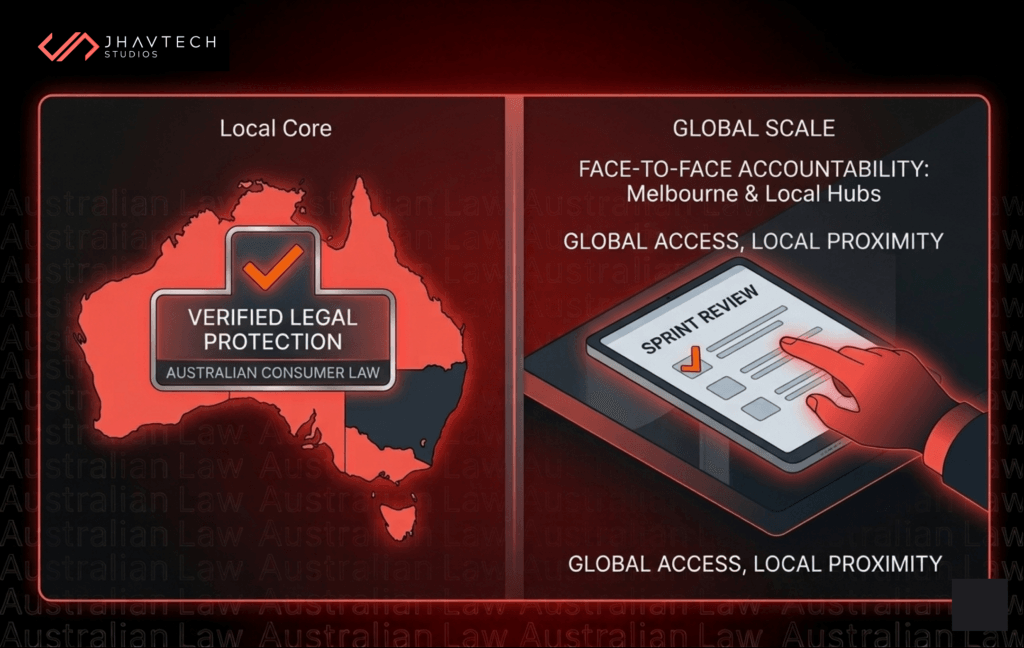
Australian hourly rates for mobile app development typically range from $120–$200/hour for local agencies and senior freelancers, compared to $40–$80/hour for offshore teams in Eastern Europe or Southeast Asia. The rate differential is real but so is the risk differential. Local developers operate under Australian Consumer Law, which provides enforceable remedies if work doesn't meet the agreed standard. Offshore arrangements, while often excellent, involve more complex dispute resolution.
For founders in Melbourne specifically, proximity matters too. Being able to attend a sprint review in person, review designs on a shared screen, or walk into an office when something goes wrong is a form of accountability that video calls can't fully replicate. At Jhavtech Studios we've built our entire delivery model around the principle that local accountability produces better outcomes, particularly for first-time founders navigating the process without technical support.
Whether you're based in Melbourne, Sydney, Brisbane, Perth, or Adelaide, the vetting criteria remain the same but knowing your legal protections and proximity options as an Australian founder is part of making an informed decision.
The Non-Technical Founder's App Developer Vetting Checklist
Use this before signing any development agreement:
Portfolio & Proof
- At least two live, downloadable apps verified in App Store or Google Play
- Work completed within the last 18 months
- Relevant industry or app-type experience
References
- Minimum two references willing to take a phone call
- References asked about budget accuracy, problem-handling, and communication
- Asked the "would you hire them again?" question
Discovery Call
- They asked about users before features
- They pushed back on at least one assumption
- No instant pricing without a proper scoping conversation
Proposal
- Itemised by phase and task, not lump-sum
- Milestone-based payment terms
- Source code ownership clause present
- Post-launch support defined in writing
Technical Signals
- Tech stack recommendation with clear reasoning
- QA/testing process described
- Version control and documentation confirmed
What Happens When You Skip the Vetting and How to Fix It
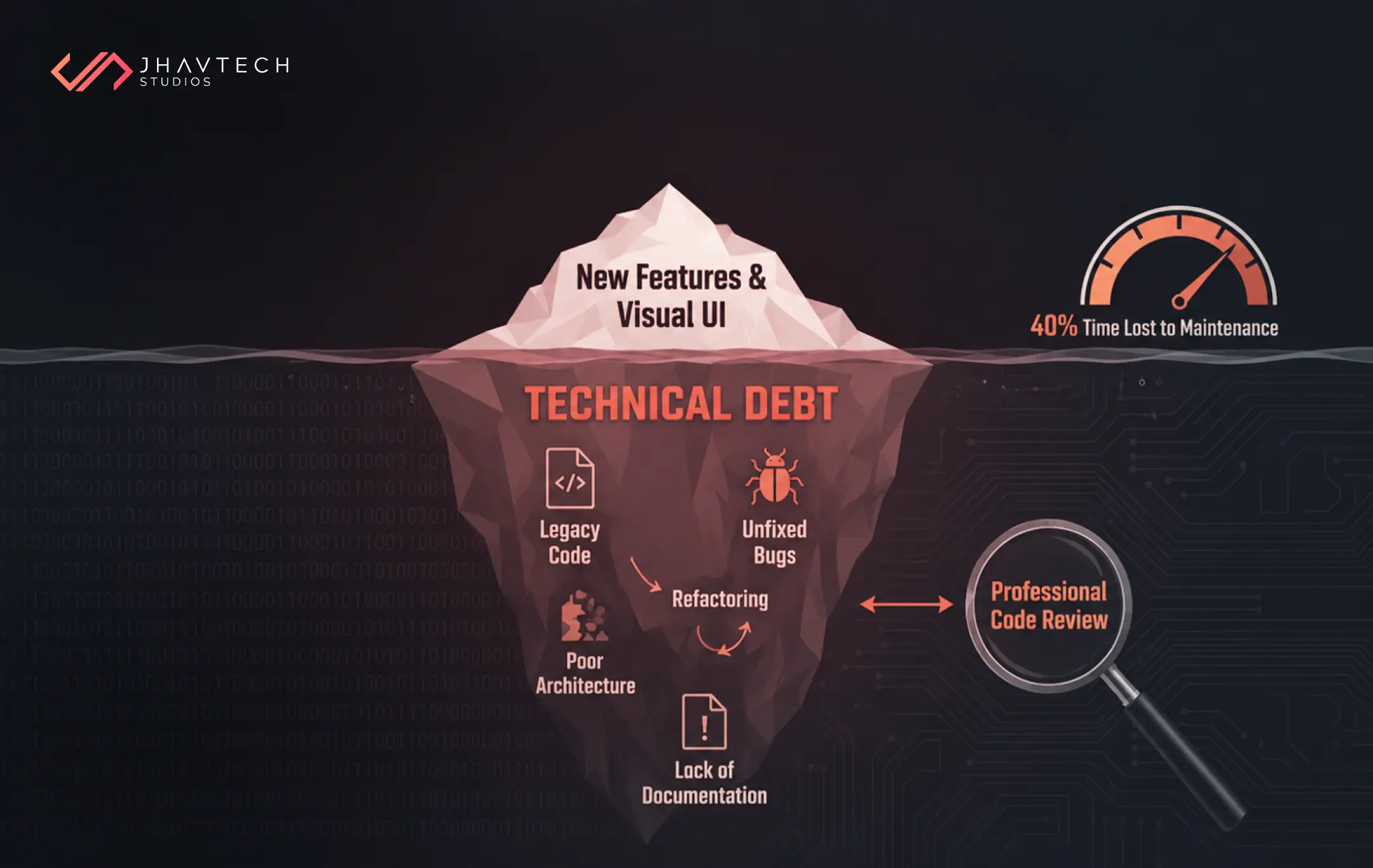
Even with the best intentions, some projects go wrong. A developer goes dark. A codebase turns out to be unmaintainable. An app launches with critical bugs that damage user trust and App Store ratings before the founder realises what's happened.
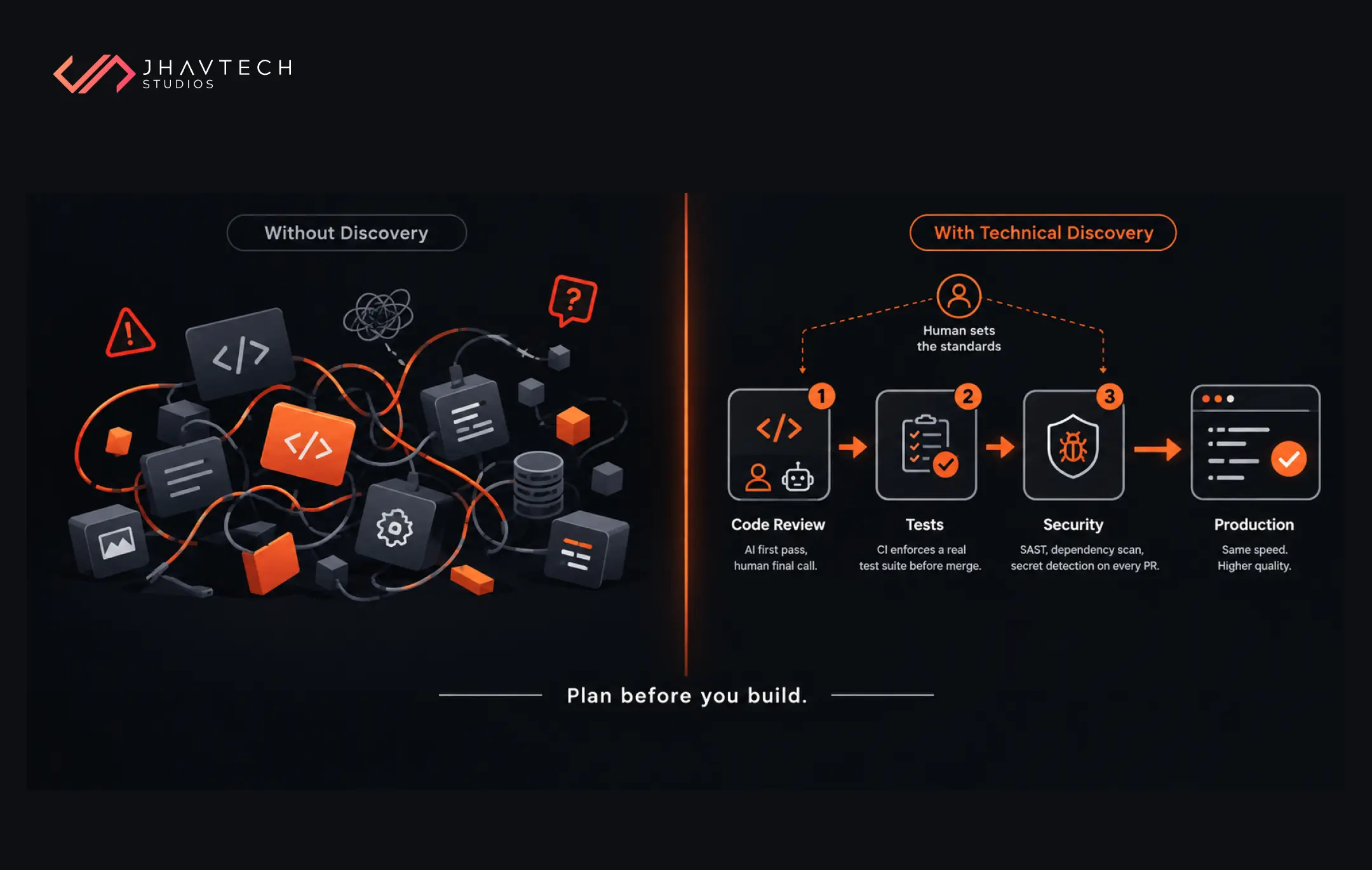
This is precisely where the concept of getting a broken build back on track becomes critical. When a project has gone sideways, the instinct is often to cut losses, but in many cases, the foundation is salvageable. What's needed is an experienced team who can audit the existing codebase, identify what's worth keeping, and rebuild on a stable architecture without starting from zero.
According to PMI's Pulse of the Profession 2020 report, 11.4% of every dollar invested in a project is wasted due to poor performance
If you're currently in a difficult project situation and need an independent expert to assess where things stand, that's a conversation worth having before sinking more budget into an uncertain build.
Frequently Asked Questions
.png)

.webp)
.webp)
.webp)
.webp)
.webp)

.webp)
.webp)

.webp)
.webp)





.png)
.png)
.png)
.png)
.png)
.png)
.png)
.png)
.png)
.png)
.png)


.png)
.png)
.png)

.png)
.png)
.png)
.png)
.png)
.png)
.png)
.png)
.png)
.png)
.png)
.png)
.png)
.png)
.png)
.png)
.png)
.png)
.png)
.png)
.png)
.png)
.png)
.png)
.png)
.png)
.png)
.png)
.png)
.png)

.png)
.png)
.png)