.svg)
.svg)


How AI Is Changing Mobile App Development in Australia
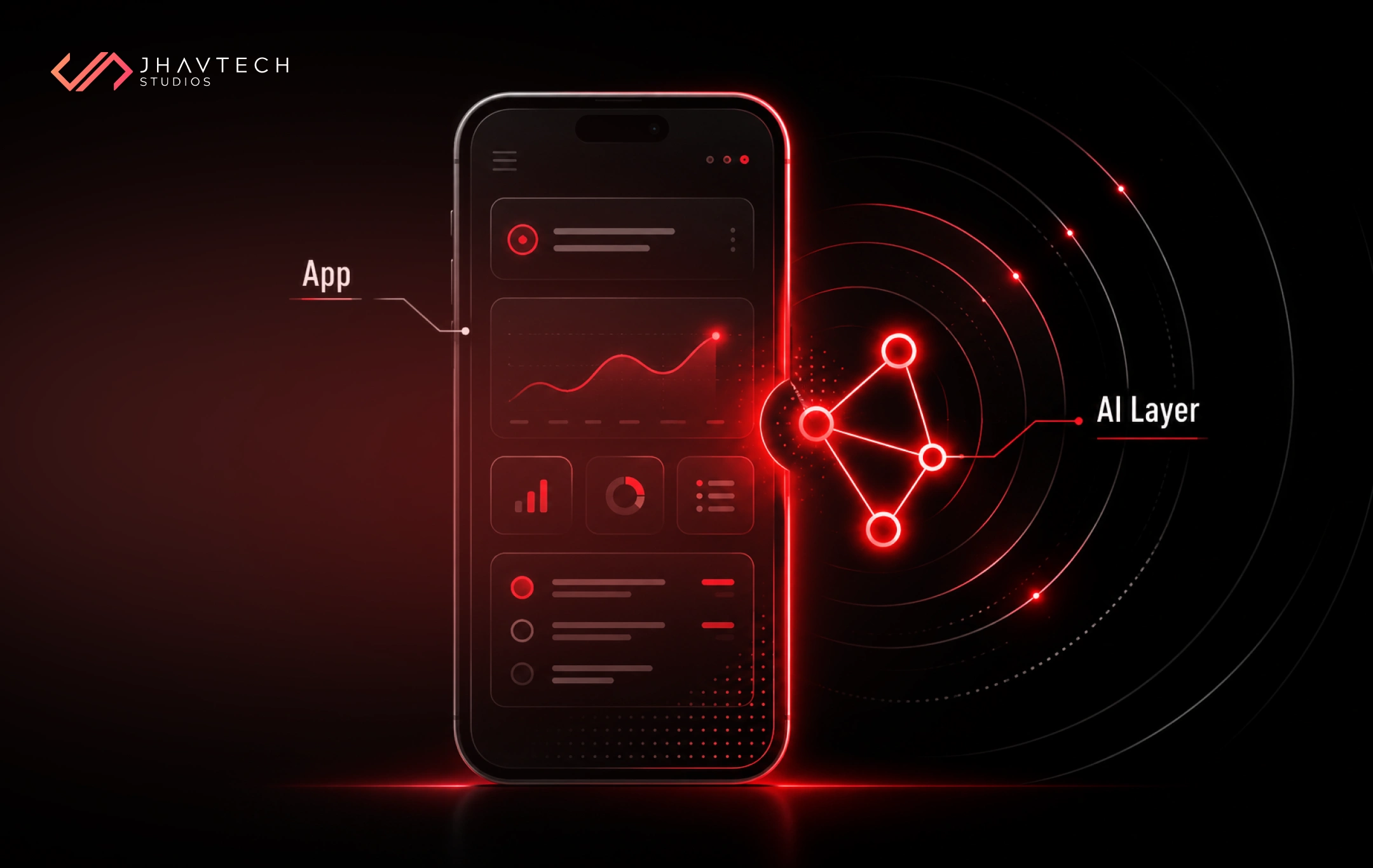
AI app development has moved from "nice to have" to default expectation for Australian startups and SMEs. This guide breaks down what's actually changing: personalisation, automation, security, and how apps get built in the first place, backed by current adoption data, real risks like AI-generated technical debt, and a practical checklist for founders deciding where to start. If you're weighing whether (and how) to bring AI into your next build, this is the no-fluff version.
If you've sat in a single product meeting in the last year, you've probably heard someone say "let's just add AI to it." Usually followed by an awkward silence, because nobody in the room can quite explain what that means in practice.
That awkwardness is the whole story of AI app development in Australia right now. Adoption is climbing fast, but most of it is happening without a clear strategy behind it. The National AI Centre's latest tracking survey puts SME AI adoption at 44% in February 2026, while separate research from Intuit found regular AI use among Australian SMEs jumped from 40% in mid-2024 to 69% by January 2026. Whichever number you trust, AI in mobile apps isn't an edge case anymore. It's becoming the baseline.
But here's what doesn't get said enough in the hype cycle: building AI-powered applications well is a different skill set to building apps the old way, and a lot of the "move fast" advice circulating right now is quietly setting founders up for expensive rebuilds. This blog covers both sides of that: the genuine opportunity and the traps that come with it.
Why This Conversation Is Happening Now
A few years ago, AI features meant a chatbot bolted onto a help page. That's not what's driving the current wave.
Three things converged at once. Large language models got cheap and reliable enough to embed directly into consumer apps rather than just power a help-desk widget. Australian businesses started feeling real cost pressure to do more with smaller teams. And AI-native coding tools changed how fast a working prototype could go from idea to app store, which changed who gets to compete.
The result is a genuinely different mobile app development landscape than the one that existed even eighteen months ago. The economic case is hard to ignore: the Tech Council of Australia's research suggests AI is already adding $21 billion annually to the Australian economy, with a projected path toward $142 billion by 2030. That said, the projection was funded by OpenAI, so it's worth treating it as directional rather than gospel.
The Adoption Numbers Are Messy, and That's Telling
If you go looking for the Australian AI adoption rate, you'll find a mess of conflicting figures, and that mess is actually informative. Depending on the source, anywhere between 37% and 68% of Australian businesses have adopted AI in some form. The gap exists because adoption means wildly different things to different surveys. Using ChatGPT occasionally and embedding AI into core operational workflows are not the same thing, but they often get counted the same way.
What's more consistent across every survey is the size gap. 82% of large enterprises have implemented at least one AI system, compared to just 33% of micro businesses. That gap isn't really about ambition. It's about access to the right technical guidance to do it properly, which is exactly where a lot of SMEs get stuck.
Where AI Is Actually Showing Up Inside Mobile Apps
Strip away the marketing language and AI tends to show up in a handful of practical ways once it actually lands inside a mobile app. If you want to see what 'done right' actually looks like, here's where the real value is landing for Australian businesses right now.
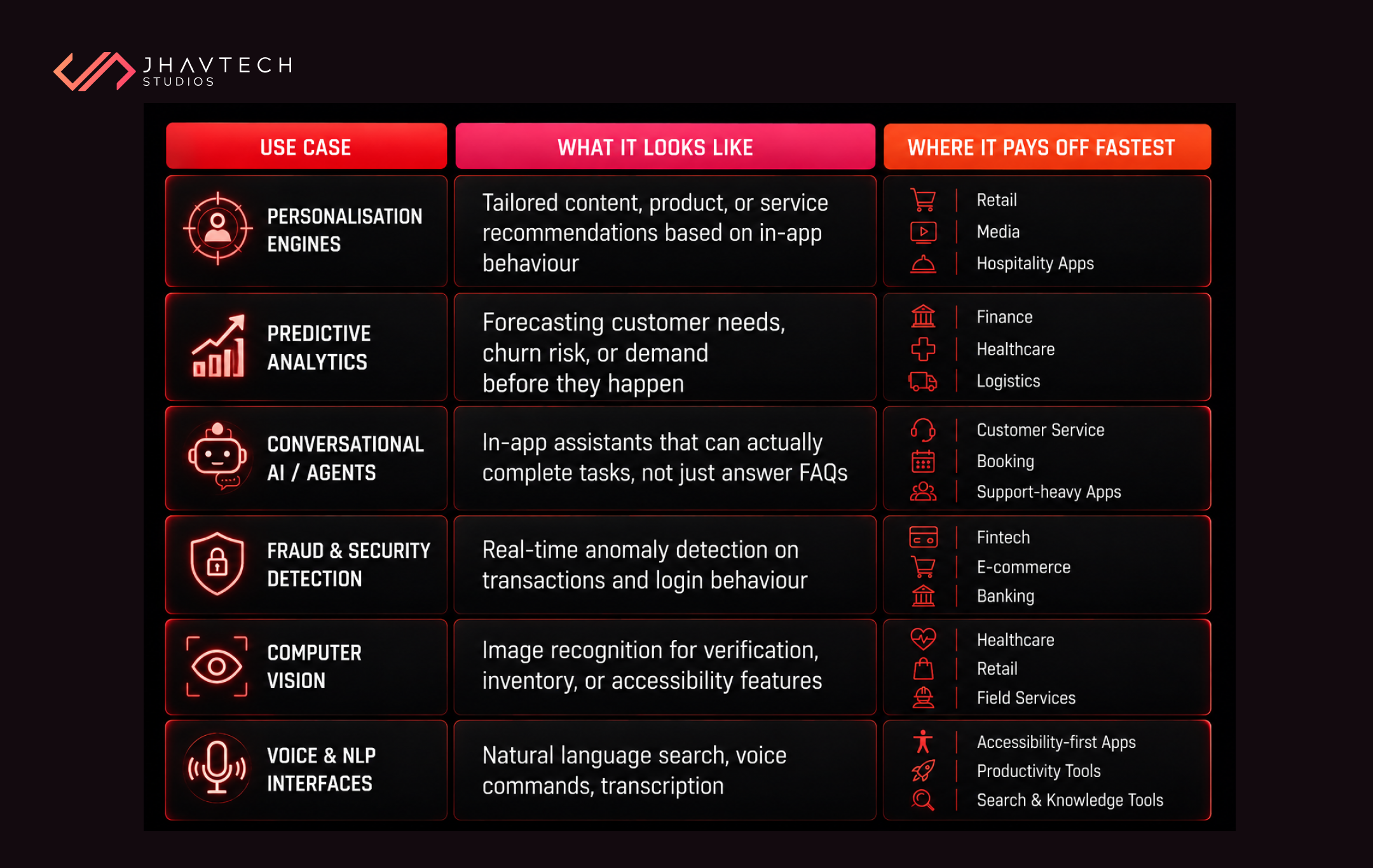
Personalisation remains the clearest commercial win. It's well documented that personalised recommendations account for a striking share of revenue at companies that do it well, a pattern Australian retail and hospitality apps are increasingly building toward, even at modest scale.
Security is the other area worth taking seriously, and not just defensively. AI-driven fraud detection is becoming standard in fintech because the payoff is measurable: industry forecasts suggest AI-based fraud prevention could save banks billions annually within the next couple of years as detection models improve. For any app handling payments or sensitive data, that's not a future roadmap feature. It's close to table stakes.
The Other Half of the Story: How Apps Get Built Is Changing Too
This is the part that gets glossed over in most "AI is transforming app development" articles, and it's arguably the more important one for decision-makers: AI isn't just a feature inside the app anymore. It's increasingly part of how the app gets coded in the first place.
Vibe coding, prompting an AI model in plain English until the output looks right, has gone from niche term to mainstream practice in under two years. It's genuinely useful for speed. It's also created a new category of risk that most non-technical founders don't see coming until it's expensive.
The Productivity Promise Is Real, But It's Not the Whole Picture
AI coding assistants do measurably speed up certain kinds of work. Early-stage developers using AI tools have been shown to complete projects significantly faster than those working without them, and citizen-development approaches, where non-engineers build functional software using AI, have demonstrated dramatically faster build times in controlled studies.
But there's a counterintuitive twist worth knowing. A randomised controlled trial by METR, an organisation that evaluates frontier AI models, found that experienced open-source developers were actually 19% slower when using AI coding tools on complex, real-world codebases, despite predicting beforehand they'd be faster, and still believing afterward that they had been. The gap between feels faster and is faster is exactly where AI app development budgets quietly go sideways.
The Risk Nobody Budgets For: Technical Debt and Security Gaps
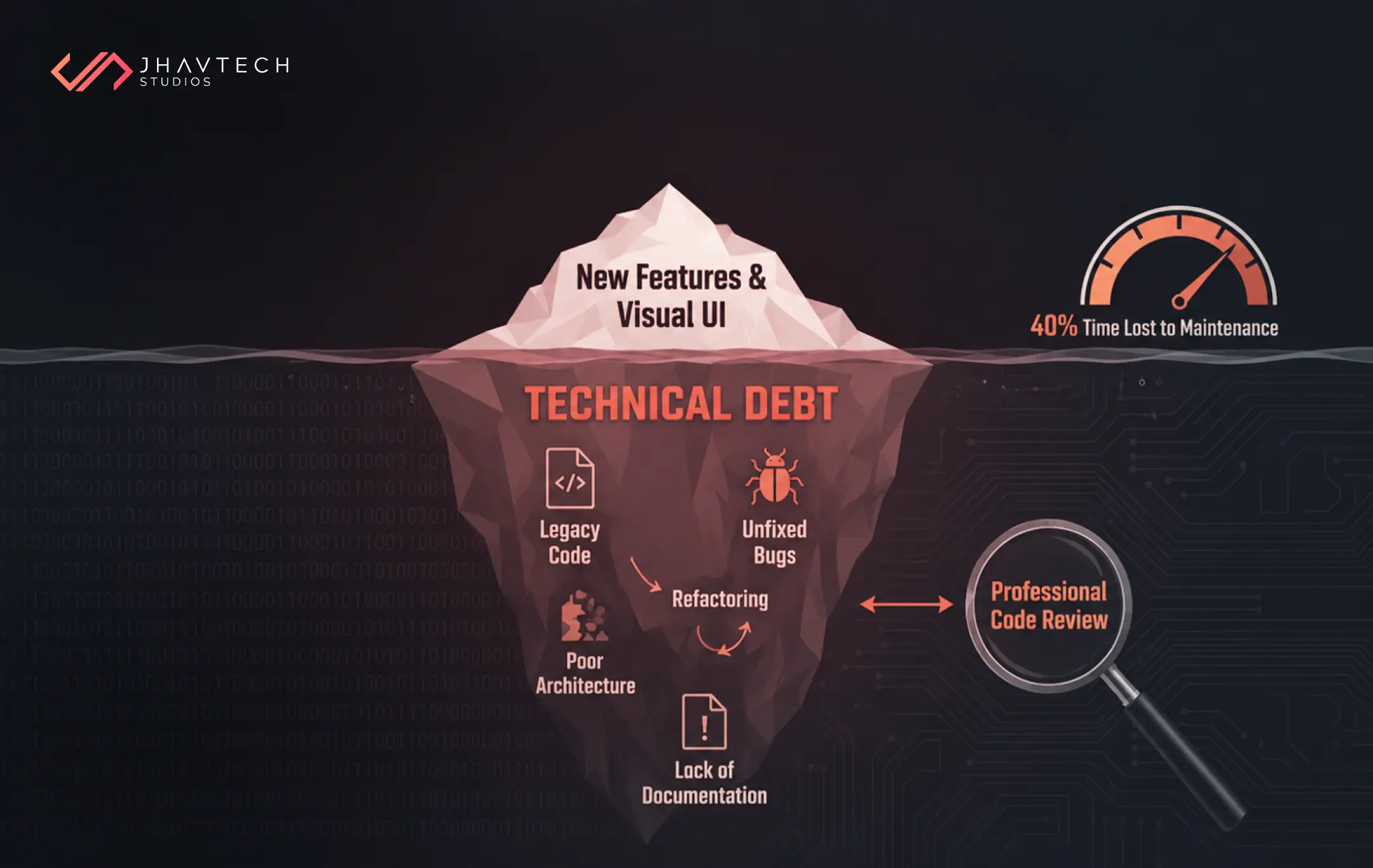
This is the uncomfortable part of the AI development strategy conversation. AI-generated code looks finished long before it actually is.
A December 2025 analysis by CodeRabbit examined 470 open-source pull requests and found that code co-authored by generative AI contained roughly 1.7 times more major issues than human-written code, with misconfigurations 75% more common and security vulnerabilities running 2.74 times higher. Separately, the 2026 Open Source Security and Risk Analysis (OSSRA) Report has tracked a sharp rise in vulnerabilities per codebase, much of it linked to AI-accelerated supply chain risks, including AI tools confidently recommending software packages that don't actually exist, which attackers have started exploiting by publishing malicious look-alikes.
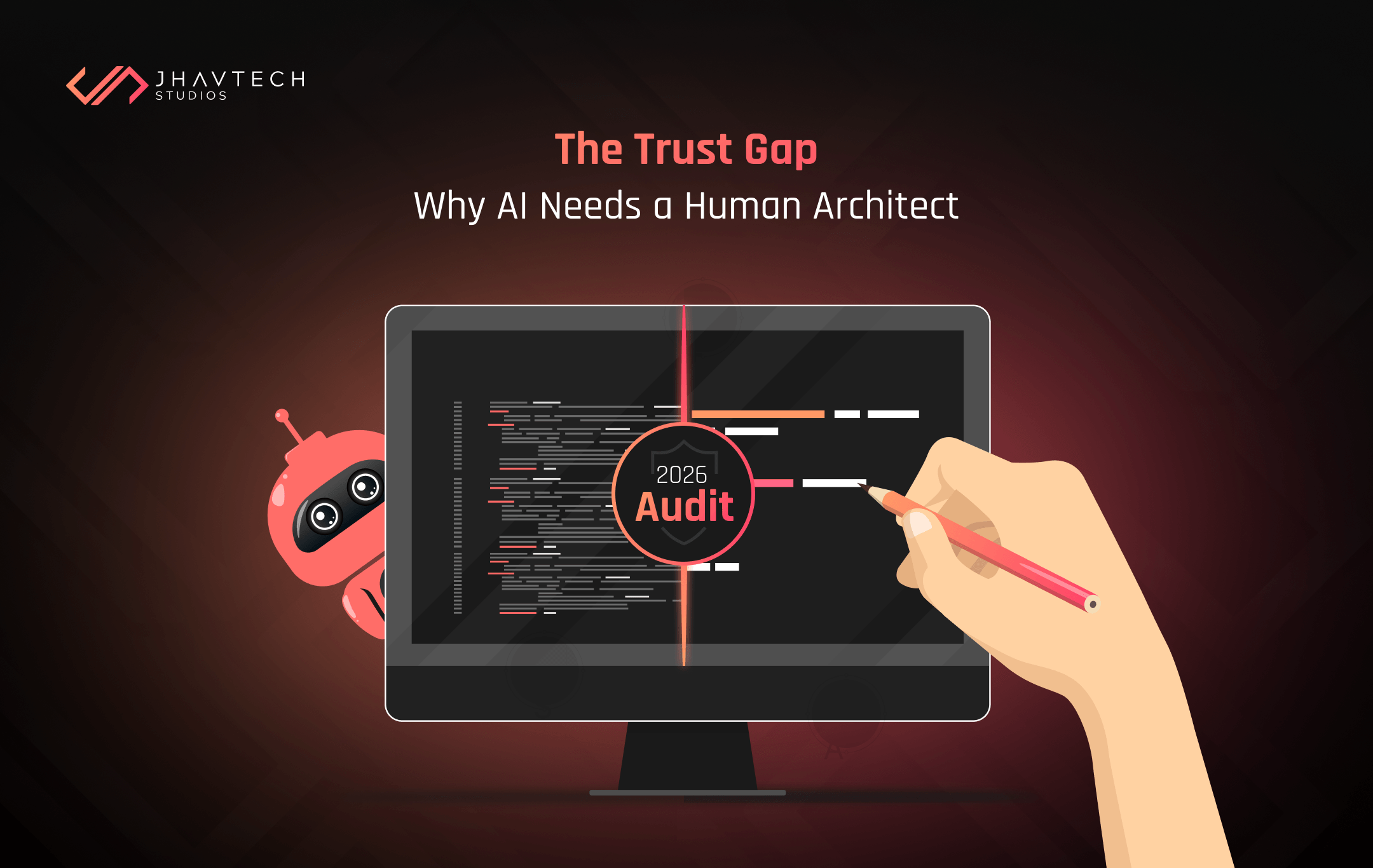
None of this means AI coding tools are bad. It means they need the same scrutiny you'd apply to any junior contributor: useful, fast, occasionally confidently wrong, and not yet trusted to ship unsupervised. We dug into exactly how this plays out in When AI Writes Code, Humans Own the Consequences, including who's legally on the hook when AI-generated code causes a breach (spoiler: it's the business that shipped it, not the AI).
A Quick Checklist: Is Your AI-Assisted Codebase Actually Production-Ready?
Before you ship anything built with significant AI assistance, run it through this:
[ ] Has a human engineer reviewed the logic, not just confirmed it runs?
[ ] Have you checked for "hallucinated" dependencies, packages that don't actually exist or are deprecated?
[ ] Is there a documented reason for each architectural decision, not just "the AI suggested it"?
[ ] Has the code been stress-tested under realistic load, not just on a local machine?
[ ] Are authentication and data-handling components specifically audited for security gaps?
[ ] Could a new developer understand why the code works this way, not just that it works?
If you answered "no" or "not sure" to more than one of these, it's worth getting a second set of eyes on it before launch. Our Free Code Review is built exactly for this gap.
AI Software Trends Australian Founders Should Actually Watch in 2026
Cutting through the noise, a few trends are genuinely shaping decisions right now rather than just generating LinkedIn posts.
Agentic AI is replacing simple chatbots. The shift from generative AI (which creates content) to agentic AI (which completes tasks autonomously) is the biggest functional change happening in app design right now. Industry analysis projects that by 2027, roughly half of enterprises using generative AI will have deployed AI agents: systems that don't just answer a question but act on it, like managing a booking end-to-end rather than describing the options.
Trust, not capability, is the real adoption barrier. This one surprises people. Among Australian SMEs not yet using AI, around 65% cite a lack of trust in AI decision-making or a preference to keep humans in control, not cost, not access. If you're building an AI-powered application for an Australian audience, visible, explainable AI behaviour isn't a nice-to-have UX detail. It's the difference between adoption and abandonment.
Industry context now matters more than general capability. Generic AI tools are giving way to models trained specifically for a sector's workflows. A healthcare app's AI needs are not a retail app's AI needs, and treating them the same is a common, costly mistake.
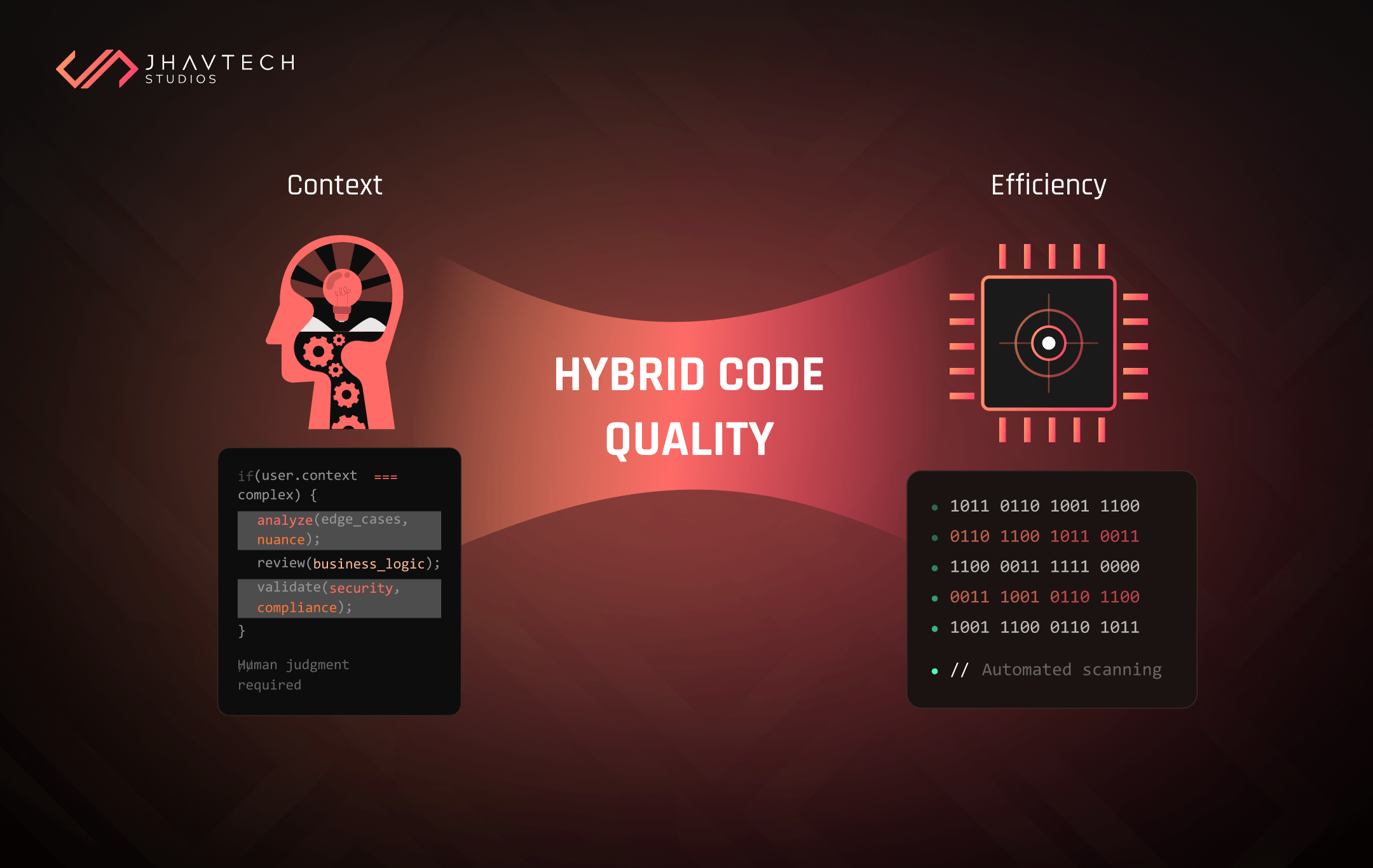
Human-in-the-loop is becoming the professional standard, not the cautious fallback. As we explored in Why AI-Written Code Breaks at Scale, the industry is actively moving away from pure automation toward structured human oversight. Not because AI isn't powerful, but because unsupervised AI-generated systems tend to be brittle in exactly the situations where reliability matters most.
AI Startup Opportunities Worth Actually Pursuing
If you're a founder weighing where to focus, the most defensible AI startup opportunities in Australia right now share a pattern: they solve a narrow, well-understood problem extremely well, rather than trying to be an AI app in the abstract.
A few patterns standing out:
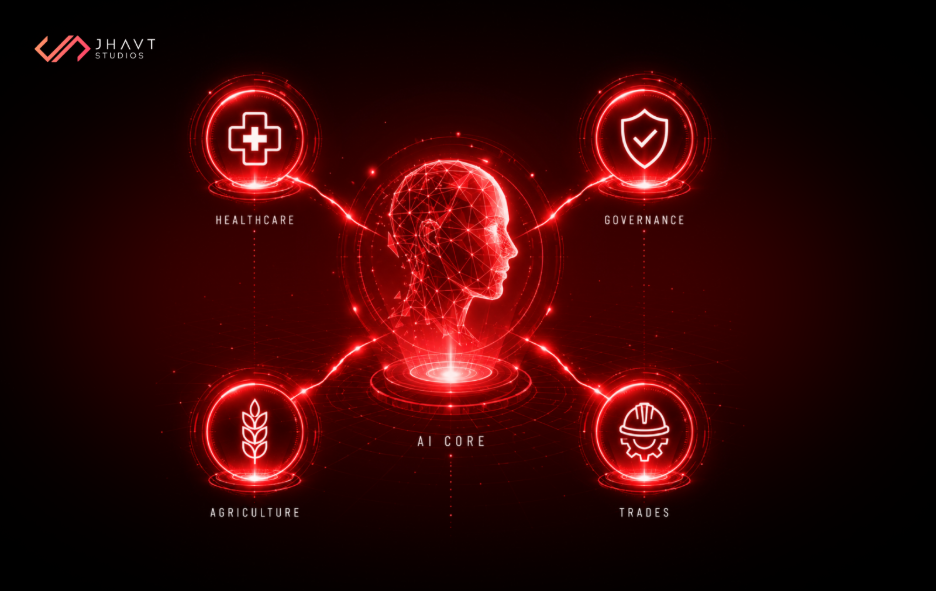
- Vertical-specific AI tools for industries the big platforms ignore: regional agriculture, trades, allied health, aged care logistics.
- Compliance-aware AI products, particularly in healthcare and finance, where Australian Privacy Principles and sector-specific regulation create real barriers to entry that protect first movers who get it right.
- AI-augmented service businesses: not pure software plays, but service businesses (accounting, legal, recruitment) using AI internally to operate leaner while keeping the human judgement that clients are actually paying for.
- Trust and governance tooling: given how much hesitation in the market comes down to trust rather than capability, products that make AI decision-making visible and auditable have real demand behind them.
The sectors leading adoption tell their own story: Health, Education, and professional Services sectors already have more than half their businesses actively using AI, while Construction and Agriculture sit under 30%. That gap isn't permanent. It's an opening.
Building an AI Development Strategy That Doesn't Fall Apart in Six Months
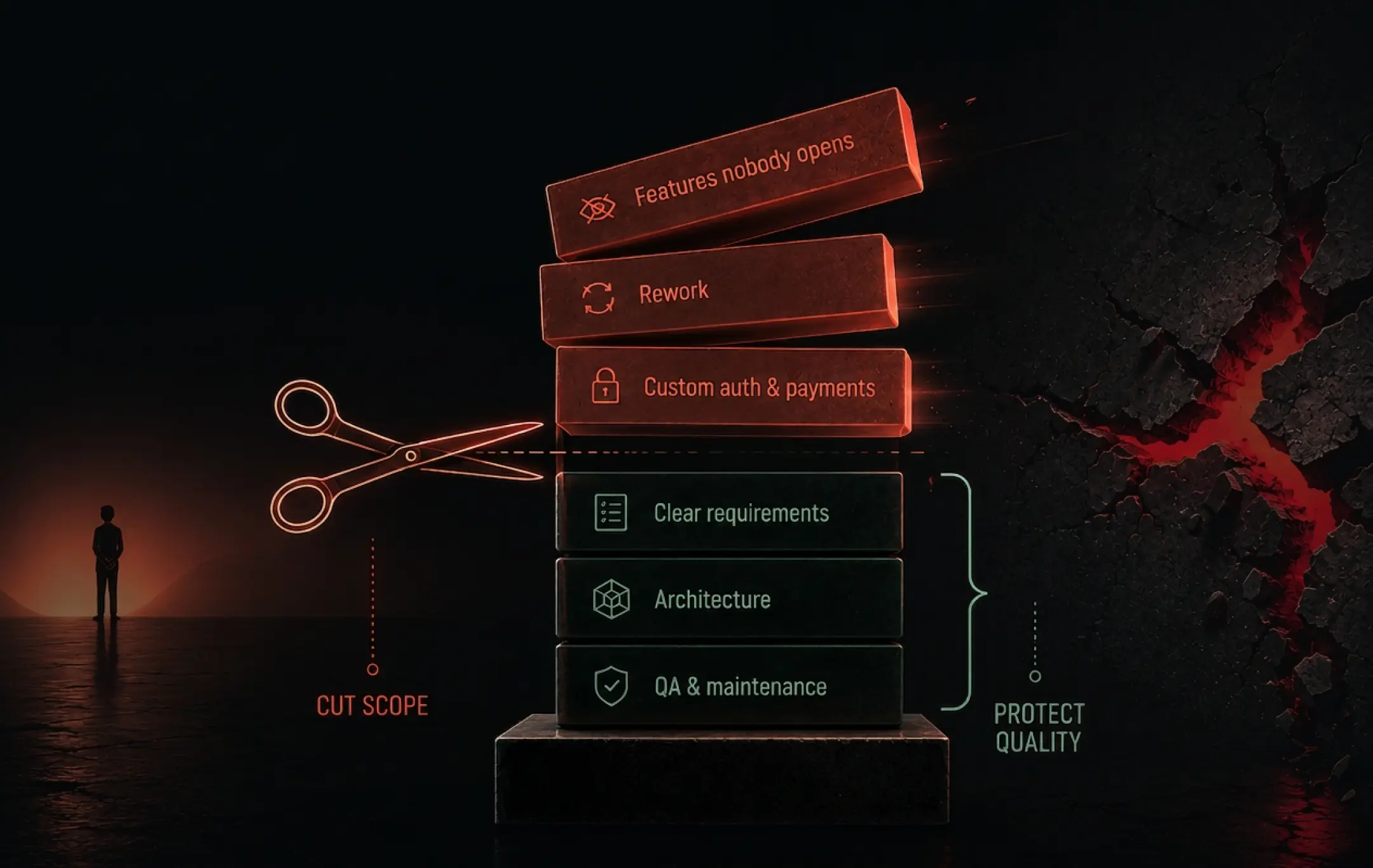
Most AI app failures aren't failures of the AI. They're failures of sequencing. Founders try to do everything at once: new feature, new tech stack, new AI vendor, new team, all in one sprint. Here's a more durable approach.
- Start with the problem, not the model. "We should use AI" is not a brief. "Our support team spends four hours a day on the same twelve questions" is.
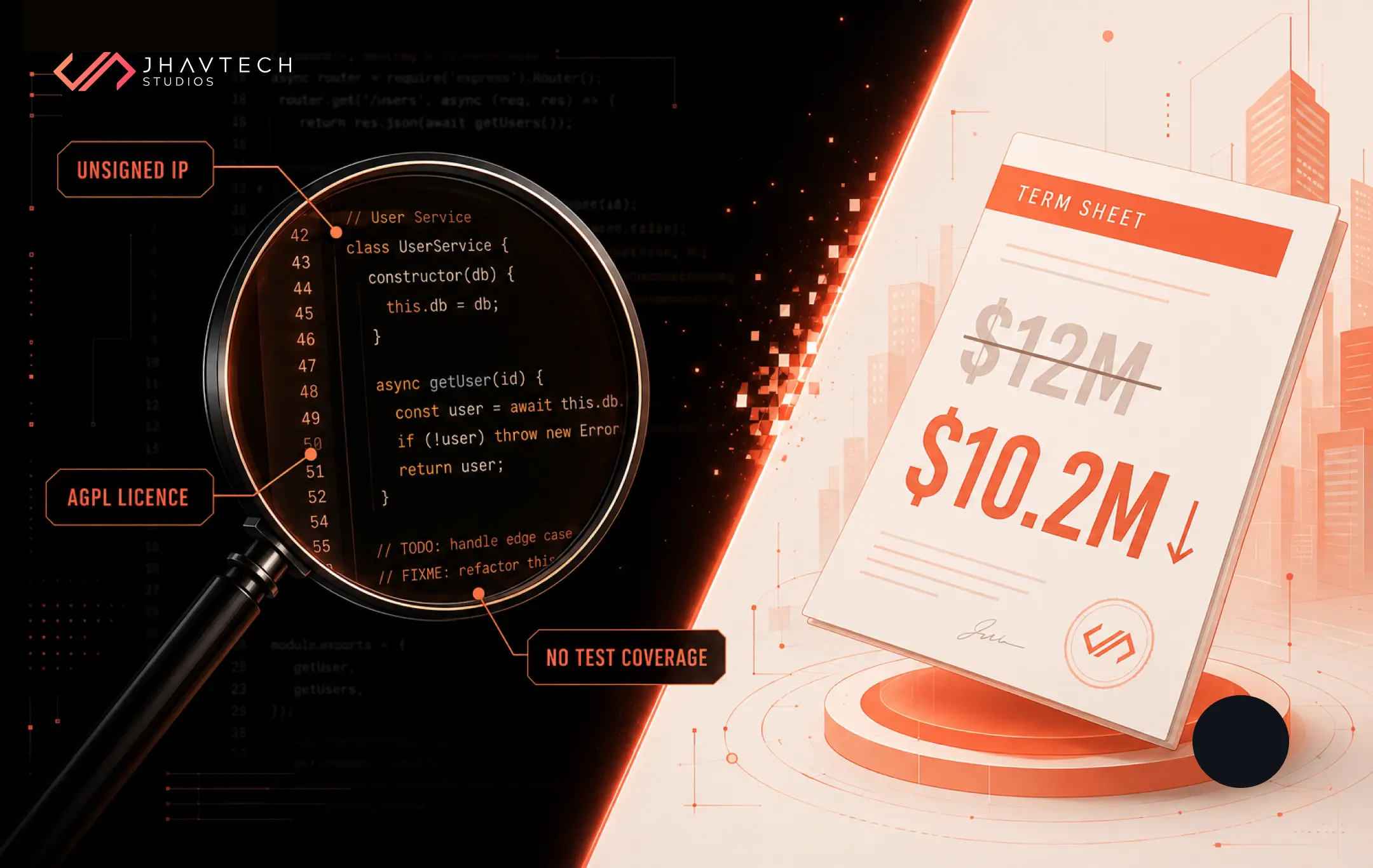
- Audit what you already have before adding anything new. If you're inheriting or extending an existing codebase, understand its actual condition first. This is precisely the gap our Software Project Rescue service exists to close, because half the AI integration projects we get called into are really "the existing app couldn't support this safely" projects.
- Pilot narrow, measure honestly. One feature, real users, real data on whether it changed behaviour, not just whether it shipped.
- Build in human review as a permanent step, not a launch-phase formality. This applies as much to AI-generated code as it does to AI-generated app content.
- Plan for governance from day one. Given how much Australian AI hesitation is trust-related, documenting how your AI makes decisions isn't bureaucracy. It's a competitive feature.
This sequencing matters more for SMEs and startups than enterprises, because there's no large internal team to absorb a misstep quietly. Get the order right and AI becomes genuine leverage. Get it backwards and you're rebuilding in twelve months, which, as we've written about in the context of sports apps designed to handle sudden scale, is a far more common (and far more expensive) outcome than most founders expect.
The Bottom Line
AI app development in Australia isn't a single trend. It's two trends happening at once. AI is changing what apps can do for users, and it's changing how apps get built in the first place. Both create real opportunity. Both also create real ways to get burned if you move without a plan.
The businesses pulling ahead aren't necessarily the ones moving fastest. They're the ones treating AI the way they'd treat any other powerful, slightly unpredictable tool: useful in the right hands, reviewed properly, and never fully unsupervised.
Frequently Asked Questions
.webp)
.png)

.webp)
.webp)
.webp)
.webp)
.webp)
.webp)

.webp)
.webp)


.png)
.png)
.png)
.png)
.png)
.png)


.png)
.png)
.png)
.png)
.png)
.png)
.png)


.png)
.png)
.png)

.png)
.png)
.png)
.png)
.png)
.png)
.png)
.png)
.png)
.png)
.png)
.png)
.png)
.png)
.png)
.png)
.png)
.png)
.png)

.png)
.png)
.png)
.png)
.png)
.png)
.png)
.png)
.png)
.png)

.png)
.png)
.png)

.png)