.svg)
.svg)


The 90-Day MVP Strategy Smart Startups Are Using to Validate Faster
.png)
An MVP strategy is a structured approach to building the minimum viable product in 90 days, enabling startups to validate market assumptions, gather customer feedback, and reduce time-to-market by 40–60%. This method prioritizes core features while deferring technical debt management, allowing teams to launch with speed without sacrificing initial product viability.
What Is an MVP Strategy (And Why It Matters in 2026)
An MVP strategy is fundamentally a risk-reduction framework. Instead of building the complete product based on assumptions, you ship a barebones version to real customers, measure their behaviour, and iterate. The difference between launching blind and launching smart comes down to strategy.
According to research from McKinsey, organisations that adopted structured MVP strategies reported 60% reduction in failure rates, 40% faster time-to-market, and up to 50% reduction in development costs. Additionally, McKinsey found that companies prioritizing speed in MVP product development are 1.5 times more likely to experience revenue growth.
The 90-day window isn't arbitrary. It's the inflection point where:
- Momentum matters – Your team stays focused and doesn't lose velocity to scope creep
- Funding pressure is real – Most seed-stage startups have 3–6 months of runway to prove traction
- Market windows close – Competitive windows are measured in quarters, not years
- Technical quality thresholds exist – Code quality below a baseline creates blockers downstream
This is where most startups misunderstand MVP strategy. Speed doesn't mean recklessness. Speed requires intentional architecture decisions that prevent you from building yourself into a corner.
The Three Pillars of a Smart 90-Day MVP Strategy
Pillar 1 – Core Assumption Mapping (Weeks 1–2)
Before you write a line of code, you need to isolate the three to five critical assumptions that, if wrong, kill your business:
Example assumptions:
- "Users will pay for premium features" (acquisition assumption)
- "Doctors will adopt this workflow change" (usability assumption)
- "Supply chain costs allow 40% margins" (economics assumption)
A report by Startup Genome revealed that premature scaling is responsible for up to 70% of startup failures. According to CB Insights research, 42% of startups fail because there is no market need for their product or service. Early-stage startups require significantly longer than expected to validate their target markets, and Startup Genome reports that 74% of failed startups scaled prematurely, often before confirming that their product meets a strong market demand. Mapping assumptions early means you're not wasting 90 days validating the wrong thing.
Action items:
- Define the "riskiest assumption" first
- Design your MVP feature set to test this assumption
- Plan a post-launch feedback loop (surveys, interviews, usage analytics)
Pillar 2 – Ruthless Feature Prioritisation (Weeks 2–4)
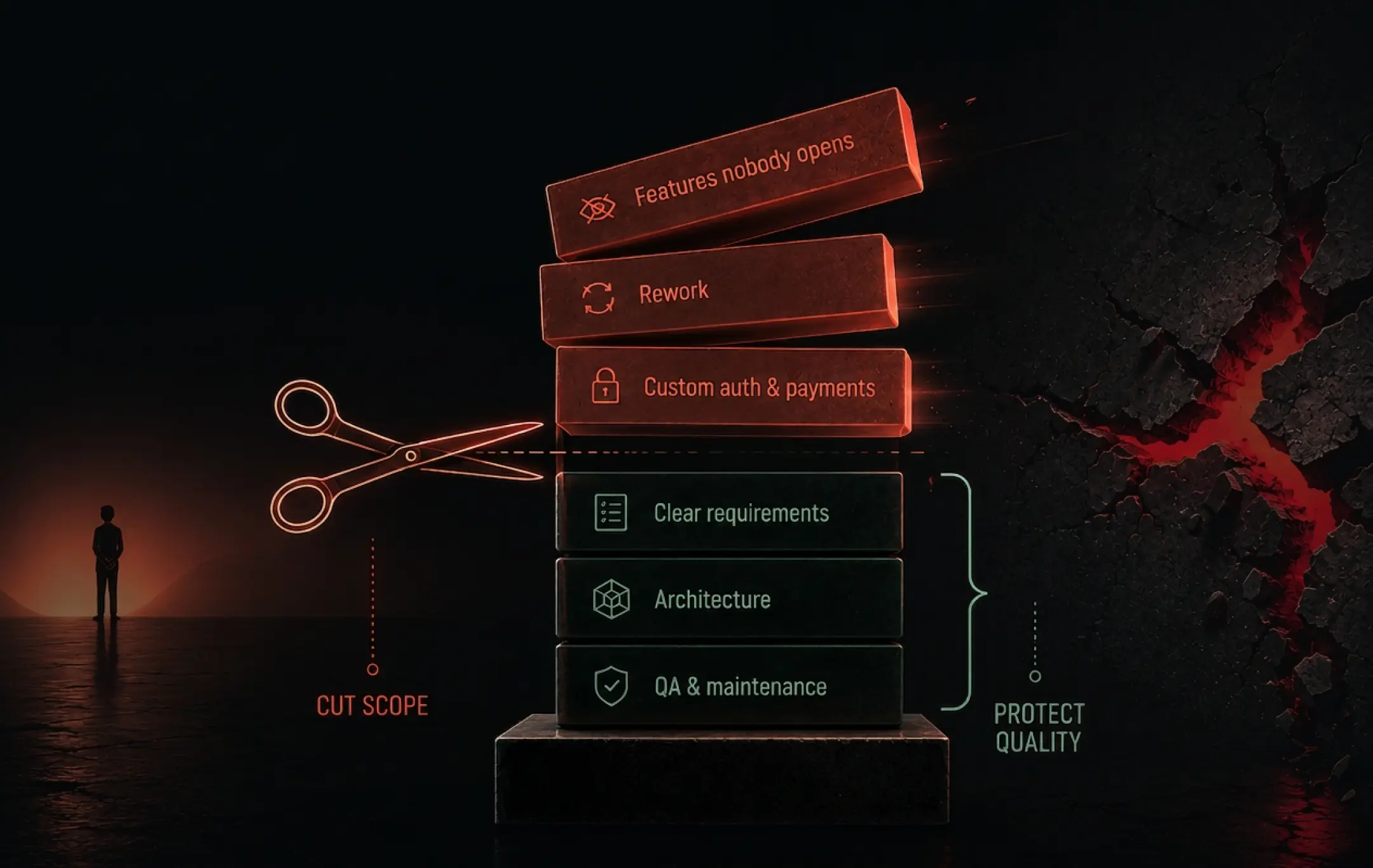
This is where most teams fail. They confuse MVP with scaled-down version of their vision.
An MVP should address one primary user pain point. Not three. Not five. One.
Real example: Airbnb's 2008 MVP wasn't a marketplace. It was: upload photos of your apartment → set a nightly rate → receive bookings. No messaging, no reviews, no payment processing initially. Just the core exchange.
Here's how to prioritise ruthlessly:
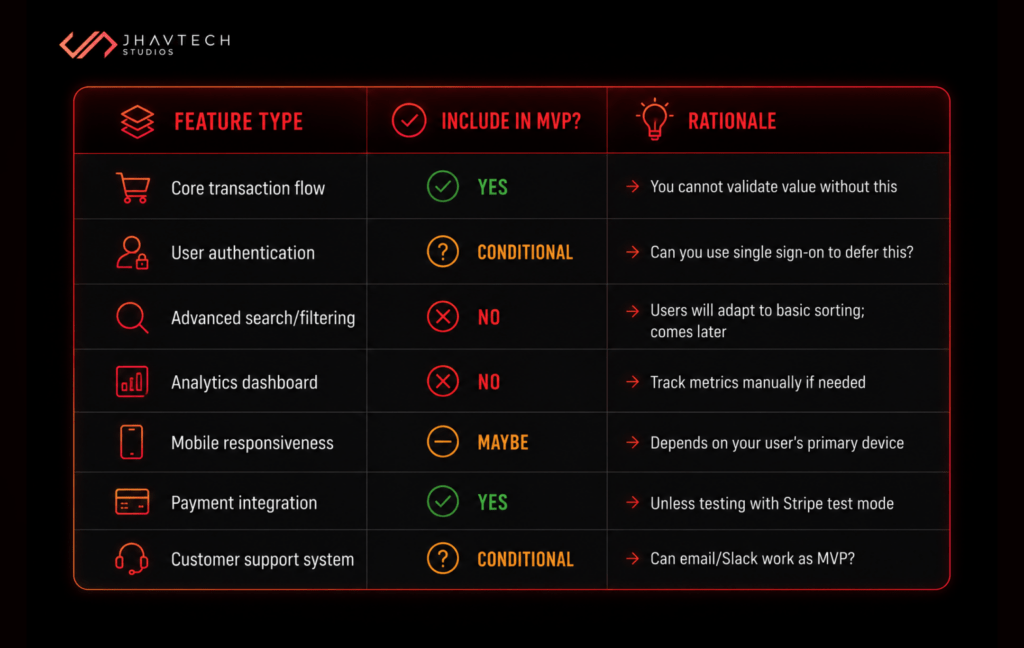
The hidden insight: eliminating features now prevents architectural debt later. Every feature you skip in week 3 is one less integration point that could fail in week 12.
Pillar 3 – Technical Foundation (Weeks 3–8)
Here's where startups often trip themselves. They think 90-day MVP means "skip architecture entirely." Wrong.
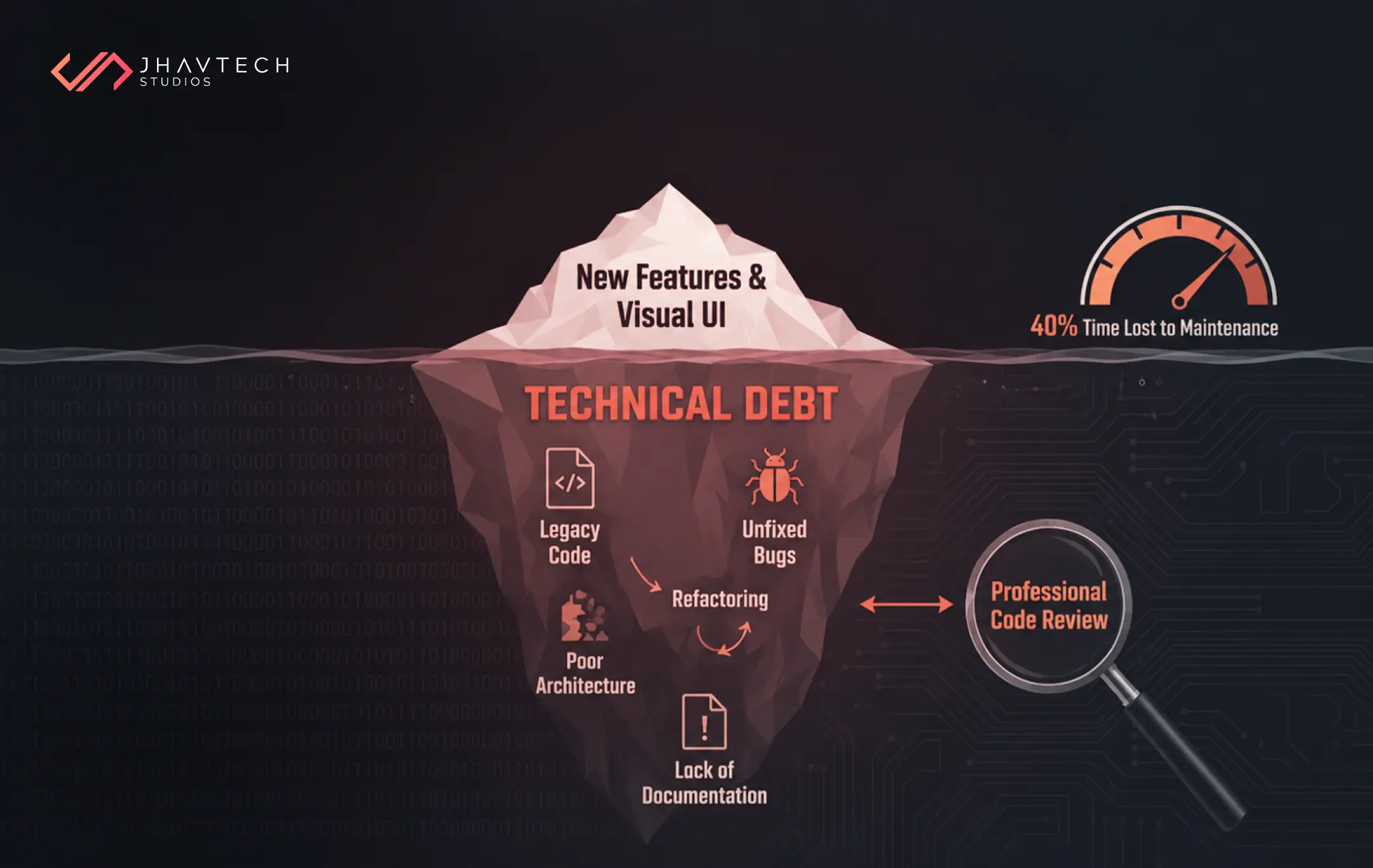
Bad architectural decisions made now become technical debt that compounds exponentially. According to Forrester Research's 2025 technology and security predictions, 75% of technology decision-makers will see their technical debt rise to a moderate or high level of severity by 2026. Organisations spend an average of 30% of their IT budgets managing accumulated technical debt. This reality means every architectural shortcut compounds over time.
For your 90-day MVP, you need:
Baseline technical requirements:
- Scalable database design – Can your schema handle 10x growth without refactoring?
- API-first thinking – Build your backend as APIs, even if your frontend is monolithic
- Deployment automation – You should deploy to production daily without fear
- Basic monitoring – Track errors and uptime. Full observability can come later
- Security baseline – Encrypted passwords, HTTPS, OWASP top 10 compliance. No exceptions.
Code quality thresholds (non-negotiable):
- Test coverage for critical paths: minimum 60%
- Documented API contracts (OpenAPI specs)
- Code review on all PRs, even under timeline pressure
- Logging for every transaction (debugging will consume 40% of post-launch time otherwise)
We've seen many startups reach this exact moment—shipping a product that works but is built on shaky technical ground. The consequences are expensive: they spend 6+ months in a software project rescue phase before they can scale further.
The insight: A 90-day MVP with good foundational architecture can scale to millions in revenue. A 90-day MVP built on shortcuts needs a complete rewrite by year two.
The 90-Day MVP Strategy Framework (Step-by-Step)
Weeks 1–2: Validation Research & Assumption Mapping
Deliverables:
- Prioritised list of riskiest assumptions (top 3–5)
- Customer research summary (minimum 20 interviews)
- Competitive landscape analysis
- Feature prioritisation matrix (see template below)
Key decision: What single customer problem will your MVP solve?
Weeks 3–4: Technical Architecture Design
Deliverables:
- System architecture diagram (no more than 1 page)
- Technology stack selection (recommendation: use proven, battle-tested technologies)
- API contract specification (OpenAPI/Swagger)
- Database schema design (normalized to 3NF minimum)
- Deployment pipeline documentation
Red flags to avoid:
❌ "Let's use the latest trendy framework" (stick to mature ecosystems)
❌ "We'll optimize for scale later" (you won't; technical debt compounds)
❌ "We don't need monitoring in MVP" (you'll regret this in month 2)
❌ "Security can wait" (it cannot; one breach kills a startup)
Proven tech stacks for fast MVPs:
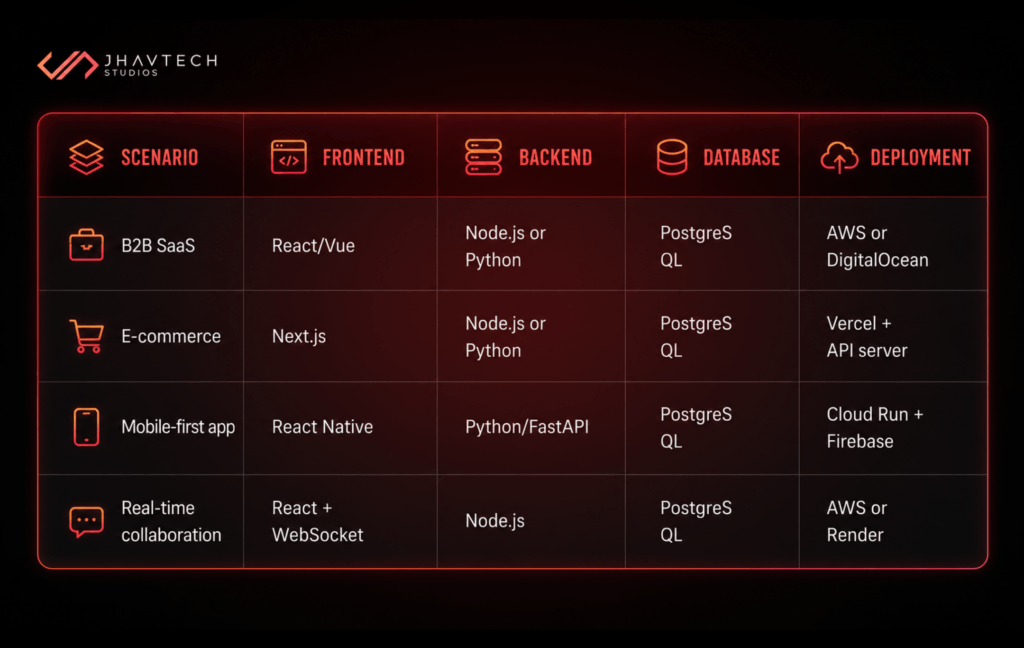
Weeks 5–8: Core Feature Development
This is where you build exactly what you designed—no more, no less.
- User authentication (email + password, or delegate to Auth0/Firebase)
- Core transaction flow (the 1–2 main features)
- Basic admin/analytics dashboard (manually track metrics if needed)
- Error handling and logging infrastructure
Development velocity expectations:
- Experienced team: 80–120 productive hours per week
- Growing team: 60–80 productive hours per week
- Inexperienced team: 40–60 productive hours per week
The difference often comes down to whether you have experienced technical architects setting the direction.
Weeks 9–10: Testing, Documentation & Security Hardening
Don't skip this. This is where quality separates leaders from laggards.
- Automated test suite (minimum 60% critical path coverage)
- Security audit (OWASP top 10, dependency scanning)
- Load testing (can your infrastructure handle 10x traffic?)
- API documentation (make it easy for your team to extend this)
- Deployment runbook (how do you roll back if something breaks?)
Weeks 11–12: Soft Launch & Refinement
- Beta launch to 100–500 power users (not public yet)
- Daily monitoring of errors, performance, user feedback
- Rapid iterations on UX/feature feedback
- Public launch + growth strategy
Why MVP Strategy Fails (And How to Avoid It)
Mistake 1: Building Without a Clear "One Thing"
The problem: Teams try to validate too many assumptions at once. Is the problem with product-market fit or with your go-to-market strategy?
The fix: Define your north star metric. Everything in your MVP should ladder up to proving that metric. (E.g., "We'll prove that 30% of users will subscribe within 30 days of signup.")
Mistake 2: Ignoring Early Signs of Code Quality Issues
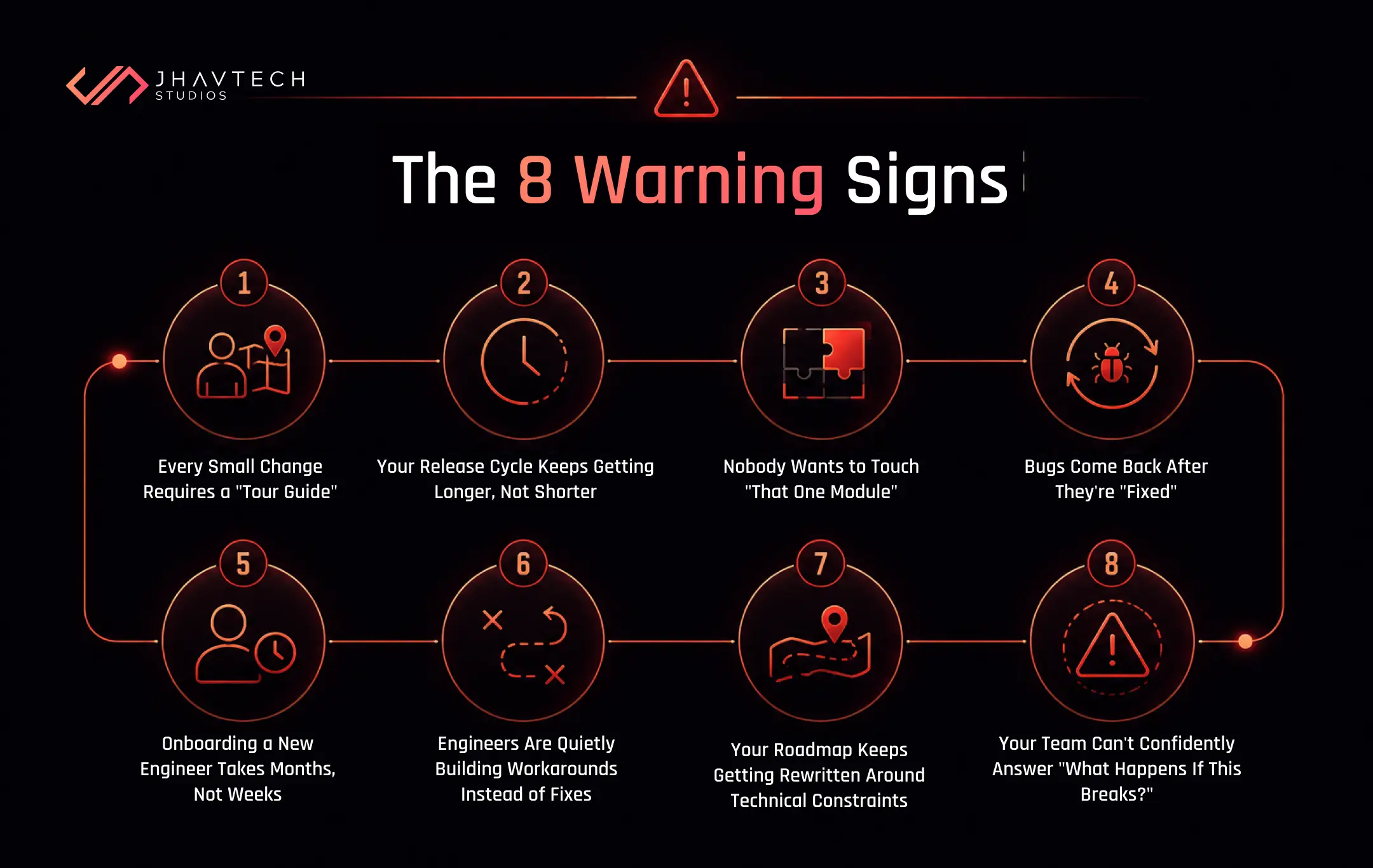
The problem: Code is working, but it's becoming increasingly difficult to modify. Every change now requires 3–4 hours of debugging instead of 30 minutes.
This is your warning signal that you've accumulated hidden technical debt. Most startups ignore it and launch anyway. By month 6, they're paying the price. (Learn more about what a 48-hour code audit reveals – we've documented the warning signs your team might be missing.)
The fix: Run monthly code quality audits (even if informal). Ask: "Could a new engineer understand this code in 30 minutes?" If not, refactor immediately.
Mistake 3: Launching Without Scalability Thinking
The problem: Your MVP works great with 100 users. At 10,000 users, the database is slow. At 100,000 users, it's unusable.
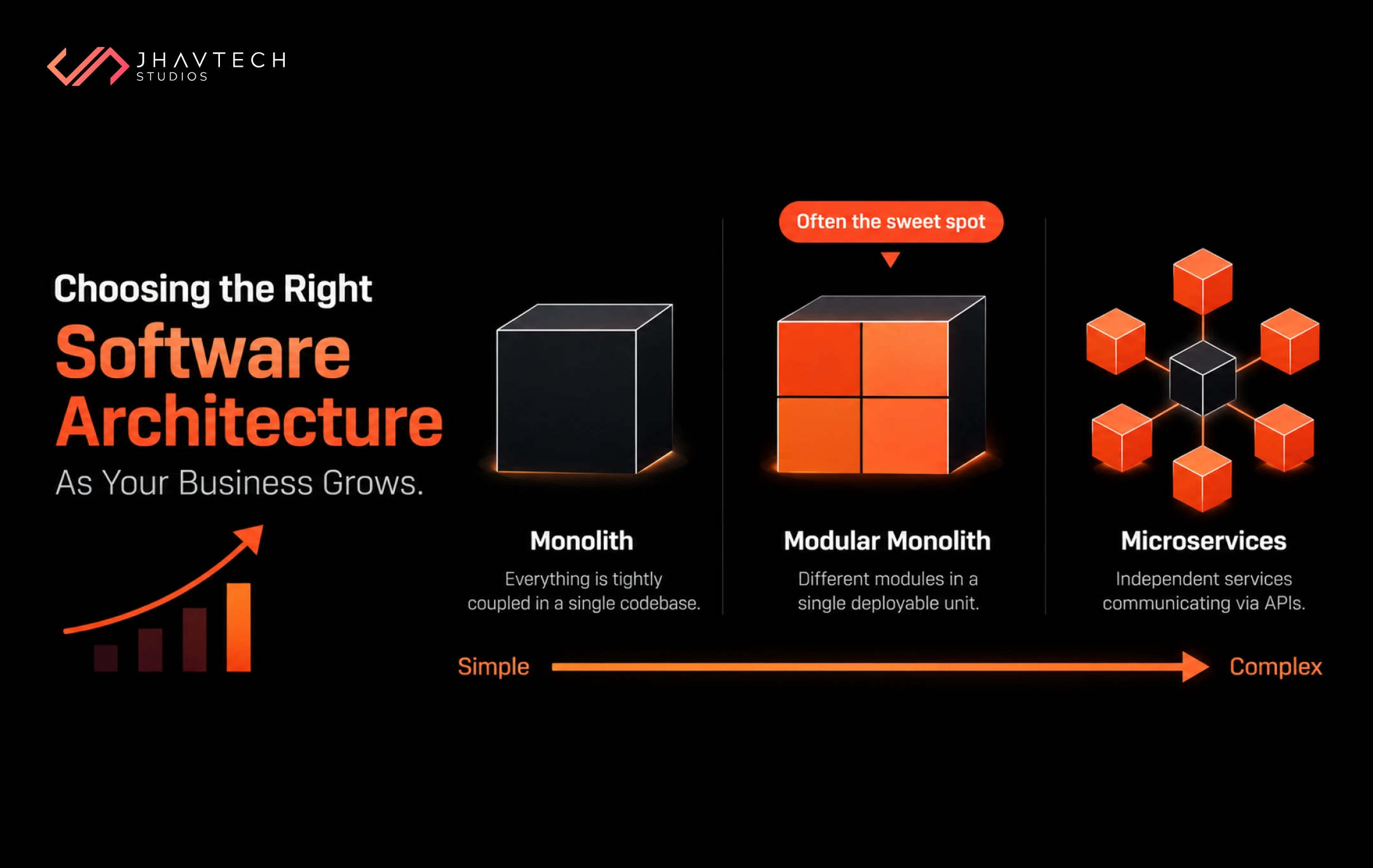
This doesn't mean you need to over-engineer for scale in year three. It means your foundational architecture (database indexing, caching strategy, API rate limiting) should be sound. Understanding why apps fail to scale and fixing those issues early is the difference between scaling smoothly and needing a complete rebuild.
The fix: Load test at 10x your projected first-month traffic. Find bottlenecks now.
Mistake 4: Assuming MVP Means "Low Quality"
The problem: This is the most dangerous misconception. An MVP is not a low-quality product. It's a focused product.
Quality and scope are different dimensions:
- High quality + narrow scope = smart MVP ✓
- Low quality + broad scope = expensive mistake ✗
- Low quality + narrow scope = hard to scale ✗
Choose the first option.
Post-Launch: The Next 90 Days (Months 4–6)
Your MVP launched. Congratulations. Now the real work begins. The teams that succeed don't treat post-launch as optimisation mode. They treat it as learning mode.
Core Metrics to Track
- Activation rate: % of signups who complete your core action within 7 days
- Retention (Day 7 / Day 30): Are users coming back?
- Conversion rate: Users → paying customers (if applicable)
- Feature usage: Which features are actually being used?
- Support load: How much time do you spend helping users?
If retention is below 20% by day 7, you have a product-market fit problem, not a feature problem. Iterate the core experience.
When to Scale vs. When to Pivot
Scale if:
- Retention is >25% at day 30
- You have paying customers or clear monetisation path
- User feedback validates your core assumption
Pivot if:
- Core assumption was wrong
- Market doesn't value your solution
- Customer acquisition cost is too high
The Role of Modern Technology in MVP Strategy
In 2026, the MVP landscape has shifted. Tools that were cutting-edge 5 years ago are now baseline.
Low-Code / No-Code vs. Custom Code
When to use no-code (Bubble, FlutterFlow, etc.):
- Consumer app with simple logic
- MVP designed for total strangers to test
- Founder wants to test market hypothesis in 4 weeks (with external investors)
When to build custom:
- B2B SaaS with complex workflows
- App that will scale to thousands of concurrent users
- Monetisation model depends on precise UX/performance
Most startups should choose custom development. Why? No-code platforms can validate concept, but they create speed illusions. You'll rebuild everything in custom code by year two anyway, and you've lost 6 months of learning.
MVP Strategy for Different Startup Types
B2B SaaS MVPs
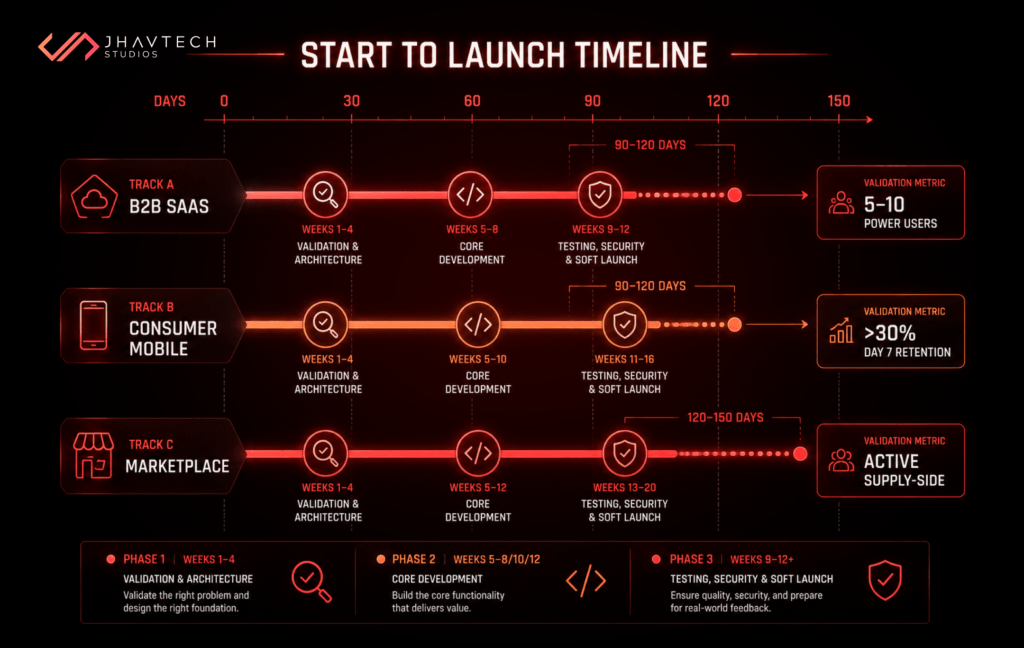
Timeline: 90–120 days is realistic Key focus: Workflow automation, integration capabilities, security/compliance basics Validation metric: Can you retain 5–10 power users for 60+ days?
Consumer Mobile Apps
Timeline: 90 days is tight; 120 days is comfortable Key focus: Core feed/experience, authentication, push notifications Validation metric: Day 7 retention >30%, user referrals
Our expertise in building customer-centric mobile experiences shows that successful MVP launches balance speed with thoughtful UX design.
Marketplace MVPs
Timeline: 120–150 days (supply/demand side are complex) Key focus: Matching algorithm, trust/safety basics, payment processing Validation metric: Active supply-side participants, repeat transactions
How to Handle Technical Debt Post-MVP
Here's the truth: your MVP will accumulate some technical debt. That's inevitable. The goal isn't zero debt; it's manageable debt.
Debt triage framework (post-launch):
- Critical debt (blocks growth/sales) – Fix immediately
- High debt (degrades performance/UX) – Fix within 4–6 weeks
- Medium debt (accumulating but not blocking) – Schedule quarterly refactoring
- Low debt (nice-to-have improvements) – Address if you have 20% capacity
If you find yourself drowning in debt by month 6—unable to ship features because you're constantly firefighting—that's a sign you need external help. This is where many teams discover that bringing in experienced architects for guidance accelerates recovery by 3–6 months.
MVP Strategy Checklist (Print This Out)
Weeks 1–2: Research & Assumptions
[ ] Top 3 riskiest assumptions identified
[ ] 20+ customer interviews completed
[ ] Feature prioritisation matrix created
[ ] Success metrics defined
Weeks 3–4: Technical Design
[ ] System architecture documented
[ ] Technology stack selected
[ ] API contracts defined
[ ] Database schema designed
Weeks 5–8: Development
[ ] Core features coded to spec
[ ] Code reviews happening on every PR
[ ] Logging & monitoring infrastructure in place
[ ] Daily deploys to staging environment working
Weeks 9–10: Testing & Security
[ ] 60%+ test coverage on critical path
[ ] Security audit completed
[ ] Load testing at 10x projected traffic
[ ] Deployment runbook documented
Weeks 11–12: Launch
[ ] Beta feedback loop active
[ ] Analytics dashboard in place
[ ] Support communication channel ready
[ ] Public launch marketing plan ready
Final Thought: Speed Isn't About Cutting Corners
The startups that execute the best 90-day MVP strategies aren't the ones cutting the most corners. They're the ones making intentional tradeoffs.
They say "no" to advanced features. But they say "yes" to solid architecture.
They say "no" to perfect UI polish. But they say "yes" to security.
They say "no" to comprehensive documentation. But they say "yes" to code quality.
That's the discipline of smart MVP strategy. And it's why some startups scale from MVP to Series A in 18 months, while others are still firefighting technical debt in year three.
FAQ: MVP Strategy Questions
.webp)
.webp)

.webp)
.webp)
.webp)

.webp)
.webp)

.webp)
.webp)






.png)
.png)
.png)
.png)
.png)
.png)


.png)
.png)
.png)
.png)
.png)
.png)



.png)

.png)
.png)




.png)
.png)
.png)
.png)
.png)
.png)
.png)
.png)
.png)
.png)
.png)

.png)
.png)

.png)
.png)
.png)
.png)
.png)
.png)
.png)


.png)
.png)
.png)
.png)
.png)
.png)
.png)
.png)
.png)
.png)

.png)
.png)
.png)

.png)