.svg)
.svg)


How to Calculate the ROI of Custom Software Before You Build It
Custom software can pay back several times over, yet a large share of builds never deliver what the founder paid for. The dividing line is almost always drawn before the first line of code. This guide gives startup and SME decision makers a practical, numbers-first way to build a custom software business case: what belongs on the cost side, how to value both hard and soft benefits, which formula to trust, and how to stress-test assumptions. You get a proprietary framework, a worked example, and a checklist that tells you whether to fund the build or walk away.
Most software vendors won't say this out loud. Plenty of custom software projects disappoint the people who write the cheque.
We see it firsthand. Reviewing client intake briefs at Jhavtech, roughly two out of every five custom builds that land on our desk have already stalled somewhere, or they're about to, usually because nobody ran the numbers before committing. That pattern lines up with decades of Standish Group CHAOS research, which has long found that only about a third of software projects fully succeed. The rest come in late, over budget, missing features, or dead in the water.
That's not an argument against building. It's an argument for doing the math first.
Because when custom software works, it really works. In one Forrester Total Economic Impact study of a custom software build, a single agency modernisation returned its investment with room to spare after replacing a costly legacy mainframe. That mirrors the broader pattern: TEI-style analyses of enterprise custom software routinely land three-year ROI in the triple digits, with payback usually between 13 and 18 months. The winners and the write-offs rarely differ on code quality. They differ on clarity: knowing the problem, knowing what solving it is worth, and knowing what it actually costs to get there.
Let's get you that clarity before you spend a dollar.
Why Bother Calculating ROI Before You Build?
Most founders treat ROI as a scoreboard you check after launch. By then the money's gone and the decisions are locked. The real value of a custom software ROI calculation is that it drags the hard questions forward, to the point where they're still cheap to answer.
Look at what changing your mind costs at each stage. The widely cited NIST research on software testing helped establish the pattern the whole industry now works from: a defect caught early costs a fraction of one caught late, and fixing something after release can run up to 100x what it would have cost to fix during design. A tight business case is the cheapest insurance you'll ever buy against that curve.
There's a second payoff that founders underrate. When you scope around measurable outcomes, you hand your development partner an actual target. The Standish Group's research on decision latency found that the biggest driver of whether software succeeds or stalls isn't technical skill; it's how quickly and clearly teams can make decisions. Clear outcomes let people decide fast. So ROI clarity isn't a finance chore. It's how projects get delivered.
What Actually Goes into the Calculation
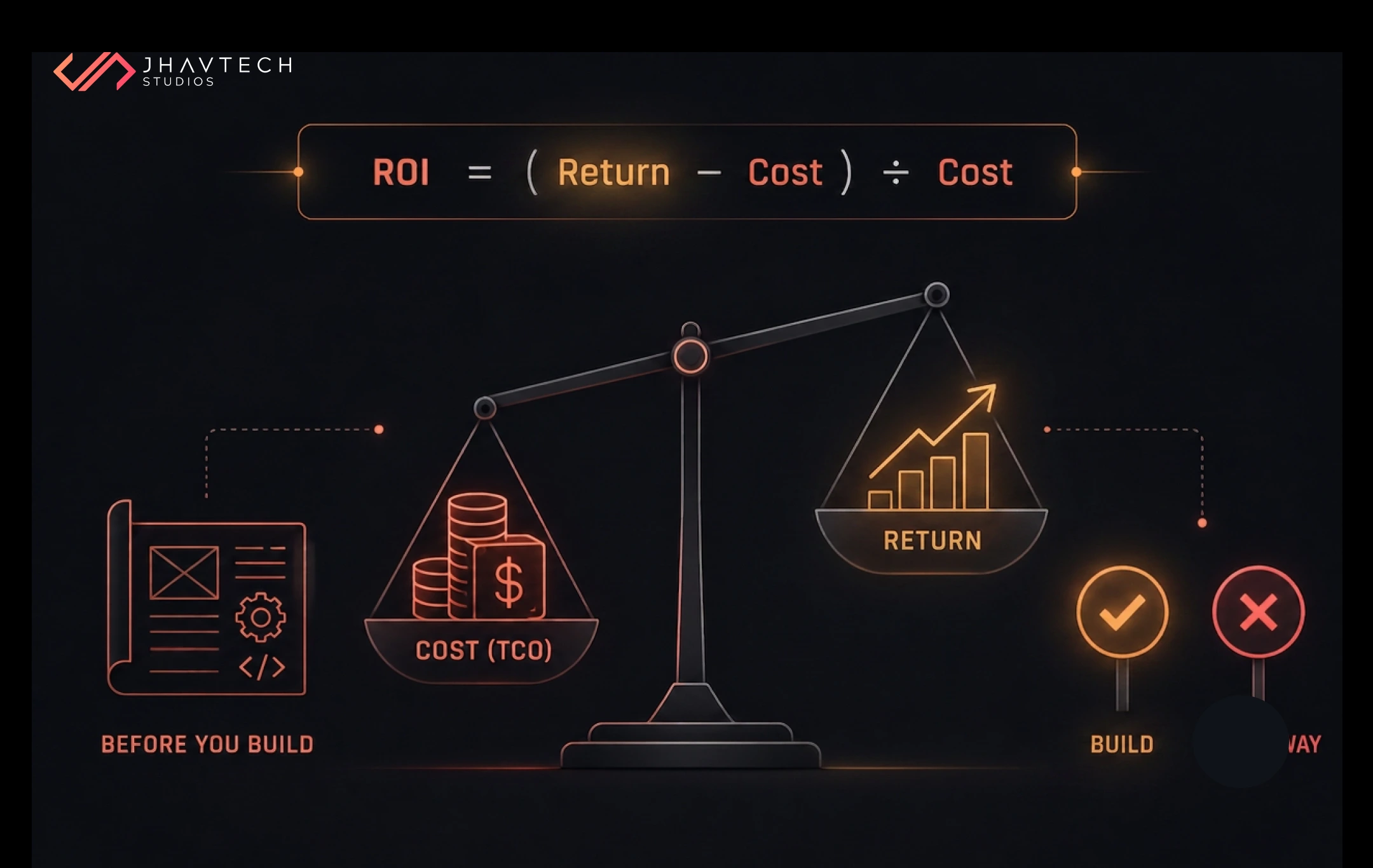
The formula itself is almost insultingly simple:
ROI (%) = (Net Benefit ÷ Total Cost of Ownership) × 100
The catch lives in those two terms. Both hide a lot. Get either one wrong and the whole business case falls over. Here's where most project managers drop the ball.
Counting the Full Cost (Not Just the Quote)
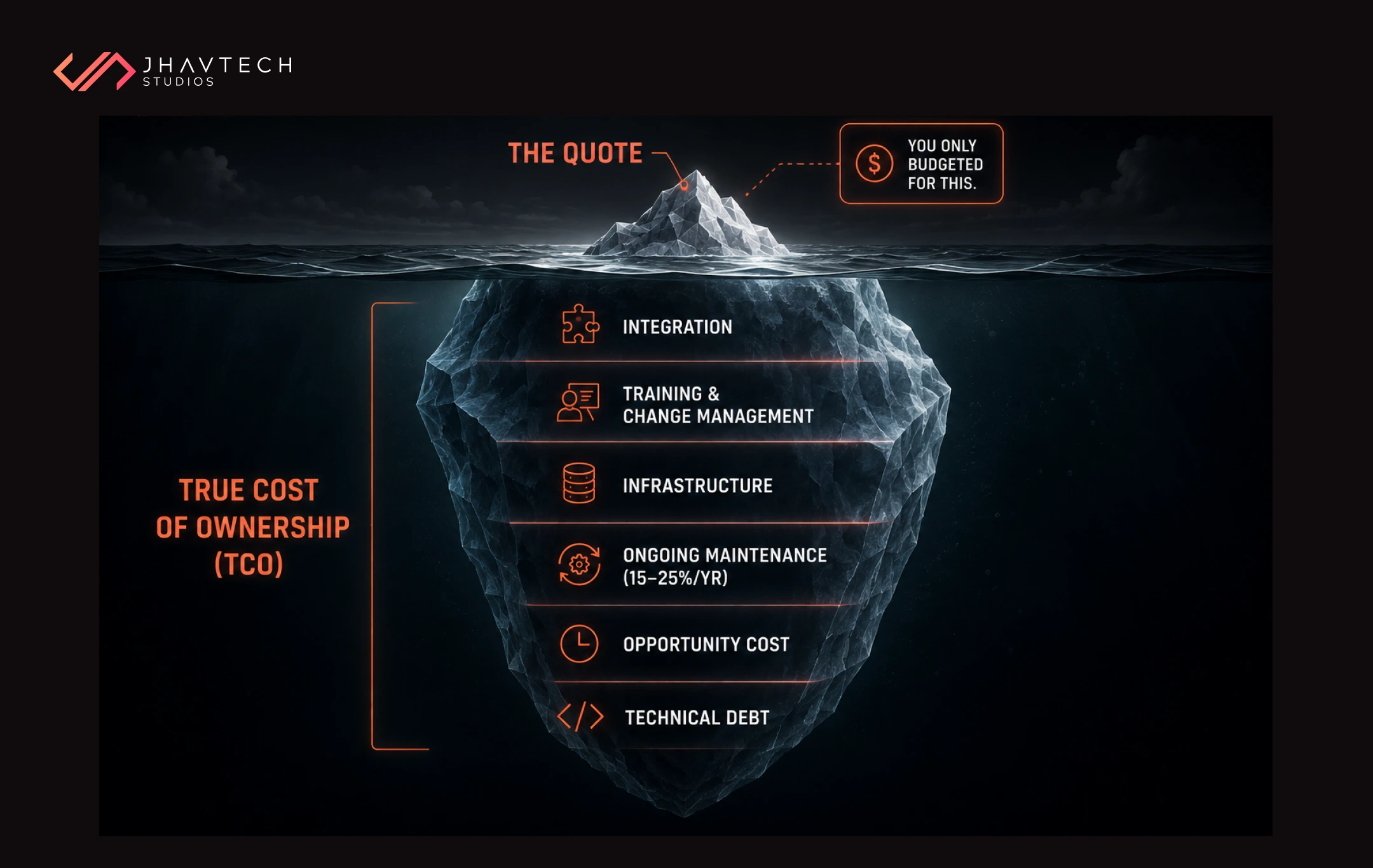
The number your vendor quotes is the tip of the iceberg. Total cost of ownership, or TCO, is what you're really signing up for, and it stacks up across layers people forget:
- Build cost: design, development, testing, project management.
- Infrastructure: hosting, cloud, third-party APIs, licences.
- Integration: wiring the software into the tools and data you already run.
- Training and change management: getting your team to actually use the thing.
- Ongoing maintenance: usually 15% to 25% of the build cost, every year.
- Opportunity cost: what your people aren't doing while the build eats their attention.
That maintenance line trips up nearly everyone. Software isn't a purchase. It's an asset you keep feeding, which is why smart teams treat it like software amortisation, spreading the cost and the value across its useful life instead of pretending it's a one-off hit. Budget only for the build, and you'll watch a healthy ROI slide negative by year two.
One more thing lurks here: technical debt. If you're building on top of an existing codebase, shortcuts taken by a previous team quietly inflate your real costs. That debt doesn't show up on any quote, but it shows up in your timeline.
Valuing the Benefits (Hard and Soft)
Benefits come in two flavours, and both belong in your custom software business case.
Hard benefits are the ones your CFO trusts: labour saved through automation, fewer errors, retired licence fees from tools you switch off, faster processing, and revenue from features you simply couldn't offer before, like putting your service directly in customers' hands. Real dollars, countable.
Soft benefits are trickier. Better customer experience, sharper decisions from cleaner data, happier staff, and a genuine edge over competitors. They matter but assign them conservative numbers and always label them as estimates. Don't let a soft benefit carry your whole case.
Here's a figure worth anchoring to. McKinsey research found that nearly 70% of top economic performers use proprietary software to set themselves apart from competitors, against just 50% of everyone else. And it defines those top performers as companies growing revenue and profit by at least 15% over three years. But that edge only shows up when the software targets a real bottleneck. Software aimed at genuine operational pain pays back. Software built because it felt clever rarely does.
The Jhavtech Pre-Build ROI Framework
It helps to run the whole exercise as a simple sequence. Here is the five-step approach we point founders to, which we call the Jhavtech Pre-Build ROI Framework. Work through them in order and the answer tends to reveal itself.
- Define the pain in numbers. Not "improve efficiency." Something like "cut quote processing from 45 minutes to 10."
- Model the do-nothing baseline. Cost out the status quo, bleeding included, so you know what standing still actually costs you.
- Build the full TCO. Every layer above, across a three-year horizon, maintenance and technical debt included.
- Value the benefits, hard first. Lead with countable dollars. Treat soft benefits as a conservative bonus, not the headline.
- Calculate, then break it. Run the ROI, then stress-test it against a pessimistic scenario. If it still holds, you've got a real case.
Simple on paper. The discipline is in refusing to skip a step.
A Worked Example You Can Copy
Let's ground this. Say you run a services business and your team burns hours every week manually processing quotes and invoices. You're weighing up custom software to automate it.
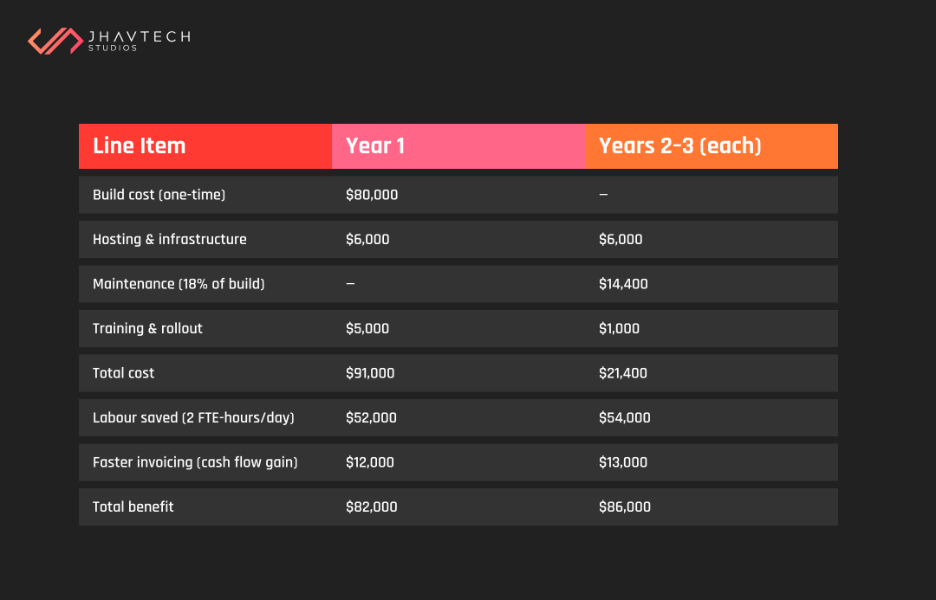
Across three years, costs land near $133,800 and benefits near $254,000. Net benefit: roughly $120,200. Three-year ROI: about 90%, with payback arriving early in year two.
Look at Year 1. It runs at a slight loss. That's normal. Custom software is front-loaded, and that's exactly why a twelve-month view lies to you and a three-year view tells the truth.
The Cost of Not Building
Here's the line item nearly every ROI calculation leaves off. Standing still isn't free.
Every day your team wrestles spreadsheets and duct-taped tools, you're paying a hidden tax: wasted hours, lost customers, a system that quietly caps how big you can get. We've argued before that scalability deserves attention from day one, and the ROI lens sharpens the point. Inaction compounds. Model that do-nothing baseline properly, and sometimes the most persuasive number in the whole exercise isn't your return. It's the size of the wound you stop.
Custom or Off-the-Shelf? A Gut Check
Good ROI math will sometimes tell you not to build. That's the framework earning its keep, not failing.
Before you commit, run an honest build-versus-buy comparison. Low-code and off-the-shelf tools have come a long way; some teams report cost reductions north of 50% using low-code for the right jobs. Custom earns its premium when your process is a genuine differentiator, when nothing off the shelf fits, or when integration and control outweigh speed. If a $50-a-month SaaS tool does 90% of the work, your custom ROI has a steep hill to climb. We unpack that call in our guide to building versus buying software in 2026.
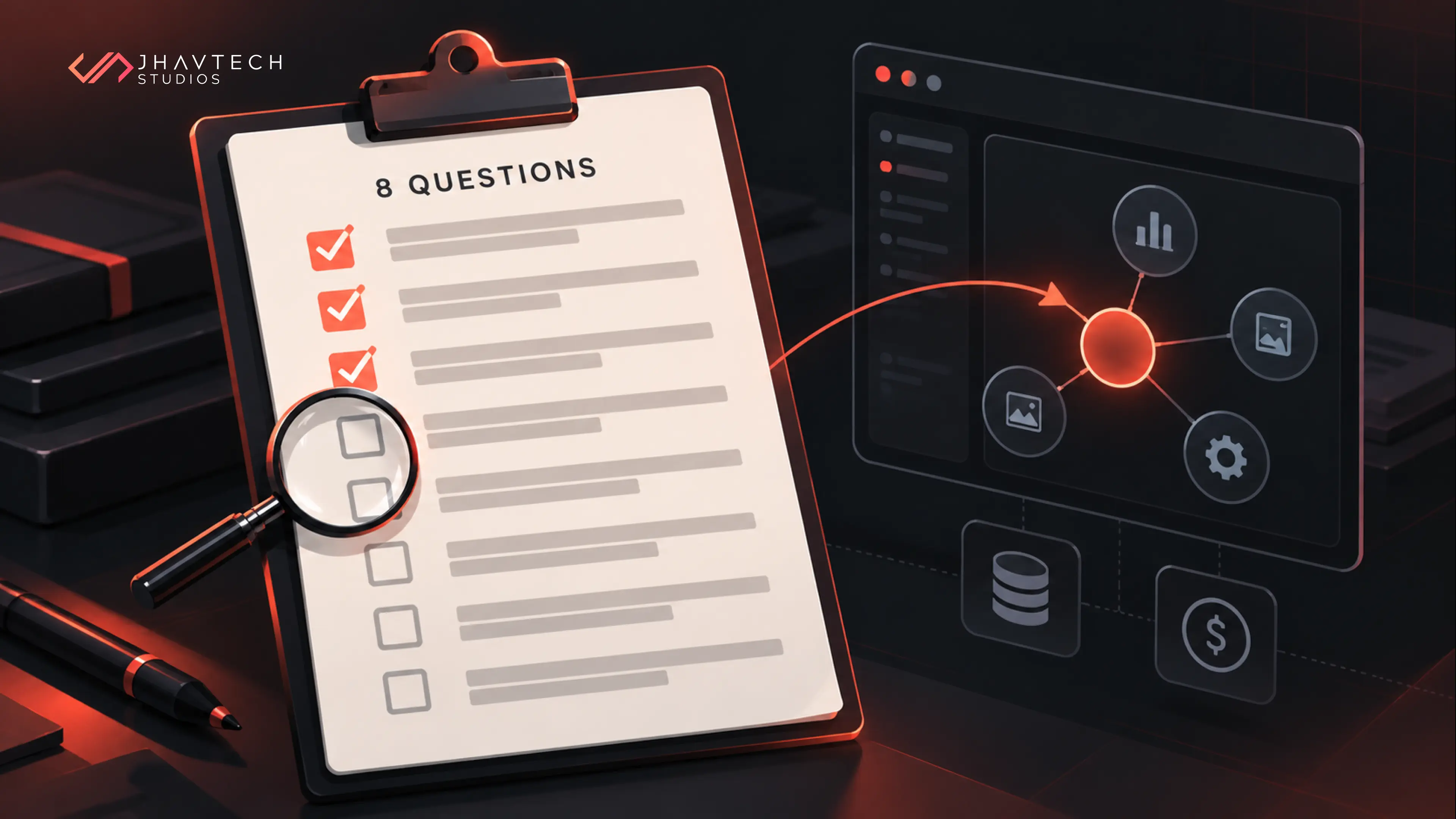
The Pre-Build ROI Checklist
Before you sign off on any budget, you should be able to tick every box. Can't? You're not ready to build.
Run This Before You Fund Anything
☐ We've defined a specific, measurable problem this software solves.
☐ We've set target outcomes in numbers, not adjectives.
☐ We've calculated full TCO, including three years of maintenance.
☐ We've separated hard benefits from soft and valued the soft ones conservatively.
☐ We've accounted for any existing technical debt in the codebase.
☐ We've modelled a do-nothing baseline.
☐ We've run build-versus-buy and custom still wins.
☐ We've scoped in agile increments, so early value ships before the full build lands.
☐ We've calculated ROI and payback over three years, not twelve months.
☐ We've stress-tested against a pessimistic scenario.
☐ We know who owns this internally and how decisions get made.
☐ We've vetted our development partner's track record on similar work.
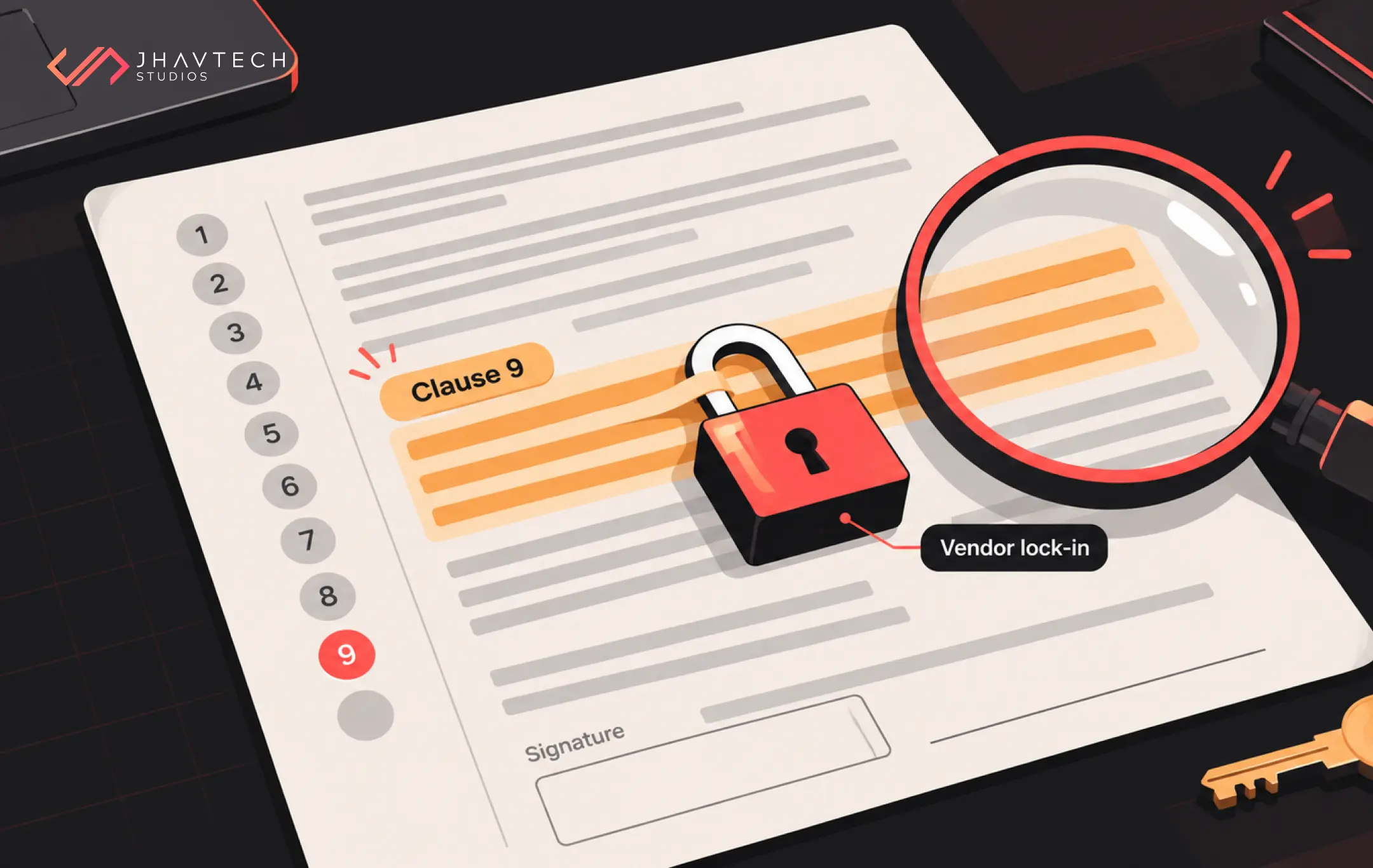
That last box carries more weight than it looks. With two in five builds stalling, the partner you pick genuinely shifts your odds. And if you've inherited a project that's already gone sideways, our software project recovery service exists to salvage the money you've already sunk.
Mistakes That Quietly Wreck Your Numbers
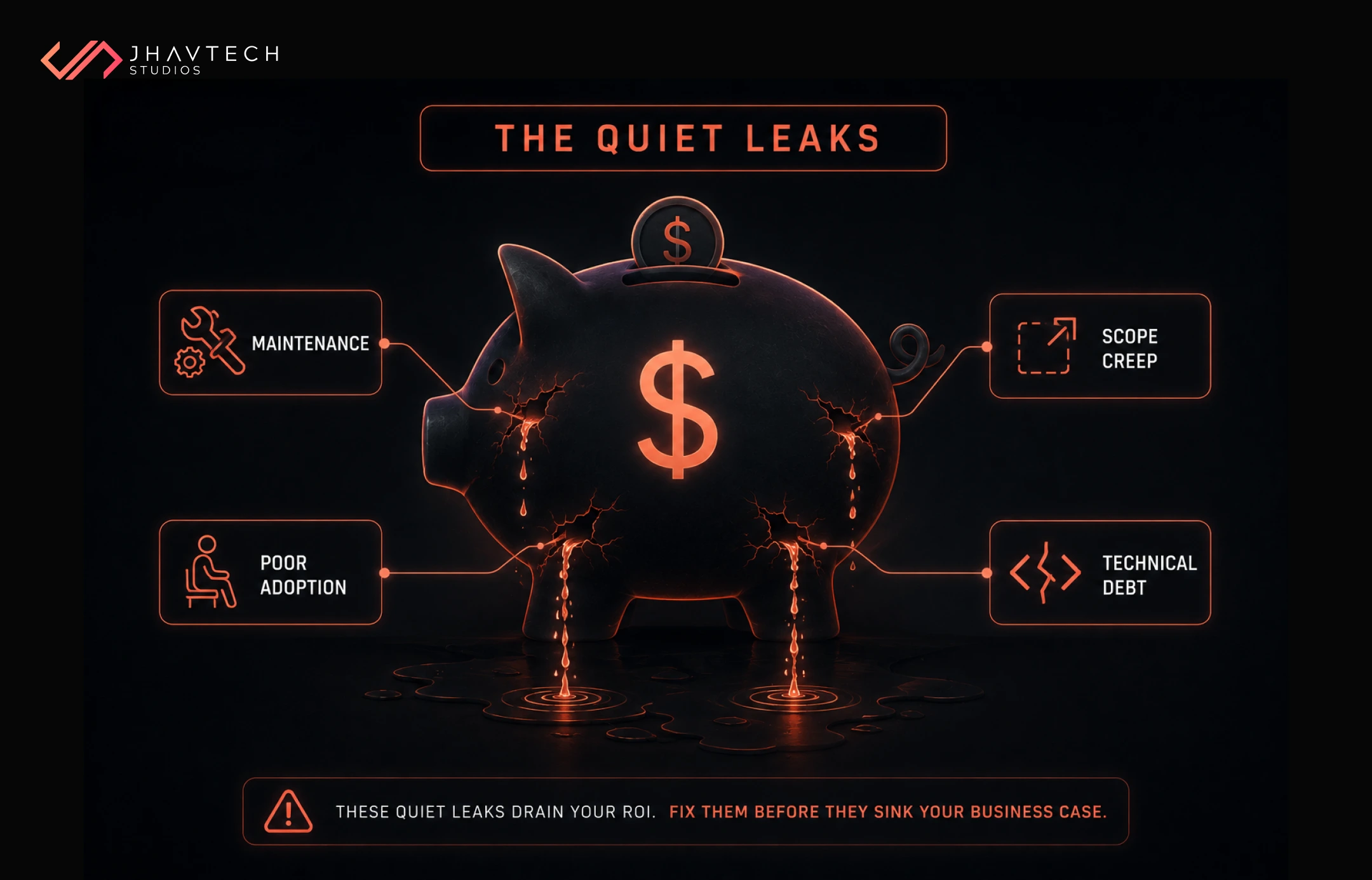
A handful of errors sink otherwise solid business cases. Underestimating maintenance is the classic. Treat software as a one-off cost and your TCO is fiction from the start.
Ignoring scope creep is the next one. It drives a third of project failures. Every quick addition reshapes your cost side, so lock your scope and treat changes as formal decisions with their own mini-ROI. Agile scoping helps here, because shipping in increments surfaces problems while they're still small.
Being rosy about adoption is a quieter killer. The best software on earth returns nothing if nobody uses it. Model a realistic adoption curve, not a fantasy of day-one perfection.
And skipping the code check. If you're building on an existing foundation, unseen technical debt can blow out your real costs before you've noticed. A quick independent look, like a free code review, flags the risks before they become budget lines.
Bringing It Together
Calculating custom software ROI before you build isn't about nailing a perfect number. It's about forcing the right conversations while they're still cheap. What are we solving? What's it worth? What'll it truly cost? What happens if we do nothing at all?
Do that honestly, over three years, with conservative benefits and a full TCO, and you end up in one of two good places. Either you've got a defensible business case that gets funded and hands your team a target. Or the numbers refuse to work, and you've dodged a very expensive lesson. Both are wins. The only losing move is building on a hunch.
Frequently Asked Questions

.webp)

.png)
.png)

.png)
.png)
.png)

.png)
.png)
.png)
.png)
.png)
.png)
.png)
.png)
.png)
.png)
.png)
.png)

.png)
.png)
.png)
.png)
.png)
.png)
.png)
.png)
.png)

.png)
.png)
.png)
.png)
.png)
.png)
.png)
.png)
.png)
.png)
.png)
.png)
.png)
.png)
.png)
.png)
.png)
.png)
.png)
.png)

.png)
.png)
.png)
.png)

.png)


.png)

.png)



.png)



.png)




.png)

.png)
.png)