.svg)
.svg)


Why Most Australian Startups Fail Before Their Product Gains Traction

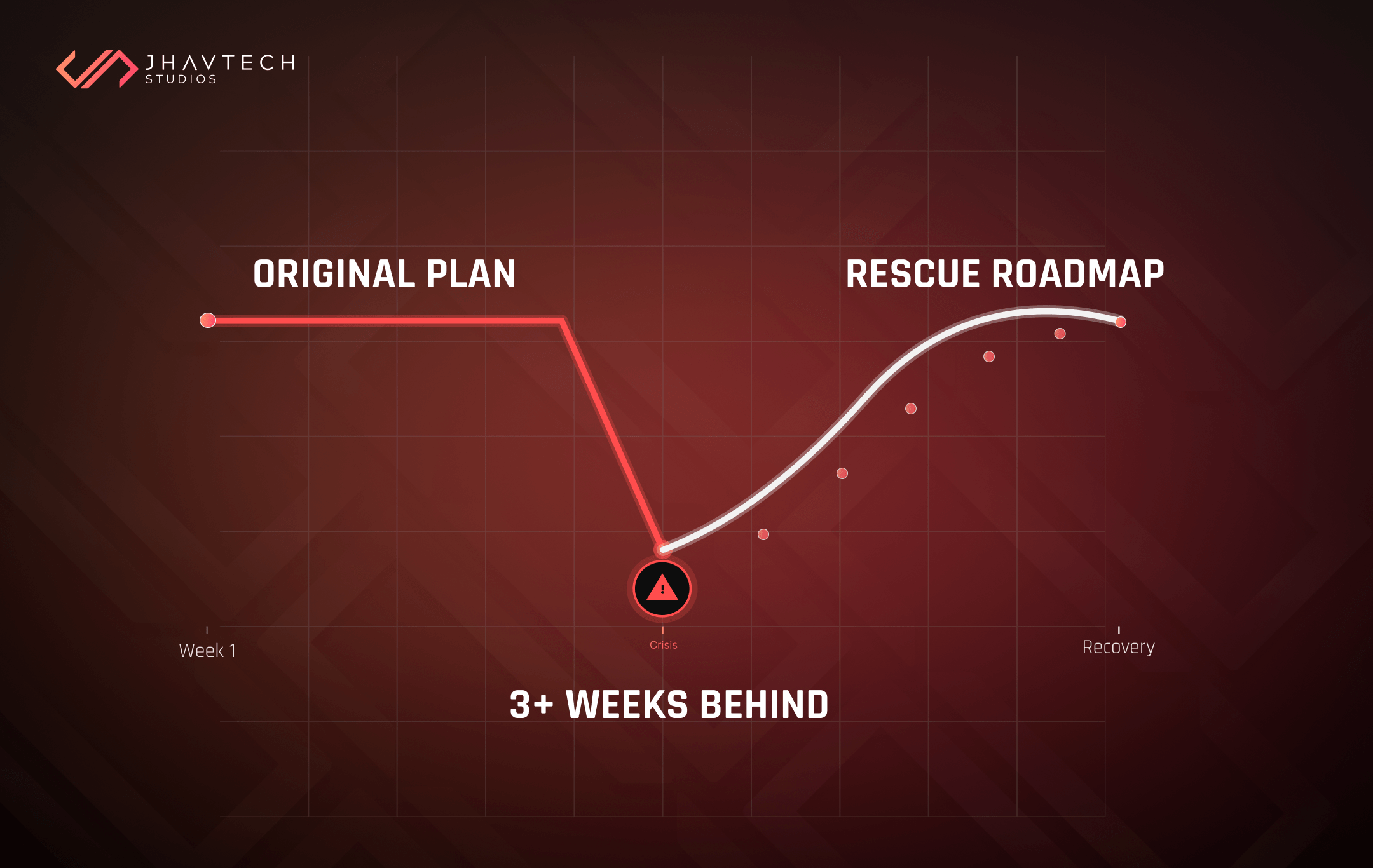
Did you know that approximately 90% of Australian startups fail within the first five years? While ambition and innovation fuel the startup ecosystem, the gap between launching a product and achieving real traction remains Australia's biggest startup challenge. From inadequate market research to poor technical execution, this guide explores the critical reasons why promising Australian startups stumble before gaining momentum—and how yours can avoid these pitfalls.
The Australian Startup Reality Check
Australia's startup ecosystem is thriving on the surface. We've got funding, we've got talent, and we've got plenty of garage entrepreneurs ready to change the landscape. Yet behind the success stories of Atlassian and Canva lies a graveyard of forgotten apps and abandoned software projects.
According to the Australian Bureau of Statistics (ABS) 2024 report on small business dynamics, startup failure rates have plateaued at alarming levels, with the majority of failures occurring within the first 24 months of operation. That's not a bug in the Australian startup system... it's a feature of poor planning, rushed execution, and a fundamental misunderstanding of what it takes to build scalable products.
Here's the painful truth: your brilliant idea isn't enough. Neither is your technical team, your funding, or your passion. Most Australian startups fail because they're solving the wrong problem, building products nobody wants, or scaling infrastructure they can't afford to maintain.
Let's talk about why, and more importantly, how you can avoid becoming another statistic.
Reason #1 – Launching Without Real Market Validation
The "Build It and They Will Come" Myth
Every startup founder has experienced that moment: you've got an idea, a prototype, and absolute conviction that the market is dying for what you're building. So you launch.
Six months later, you're spending 80% of your time on support tickets for features nobody asked for, while your actual target users have moved on to competitors.
This isn't speculation. Research from startup analytics platform Startup Genome found that 42% of startup failures were attributed to lack of product-market fit, with Australian startups faring no better. The problem? Founders skip the foundational work of validating their core assumptions.
Market validation isn't a box-ticking exercise: it's the difference between a product that gains traction and one that gets archived. Australian startups often rush this phase due to the following:
- Funding pressure: Investors want to see a live product, not survey data and customer interviews
- Time scarcity: Early-stage founders juggle full-time jobs, side projects, and family responsibilities
- Overconfidence: You've already solved the technical problem; surely the market will see the value
But here's what actually works: Talk to at least 50-100 potential customers before writing a single line of code. Ask them about their problems, their existing solutions, and how much they'd realistically pay. Document everything. Then, build only the features that solve problems they've explicitly articulated.
Reason #2 – Poor Technical Architecture and Scalability Issues
The Shortcut That Becomes Your Ceiling
Every startup architect faces the same temptation: cut corners on infrastructure, use the latest trendy framework, or outsource critical technical decisions to the cheapest contractor.
Initially, this works. Your MVP launches on a shoestring budget, and the first 100 users love it. But then something magical happens... you get traction. Suddenly, you've got 10,000 users, traffic spikes, and a system held together with duct tape and AWS freebies.
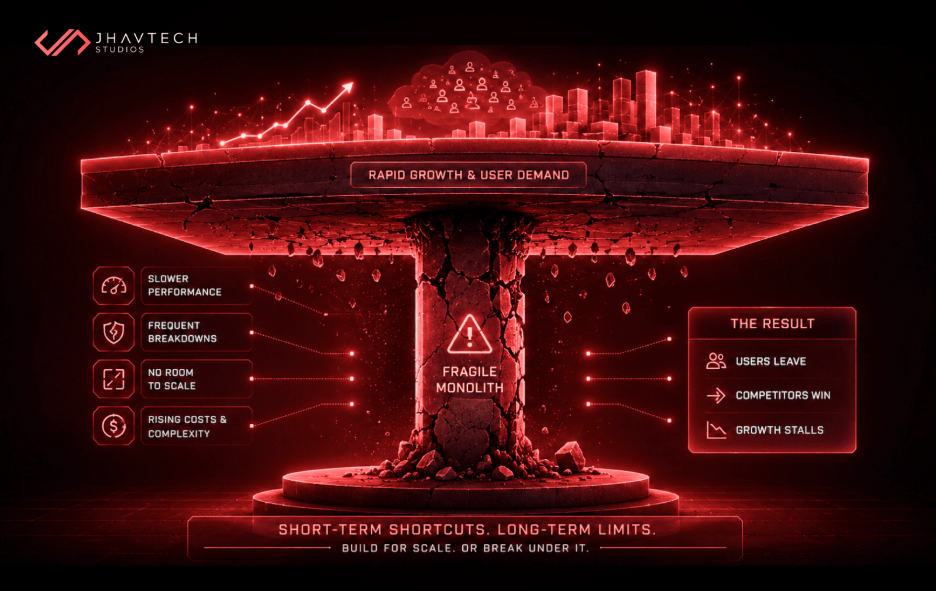
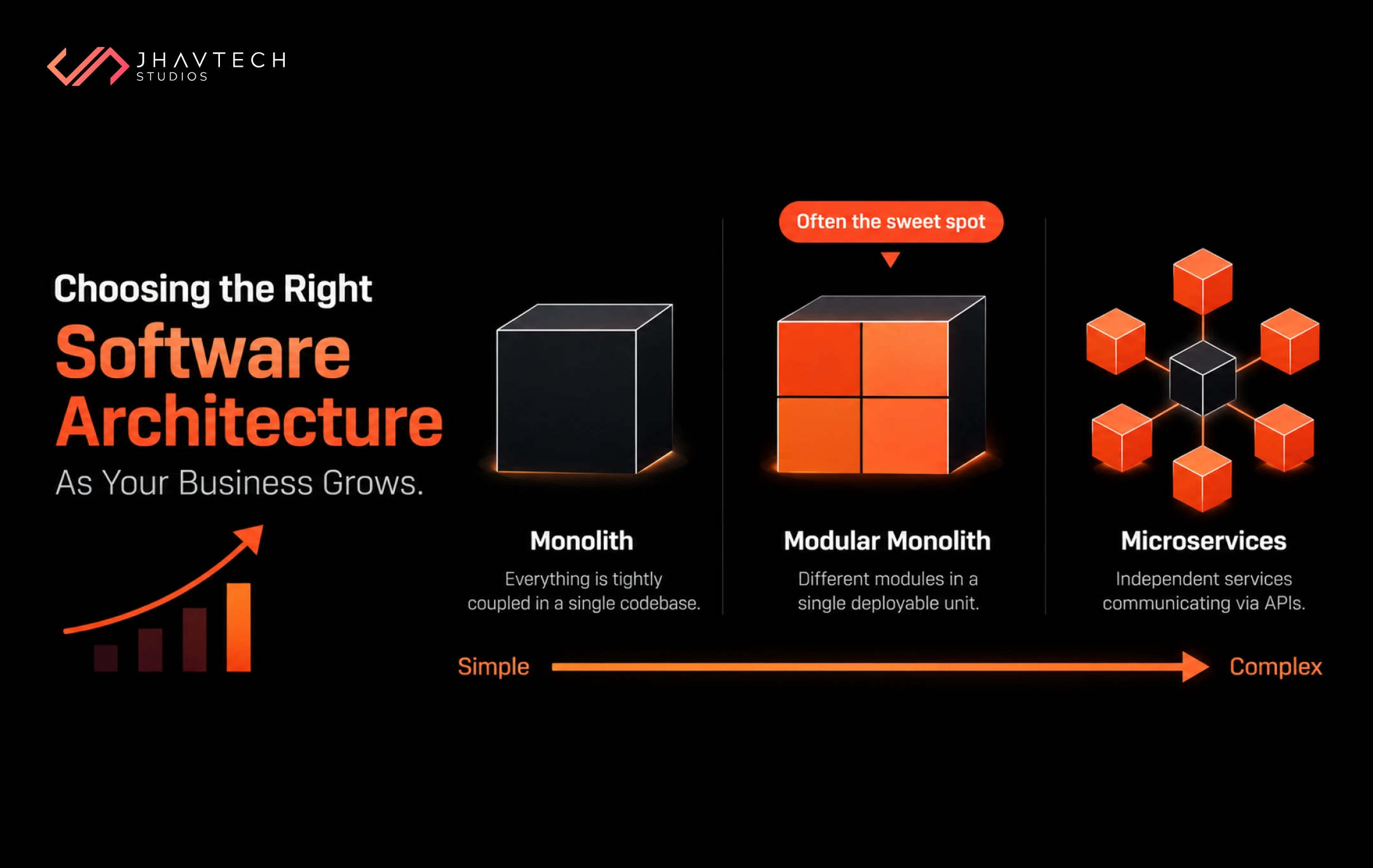
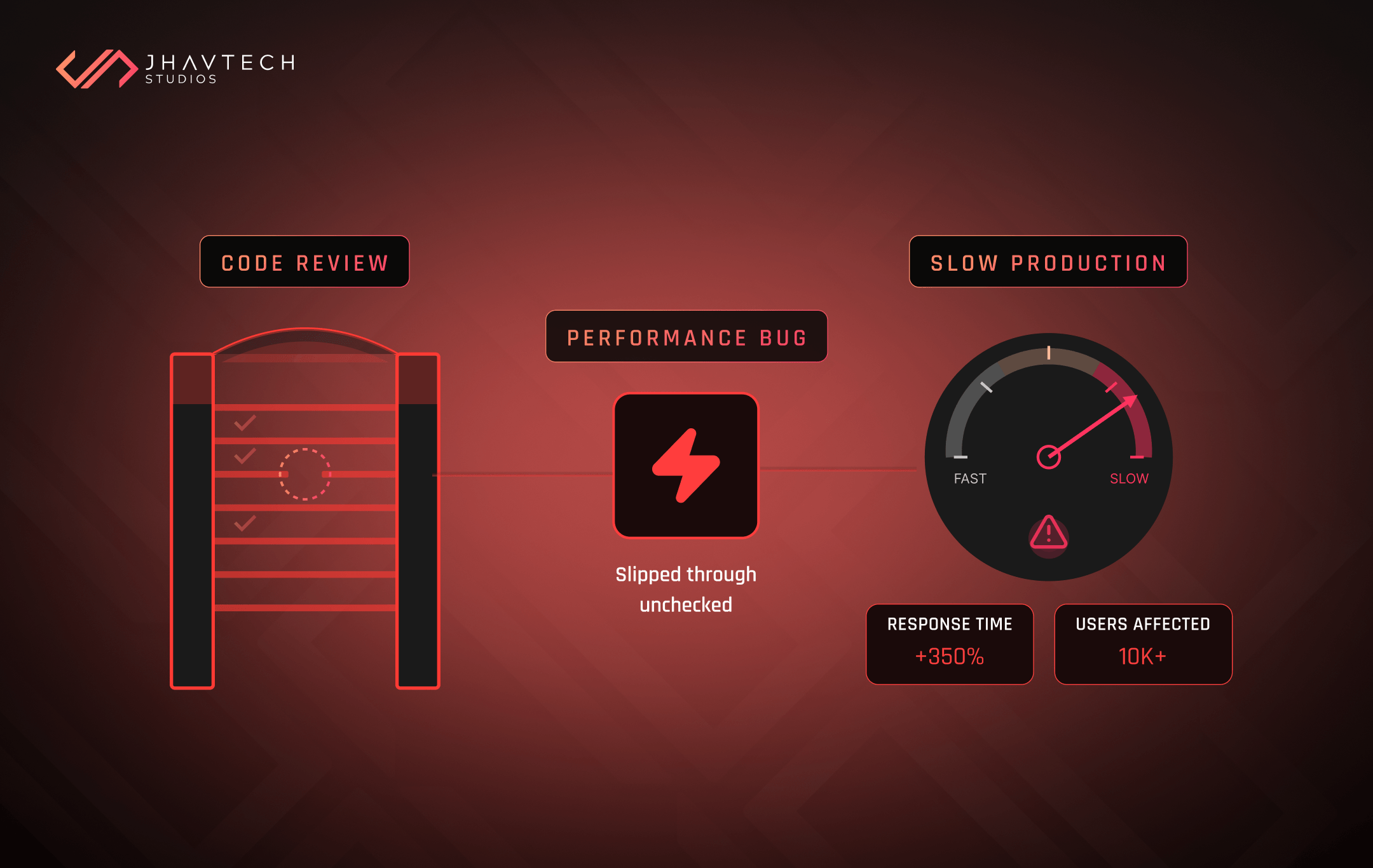
Software scalability issues are among the top reasons Australian startups never make it past the proof-of-concept stage. When your application starts buckling under load—slow response times, database bottlenecks, or catastrophic crashes during peak usage—users leave. They don't wait for you to refactor your monolithic codebase. They download your competitor's app.
Common architecture mistakes we see:
- Monolithic systems: All features bundled into one codebase, making updates painful and bug fixes risky
- Database design failures: No proper indexing, inefficient queries, or insufficient storage planning
- No load testing: You ship features without simulating real-world traffic patterns
- Cloud configuration neglect: Missing auto-scaling setup, poor security practices, or data residency ignorance
For Australian founders, there's an additional layer: many fail to appreciate Australia's geographic challenges. Your user base is distributed across multiple time zones and continents. You need infrastructure that accounts for this reality from day one.
The fix? Invest in proper technical planning before you launch. Understand your expected growth trajectory, design systems that scale horizontally, and test under load. It's not glamorous, but it's how companies like Atlassian became unicorns.
If your startup's technical foundation is shaky, our experts can help you identify hidden scalability risks and provide project rescue services to salvage traction before it's too late.
Reason #3 – The MVP That Isn't Minimal
Feature Creep Before You've Got Users
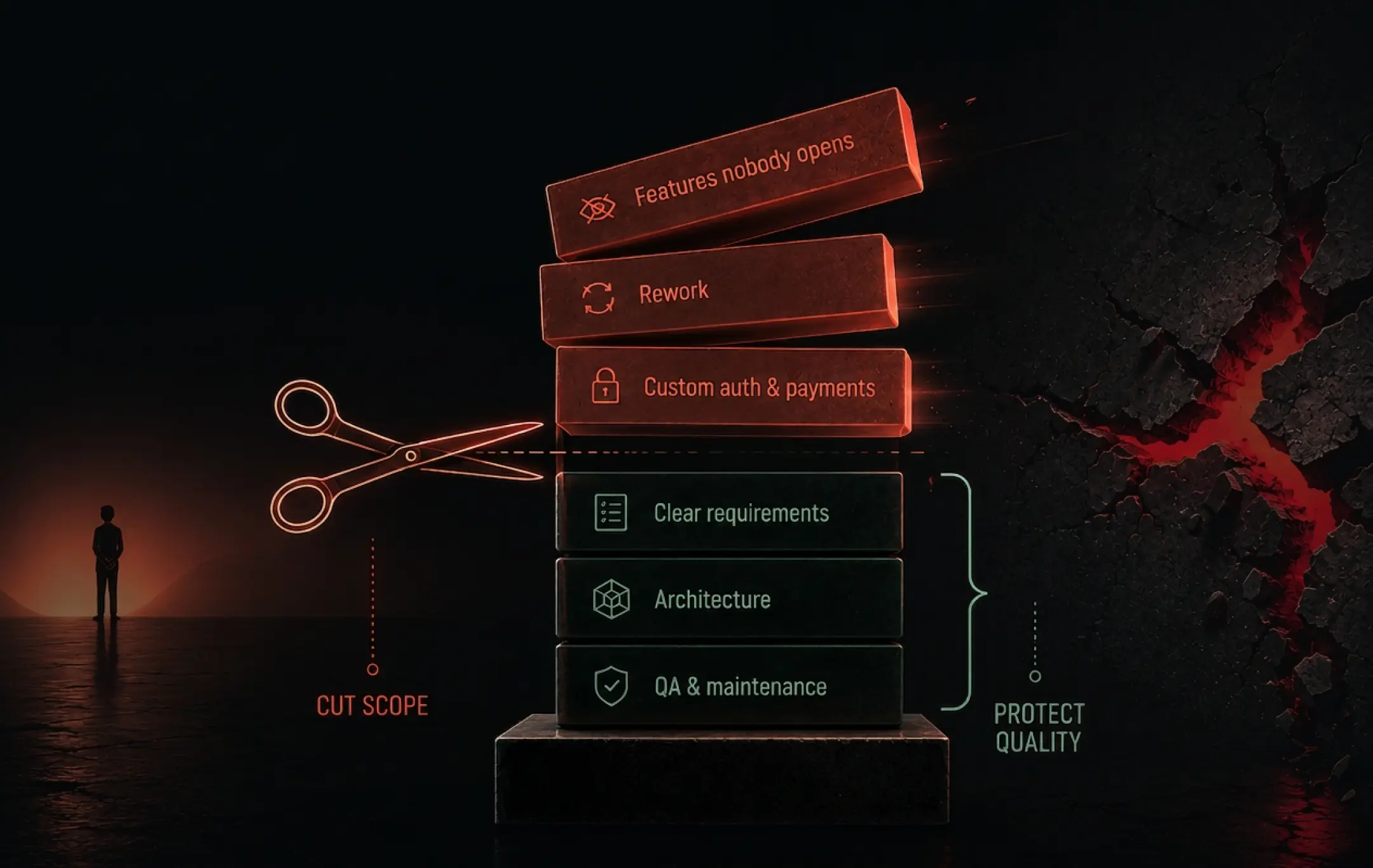
The Minimum Viable Product is perhaps the most misunderstood concept in startup culture. Founders interpret it as the smallest possible version of their ultimate vision: a feature-rich application with a simplified UI. Sorry, but it’s wrong!
An MVP should be so stripped down that it barely qualifies as a product. It should answer a single question: Do people have this problem badly enough to use our solution?
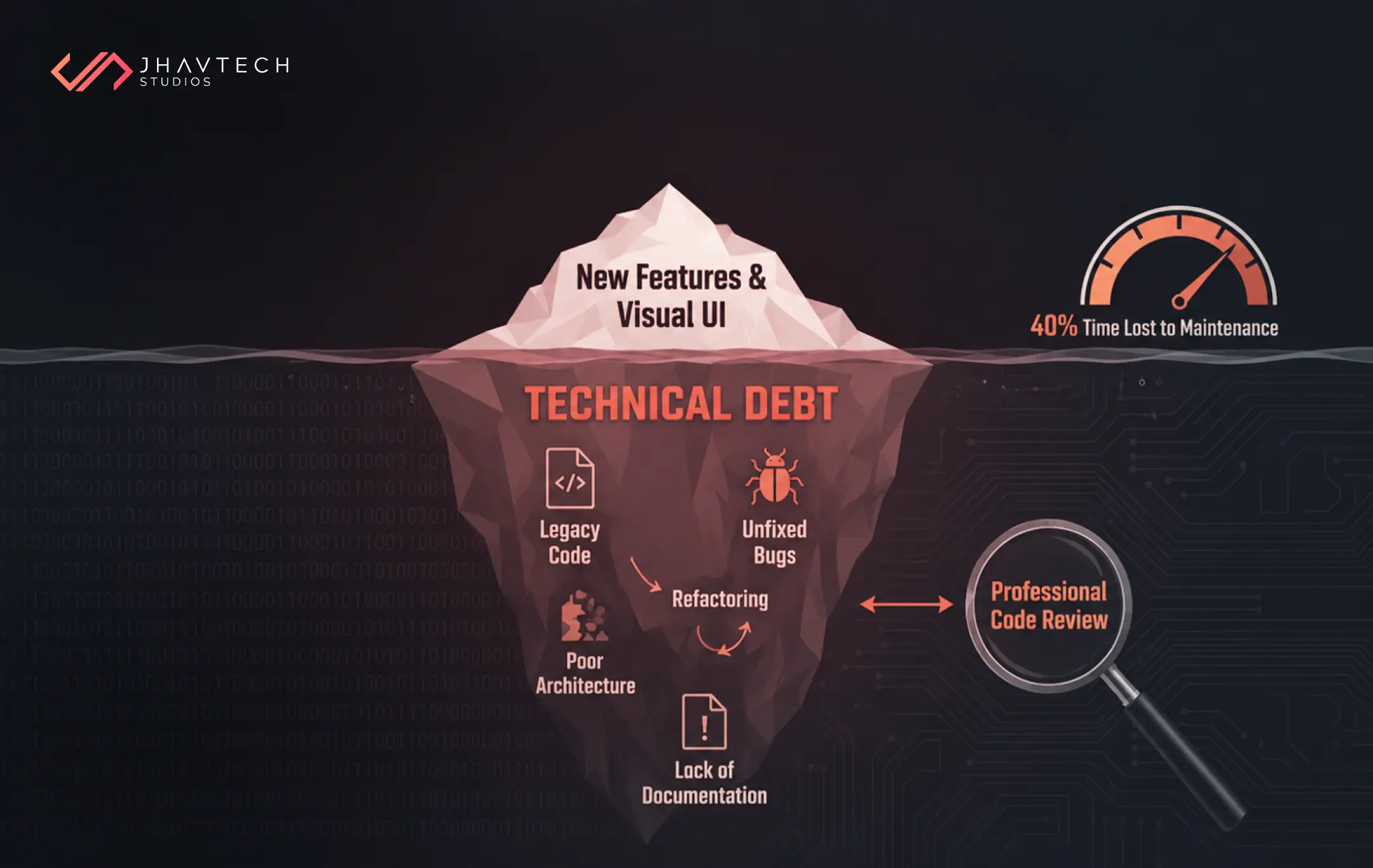
Australian startup app mistakes often stem from launching with 30 features when you need 3. You've wasted months building bells and whistles that distract from your core value proposition. Worse, you've created technical debt that makes iteration slower and more expensive. This happens because of the following:
- Fear of criticism: You add polish to avoid being judged
- Perfectionism: You've been tinkering with this for 18 months; you want it to be perfect
- Scope creep: Stakeholders keep requesting "just one more feature"
The result? Your product takes longer to launch, costs more to develop, and when you finally release it, nobody uses it because you've solved a problem that sounded important in planning meetings but doesn't resonate with actual customers.
Real MVPs have the following in common:
- One core feature that solves one problem
- Enough polish to not be embarrassing
- Metrics to track whether users actually care
- Ruthless focus on that single use case
Reason #4 – Underestimating Customer Acquisition Costs
Building Something Great Doesn't Mean Anyone Will Know About It
You've created an exceptional product. Your tech is clean, your UX is intuitive, and your pricing is fair. Surely word will spread organically? It won't.
This is where Australian startups hemorrhage money. They spend 80% of their budget on product development and 20% on getting people to actually use it. Then they wonder why their metrics look like a seismograph after an earthquake.
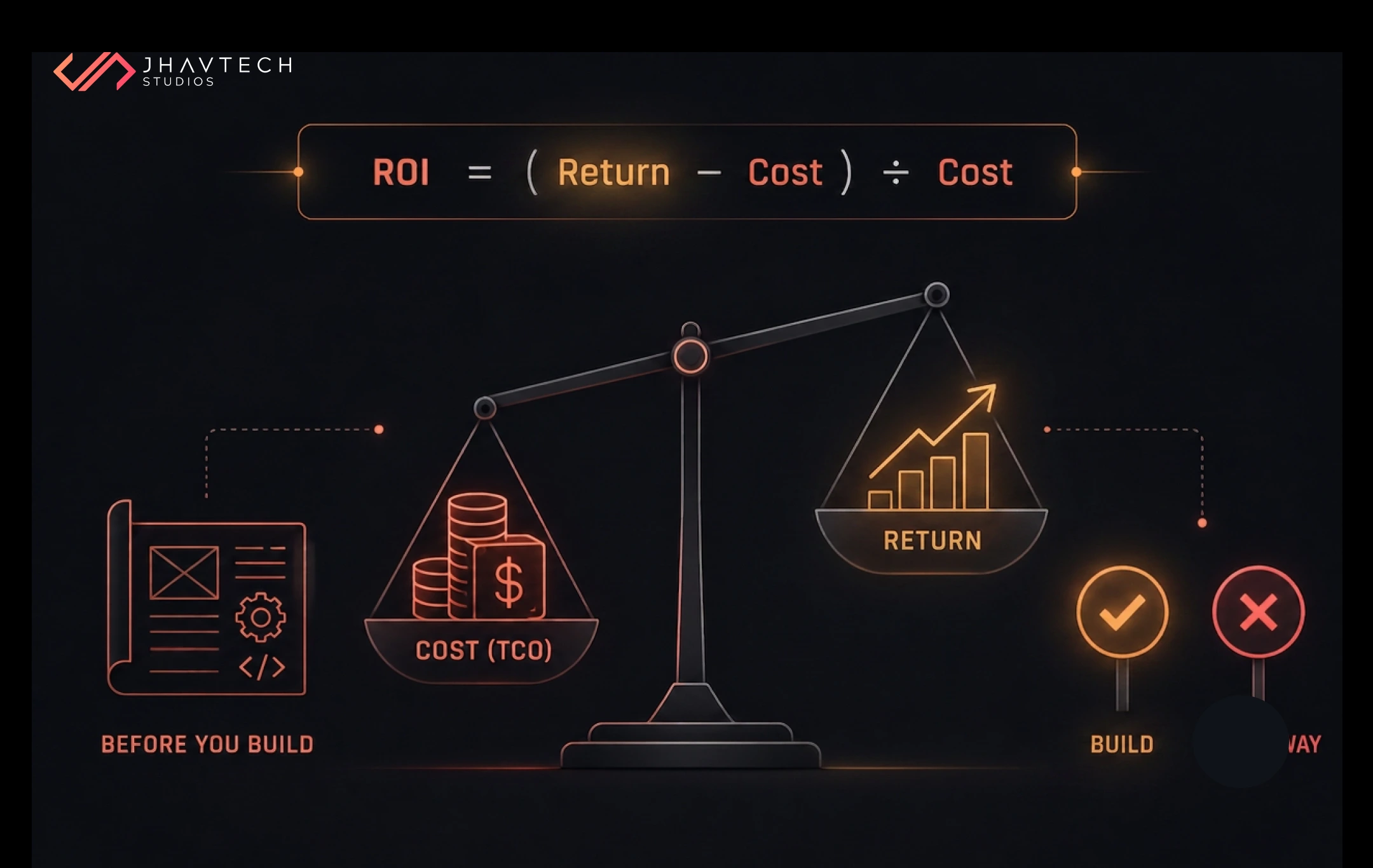
Customer acquisition is neither free nor guaranteed. Depending on your market, acquiring a single customer might cost anywhere from $20 to $500. If you haven't planned for this, you'll run out of runway before you hit any meaningful traction numbers.
Consider this: Australian venture capital funding to tech startups totaled AUD $11.6 billion in 2023, yet most of that capital is concentrated in Series B+ companies. Early-stage founders are competing for scraps while pretending that "growth hacking" and Twitter presence will drive adoption.
Your go-to-market strategy needs to be as engineered as your product architecture. You need to understand:
- Which channels deliver customers at sustainable costs (hint: it's rarely the free ones)
- What your unit economics look like at scale
- How long your customer lifetime value gives you to break even
Without this clarity, you're essentially throwing darts in the dark.
Reason #5 – Team Misalignment and Skill Gaps
The Mismatch Between Vision and Execution
Here's a scenario that plays out constantly in Australian startups: A charismatic founder with business acumen partners with a friend who "knows coding." The founder has never built a product before. The developer has never shipped anything to production at scale. Together, they're supposed to build the next unicorn.
Predictably, this creates friction. The founder wants features fast. The developer wants to do things properly. There's no shared language around technical decisions, timelines, or quality standards.
Startup tech mistakes often originate here: poor technical decisions made by non-technical founders, or poorly communicated business constraints that result in over-engineered solutions.
The skill gaps compound across hiring decisions. You bring on a designer who's never worked on consumer-facing products. You outsource backend work to a contractor who's never seen your full codebase. You hire a marketer from enterprise software who doesn't understand B2C dynamics. Each person is competent individually, but collectively, they're out of sync.
What actually work:
- Hire for cultural fit and growth mindset, not just raw skills
- Establish clear decision-making frameworks early
- Create feedback loops where technical reality informs product strategy
- Be ruthlessly honest about skill gaps and fill them proactively
Reason #6 – Ignoring User Feedback and Analytics
Data-Driven Iteration Is Harder Than It Sounds
You've launched. Users are trickling in. But instead of obsessing over why people aren't adopting your product or why churn is higher than expected, you're already planning the next feature. Confirmation bias is real, and it's killed more startups than bad code.
Australian startup product failures often come from founders who fall in love with their own solutions rather than staying obsessed with solving customer problems. You see users clicking away from a certain feature and convince yourself they're not the right fit. You watch session recordings showing users struggling with onboarding, proving you lack an intuitive, conversion-focused design, and then incorrectly decide the UI is just too modern for their generation.
Here's what you should be doing instead:
- Track key metrics rigorously: activation, engagement, retention, referral
- Implement user feedback loops that force regular customer conversations
- Run experiments before shipping major features
- Treat analytics as your source of truth, not your ego
Reason #7 – Running Out of Runway Before Hitting Critical Mass
The Cash Burn Rate That Creeps Up on You
You've got 18 months of funding, a team of 5, and ambitious growth targets. The math seems sound: if you spend $50K per month and acquire customers at $100 each, you'll hit profitability when you reach 500 paying customers.
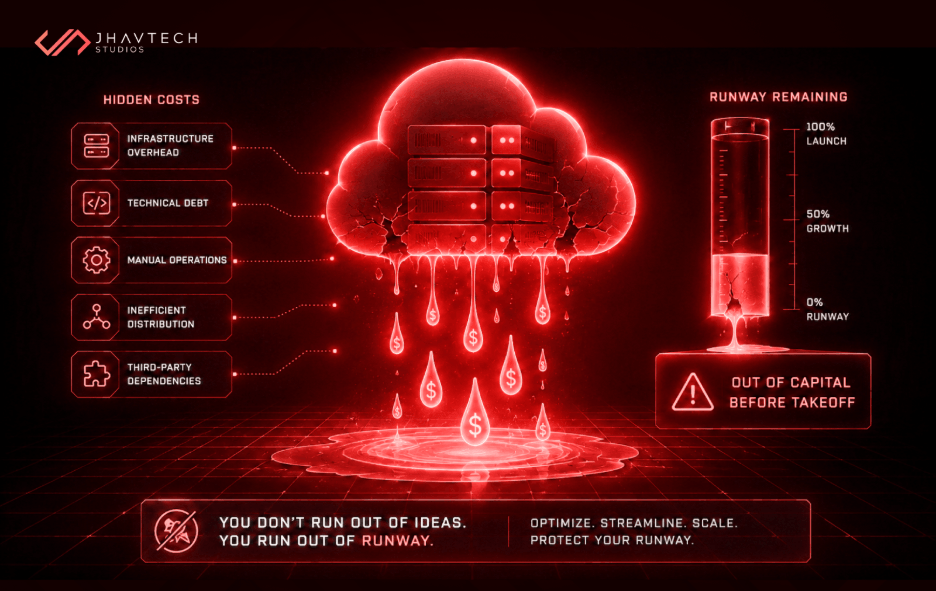
Except you'll hit 500 customers in month 14 after burning through $700K. Your growth rate slowed because distribution costs climbed higher than expected. Your payroll increased because hiring took longer than planned. Your infrastructure costs doubled because you didn't optimise database queries.
Failed MVP reasons frequently boil down to financial mismanagement. You built something people wanted, but you ran out of money before the flywheel started spinning.
The fix isn't rocket science: build detailed financial models, stress-test your assumptions, and regularly revisit your runway projections. Know your unit economics inside and out. If CAC (customer acquisition cost) exceeds LTV (lifetime value) by 3x, you're not going to stumble into profitability. You need a new strategy.
How to Actually Build Traction
If these failure modes resonate with your startup, here's what works:
- Start with customer obsession, not product obsession: Spend 3 months talking to customers before you commit to a roadmap
- Design for scale from day one: Use architects who specialise in building high-performance mobile applications that handle millions of users.
- Keep your MVP ruthlessly focused: One core insight, solved beautifully
- Build your growth strategy in parallel with your product: Marketing isn't an afterthought
- Track metrics that matter: Engagement, retention, and unit economics trump vanity metrics
Many Australian startups need more than advice. They need hands-on help rebuilding their technical foundation. If your startup's infrastructure is creaking under the weight of growth, consider bringing in specialised expertise to optimise your systems.
The Bottom Line
Australian startups have world-class talent, access to capital, and market opportunities. What they often lack is execution discipline. The difference between startups that die and startups that thrive isn't intelligence or creativity—it's the ability to validate ruthlessly, build systematically, and adapt based on evidence rather than ego.
Most failures aren't catastrophic pivots or market collapses. They're the accumulation of small decisions: cutting corners on architecture, launching without validation, ignoring metrics, burning through cash before hitting critical mass.
Your startup doesn't have to be another statistic. It requires honest assessment of where you are, uncompromising focus on what matters, and the wisdom to know when you need outside expertise. The time to address these issues isn't after you've failed. It's now.
Frequently Asked Questions


.webp)
.webp)
.webp)

.webp)
.webp)
.webp)

.webp)

.webp)
.webp)






.png)
.png)
.png)
.png)
.png)
.png)

.png)
.png)
.png)
.png)
.png)
.png)
.png)



.png)

.png)

.png)





.png)
.png)
.png)
.png)
.png)
.png)
.png)
.png)
.png)
.png)
.png)

.png)
.png)

.png)
.png)
.png)
.png)
.png)
.png)
.png)



.png)
.png)
.png)
.png)
.png)
.png)
.png)
.png)
.png)
.png)

.png)
.png)
.png)

.png)