.svg)
.svg)


The champagne corks have popped. The development team has high-fived. Your application is officially live on the App Store and Google Play. For many founders and project managers, this feels like the finish line. In reality, the “Go-Live” date is simply the starting gun for a whole new marathon.
The digital landscape is not a static shelf; it is a shifting ecosystem of operating system updates, evolving security threats, and changing user expectations. If you treat your software like a physical product that is finished once it leaves the factory, you are setting yourself up for a crash. Statistics show that the real work and the real risk starts now. In fact, industry data suggests that nearly 60% of software project failures occur because requirements and technical health drift apart after the initial launch.
To keep your digital asset from becoming a liability, you need a robust strategy for software support & maintenance. Without it, the very tool built to grow your business could become the bottleneck that breaks it.
Why App Maintenance Is Important After Launch
Why can’t you just leave a “finished” app alone? The answer lies in the concept of software rot. Even if your code doesn’t change, the world around it does. Apple and Google release major OS updates annually, and minor patches almost monthly. According to the 2024 Mobile App Stability Outlook, there is a direct correlation between maintenance and user retention: leading apps now maintain a 99.9% crash-free rate. The study identifies a “critical stability threshold” at 99.7%; apps that dip below this mark see a massive spike in uninstalls, often losing up to 42% more monthly active users than their high-performing competitors.
When users encounter a bug in a live environment, their patience is thin. Research indicates that less than 5% of users remain engaged with an app 30 days after download if the experience is suboptimal. This is where post-launch support services become your primary defense against churn. By monitoring performance in real-time, you can catch edge-case bugs that were invisible during the initial code review phase but became glaringly obvious once thousands of people started clicking simultaneously.
The Role of Application Lifecycle Management (ALM)
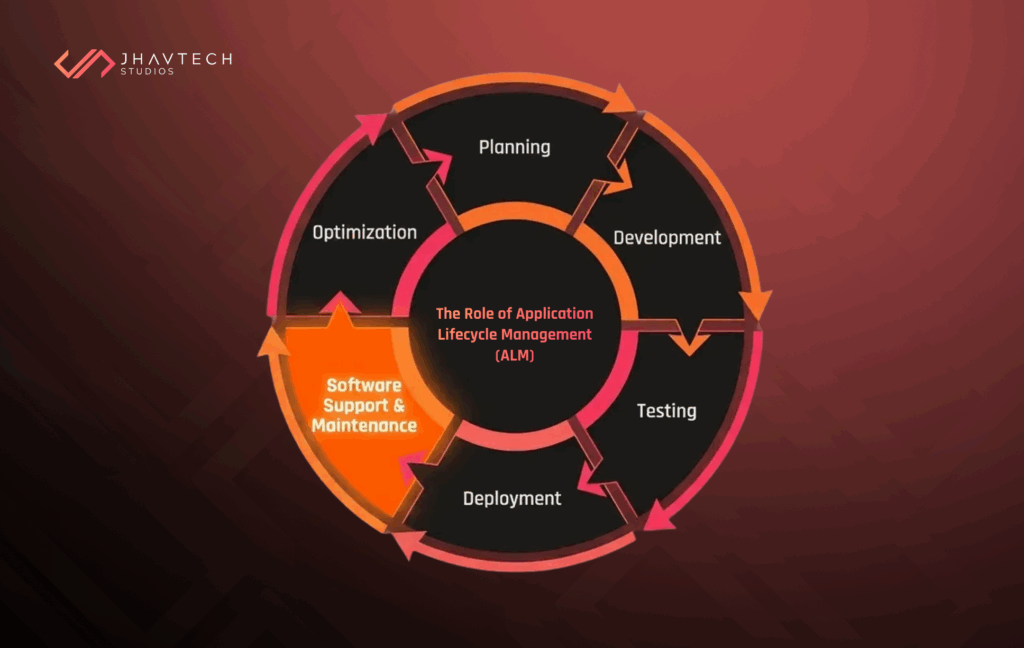
Successful software isn’t built in a vacuum; it is managed through Application Lifecycle Management (ALM). ALM is the continuous process of overseeing an application from its initial planning through its retirement. It shifts the focus from “project delivery” to “product longevity.”
Organisations that implement strict ALM practices have seen operational costs fall by as much as 71%. Why? Because ALM ensures that every update, every security patch, and every new feature is tracked and integrated into the existing ecosystem. Without this high-level governance, your software becomes a “black box” where no one is quite sure how a change in the login screen might accidentally break the checkout process. This is particularly vital in mobile app development, where the variety of hardware and screen sizes makes manual oversight impossible.
The Growing Shadow of Technical Debt
One of the most dangerous problems that begins the moment your app goes live is the accumulation of technical debt. This term refers to the “interest” you pay when you choose a quick, messy fix over a long-term, stable solution.
During the rush to meet a launch deadline, it is common for teams to take shortcuts. While this might get you to market faster, the McKinsey report for 2024 highlights that technical debt now accounts for up to 40% of the entire technology estate for modern companies. If you don’t invest in regular software support & maintenance, you aren’t just ignoring bugs—you are accruing high-interest debt that will eventually make it impossible to add new features or scale your platform.
Managing the Cost of Success
As your user base grows, so does the strain on your infrastructure. What worked for 100 beta testers will likely buckle under the weight of 10,000 active users. This is where IT consulting plays a pivotal role. A consultant can help you navigate the transition from a “minimum viable product” to a high-performance enterprise system.
Maintaining an app typically costs between 15% and 25% of its original development budget annually. This budget isn’t just for “fixing things that are broken.” It covers:
- Adaptive Maintenance: Ensuring compatibility with new APIs and OS versions.
- Perfective Maintenance: Improving the UI/UX design based on how real people are actually using the app.
- Preventive Maintenance: Hardening security before a breach occurs.
Knowing When You Need a Software Project Rescue
Sometimes, maintenance isn’t enough. If an app was built on a shaky foundation or neglected for years, it may enter a state of “functional obsolescence.” You might notice that every time you fix one bug, two more appear. This is the “spaghetti code” nightmare that often requires a software project rescue.
A rescue is more intensive than standard software support & maintenance. It involves deep-diving into the architecture to untangle legacy issues and restore the platform to a maintainable state. Jhavtech Studios often works with clients who realise too late that their initial “budget” developer left them with a product that cannot be updated. By establishing a partnership for managed software maintenance and support for startups, you can avoid the “rescue” phase entirely and keep your costs predictable.
Security and the DevOps Advantage
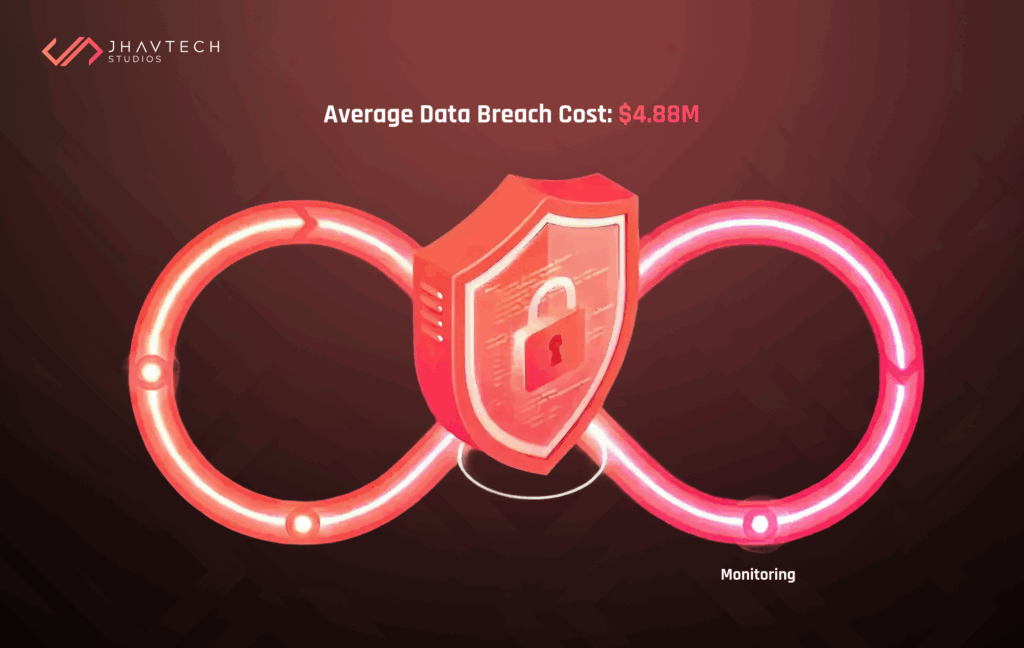
In 2024, the average cost of a data breach reached an all-time high. The global average has now climbed to $4.88 million according to the latest IBM/Ponemon Institute figures, with the U.S. and Australia often seeing even higher localised costs. For many businesses, a single security vulnerability is a “day zero” event that can end the company. Security is not a one-time setup; it is a core component of software support & maintenance.
This is why modern teams rely on DevOps. By integrating development and operations, DevOps creates a continuous loop of testing, deployment, and monitoring. It allows for ‘automated dependency scanning,’ which flags outdated libraries that might have known vulnerabilities. When you have a dedicated team handling your software support & maintenance, security patches are applied in hours, not weeks.
Why App Maintenance Is Important After Launch: The Human Element
Beyond the code, there is the user. Post-launch is the only time you get “honest” data. Your initial UI/UX design was based on hypotheses; your post-launch updates are based on reality.
If heatmaps show that users are getting stuck on your sign-up page, you need the agility to tweak that flow immediately. Software support & maintenance provides the framework to turn user feedback into functional improvements. Studies show that apps receiving regular updates (at least once a month) experience 35% higher user retention than those updated quarterly.
Partnering for Long-Term Stability
Building an app is like building a house. Launching it is like the day you move in. You wouldn’t expect a house to stay in perfect condition for ten years without any cleaning, repairs, or upgrades to the plumbing. Your software is no different.
At Jhavtech Studios, we believe that software support & maintenance is the most critical phase of the development cycle. It is where value is protected and growth is enabled. By leveraging professional post-launch support services, you ensure that your team can focus on business strategy while the technical experts ensure the “engine” stays running at peak performance.
Conclusion: Is Your App Ready for Day 2?
The ‘real problems’ that begin after launch are only problems if you aren’t prepared for them. By embracing Application Lifecycle Management (ALM) and committing to a schedule of software support & maintenance, you transform these challenges into opportunities for refinement.
Don’t let technical debt or a lack of DevOps protocols sink your investment. Whether you need a simple update or a full software project rescue, the key is to act before the problems become visible to your customers. Your app is live… now make sure it stays that way. Through consistent software support & maintenance, your digital product will not only survive the ‘real problems’ of post-launch life but will thrive and evolve alongside your business.
Remember, the goal of software support & maintenance isn’t just to keep the lights on; it’s to ensure your app remains the high-performance tool your users expect and your business deserves. Don’t wait for a crash to realise the value of a support plan; start protecting your future today. With multiple mentions of software support & maintenance throughout this guide, the message is clear: the post-launch phase is where champions are made.
Don’t let your post-launch success turn into a technical headache. Partner with the experts who specialise in managed software maintenance and support for startups. Contact Jhavtech Studios today to ensure your digital journey is a long-term success.