.svg)
.svg)


How to Prepare Your Startup for Rapid Product Scaling

A solid startup scaling strategy means getting four things ready before growth hits: infrastructure that won't buckle under traffic spikes, a technology roadmap that matches where the business is headed, operations that can absorb new hires and new customers without chaos, and a runway long enough to survive the bumps. Startups that scale before nailing these fundamentals are the ones you read about in the "what happened to them?" threads a year later.
There's a strange kind of dread that hits founders right after things start going well. The demo calls turn into signed contracts. The waitlist actually converts. Then, a few weeks in, the app starts timing out during peak hours, support tickets pile up faster than anyone can answer them, and the engineering team is quietly panicking in a Slack channel you're not part of.
Growth is supposed to feel like a win. And it is, until the systems underneath it start cracking.
If you're a founder, CTO, or operations lead trying to figure out how to prepare your startup for rapid scaling instead of just reacting to it, this blog walks through what actually matters: the infrastructure choices, the roadmap decisions, and the operational habits that separate startups that scale well from the ones that scale themselves into a wall.
Why Most Scaling Attempts Fail Before They Even Start
Here's the uncomfortable truth. Most startups don't fail because they couldn't grow. They fail because they grew in the wrong order.
Research from the Startup Genome Project found that roughly 74% of failed startups scaled prematurely, building out teams and pouring money into marketing before they'd actually confirmed product-market fit. That's not a small footnote. It's the single biggest predictor of failure in their dataset, ahead of running out of cash or building the wrong product entirely.
CB Insights tells a similar story from a different angle. In their post-mortem analysis of failed companies, 62% of shutdowns involved losing market momentum or simply being unable to scale operations fast enough to keep up with demand.
Put those two numbers side by side and a pattern shows up: startups die from scaling too early just as often as they die from not being able to scale at all. The lesson isn't "avoid growth." It's "build the scaffolding before you build the tower."
What "Startup Scaling Strategy" Actually Means
A lot of founders use 'scaling' and 'growing' interchangeably, but they're not the same thing.
Growth is adding more revenue by adding proportionally more resources: more sales reps, more ad spend, more servers. Scaling is adding revenue without a matching jump in cost or headcount, because the underlying systems, product, infrastructure, and processes were built to absorb volume in the first place.
A startup scaling strategy, then, is really a plan for making growth cheap and safe instead of expensive and fragile. It touches product architecture, your tech stack, hiring sequencing, and how customer-facing teams operate, not just your marketing funnel.
The Core Pillars of a Startup Scaling Strategy
Every scaling plan we've seen work at Jhavtech, and every one we've seen fall apart, comes down to the same five areas. It's rarely one catastrophic decision that sinks a scaling push. It's usually a handful of small, unexamined defaults, the database that was never meant to hold this much data, the process that only ever lived in one person's head, quietly compounding until they collide at the worst possible moment. Treat these five pillars as a pre-flight check, not a wish list, and most of that collision is avoidable. Here's how early-stage habits typically compare with what a scale-ready startup looks like.
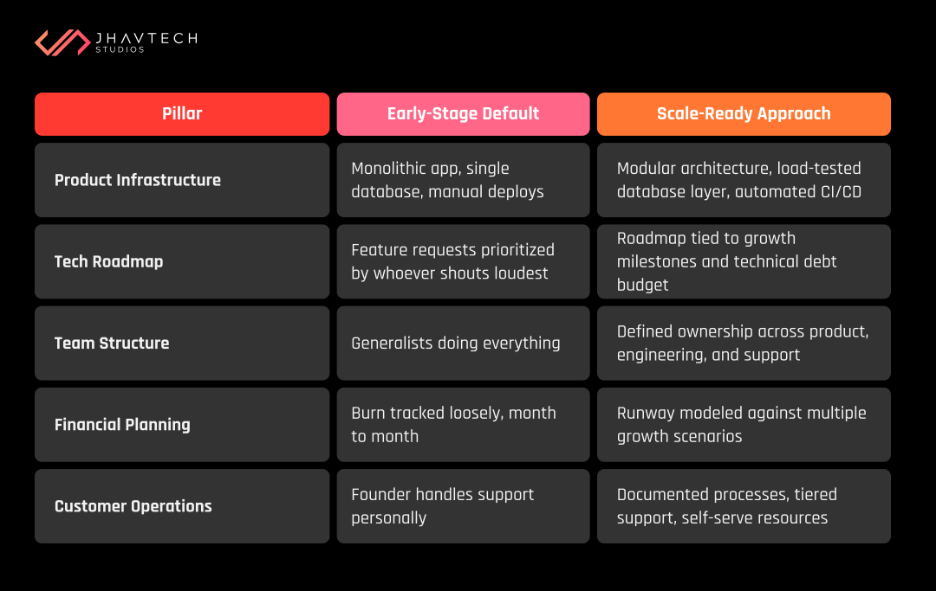
None of these need to be ‘enterprise-grade’ on day one. But each one needs an honest owner and a plan for when it will get outgrown, because it will.
Building Product Infrastructure That Doesn't Buckle Under Growth
Infrastructure is where scaling ambitions usually meet reality first, and it's rarely gentle. The New Relic 2025 Observability Forecast, which surveyed over 1,700 IT and engineering professionals across 23 countries, found that high-impact outages now carry a median cost of roughly $2 million per hour, pushing the average annual cost of downtime for mid-to-large businesses into the tens of millions. For a startup running on thin margins and investor patience, even a fraction of that impact can be existential.
The good news is that most of this is preventable with decisions made well before the traffic spike hits:
- Move away from monolithic dependencies early. A single database or server handling everything works fine at 500 users and becomes your biggest liability at 50,000.
- Load test before you need to, not after something breaks. Simulate your next growth milestone, not just your current traffic.
- Automate deployment and rollback. Manual deploys are fine for a two-person team. They're a liability once ten engineers are shipping code weekly.
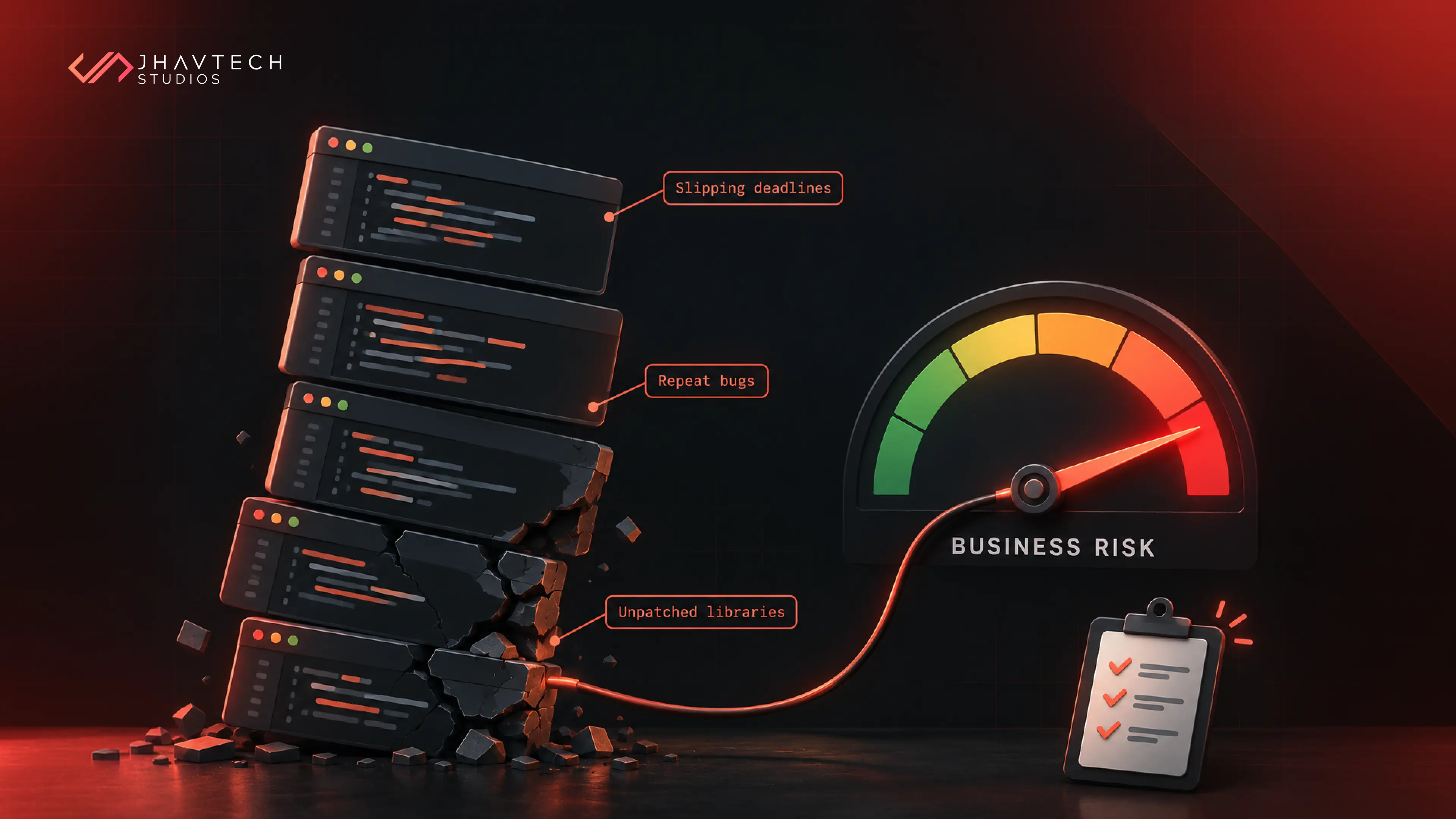
- Audit technical debt on a schedule, not in a crisis. If your codebase has quietly become unmanageable, that's usually visible months before it becomes a five-alarm fire, which is exactly the kind of pattern we break down in our breakdown of the warning signs your software is becoming unmanageable.
If your platform is already showing strain and you're not confident it can handle the next growth phase, an outside set of eyes tends to catch what internal teams miss simply because they're too close to it. That's the entire premise behind stepping in before a struggling platform buckles under its own growth: catching the structural problems before they turn into outages
SaaS Growth Planning: Aligning Product, Revenue, and Ops
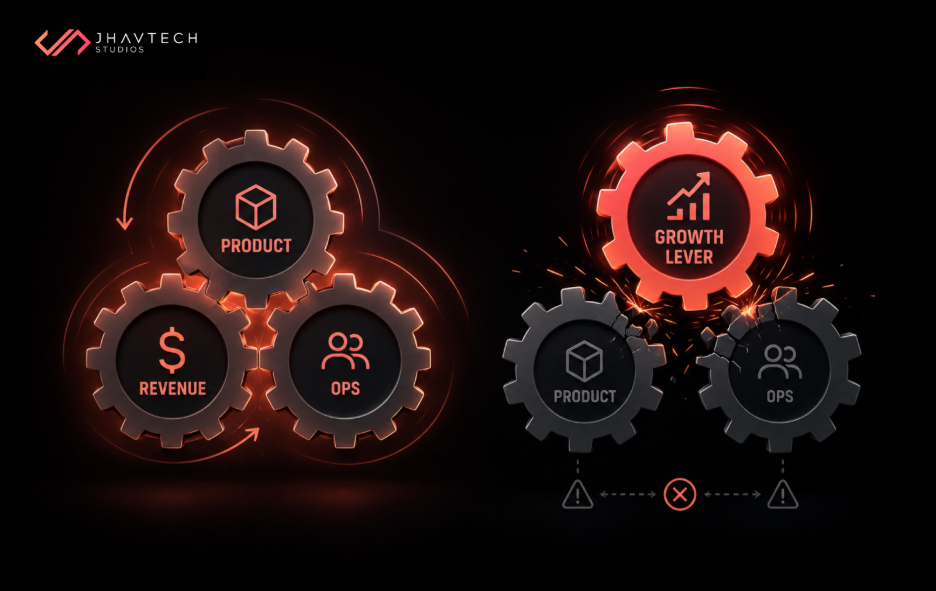
For SaaS founders specifically, growth planning has to connect product decisions to revenue reality, not run on a separate track. A pricing change, a new tier, or a feature push that drives signups all put direct pressure on infrastructure, support volume, and onboarding capacity at the same time.
This is exactly where premature scaling bites hardest. Adding paid acquisition or sales headcount before your product can reliably handle the resulting load doesn't just risk downtime, it risks churning the very customers you just paid to acquire. We covered this trap in more depth in our piece on what happens when apps scale before they're ready, and it's worth reading before you greenlight your next growth push.
A practical rule of thumb: for every growth lever you pull (ad spend, a new pricing tier, a partnership that sends a wave of new users), ask what breaks first if that lever works better than expected. If you don't have a confident answer, that's your next infrastructure priority.
Your Startup Technology Roadmap: A Practical Framework
A technology roadmap built for scaling looks different from a typical feature roadmap. It's less about what customers are asking for this quarter and more about what capacity the business will need in six, twelve, and eighteen months.
A few things worth building into that roadmap from the start:
- Milestone-based triggers, not calendar dates. Plan infrastructure upgrades around user or revenue thresholds rather than arbitrary dates.
- A visible technical debt budget. Set aside a fixed percentage of every sprint for debt reduction so it never competes directly with new features and always loses.
- Investor-readiness as a side effect, not an afterthought. Investors doing diligence look closely at whether your stack can actually support the growth projections in your deck. We break down exactly what they check in our guide to what investors evaluate in a startup's technology stack, and a roadmap built with scaling in mind tends to pass that review without extra scrambling.
- Regular external code review. Even strong internal teams develop blind spots. A structured, outside review of your codebase before a major raise or growth push is one of the cheapest insurance policies available to a startup.
If you're weighing whether to build new customer-facing experiences in-house or bring in specialist support to move faster, it's also worth having an honest conversation about how dedicated development expertise can shorten your path to a scalable release rather than stretching an already thin internal team even thinner.
Scaling Operations Without Losing Culture or Speed
Infrastructure gets most of the attention, but operational scaling quietly determines whether your team can execute the roadmap you just built.
The common failure pattern looks like this: headcount grows, but decision-making processes don't. Suddenly nobody's sure who owns a call, meetings multiply, and the speed advantage that made the startup competitive in the first place erodes. This is also frequently where legacy tooling decisions from the early days start actively working against the team, a dynamic we've written about in our analysis of how legacy software quietly slows business growth.
A few habits that keep operations scalable:
- Document processes the moment they're repeated a third time, not after they've broken twice.
- Assign clear ownership for each pillar in the table above; shared ownership tends to mean no ownership.
- Build customer self-serve resources before support volume forces you to.
- Revisit your org chart every funding milestone, not just once a year.
A Pre-Scaling Readiness Checklist
Before you push hard on growth, run through this list honestly. If you're answering "no" to more than two or three of these, that's your priority list, not your growth plan.
[ ] Our infrastructure has been load-tested against our next growth milestone, not just current traffic
[ ] We have automated deployment and rollback processes in place
[ ] Technical debt is tracked and budgeted, not just discussed when something breaks
[ ] Our technology roadmap is tied to specific growth triggers, not arbitrary dates
[ ] Support processes are documented and don't rely solely on the founding team
[ ] We know exactly what breaks first if our next growth push works better than expected
[ ] Our codebase has had an external review within the last 6 to 12 months
[ ] Financial runway has been modeled against at least two growth scenarios, not just one
Final Thoughts...
Scaling isn't a reward for good product-market fit. It's a separate skill set, and it's one most founders only learn by getting it wrong once. The startups that handle rapid growth well aren't the ones with the flashiest product. They're the ones who treated infrastructure, roadmap planning, and operations as seriously as they treated the product itself, well before the growth curve forced their hand.
If you're staring down a growth spike and you're not confident your systems will hold, that's not a sign to slow down. It's a sign to get a second, experienced set of eyes on the problem before it becomes an outage, a churned customer, or a missed investor milestone.
Frequently Asked Questions






.png)
.png)
.png)

.png)
.png)
.png)

.png)
.png)
.png)
.png)
.png)
.png)
.png)
.png)
.png)
.png)
.png)
.png)


.png)

.png)
.png)
.png)
.png)
.png)
.png)
.png)
.png)

.png)
.png)
.png)
.png)
.png)
.png)
.png)
.png)
.png)
.png)


.png)
.png)
.png)

.png)
.png)
.png)
.png)

.png)
.png)
.png)


.png)
.png)
.png)

.png)

.png)



.png)


.png)





.png)



.png)







.png)

.png)




.png)