7 IT Investment Decisions Business Leaders Should Get Right Before Spending
Summary: What You Need to Know
- Most IT investment regret is a decision problem, not a vendor problem. The money was committed before anyone wrote down what success looked like, who owned the outcome, or what the exit looked like if it went badly.
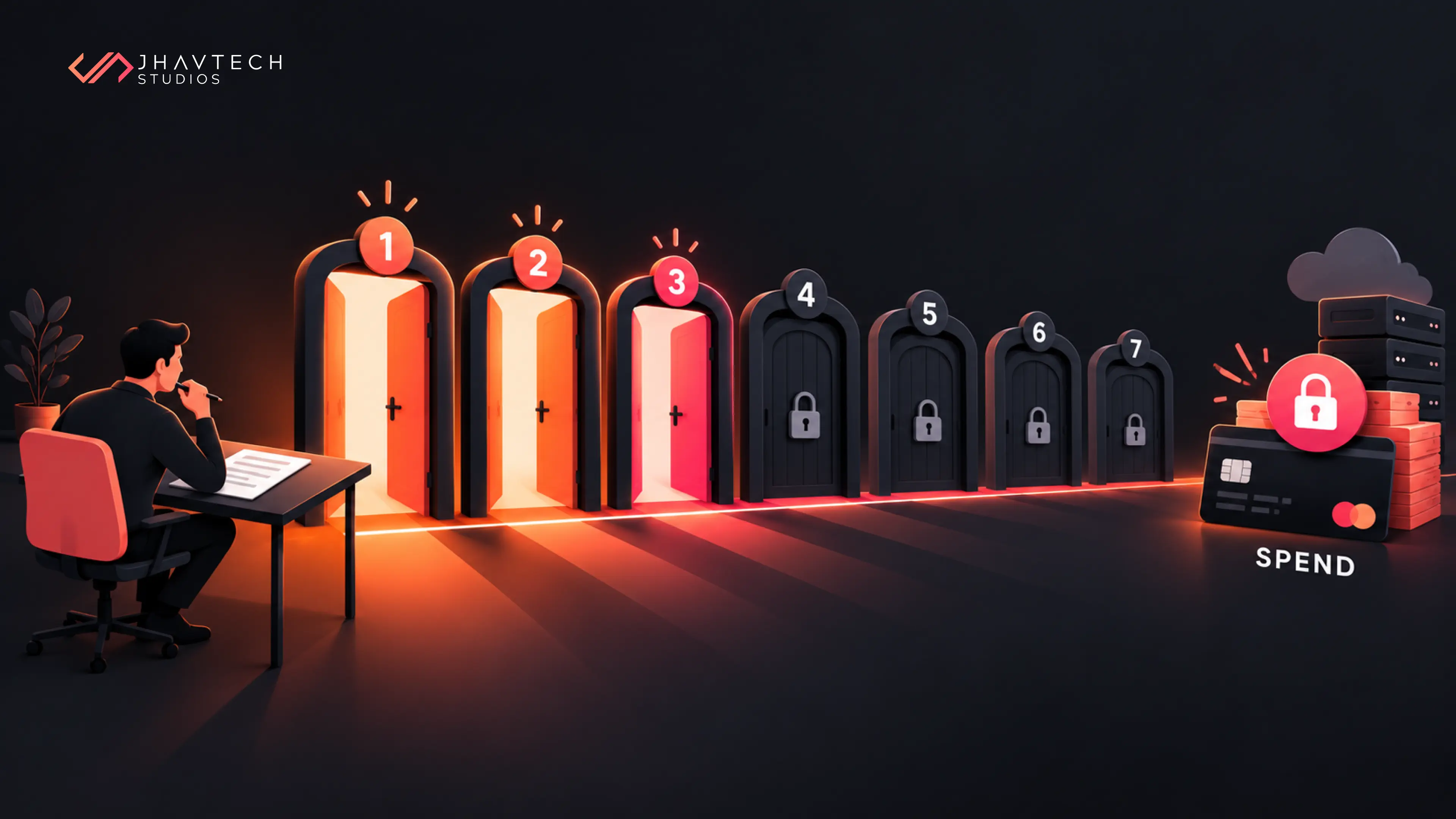
- Seven decisions do most of the damage: the problem you are solving, how your IT budget allocation is split, whether you build or buy, which process gets automated first, how far ahead your infrastructure is planned, what the contract lets you walk away from, and how you will measure the result.
- Gartner forecast worldwide IT spending of US$6.37 trillion in 2026, up 14.2% on 2025. Prices and expectations are both rising, which makes a sloppy decision more expensive than it was two years ago.
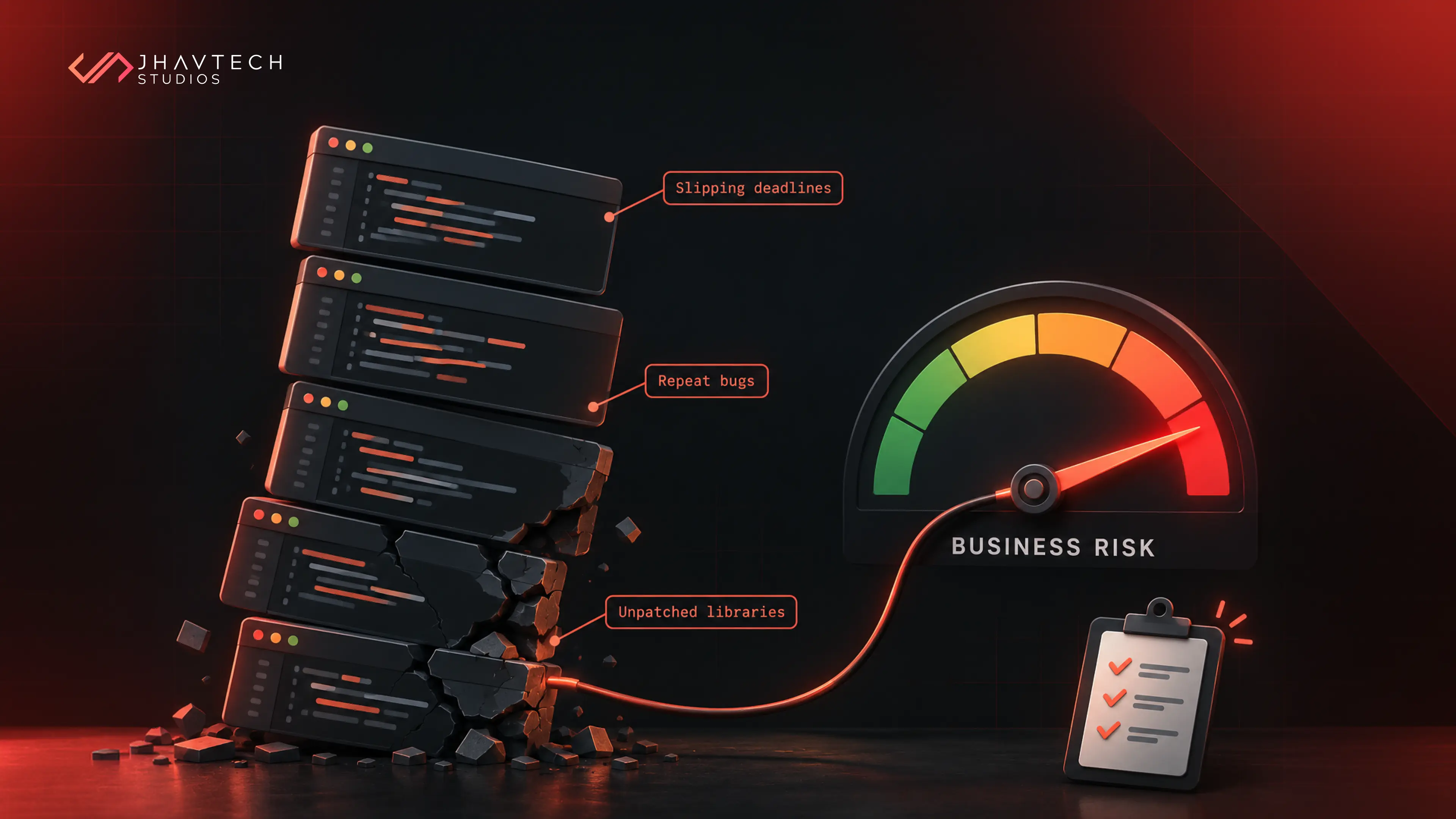
- The Australian Signals Directorate put the average self-reported cost of cybercrime for a small business at $56,600 per report in 2024–25, a 14% jump. Security is a line item in every technology purchase now, whether or not you listed it.
- The table and checklist below give you a defensible position before you sign anything.
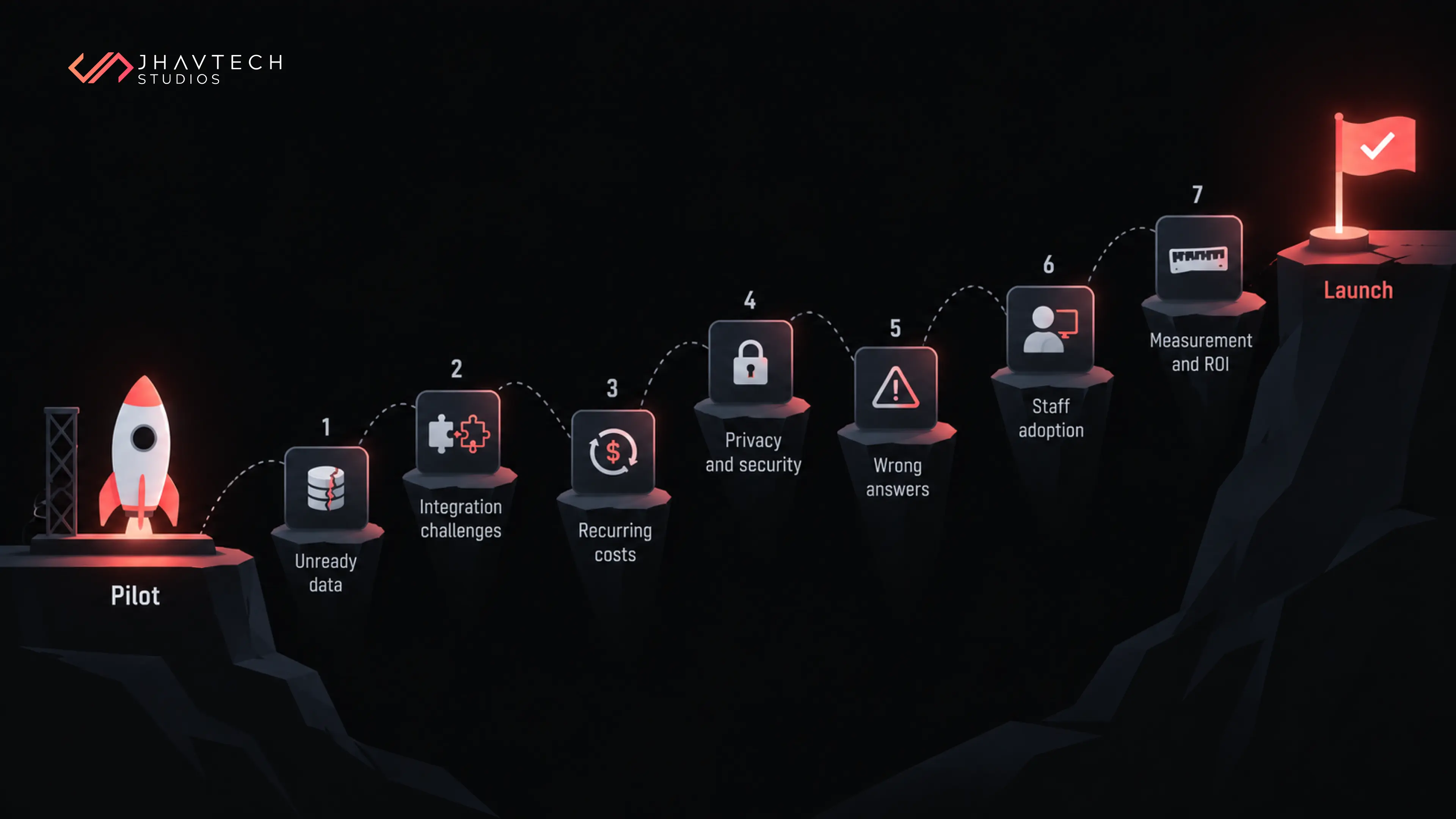
A services business we spoke with last year had signed for a new operations platform. Eighty thousand dollars across the first eighteen months, picked after three demos and a reference call. Sensible process, on paper.
Ten months later they were still running the old spreadsheets alongside it. The software was fine. What never got settled, before the money moved, was which of the four problems it was meant to fix came first, and who in the business had the standing to tell people their job was changing on Monday.
That is the shape of most bad IT investment, and we see the aftermath often enough at Jhavtech Studios, usually when a founder calls us to audit a platform that has been live for a year and still nobody trusts. The product is rarely the culprit. The decision around it was made by whoever happened to be in the room on the day, and no one wrote down why.
Gartner now forecasts worldwide IT spending will hit US$6.37 trillion in 2026, up 14.2% on the previous year, with data center and AI infrastructure pulling the hardest (Gartner, July 2026). Everyone around you is spending more. That is not a reason to join in, and it is a very good reason to be sharper about how you choose.
Here are the seven decisions worth getting right while they are still cheap to change.
Decision 1: Which Problem Are You Buying Your Way Out Of?
Ask five people in a twenty-person company why you need the new system and you will get five answers, most of them reasonable. Sales wants pipeline visibility. Finance wants month-end invoicing to stop eating every second Thursday, which it has done since the last migration. Ops has a different complaint altogether, which is that jobs keep falling through the gap at handover and someone has to ring the client. And somewhere in the mix there is usually a founder who read something on a flight.
All four are real. They are not the same project, and software that chases all four lands badly on each.
Write one sentence before anything else: we are spending this money so that X stops happening. If the sentence needs an "and", you have two projects. Sequence them.
The test that sorts the serious from the vague is a number. How many hours a week does the problem cost, or how much revenue does it leak? A business owner who cannot answer that is not ready to spend, and the answer takes a fortnight of watching, not a workshop.
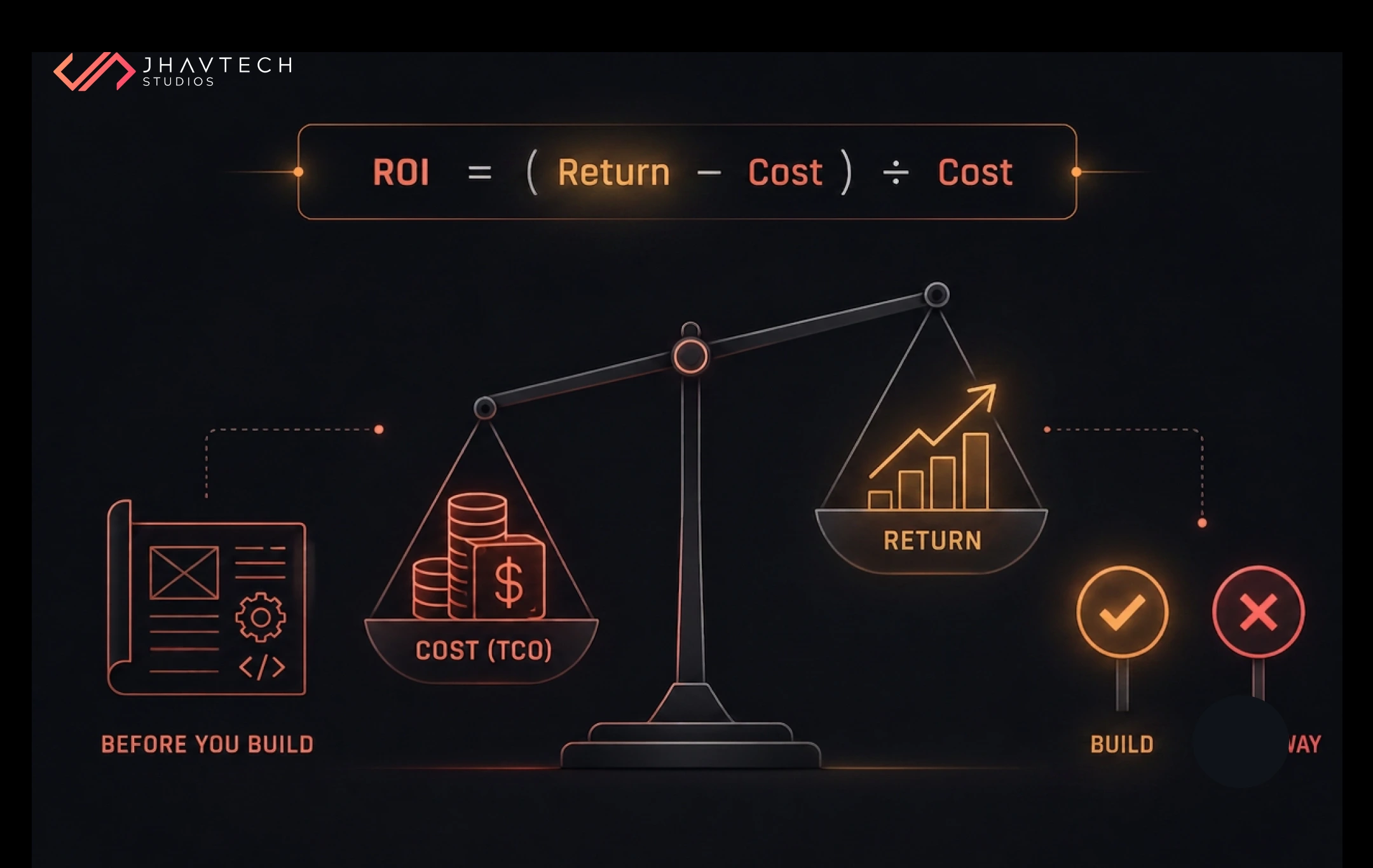
One caution on scope. The problem you name becomes the brief, and briefs written in a hurry produce builds that need rescuing a year later. Our guide to working out the return before a line of code exists walks through putting a dollar figure on the problem first.
Decision 2: How Is the IT Budget Split?
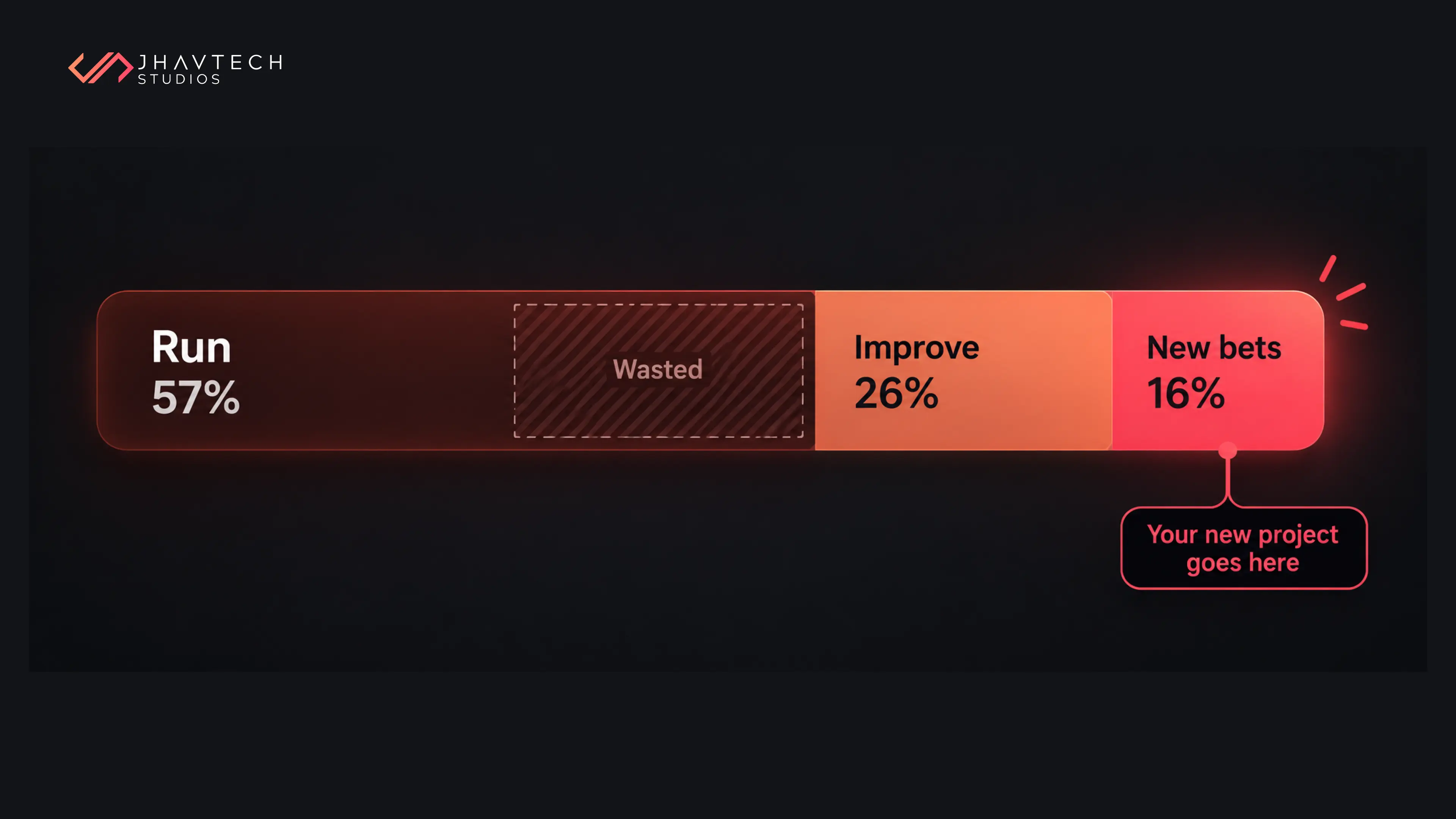
Most well-run businesses land on the same split eventually, usually after learning it the hard way: money goes into keeping things running, improving what you already own, and new bets. The proportions vary by industry and stage. The habit of knowing them does not.
If you have never looked, go and look. Pull twelve months of technology spend into a spreadsheet and tag every line. Licences, hosting, the contractor who keeps the integration alive, phones, the security tooling, the thing nobody can cancel because something might break.
The number that matters is what percentage of your IT budget allocation goes to simply standing still. Deloitte’s Global CIO Survey benchmark puts the average at 57% on business operations, with 26% going to incremental change and 16% to innovation (Deloitte, Technology budgets). Most growing SMEs sit higher than that, and once you are well clear of it the new investment you are contemplating has nowhere to live, because every spare dollar and every spare engineer is already committed to maintenance.
This is where unused software hides. Seats bought for a headcount you never hit. Two tools doing one job because two departments bought separately. A platform that survived the team that championed it. Cancelling three of those often funds the project you were about to borrow for. Flexera’s 2026 State of the Cloud Report, drawn from more than 750 cloud decision-makers, found respondents estimate 29% of cloud spend is wasted, the first increase in five years (Flexera, March 2026). That is infrastructure alone, before anyone counts the licences.
A rough working rule, and this one is ours rather than anyone’s research: if run costs are above 70%, your next spend should reduce that number rather than add to it.
Decision 3: Build, Buy, or Stitch Together What You Have?
The honest version of this question is not "which is cheaper". It is "which part of this is genuinely ours".
Payroll is not yours. Accounting is not yours. Email, storage, video calls, none of it. Buy those, and buy the boring well-supported option, because the hours you spend being clever there earn nothing.
What is yours is the thing a customer would notice if it disappeared. The way you price a job. The workflow that lets you quote in a day when competitors take a week. The data you hold that nobody else has. Custom work pays for itself there and almost nowhere else.
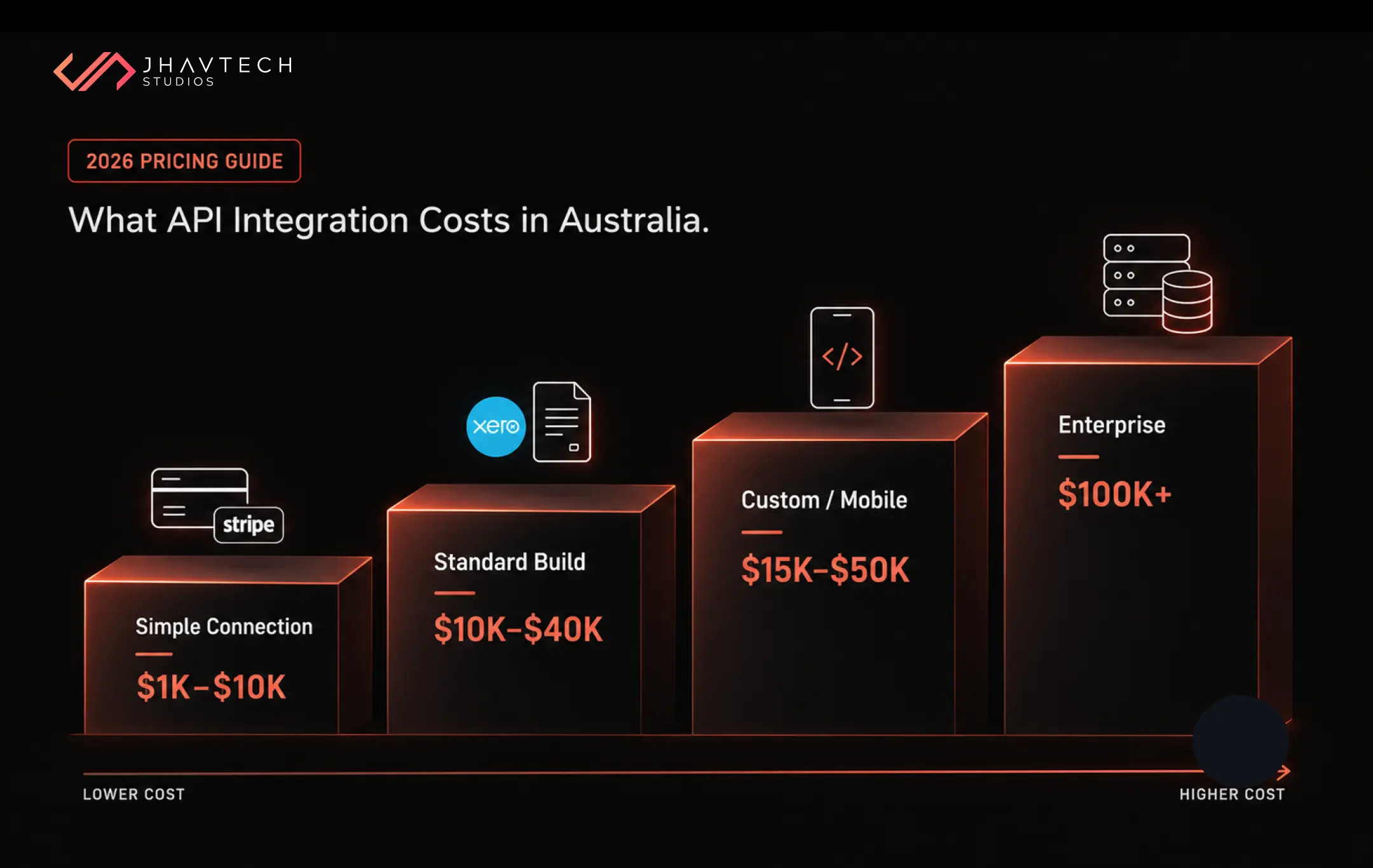
There is a third option people forget, and it is often the right one for an SME. You already own several systems. The gap between them is where the manual work lives. Connecting two platforms properly can cost a fraction of replacing either, and it ships in weeks. We put real figures against that in our breakdown of what integration work costs in Australia this year.
If the thing you need is customer-facing and the experience is the product, that is the point where a purpose-built app your competitors cannot buy off a shelf starts to make commercial sense rather than just technical sense.
Decision 4: Which Process Gets Automated First?
Business process automation fails for a predictable reason. Companies automate the loudest process instead of the most repeatable one.
The loudest process is usually loud because it is messy, political, or has exceptions nobody has documented. Automating it hard-codes the mess. Six months later you have an expensive system that encodes a bad process and is harder to change than the spreadsheet it replaced.
Before you pick, score the candidates on how often the process runs, how consistent it is from one run to the next, and what a mistake costs you when it slips through. A weekly task done eleven different ways is not a candidate yet.
High frequency, high consistency, and meaningful cost of error is where automation pays. Invoice matching. Onboarding paperwork. Status updates that someone currently types into three places. Not much glory in any of it, which is exactly why it works.
Australian businesses are moving quickly here. The ABS found 12% of businesses reported using artificial intelligence in 2023–24, up from 1% the year before (ABS, Characteristics of Australian Business). The figure says nothing about how much of that adoption was preceded by any process work at all, which is the part worth being deliberate about.
Fix the process on paper. Then automate it. The order is not optional.
Decision 5: Does the Infrastructure Survive Three Years of Growth?
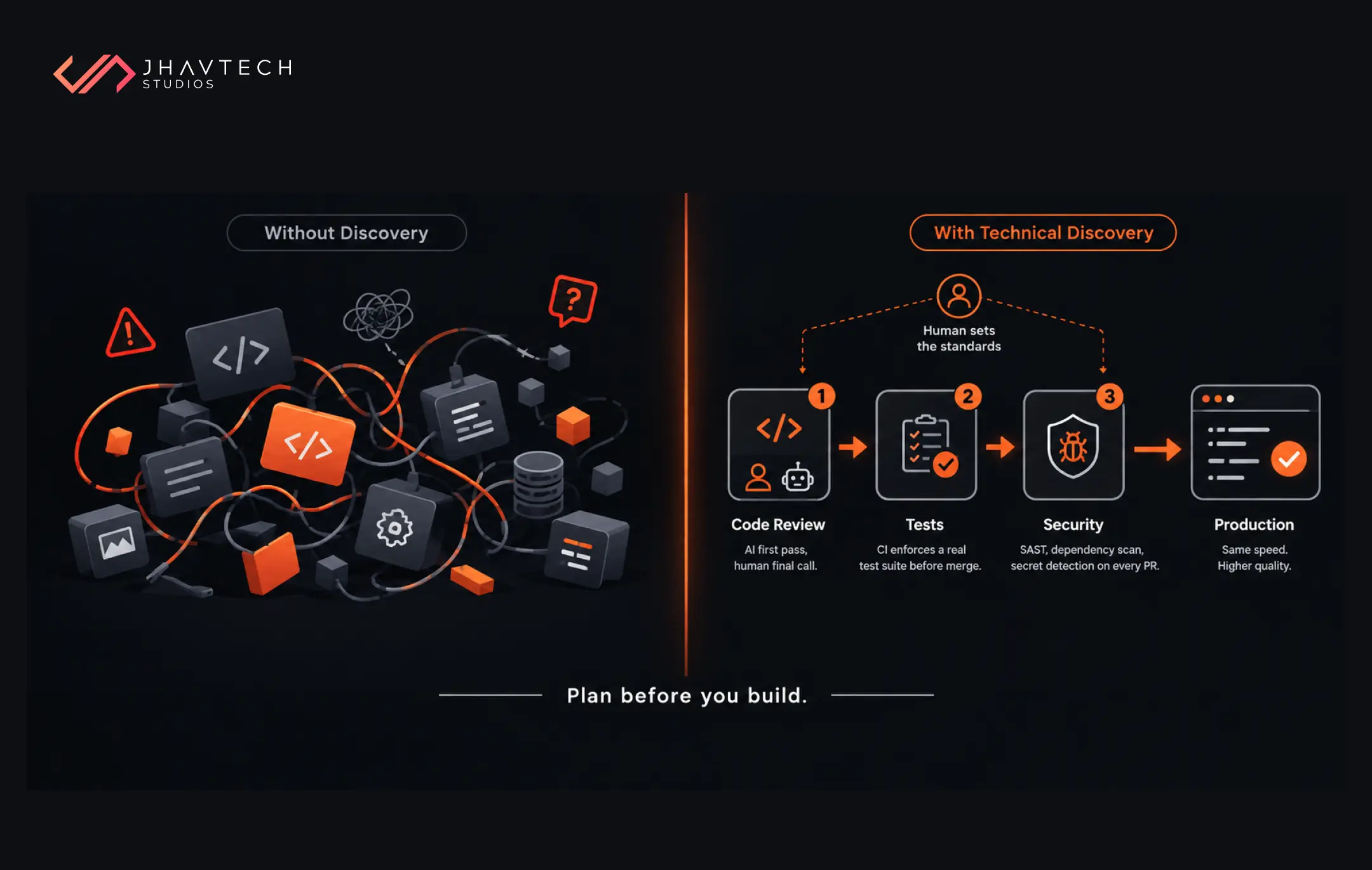
IT infrastructure planning sounds like a conversation for companies with a data center, which is probably why most SMEs skip it. In practice it comes down to a handful of unglamorous questions that take an afternoon to answer.
What happens at ten times the current load? Not a guess, a number. If the answer involves a phone call to a vendor and an unknown invoice, that is a risk you are carrying without pricing it.
Where does the data live, and who can get it out? Australian data residency matters for health, finance, government-adjacent work and plenty of contracts that quietly assume it.
What is the security posture, and is it yours or theirs? The ASD recorded over 84,700 cybercrime reports in 2024–25, roughly one every six minutes, with small business losses averaging $56,600 per report (ASD Annual Cyber Threat Report 2024–25). A platform choice is a security choice.
What breaks if this vendor disappears, and how long would you be down? Most SMEs have never tested a restore. The time to find out is not during an incident.
None of this requires a consultant. It requires someone writing the four answers down and being uncomfortable about the weak ones.
Decision 6: What Does the Contract Let You Walk Away From?
Technology procurement is where bargaining power disappears quietly. You have the most of it in the fortnight before you sign and almost none afterwards, which is the opposite of how most businesses behave.
These are the clauses that bite:
- Data export. In what format, at what cost, within what timeframe. "Available on request" is not an answer. Ask for a sample export before signing.
- Price escalation. Most agreements carry an annual uplift clause. Find the number, then multiply it across the full term before you sign, because a rate that looks trivial in year one compounds hard by year five.
- Code and IP ownership. For custom work, name who owns the repository, designs and infrastructure configuration. If a developer holds the keys, you do not own your product.
- Termination and transition. What notice, what assistance, what happens to your data on day one of the gap.
- Support reality. Response times in hours, in your timezone, with what happens when they are missed.
We covered the traps in detail in eight vendor lock-in risks worth checking before you sign. Read it before the pen comes out, not after.
One more thing on procurement. Ask every shortlisted vendor the same written question set, and keep the answers. Demos are theatre. Written answers are evidence, and they change how a vendor behaves in month eight.
Decision 7: How Will You Know Whether This Worked?
Most technology investments are never evaluated. The project ships, the team moves on, and the question of whether it paid for itself becomes unanswerable because nobody recorded what things looked like before.
So record it. Baseline the two or three numbers the project is meant to move, in the month before go-live. Hours spent on the process. Error rate. Time from enquiry to quote. Whatever your one sentence from Decision 1 named.
Then pick a date, put it in the calendar, and give someone's name to it. Ninety days after go-live is usually right for process work, six months for anything customer-facing.
Two outcomes are acceptable in that review. It worked, so expand it. It did not, so stop paying for it. The third outcome, where the review never happens and the licence renews forever, is how a technology budget quietly becomes untouchable.
When a project is already past that point and the dates keep moving, the useful move is not another status meeting. It is bringing in a team that takes over stalled builds and gets them shipping again while the business keeps trading.
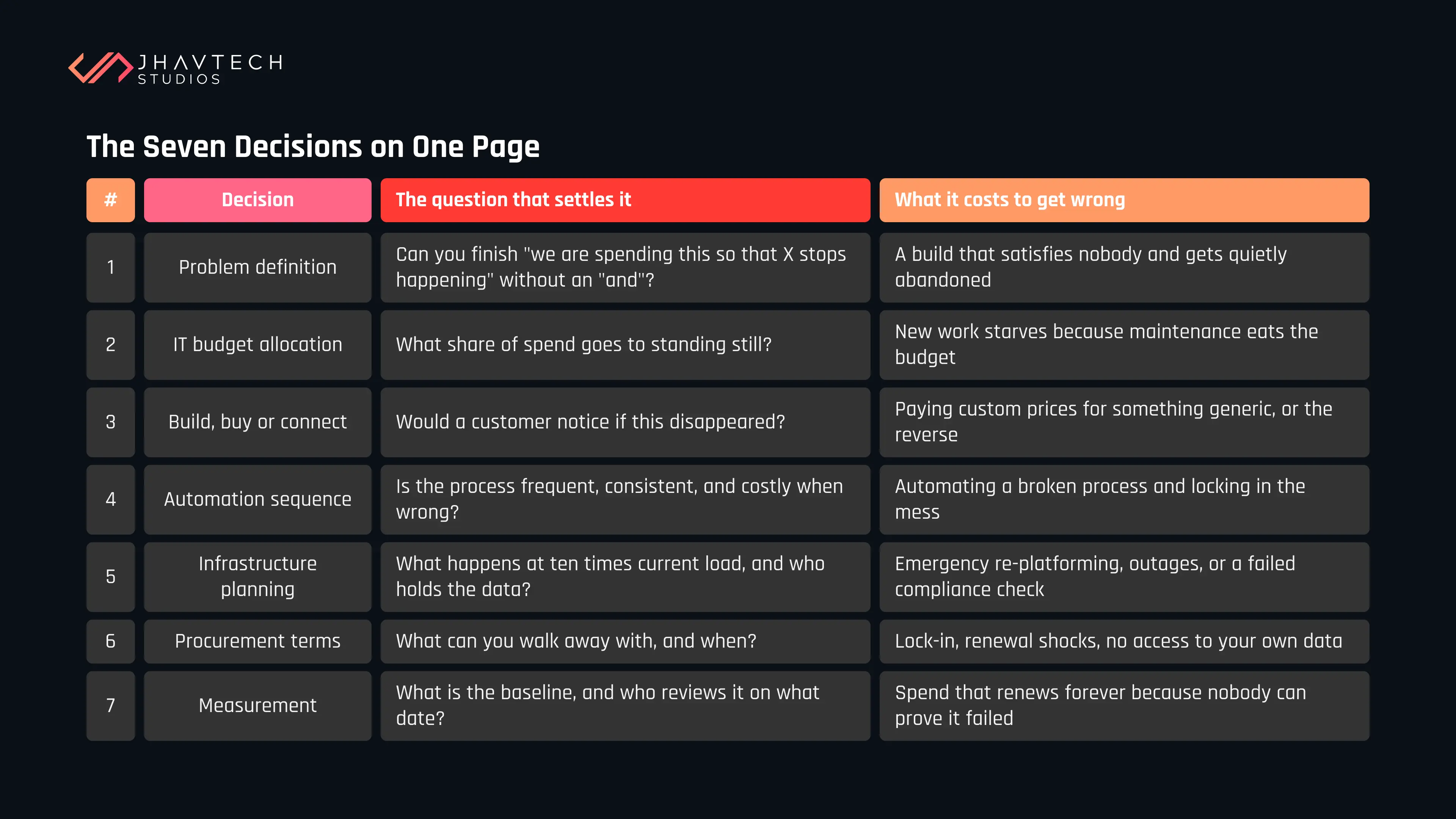
The Seven Decisions on One Page
Each of the seven decisions comes down to a question someone has to answer in writing, and a signal that tells you the answer is not ready yet. The table below is the short version — useful for a planning session, or for handing to whoever is about to sign. If a row makes you pause, that is the decision worth going back to.
The Pre-Spend Checklist
Run this before the money moves. Four or more unticked and the decision is not ready.
❑ The problem is written as one sentence, with a number attached
❑ Twelve months of technology spend is tagged into run, improve and new
❑ Someone has checked for duplicate or unused licences in the last quarter
❑ One person owns the outcome by name, not a committee
❑ The build versus buy call is written down with the reasoning
❑ The process being automated has been documented as it runs today
❑ Load, data residency, security and recovery answers exist in writing
❑ A data export sample has been requested and received
❑ Price escalation and termination clauses have been read in full
❑ Code, design and infrastructure ownership is named in the contract
❑ Baseline numbers are recorded for the month before go-live
❑ A review date and reviewer are in the calendar
A business that can tick ten of these is making an investment. A business ticking four is making a purchase and hoping.
Where This Leaves You
None of the seven decisions requires a technical background. They require someone willing to ask plain questions and sit with the awkward silence when the answer is missing.
The businesses that get good value from technology are rarely the ones with the biggest budgets. They are the ones who decided slowly and bought quickly, rather than the other way around.
If you are three weeks from signing something, print the checklist and work through it with whoever will carry the result. The questions cost you an afternoon. The answers can save you a year.
Frequently Asked Questions