.svg)
.svg)


Top Benefits of Getting a Code Review Before Launch
.png)
Launching a web or mobile app without a proper final check can be risky. Just like manufacturers perform quality assurance before shipping a product, software developers need to run one last, crucial process: the code review.
It’s not just about catching bugs—although that’s a big part of it. Conducting a thorough and meticulous review of your code ensures your product is stable, secure, scalable, and maintainable. Whether you're a startup founder or a product manager in a large tech team, investing time in a thorough review before going live could save your business money, time, and reputation.
In this blog, we’ll break down the most compelling benefits of getting your code reviewed before launch and explain how Jhavtech Studios’ Free Code Review Service can help you avoid disaster and launch with confidence.
What Is a Code Review?
A code review is a structured examination of your application's source code by another developer or a team. The aim is to ensure your code adheres to best practices, avoids bugs and inefficiencies, and aligns with architectural and security standards.
There are two main types:
Manual Reviews:
Done by peers or external developers who examine the code line by line
Automated Reviews:
Run by tools like SonarQube, GitHub Advanced Security, or Codacy that flag potential issues such as duplicated code, security vulnerabilities, and stylistic inconsistencies
In reality, the best results come from using both. Automation catches patterns and errors; human reviewers catch logic flaws, architectural mismatches, and areas of improvement that machines can’t see.
Top Benefits of a Pre-Launch Code Review
Before you hit “go live,” it's essential to ensure your code is as polished and reliable as possible. A pre-launch code review acts like a final quality checkpoint—catching potential problems early and reinforcing the foundation of your application. Let’s take a closer look at the key benefits of reviewing your code before release.
1. Prevent Bugs from Hitting Production
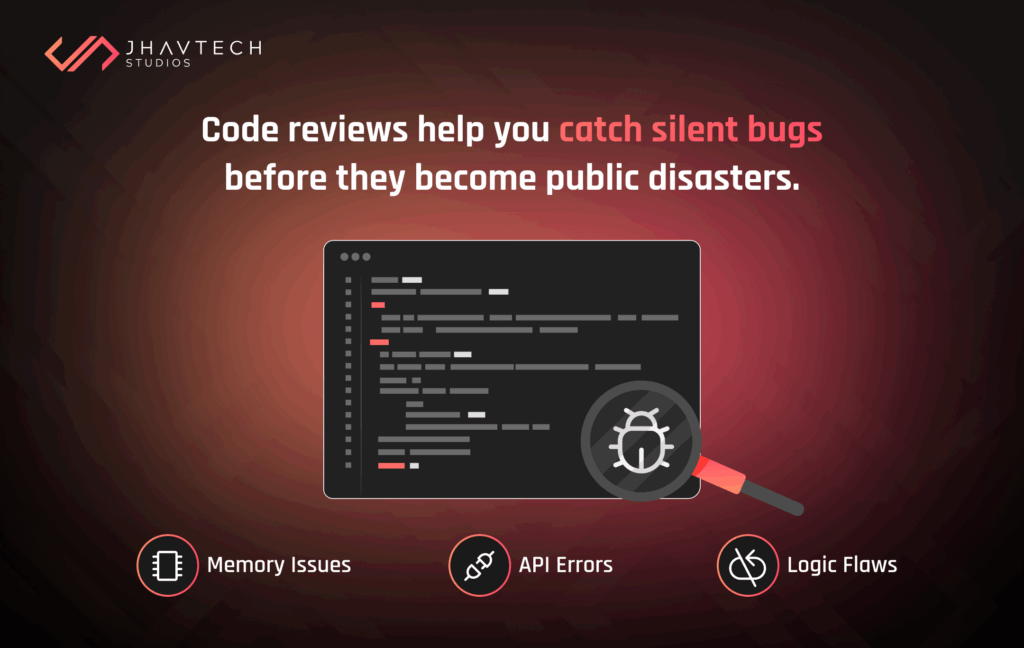
Bugs can range from minor annoyances to business-breaking disasters. A pre-launch review is often the last chance to catch issues like:
- Broken loops or conditional statements
- Missing API error handling
- Memory leaks and unclosed resources
- Problems with asynchronous behaviour
In Australia, the average cost of IT downtime climbs to AUD 7,011 per minute for large organisations—highlighting the heavy financial impact of software failures before launch
Investing a few days in reviewing your code now can prevent costly post-launch bug hunts, user complaints, and bad app store reviews.
2. Improve Code Quality and Maintainability
Readable and well-organised code isn’t just a developer’s luxury—it’s essential for long-term sustainability. Here’s what high-quality code typically looks like after a solid review:
- Clean formatting with consistent naming conventions
- Modular functions with single responsibilities
- Reduced duplication and dead code
- Clear inline documentation
These elements make your product easier to update, scale, and troubleshoot later. It also reduces onboarding time when new developers join the project. The result? Fewer headaches when adding features or tracking down issues later on.
Tip: Using a clean architecture like MVVM or MVP improves maintainability even further.
3. Boost Performance and Efficiency
A sluggish app can make even the most exciting features feel clunky. By catching performance issues early, a code review helps ensure a smoother and more reliable user experience. Reviewers often examine how the code handles data, rendering, and resource management—areas where poor implementation can significantly degrade performance. This is especially crucial for users on older devices or slower networks, where efficiency can make or break engagement.
Here’s a comparison of common performance pitfalls that reviewers often identify:
Performance Issue Frequency Found Impact Severity Inefficient loops High High Redundant API requests Medium Medium Overdrawn UI layers Medium High Memory misuse High High
When these issues are optimised before release, users get smoother animations, faster load times, and better responsiveness—even on lower-end devices. If performance is your issue, check out How to Optimise Android Apps for Performance and Battery Life.
4. Strengthen Security Measures
App security is no longer optional—especially with increasing regulation around data protection. Users expect their personal information to be handled with care, and even a single breach can permanently damage trust. A thorough review of your code can help uncover hidden vulnerabilities before they become liabilities. Code reviewers are trained to identify security flaws like:
- Hardcoded secrets or credentials
- Weak or outdated encryption algorithms
- Lack of input validation
- Insecure authentication flows
The Open Web Application Security Project (OWASP) found in 2024 that 35% of mobile apps contained at least one major security vulnerability. Many of these were the result of poor coding practices that a pre-launch review would have flagged. By patching these holes early, you protect not just your data, but your users’ trust.
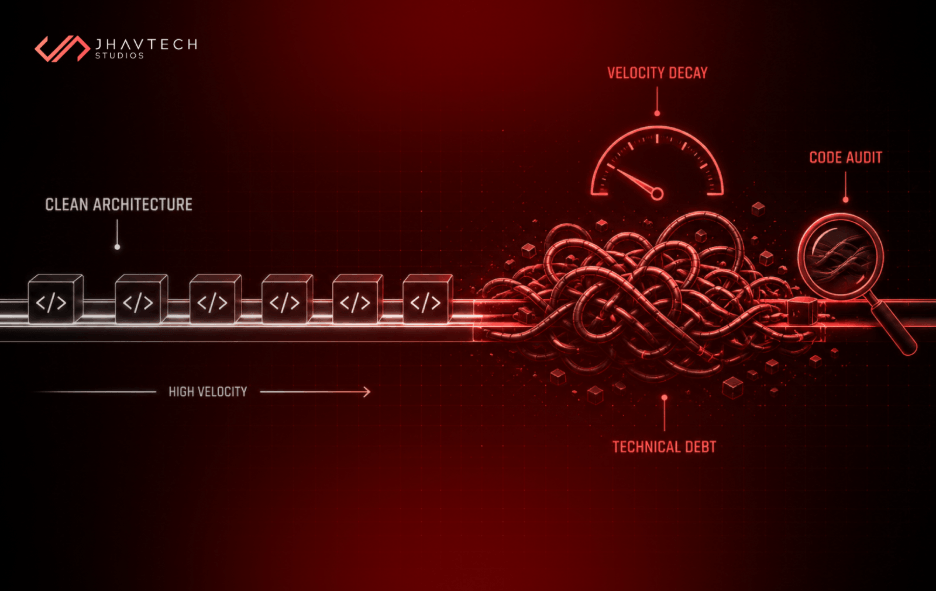
5. Reduce Long-Term Technical Debt
Technical debt happens when teams prioritise speed over code quality, often taking shortcuts to meet tight deadlines. While this may offer short-term gains, it usually leads to higher costs later due to:
- Frequent refactoring
- Slow feature rollouts
- Bug-ridden releases
A pre-launch review helps address technical debt before it piles up—one of the early warning signs that your product may soon require a software project rescue. It encourages good habits, uncovers existing debt, and helps enforce cleaner, more maintainable architecture moving forward.
6. Enhance Team Collaboration and Skill Growth
A healthy review process fosters a learning culture. Junior developers get valuable feedback, senior developers identify architectural patterns, and everyone learns how to write better code. Benefits include:
- Shared knowledge across the team
- Consistent implementation of design principles
- Better understanding of the project’s technical direction
This is especially useful in hybrid or remote environments where face-to-face collaboration may be limited. Reviews serve as both quality checks and training sessions rolled into one.
7. Lower Future Maintenance Costs
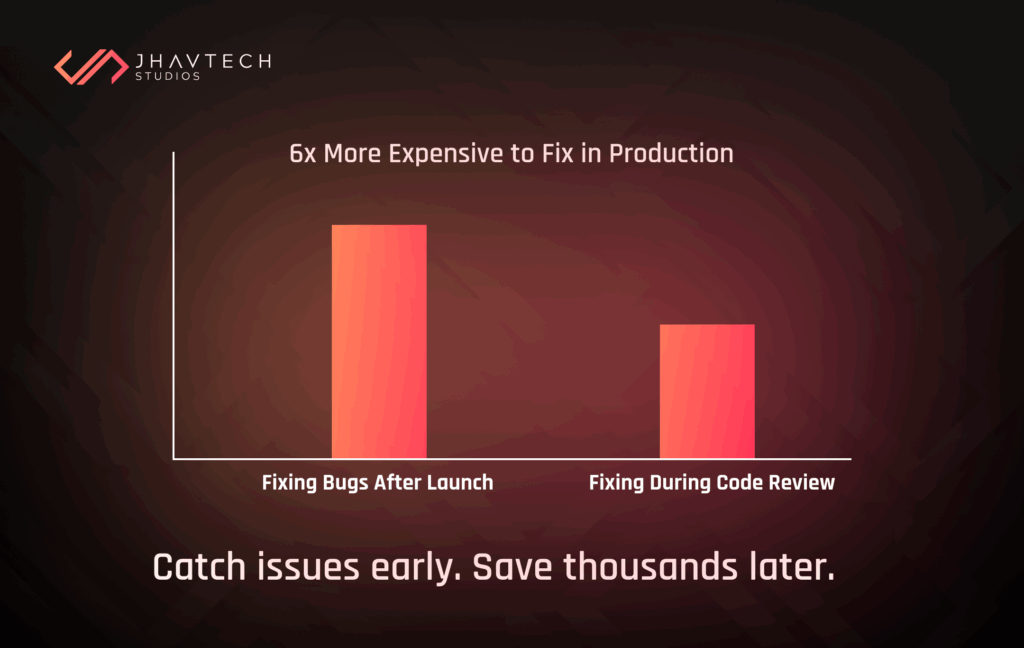
Here’s where the numbers really shine. IBM’s research shows that fixing a bug in production can cost up to six times more than fixing it during development. A well-reviewed app is:
- Easier to debug
- Less likely to suffer regressions
- Faster to test during future releases
- More predictable during feature rollouts
This leads to shorter release cycles and lower development costs—critical for lean startups and enterprise teams alike.
Launching soon? Learn about The Cost of Fixing vs. Rebuilding a Failing Software Project
8. Align Code with Project Architecture
It’s easy to drift away from intended design patterns—especially during rapid development cycles. A thorough review ensures your code respects the original architecture, whether it’s:
- MVC (Model-View-Controller)
- MVVM (Model-View-ViewModel)
- Clean Architecture
- Microservices or monolithic
Reviewers ensure that modules are properly isolated, that dependencies are managed correctly, and that data flows are well structured. This alignment helps avoid later rework and keeps the entire system coherent and scalable.
9. Identify Redundant or Legacy Code
Apps evolve. As features get added, removed, or rewritten, some parts of the codebase inevitably become obsolete. A proper review before launch helps identify:
- Old logic that’s no longer used
- Duplicated functionality
- Features written but never integrated
- Unnecessary libraries or imports
Removing this clutter improves compile times, reduces file size, and makes the app easier to navigate and maintain.
10. Boost Stakeholder Confidence
Your investors, partners, and clients want to know that the product you’re launching is stable and secure. Telling them you’ve completed a formal code review by an experienced team builds confidence.
It shows you’re not cutting corners. That you’ve taken the time to polish every detail and mitigate risk. This is especially useful when raising funds, pitching enterprise clients, or preparing for compliance audits.
Frequently Asked Questions
Why is a code review important before launch?
It catches bugs, security flaws, and performance issues before they affect users—reducing costs and preserving your brand reputation.
How long does a typical review take?
At Jhavtech Studios, a standard code review takes about 2–3 business days, depending on the complexity and size of your codebase.
Do I need both manual and automated reviews?
Yes. Automated tools catch surface-level problems, but only manual reviews can assess logic, architecture, and usability.
Will it delay my launch?
No. In fact, it can prevent costly delays after launch. Think of it as preventive maintenance for your software.
Who should perform the review?
Ideally, senior developers who weren’t involved in the original build—or a third-party team that offers unbiased, expert feedback.
Final Thoughts...
The final days before launch are some of the most exciting—and most stressful—moments in any development cycle. A code review ensures you’re not just racing to the finish line, but crossing it with a stable, secure, and scalable product.
At Jhavtech Studios, we offer a Free Code Review to help teams catch issues early and release confidently. Whether you’re an agile startup or a scaling tech firm, our experienced developers will give your codebase the attention it deserves.
Ready for a second opinion? Contact us today and let our experts take a deep dive into your codebase. Let’s make sure your product is ready for the spotlight!

.png)

.png)
.png)
.png)
.png)
.png)
.png)
.png)
.png)
.png)
.png)


.png)
.png)
.png)
.png)
.png)
.png)
.png)
.png)
.png)
.png)
.png)
.png)
.png)
.png)
.png)
.png)
.png)
.png)
.png)
.png)
.png)
.png)
.png)
.png)
.png)
.png)

.png)
.png)
.png)

.png)
.png)
.png)
.png)

.png)


.png)

.png)



.png)



.png)




.png)

.png)

.png)

.png)

.png)
.png)