.svg)
.svg)


How Secure Code Review Boosts App Security and Speed — With Real Data
.png)
The pace of software development today is relentless. Features need to be shipped fast, and users expect instant updates and flawless functionality. In this high-speed environment, development teams often face a fundamental tension: speed versus security. The pressure to deliver quickly can sometimes lead to security being treated as a final, bolt-on checklist item, rather than an integral part of the process.
But what if we told you that the key to achieving both security and speed is the same process? The answer lies in making a rigorous and systematic secure code review a non-negotiable part of your development lifecycle. Here at Jhavtech Studios, where we pride ourselves on building robust, high-quality software solutions and preventing costly rework, we've seen firsthand that a well-implemented code review process doesn't slow you down; it acts as a powerful accelerator, safeguarding your product and streamlining your delivery. This deep dive will explore the data, the process, and the undeniable synergy between quality assurance and development velocity.
The Unseen Cost of Insecure Code: Why Security Can't Wait
Before we discuss acceleration, we must confront the primary motivation: risk mitigation. A security breach is exponentially more costly than any minor delay caused by a diligent review.
Recent industry reports paint a sobering picture. The average total cost of a data breach is now measured in the millions of dollars, a figure that continues to climb year over year. But beyond the financial impact, there’s the irreparable damage to brand reputation and customer trust. For any business building sophisticated applications, including those we partner with in Australia and globally, this is an existential threat.
The industry consensus is clear: we must adopt shift-left security. This philosophy dictates that security practices must move from the end of the Software Development Lifecycle (SDLC), just before deployment, to the very beginning, when code is first being written. The earlier a bug or vulnerability is detected, the cheaper and faster it is to fix. A vulnerability found during a code review takes minutes to fix; the same vulnerability found in production during a security incident takes weeks of frantic effort, potentially costing hundreds of thousands of dollars in crisis management, legal fees, and mandated remediation.
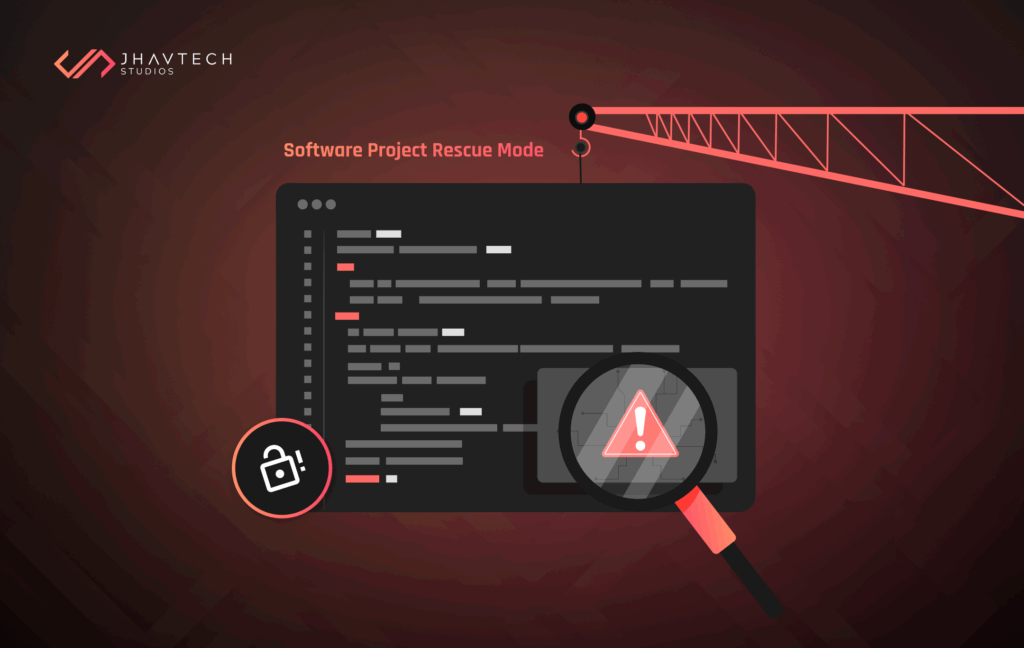
The Software Project Rescue Nightmare
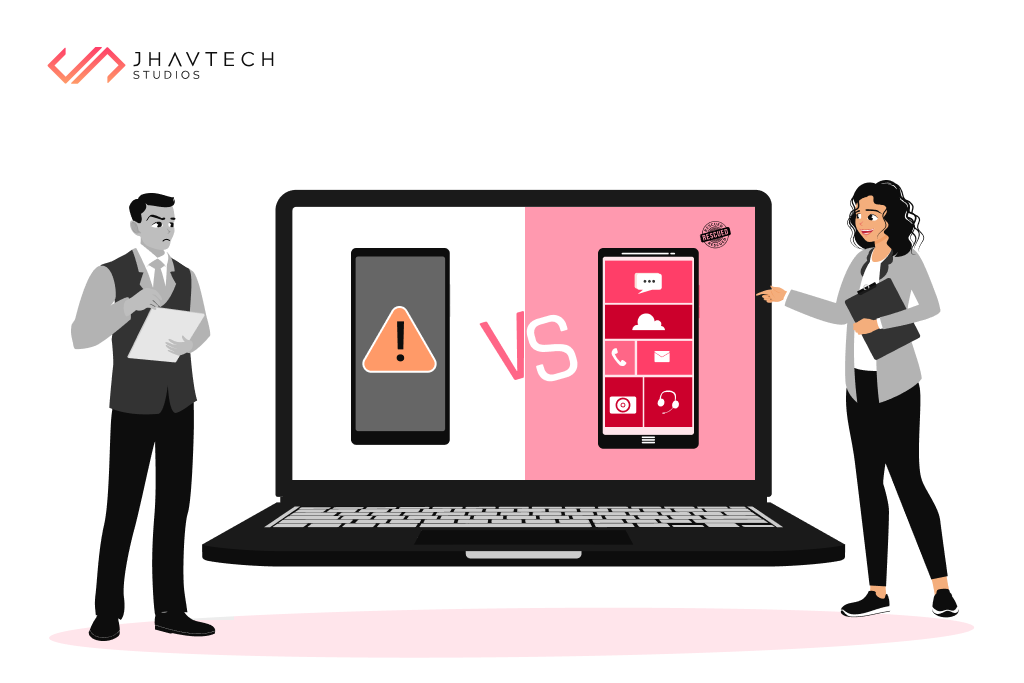
The lack of proactive review is a direct path to a crisis. Often, when teams neglect proper QA and security checks, they inevitably end up facing a software project rescue scenario. This occurs when a project is stalled, plagued by defects, or fundamentally insecure, requiring an external team to step in and stabilse the codebase. These rescue operations are expensive, stressful, and often involve rebuilding significant portions of the application.
If your organisation is building custom software solutions, the risk is even higher because your code is unique, meaning off-the-shelf security tools may not catch context-specific vulnerabilities. A strong secure code review process is the best insurance policy against the enormous overhead and delay associated with a project rescue, ensuring your team is building quality right from the first commit. This proactive approach saves time and budget far beyond the initial investment.
The Fundamentals of Secure Code Review
A standard code review typically focuses on logic, readability, and adherence to coding standards. A secure code review, however, elevates this practice by explicitly looking for security flaws. It’s a targeted, systematic inspection of source code aimed at identifying vulnerabilities such as input validation errors, improper encryption, weak access controls, and hard-coded secrets.
Benefits of Code Reviews for Security
The measurable advantages of making your reviews security-focused are compelling:
- Vulnerability Detection: Reviewers look for common threats like Cross-Site Scripting (XSS), SQL Injection (SQLi), and Insecure Direct Object Reference (IDOR), which automated tools might miss due to complexity or context. This is particularly vital in mobile app development, where data security and local storage integrity are paramount.
- Contextual Understanding: A human reviewer understands the business logic. An automated scanner might flag a function, but only a human can determine if that function, in the context of the application's unique user roles and data flow, represents a high-risk security flaw.
- Knowledge Transfer: Every review is a teaching opportunity. When a senior developer explains why a certain piece of code is vulnerable, they aren't just fixing one bug; they are leveling up the junior developer's security awareness, preventing dozens of future bugs. This is crucial for new technologies like Flutter, where cross-platform security considerations need specialised attention.
- Consistency and Compliance: Security standards (like the OWASP Top 10) can be consistently enforced across all pull requests, making your codebase inherently more compliant and reliable.
The goal is not simply to catch bugs, but to fundamentally improve the security posture of the application. By integrating security into the review process, you are making security everyone’s responsibility, not just the security team’s. This is why a dedicated focus on secure code review is essential for building trustworthy software.
Identifying Code Smell and Technical Debt
Another profound, non-security benefit of robust code reviews is the early identification of code smell. It refers to any surface indication that something may be wrong in the code design. While not necessarily a bug or security flaw, code smells indicate poor design choices that make the code difficult to maintain, test, or extend. Examples include overly long methods, complex conditional logic, or duplicate code blocks.
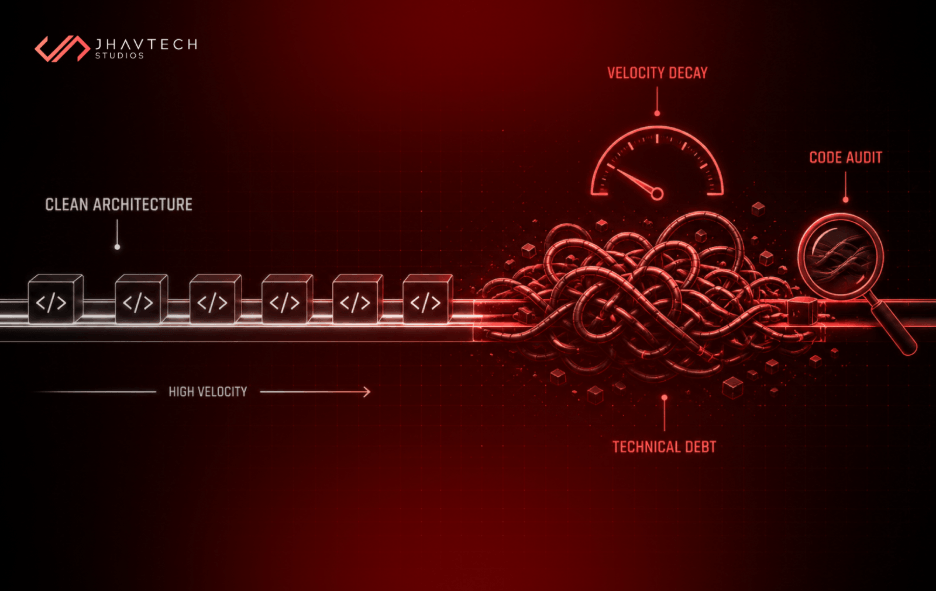
When code smells are allowed to accumulate, they become technical debt. This debt is the primary driver of future slowdowns, instability, and eventual decay of the software architecture. A good secure code review process will flag both security risks and architectural risks, addressing technical debt before it becomes crippling. By preventing the accumulation of complex, hard-to-read code, you ensure the long-term maintainability and velocity of your development team. It’s a dual benefit: cleaner code is inherently easier to audit for security flaws, and easier to scale for performance.
Beyond the Myth: Driving Code Review Performance
The most common pushback we hear about rigorous code review is: “It takes too long. It breaks our velocity.” This is a myth born from poor implementation, not from the practice itself. When done correctly, code review performance is a key component of a high-velocity team.
How to Speed Up Code Reviews Without Losing Quality
The secret to maximising performance lies in two areas: size and frequency, coupled with the strategic use of automation.
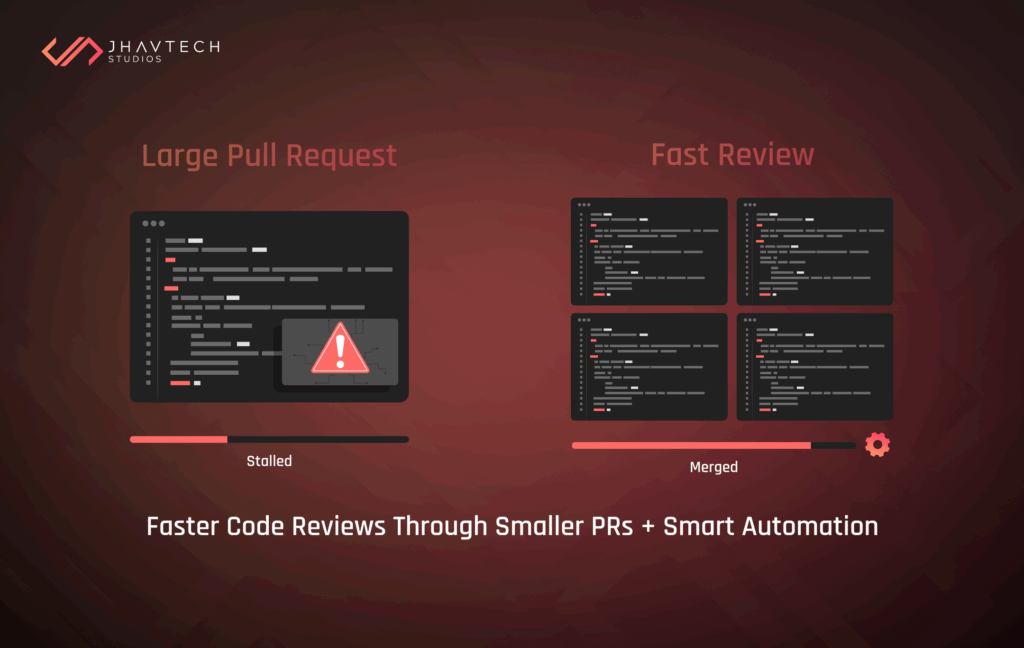
1. Smaller, More Frequent Reviews: Industry research consistently shows that review quality decreases drastically as the size of the pull request (PR) increases. Studies suggest that after a reviewer covers 400 lines of code (LoC), the ability to find defects plummets. Instead of submitting one massive PR at the end of a sprint, developers should submit several small, focused changes throughout the week. This makes the review process less mentally taxing for the reviewer and speeds up the "time to merge," a critical metric for team velocity.
2. Leveraging Automation Strategically: We never advocate for purely manual code reviews. Tools like Static Application Security Testing (SAST) and Dependency Scanners handle the low-hanging fruit: known vulnerabilities in open-source libraries, basic syntax errors, and common patterns of bad practice.
- Automation Focus: Automated tools should be used to enforce style guides and catch simple, non-contextual security issues.
- Human Focus: The human reviewer is then free to focus their limited time and cognitive load on the sophisticated, logic-based security flaws and architectural decisions, ensuring a high-quality secure code review without sacrificing speed.
By shifting the burden of simple checks to machines, and reserving human intelligence for complex security context, you achieve faster throughput and maintain quality. This is the definition of efficiency in the modern SDLC.
The Synergy: Where Security and Speed Converge
The most powerful argument for a strong secure code review process is that it eliminates debt. Every vulnerability and every defect that slips into production is a guarantee of future slowdown.
Technical Debt Reduction: When your application has fewer bugs, your team spends less time on urgent, unplanned "firefighting." This freed-up capacity can be redirected back to building new features, which directly translates to increased speed and predictability in your delivery pipeline.
The "Four-Eye" Principle: A study of software quality has shown that having multiple people look at a piece of code — the "four-eye" principle — is one of the most effective ways to reduce the overall defect density of a codebase. This inherent improvement in quality reduces maintenance costs and ensures that your application is built on a solid, secure foundation. At Jhavtech Studios, we always highlight the fact that a reliable foundation is paramount for long-term project success.
The Impact on Customer Experience and UI/UX Design
The benefits of solid code quality extend far beyond the server room. When code is clean, secure, and performs well, the end-user experience is dramatically improved. Think about it: a slow, insecure, or buggy application frustrates users and diminishes the value of even the most beautiful UI/UX design.
- Performance: Code review performance ensures algorithms are efficient, database queries are optimised, and asynchronous operations are handled correctly. This prevents lag, loading screens, and unexpected crashes, which are all detrimental to UI/UX design.
- Trust: A security breach, or even minor security hiccups like unexpected logouts or data corruption, instantly erodes the trust established by exceptional design.
Ultimately, the goal of any custom software solutions provider is to deliver seamless, delightful user experiences. And a flawless user experience requires a flawless technical backbone, which only a robust secure code review process can guarantee. The investment is not just in security; it's an investment in customer satisfaction and retention.
Building a Culture of Quality and Speed
To truly maximise the return on investment of code reviews, the practice must be cultural, not compulsory.
- Positive Feedback: Reviewers must offer constructive, empathetic feedback. The goal is to improve the code, not to criticise the coder.
- Clear Checklists: Provide your app developers with a clear checklist of security, performance, and style items to check before submitting a pull request. This self-review dramatically cuts down the reviewer's time and increases the overall quality of submissions.
- Prioritisation: Use a risk-based approach. The code handling payment processing or authentication should receive a deeper, more intensive secure code review than a simple UI change.
This measured, risk-aware approach ensures that your team is not only shipping faster but is also continuously building a security-aware mindset. This proactive development culture is what separates market leaders from those constantly playing catch-up.
Conclusion: Investing in Secure Code Review
For Jhavtech Studios and our clients, the choice is clear: secure code review is an investment that pays dividends in both security and efficiency. It transforms security from a roadblock into a reliable guardrail, enabling teams to move faster with confidence.
By adopting a shift-left security approach, embracing smaller, frequent reviews, and strategically leveraging automation, you can break the speed-versus-security paradox. You will reduce costly production defects, enhance team knowledge, and ultimately, deliver more features to market faster and more reliably. The time and money saved by preventing a single security incident or avoiding a full-blown software project rescue will dwarf the cost of implementing a high-quality review process.
Ready to build your next application with security and speed baked in from day one? Contact us today and let our experienced team guide your development process to a new standard of excellence.
Frequently Asked Questions (FAQ)
Q: What is the main difference between a regular code review and a secure code review?
A regular review focuses on logic, maintainability, and style. A secure code review adds a dedicated, systematic check for security flaws (e.g., injection, weak crypto) to protect the application from attack.
Q: Does a strict secure code review process actually slow down development?
No. When implemented correctly (small, frequent reviews), it speeds up the overall time-to-market. Bugs found in review are much cheaper and faster to fix than bugs found in production.
Q: How can we measure the ROI of secure code review?
ROI is measured by tracking defect density (vulnerabilities found pre-release) and comparing the cost/time of fixing bugs found in production versus those found in review. It improves predictable lead time.

.png)

.png)
.png)
.png)
.png)
.png)
.png)
.png)
.png)
.png)
.png)
.png)


.png)
.png)
.png)
.png)
.png)
.png)
.png)
.png)
.png)

.png)
.png)
.png)
.png)
.png)
.png)
.png)
.png)
.png)
.png)

.png)
.png)
.png)

.png)
.png)
.png)
.png)

.png)
.png)
.png)


.png)
.png)
.png)

.png)

.png)


.png)


.png)




.png)



.png)





.png)

.png)




.png)

.png)


.png)
.png)