.svg)
.svg)


The Hidden Cost of Delayed Software Projects in 2026
.png)
Delayed software projects don't just miss deadlines. They quietly drain revenue, erode customer trust, and hand market share to competitors. This blog breaks down the true financial and strategic cost of software project delays in 2026, explores why they keep happening even to experienced teams, and outlines what decision-makers at startups and SMEs can do right now to stop the bleed. Whether your project is running late or you simply want to avoid the risk, what you'll read here could save your business far more than you expect.
That "Small Delay" Is Costing You More Than You Think
Let's be direct about something most development teams won't tell you upfront: there's no such thing as a small delay.
You've probably heard phrases like "we're just a few weeks behind" or "we hit a technical snag but we're back on track." It sounds manageable. You nod, you adjust your internal timeline, and you carry on. But every week a product sits in development limbo instead of in the hands of paying users represents a cost; one that rarely shows up in a single line item and is almost never discussed honestly at the board or leadership level.
In 2026, with competition moving faster than ever and customers less patient than they've ever been, delayed software projects aren't just a project management headache. They're a strategic liability.
The Numbers Don't Lie — Software Delays Are Alarmingly Common
If you've been quietly assuming that project delays are the exception rather than the rule, the data will disabuse you of that notion quickly.
According to a widely cited study conducted by McKinsey in collaboration with the University of Oxford, which examined more than 5,400 large-scale IT projects, the average software project runs 33% over schedule and 66% over budget, while delivering 56% less value than originally predicted. Let that last number sink in. More than half the expected value, gone.
And it's not just large enterprises feeling the pain. The Standish Group's CHAOS Report found that only 29.7% of software development projects fully met their time, budget, and quality goals. That means roughly seven out of ten projects experienced some form of failure, whether that's an outright cancellation, a significant delay, or a product that launched well past its window of opportunity.
Perhaps most sobering for startups and SMEs is this: the same McKinsey research found that 17% of IT projects perform so badly they threaten the very existence of the company. These aren't hypothetical catastrophes. They're the kind of software delivery issues that appear in post-mortems and uncomfortable investor conversations.
The point isn't to alarm you unnecessarily. It's to make sure you're operating with a clear-eyed view of what's actually at stake when your development timeline starts to slip.
The Hidden Costs Nobody Budgets For
Most founders and business leaders think about project delays in terms of the obvious: extra developer hours, extended contracts, and a pushed-back launch date. But those are just the costs you can see. The ones you can't see are often far more damaging.
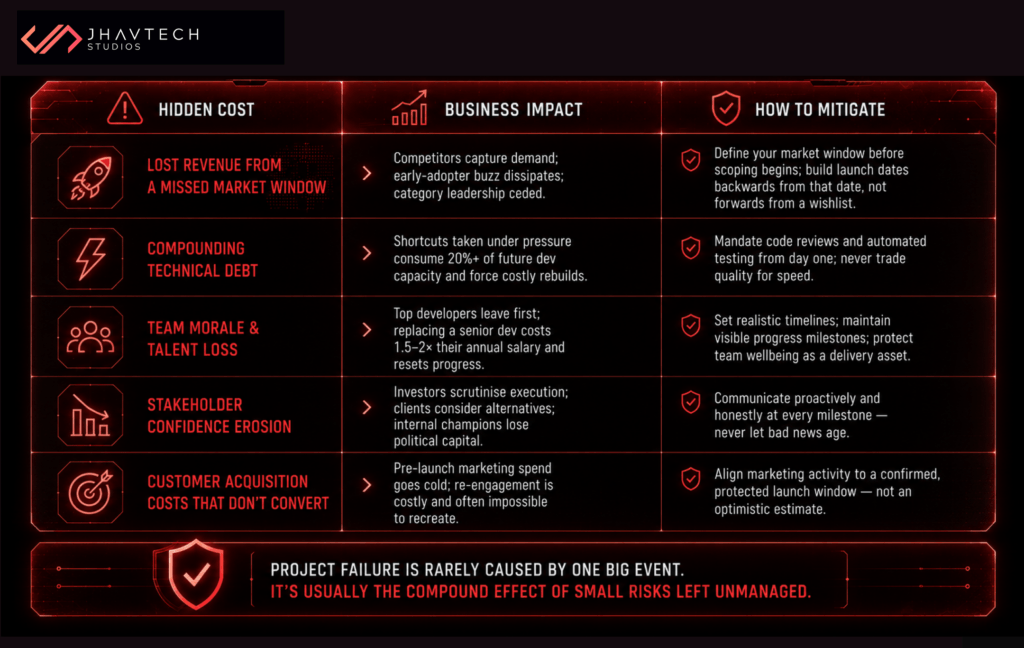
1. Lost Revenue from a Missed Market Window
Every product has a window of maximum opportunity — a moment when the market is ready, the competitive landscape is favourable, and early adopters are actively looking for solutions. When app launch delays push you past that window, you're not just losing a few sales. You're potentially letting a competitor walk in and fill the gap you identified.
In fast-moving verticals like fintech, health tech, and SaaS, six months can be the difference between category leadership and irrelevance. By the time your product finally ships, you may be playing catch-up instead of setting the pace. If you're still in the planning stage, working with a team that builds and delivers apps with precision from day one is one of the best ways to protect that window.
2. Compounding Technical Debt
Every shortcut taken to catch up on a delayed timeline generates technical debt, which typically involves messy code, skipped tests, architectural decisions made under pressure rather than good judgement. That debt doesn't disappear after launch. It compounds. It slows down your next feature release, increases the likelihood of bugs reaching your users, and eventually forces a costly rebuild.
Research by McKinsey suggests that technical debt can consume more than 20% of a software development team's overall capacity. In other words, the shortcuts you take today are quietly stealing a fifth of your future development bandwidth.
3. Team Morale and Talent Loss
Developers and designers don't thrive in perpetually delayed, high-pressure environments. When a project drags on with no clear end in sight, the best people (i.e. the ones with options) start looking elsewhere. Replacing a senior developer mid-project doesn't just cost money (typically 1.5 to 2x their annual salary when you account for recruitment and onboarding). It resets institutional knowledge and almost always extends the delay further.
4. Stakeholder Confidence Erosion
Whether it's investors, clients, or internal leadership, every missed product deadline chips away at trust. And trust, once eroded, is far harder to rebuild than any codebase. Investors begin to scrutinise the team's execution capability. Clients start considering alternatives. Internal champions for the project lose political capital. The downstream effects of this eroded confidence can persist long after the product eventually ships.
5. Customer Acquisition Costs That Don't Convert
If you've already started marketing activity in anticipation of a launch date that then slips, you're not just paying for delayed marketing. You are potentially warming up an audience that grows cold before you have anything to show them. Re-engagement costs money, and in some cases, that early buzz simply can't be recreated.
The five hidden costs below rarely appear as line items, but each one compounds the damage of a delay far beyond what most founders and leaders budget for.
Why Do Software Projects Keep Getting Delayed?
Understanding the cost of delays is one thing. Understanding why they happen so you can prevent them is where the real value lies.
Scope Creep Is the Silent Killer
Ask any experienced developer about their biggest frustration and scope creep will appear near the top of every list. It happens when additional features, revised requirements, or "just one more thing" requests are layered onto a project after development has begun, without a corresponding adjustment to timeline or budget. According to a 2023 PMI Pulse of the Profession survey, poor requirements management was cited as the cause of 42% of project failures. This is scope creep by another name.
The fix isn't simply saying no to change — it's having a robust change management process from day one. That means clearly documented requirements, a formal review process for any scope additions, and honest conversations about what additions cost in time and money.
Unrealistic Planning and Optimism Bias
Here's an uncomfortable truth: most development timelines are set by people who have a vested interest in telling stakeholders what they want to hear. This isn't malice; it's the very human tendency towards optimism when we're excited about a project. But optimistic estimates compound. If every phase is estimated 20% too lean, a six-month project becomes an eight or nine-month reality.
Studies have consistently found that projects with detailed, rigorous planning phases have significantly higher chances of delivering on time and within budget. The upfront investment in honest scoping pays back many times over.
Communication Breakdowns Between Business and Tech
Many of the most costly development bottlenecks aren't technical — they're communicative. When the business stakeholders and the development team aren't speaking the same language, decisions get made in a vacuum, assumptions go unchallenged, and problems get discovered later than they should. Regular, structured communication isn't just nice to have on a software project. It's the architecture that holds everything else together.
Inadequate Code Quality Controls
Skipping code reviews, neglecting automated testing, or deprioritising quality assurance to save time is one of the most expensive false economies in software development. Bugs found in production cost significantly more to fix than bugs caught in development, and they do vastly more damage to customer trust along the way.
If your team hasn't recently had an independent assessment of your codebase's health, our guide on the benefits of a pre-launch code review walks through exactly why that step can be the difference between a smooth launch and an expensive fire-fighting exercise.
What a Real-World Delay Looks Like at Scale
To ground this in something tangible: Volkswagen's software division, Cariad, faced delays of more than two years on major digital projects, ultimately requiring a $5 billion partnership with Rivian to course-correct. While Volkswagen is hardly an SME, the underlying causes — poor integration between business vision and technical execution, underestimated complexity, and insufficient early-stage planning — are precisely the same issues that sink smaller projects every week.
Closer to home, the failure pattern tends to be less dramatic but no less damaging: a startup that burns through its runway waiting for a product that keeps slipping, or an SME that misses a key seasonal window because the development team underestimated the complexity of a third-party integration.
The common thread in almost every case? The warning signs were visible early. The problems weren't discovered; they were ignored or minimised until they became unavoidable.
What Startups and SMEs Can Do Right Now
You don't need a massive enterprise budget to significantly reduce your exposure to software project delays. What you need is discipline, honest communication, and the right external support at the right moments.
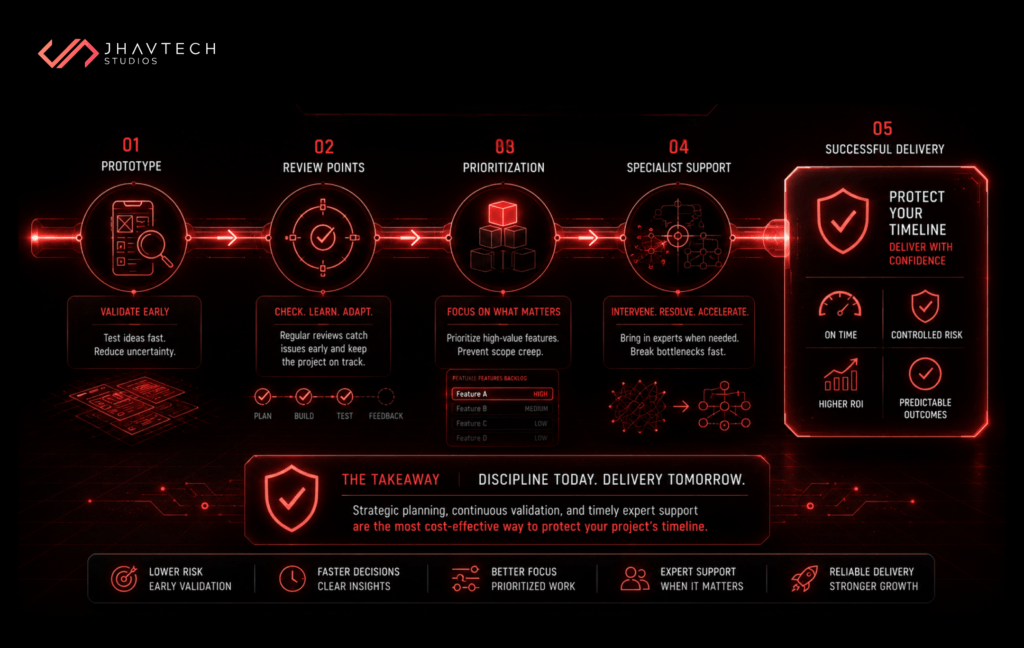
Start With a Prototype Before You Build
One of the most effective ways to prevent costly delays is to validate your concept and refine your requirements before a single line of production code is written. Our recent piece on why startups need a prototype before writing code makes the case compellingly: the cost of getting your requirements wrong before development is a fraction of the cost of discovering those errors three months in.
Build in Progress Reviews at Every Stage
Rather than running a project in a long, unbroken arc from kick-off to launch, structure it in stages with genuine review points. This isn't just agile methodology for its own sake; it's how you create natural opportunities to catch problems while they're still manageable.
Separate "Nice to Have" from "Must Have" Early
A clearly prioritised feature list isn't just a planning tool. It's a risk management tool. When scope creep comes knocking — and it always does — having an agreed hierarchy of priorities makes it far easier to protect your timeline while still accommodating genuine business needs.
Know When to Call in Specialist Help
Sometimes a project gets into trouble despite your best efforts. Technical debt accumulates, key team members depart, or a third-party dependency creates a cascade of problems. In these situations, continuing to push forward with the same team and approach often makes things worse. Specialist project recovery expertise exists precisely for this scenario and engaging it earlier rather than later is almost always the more cost-effective decision.
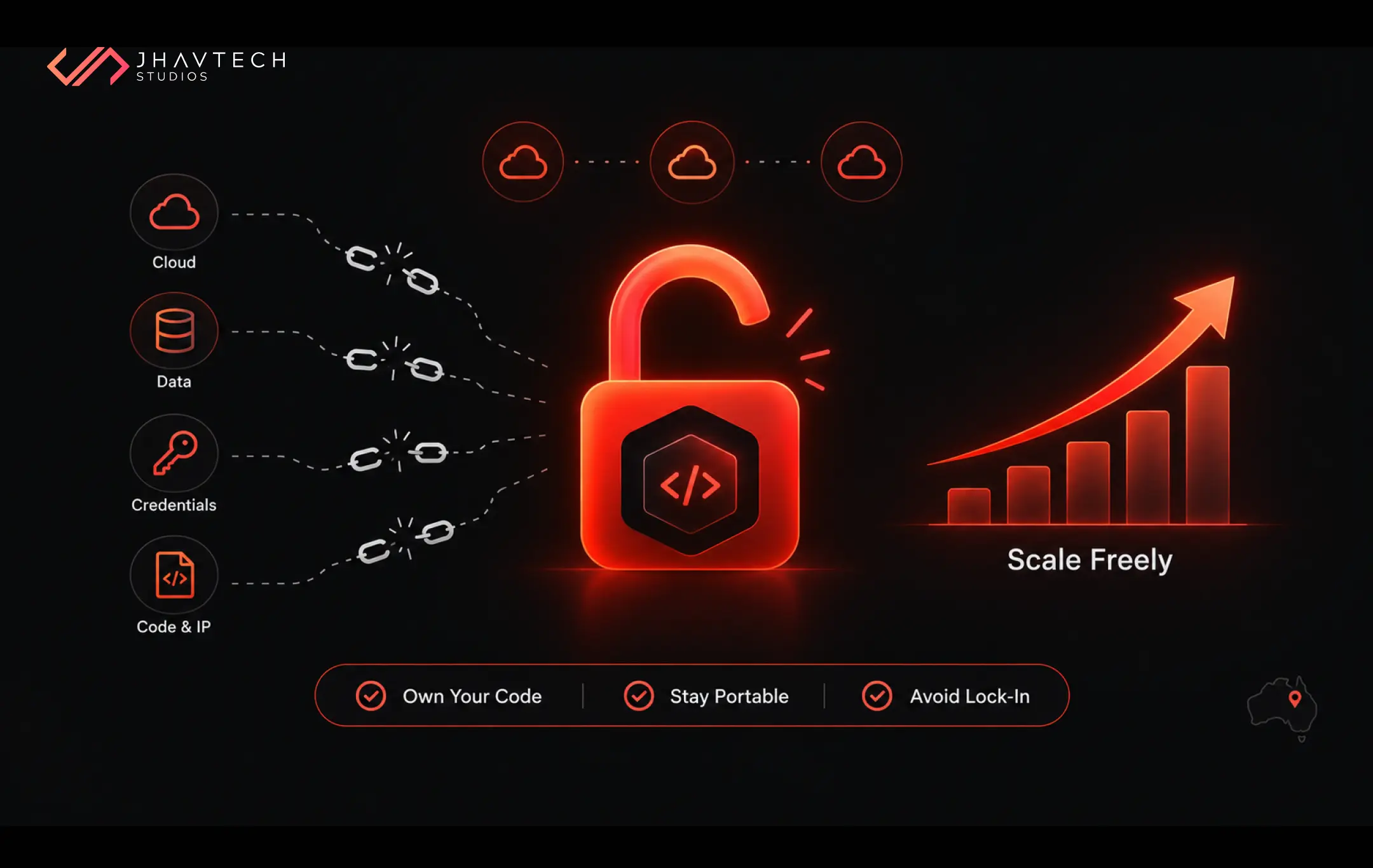
Consider Your Technology Stack Carefully
The technology choices you make early in a project have long-lasting consequences for delivery speed and maintainability. Cross-platform frameworks, for example, can significantly reduce development timelines without sacrificing quality — and if you're curious about the trade-offs, our deep dive on why cross-platform development is shaping the future of app delivery is worth a read.
The 2026 Competitive Reality
The market in 2026 is unforgiving of slow movers. AI-powered tools have dramatically accelerated what lean, well-organised development teams can achieve, but they've also raised the bar for what customers and investors expect. The businesses that are winning aren't necessarily the ones with the largest budgets. They're the ones that ship reliably, iterate quickly, and treat delivery discipline as a core competency rather than an afterthought.
If your product has been in development longer than originally planned, or if you're about to kick off a new build, the single most important question you can ask is: what are our most significant risks, and are we managing them actively?
Getting that question answered honestly, preferably with an external perspective, is worth more than almost any other investment you can make in your project right now.
Frequently Asked Questions

.webp)
.png)
.png)

.png)
.png)
.png)
.png)
.png)
.png)
.png)
.png)
.png)
.png)
.png)


.png)

.png)
.png)
.png)
.png)
.png)
.png)
.png)
.png)

.png)
.png)
.png)
.png)
.png)
.png)
.png)
.png)
.png)
.png)


.png)
.png)
.png)

.png)
.png)
.png)
.png)

.png)
.png)
.png)


.png)
.png)
.png)

.png)

.png)


.png)


.png)





.png)



.png)







.png)

.png)




.png)

.png)



.png)
.png)