7 AI Implementation Challenges Businesses Should Prepare for Before Launch
Before you read on
Most AI projects that fail in Australian SMEs do not fail because the model was wrong. They fail somewhere between the data warehouse and the person who was supposed to use the thing. Most AI projects that fail in Australian SMEs do not fail because the model was wrong. They fail somewhere between the data warehouse and the person who was supposed to use the thing. Nearly nine in ten Australian businesses now use AI. Around one in ten has built it into how the business runs. Everything expensive happens in that distance.
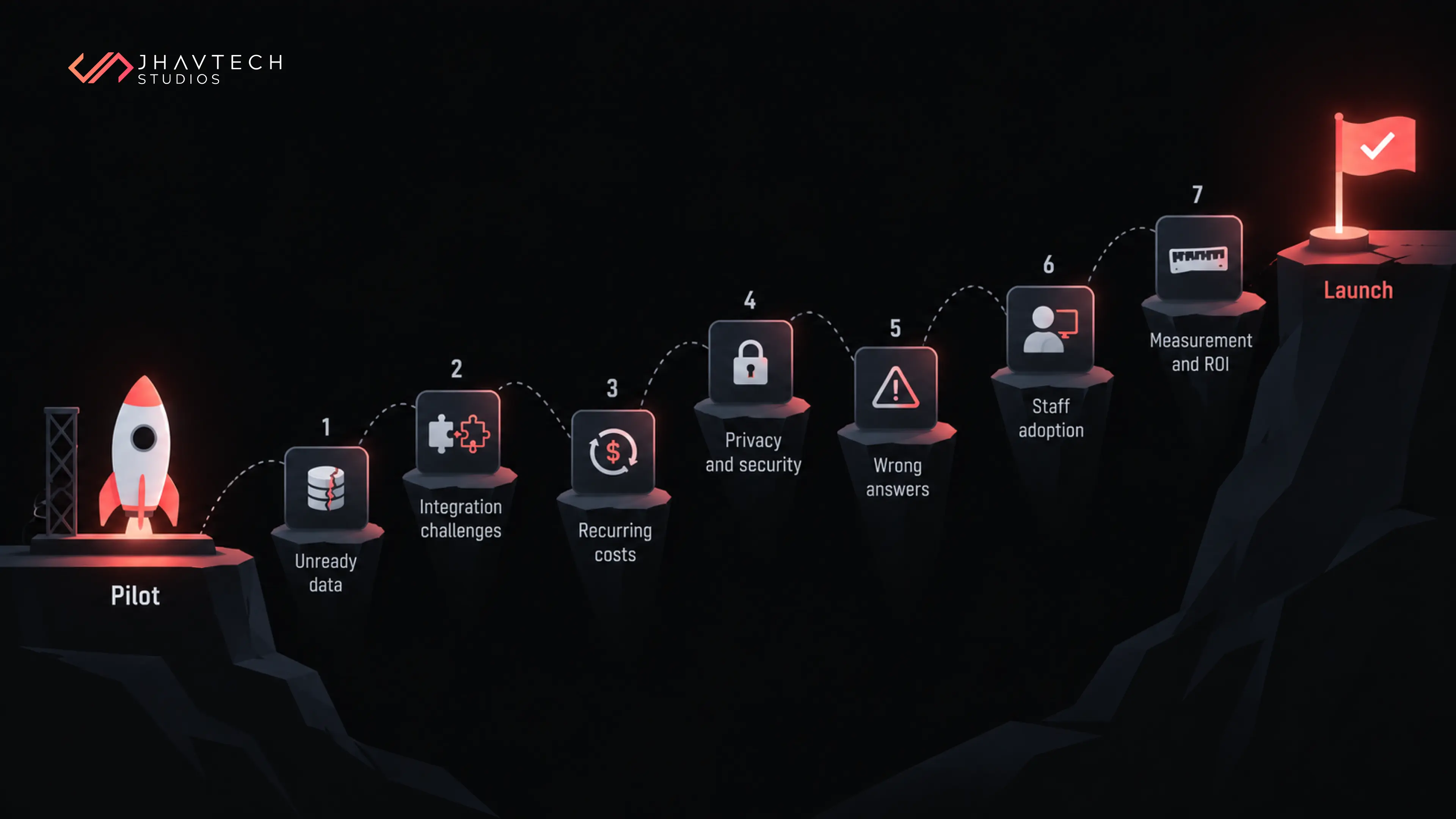
This guide walks through the seven failure points Jhavtech Studios encounters most often in pre-launch reviews: unready data, integration load, recurring costs, privacy obligations under the Privacy Act, error handling, staff adoption, and the missing baseline that makes success impossible to prove. There’s a cost table, a privacy checklist, and a full readiness list at the end.
Why does AI implementation look straightforward until the week before launch?
A prototype runs on twenty records you hand-picked yourself. Production runs on eleven years of data entered by forty different people, each with their own theory about what belongs in the “notes” field.
That gap swallows budgets.
Australian businesses have adopted AI at scale without integrating it. CPA Australia’s 2026 Business Technology Report, drawn from 1,679 accounting and finance professionals across five markets, found 88% of Australian businesses now use AI while only 10% have embedded it across their operations. Australia recorded the lowest level of broad AI integration among the markets surveyed.
The ABS figures on business adoption of artificial intelligence count it more strictly, at around 12% of businesses using AI in the workplace in 2024–25, up from about 1% two years earlier. Among large businesses the rate reached 35%. The two bodies are counting different things, and that is the point: trying a tool is not implementing one.
Internationally, the pattern repeats. MIT’s NANDA initiative reported in The GenAI Divide: State of AI in Business 2025 that 95% of organisations saw no measurable return on generative AI spending. The figure has drawn methodological debate, but its direction matches what the Australian data shows about depth.
1. Your data is not as ready as your dashboard suggests
Every AI implementation involves a data audit. You either schedule one, or you discover one three weeks into development when a developer finds that a third of your customer records carry a null in the field the model depends on.
What are machine learning data requirements?
Machine learning data requirements are the minimum conditions a dataset must meet before a model can learn from it: sufficient volume, consistent formatting and labelling, and a history long enough to contain the pattern you want predicted. A churn model needs recorded examples of churn. A demand forecast needs full seasons, not a quarter.
According to Jhavtech Studios’ engineering team, four blockers account for most of the delays we find in SME systems during discovery:
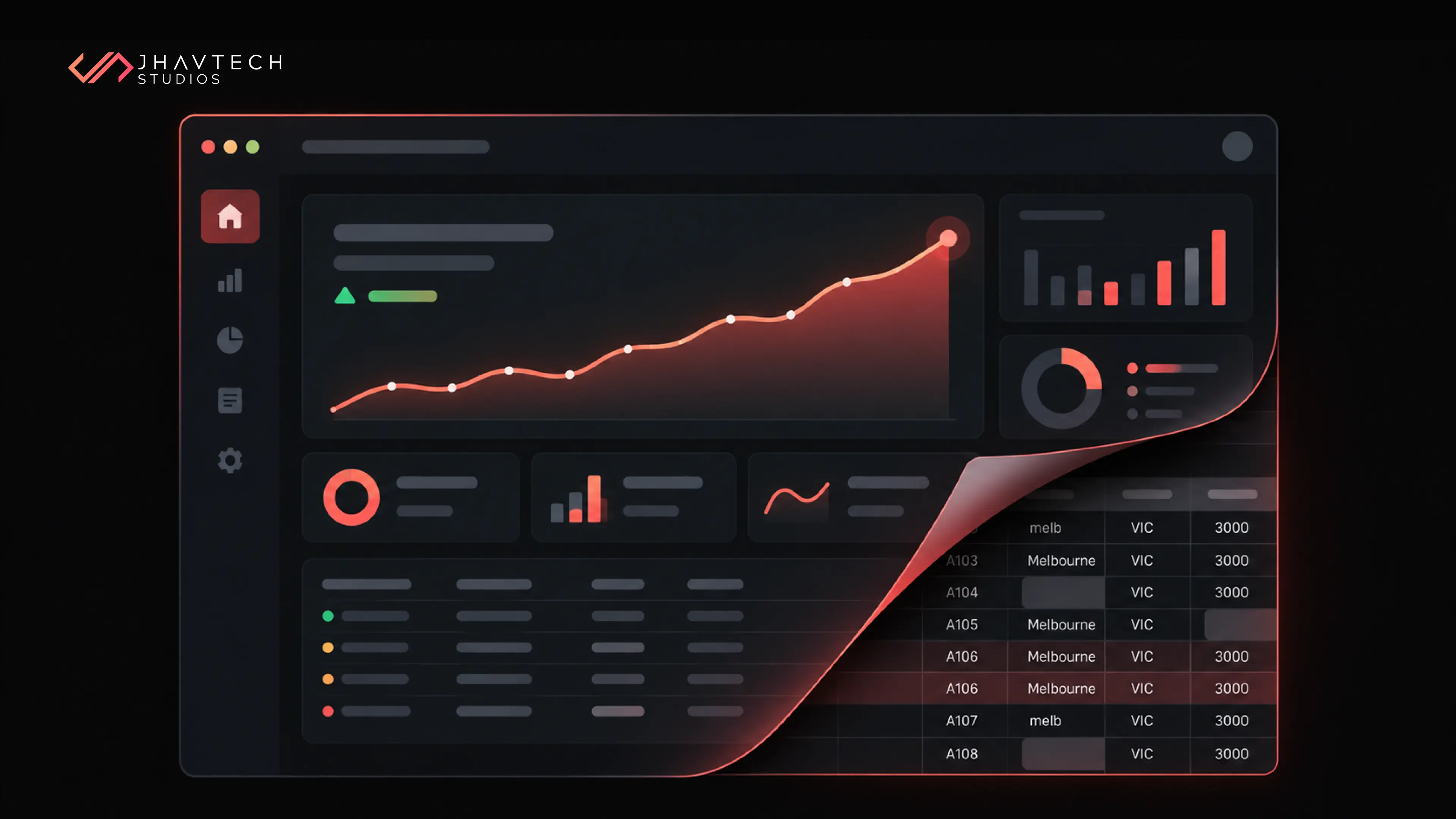
- Free-text fields standing in for structured ones. “Melbourne”, “melb”, “MEL” and “Victoria” read as four different places to a model.
- Duplicate records left behind by a CRM migration that nobody finished.
- Too few examples of the rare event that matters. If fraud happened nine times last year, no model will learn it from nine rows.
- Data trapped in a platform whose vendor won’t expose an API.
Pull 500 real records and have someone read them. Not the summary statistics. The records themselves. One afternoon of that beats a month of planning documents, and it costs nothing.
2. The model is the simple part. Connecting it is where timelines slip
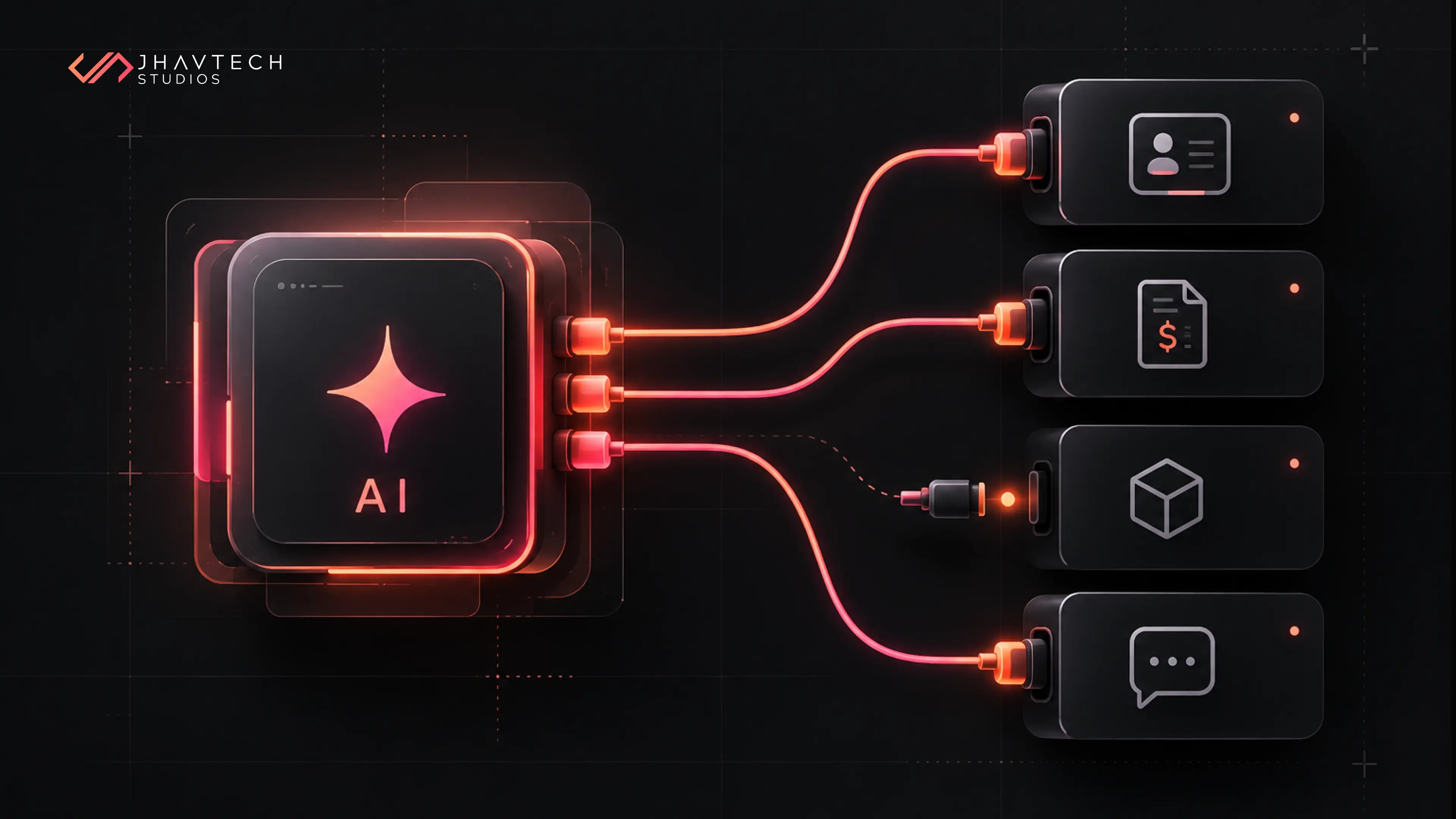
AI model integration means wiring a model’s outputs into the systems that already run your business, so predictions arrive where decisions get made rather than sitting in a dashboard nobody opens.
Putting a model in a slide deck takes an afternoon. Connecting it to your booking system, your inventory database, your app and your support desk, then keeping those in sync when one of them updates, is an engineering project with its own architecture and its own failure modes.
Four questions settle most of the architecture:
- Latency. Does the prediction need to land in under a second, or will an overnight batch do? This single answer moves your infrastructure bill by an order of magnitude.
- Failure behaviour. When the model API goes down, does your checkout still work? A fallback that fails loudly is better than one that returns nothing quietly.
- Ownership. Rate limits, retries, token spend, version deprecations. Someone’s name goes next to that.
- Foundations. Older codebases often can’t take the extra load, and attaching AI to fragile architecture turns minor issues into outages.
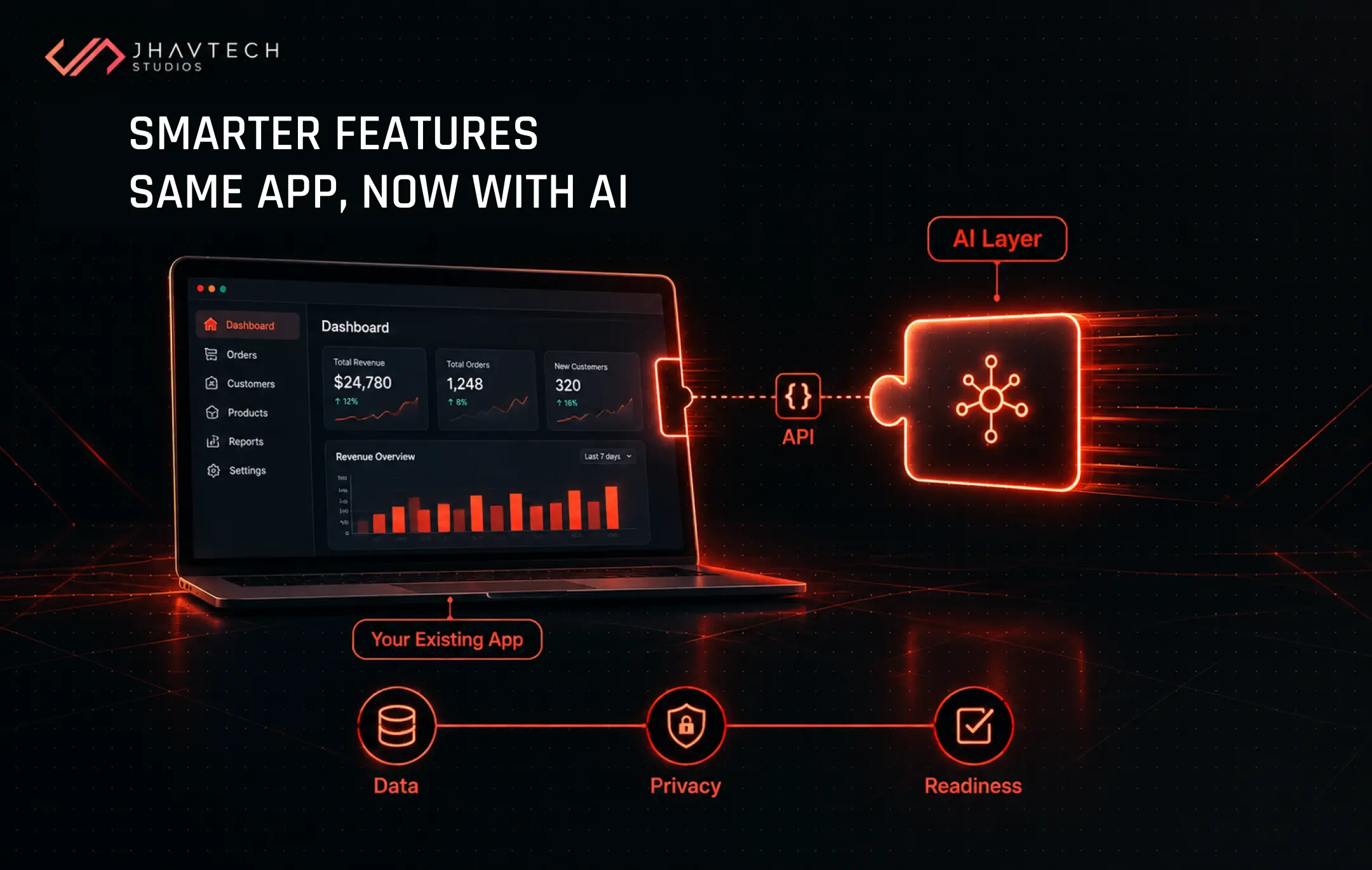
If you want the integration patterns in more depth, we’ve mapped them out in our guide to connecting AI tools with the business systems you already run.
Where the existing codebase is the unknown, a free code review will surface the pressure points before you commit budget to them.
3. AI implementation costs keep arriving long after launch day
Here’s the inversion that catches founders out. Conventional software has a large build cost and a smaller maintenance cost. AI flips the ratio. Every prediction has a price. Every retrain has a price. Data drifts away from what the model learned, performance degrades, and someone pays to correct it.
What is inference cost?
Inference cost is the amount you pay each time a trained model produces an output in production, usually billed per API call or per token. It recurs monthly and scales directly with usage, which separates it from the one-off cost of building the model.
Where AI implementation costs really land
Table 1. AI implementation cost lines and timing. Source: Jhavtech Studios pre-launch project reviews, 2024–2026.
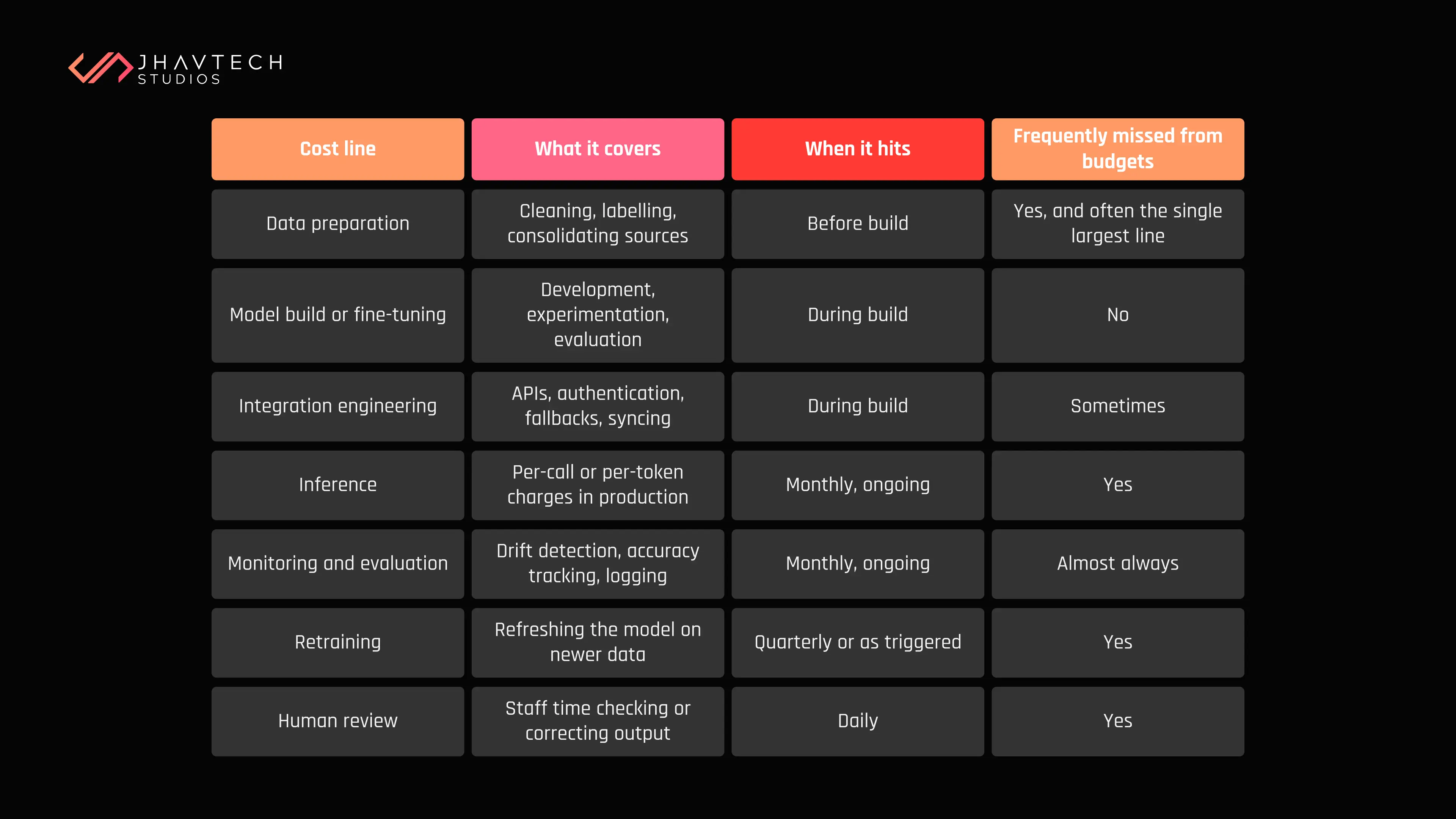
Model your inference spend at ten times pilot volume before signing anything. An internal assistant costing $80 a month across your team can reach $8,000 a month once it faces every customer at once. That calculation belongs in a spreadsheet now, not in a board meeting in April.
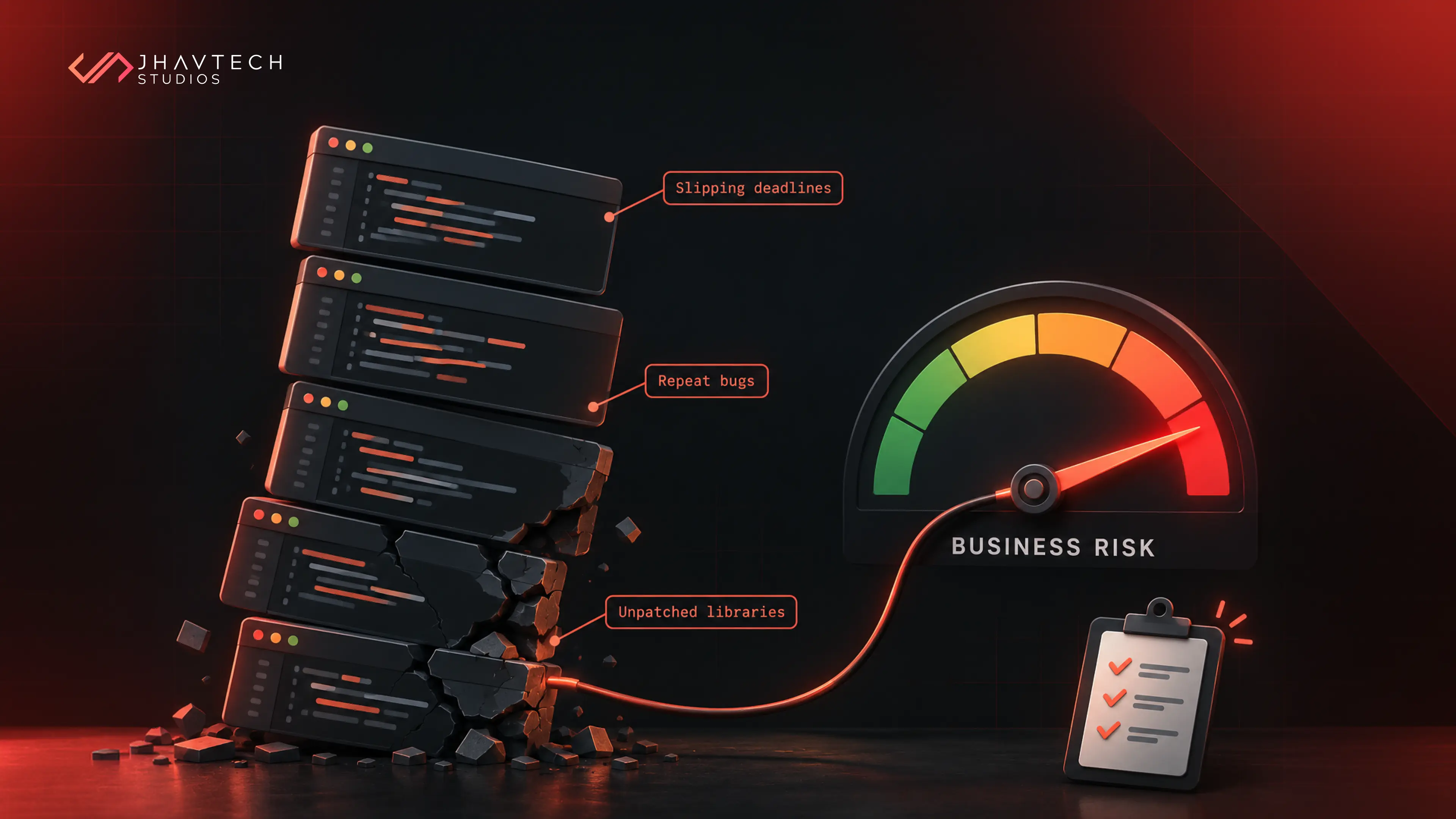
Teams who have already overrun once will recognise the pattern in our breakdown of the seven ways technical debt drains a development budget, which explains why year two usually costs more than year one.
4. Data privacy in AI is a day-one obligation
The Office of the Australian Information Commissioner has been direct here. Its guidance on privacy and the use of commercially available AI products confirms that privacy obligations apply both to personal information entered into an AI system and to output the system generates where that output contains personal information. The OAIC also recommends against entering personal information, especially sensitive information, into publicly available generative AI tools.
Privacy checklist for an AI deployment in Australia
☐ Privacy Impact Assessment completed before go-live (the OAIC treats this as a privacy-by-design expectation)
☐ Processing and storage locations documented, including any offshore processing
☐ Vendor contract covers prompt retention and whether your data trains their models
☐ Privacy policy updated to describe your AI use in plain terms
☐ Customer-facing AI clearly identified as AI
☐ Review schedule set, since due diligence is not a one-off
The last point deserves emphasis. A tool that was fit for purpose in March may not be in November, and the guidance expects ongoing review across the product lifecycle.
5. Decide now what happens when the model is wrong
Models produce wrong answers. That’s a property of the technology, not a bug waiting to be patched. What you control is the response.
For every AI-driven decision in your product, write down the answer to four things: whether a human approves it, reviews it afterwards, or never sees it; how a user reports a bad output and where that report lands; what a wrong answer costs in this specific spot; and whether you could explain the decision to a customer or a regulator who asks.
Match oversight to stakes. An odd product recommendation is noise. A mispriced quote or an incorrect medication reminder is not. High-stakes paths keep a human in the loop. Low-stakes paths can run unattended with sampling and logging, so a pattern of errors surfaces internally before your customers find it.
6. Staff may quietly decline to use what you built
The MIT research turned up something worth sitting with. While sanctioned AI programs stalled, workers at more than 90% of surveyed companies were already using personal AI tools for work. The appetite exists. It just doesn’t transfer automatically to the tool you commissioned.
Internal tools get abandoned for predictable reasons: the new way is slower than the old way, errors can’t be corrected easily, nobody explained the purpose, or the tool looks like surveillance in a friendly interface.
What works better is narrower than most rollout plans. One team. One workflow those people already find painful. Six weeks of them shaping it. Then a measurement of whether their week got easier, and only then an expansion.
Ten workflows across five departments produces something everyone tolerates and nobody opens by March.

7. Without a baseline, you can’t prove anything worked
This costs nothing to fix and gets skipped more than any other item on the list.
Write down the current state before launch. Average handling time. Error rate. Hours spent weekly on the task. Conversion percentage. Then define success in those same units with a date attached.
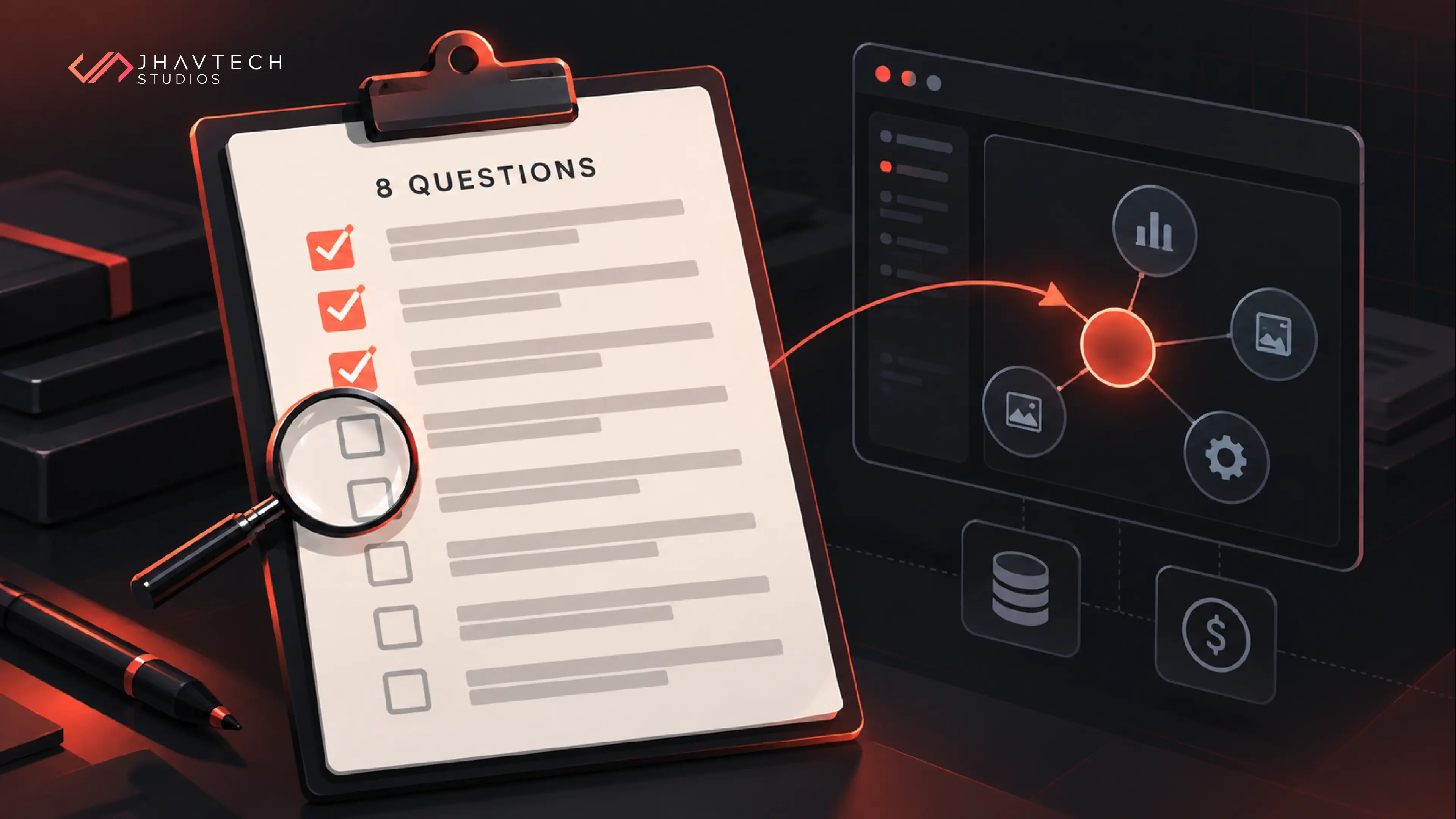
“Improve customer service” will produce a debate in six months. “Cut average first response from 9 hours to under 2 by March without a drop in CSAT” will produce a decision. There’s more on framing these at discovery stage in our list of eight questions to ask before starting your first AI project.
The pre-launch AI readiness checklist
Three or more unticked boxes means the build is premature.
Data
☐ I’ve read a real sample of the data the model will use
☐ The dataset holds enough examples of the outcome I want predicted
☐ I know who owns the data and whether we’re permitted to use it this way
Integration
☐ The systems the AI must read from and write to are listed
☐ A fallback exists for when the model is unavailable
☐ One person owns the integration layer by name
Cost
☐ Inference modelled at ten times pilot volume
☐ Monitoring, retraining, and human review sit in the annual budget
☐ Break-even point known in months
Privacy
☐ Privacy Impact Assessment complete or scheduled
☐ Data processing and storage locations documented
☐ Privacy policy updated and AI disclosed to customers
People and proof
☐ One team, one workflow, named users for release one
☐ Baseline metrics recorded with a date
☐ Kill criterion agreed in writing
Where to start
The businesses getting value from AI in 2026 aren’t the ones with the largest budgets. They picked one narrow problem, prepared the data properly, costed the running bill honestly, and measured the outcome against something written down beforehand.
Pick one workflow. Prove it. Widen from there.
If a build has already stalled, a second set of eyes is almost always faster and cheaper than starting over. We help teams get a stalled project moving again, and when an AI feature needs a proper product around it, we turn the idea into something customers can hold.
Frequently Asked Questions