.svg)
.svg)


Wellness Apps in 2025: Building Digital Products That Help Users Live Healthier, Happier Lives
.png)
Wellness isn’t a buzzword anymore — it’s become a way of life.
In 2025, people are prioritising mental health, sleep quality, nutrition, and emotional wellbeing like never before. And what’s powering this shift? Wellness apps.
From meditation reminders to mood tracking and personalised sleep support, these apps act like digital life coaches, tucked right into your pocket. They nudge you toward healthier routines, better habits, and a more balanced lifestyle.
If you’re curious about how to build a wellness app that actually improves lives — not just adds to the noise — this guide will walk you through what users expect, what makes these apps successful, and how you can create something that stands out in a crowded marketplace.
What Are Wellness Apps?
Definition and Market Scope
Wellness apps are digital platforms designed to support physical, mental, emotional, and even spiritual well-being. They help users reduce stress, build healthier habits, and become more mindful of their daily choices.
And the demand is skyrocketing. Industry research shows that the global wellness tech market is expected to surpass $7 billion by 2027. The takeaway? People are actively investing in tools that support their health and happiness.
Difference Between Fitness, Health, and Wellness Apps
It’s easy to mix them up, so here’s the breakdown:
- Health apps: Track clinical or medical data (e.g., glucose levels, heart rate).
- Fitness tracking apps: Focus on exercise, movement, and physical performance.
- Wellness apps: Broader in scope — tackling sleep, mindfulness, stress relief, hydration, nutrition, and overall lifestyle balance.
Core Functions of Wellness Apps
While every product has its unique twist, most wellness apps share a set of core functions that help users stay consistent, motivated, and mindful in their daily routines. These foundational features make the difference between an app that simply tracks activity and one that truly supports long-term wellbeing.
- Habit and emotion tracking
- Guided meditation or journaling prompts
- Gamified motivation and progress dashboards
- Gentle reminders to breathe, hydrate, stretch, or reflect
Types of Wellness Apps Gaining Popularity in 2025
1. Meditation & Mindfulness Apps
Guided audio sessions, breathing exercises, and focus timers help users decompress and regain clarity.
2. Habit-Building & Productivity Apps
Tools like habit trackers, daily goal-setting, and digital planners support consistency in routines.
3. Sleep & Relaxation Trackers
These offer sleep stories, white noise, analytics, and bedtime reminders — a godsend for insomniacs.
4. Mental Health Support Apps
With mood logs, CBT-based prompts, and even access to licensed professionals, these apps offer safe emotional support.
5. Nutrition and Diet Apps
From calorie counters to hydration trackers, these apps guide users toward balanced eating and better food awareness.
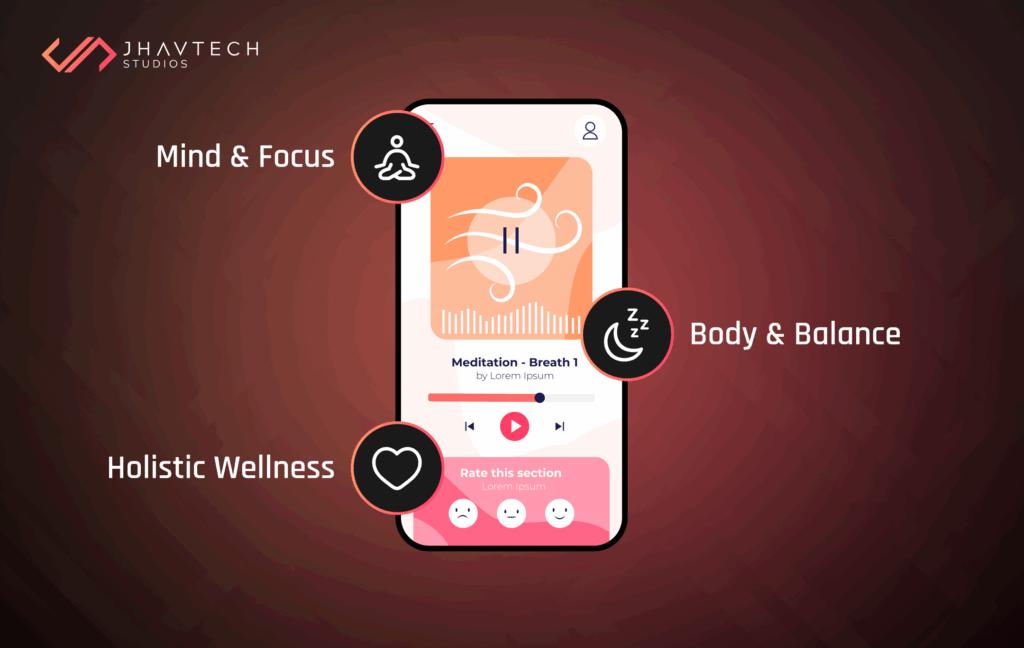
6. Holistic Wellness Apps
All-in-one platforms that combine yoga tutorials, mood journaling, gratitude logs, affirmations, and more.
Why the Wellness Market Is Thriving
Burnout, Anxiety, and Mental Health Awareness
The post-pandemic world has left many dealing with chronic stress and burnout. People now turn to wellness apps for relief and structure.
Remote Lifestyles Demand Balance
With hybrid work being the norm, users want digital tools to help separate personal life from work and reduce digital fatigue.
Corporate Wellness Is Big Business
Companies are investing heavily in employee wellness. Corporate partnerships with app developers have become a significant revenue driver, especially for meditation and stress management solutions.
Must-Have Features in a Wellness App
- Daily Reminders & Notifications – Gentle nudges to hydrate, journal, or meditate.
- Progress Dashboards – Clear visuals showing streaks, milestones, and goals.
- Positive Reinforcement – Celebrations for small wins (“You’ve meditated 3 days in a row — amazing!”).
- Mood Trackers – Emotional logging with insights and patterns.
- Personalised Wellness Plans – Adaptive routines based on progress.
- Voice Notes & Audio Prompts – Calming narrations or motivational affirmations.
Personalisation: The Heart of User Engagement
No two wellness journeys are the same. That’s why personalisation isn’t just a nice-to-have—it’s the cornerstone of building apps that users trust and return to. By adapting to each individual’s needs, preferences, and daily rhythms, wellness apps can deliver a seamless user experience that feels truly supportive.
AI-Driven Habit Recommendations
Smart suggestions based on usage patterns and lifestyle data.
Tailored Mindfulness Sessions
Content that adapts to real-life needs — from “5-minute resets for anxious minds” to “bedtime gratitude meditations.”
Adaptive Goal Setting
Letting users adjust daily goals based on stress, sleep, or mood keeps experiences realistic and rewarding.
Wellness App Design Principles
Design plays a huge role in whether users feel calm, motivated, or overwhelmed when they open your app. In fact, thoughtful UI/UX design is often what separates a successful wellness app from one that gets abandoned after a few uses. At Jhavtech Studios, we’ve seen firsthand how design choices can impact engagement, retention, and even emotional wellbeing.
Calm and Minimalist UI
A clutter-free interface with soft fonts, clean layouts, and gentle animations makes the app feel like a digital sanctuary instead of another stressful dashboard.
Soothing Colour Palettes
Nature-inspired tones, gradients, and pastel shades promote relaxation and mindfulness, while harsh reds or bright alerts are avoided.
Accessibility and Neurodiversity Support
Inclusive features like voice inputs, dyslexia-friendly fonts, dark mode, and reduced animation options ensure that the app is welcoming to everyone, regardless of ability or neurodiversity.
A well-crafted design doesn’t just look good — it creates trust, reduces friction, and helps users form lasting healthy habits.
Privacy and Sensitivity in Wellness Apps
Handling sensitive emotional data requires absolute care. Users are not just sharing activity logs — they’re often revealing their deepest thoughts, moods, and vulnerabilities. Protecting this information isn’t just a compliance requirement, it’s a moral responsibility that can make or break user trust.
End-to-End Encryption
Ensures that journals, voice notes, and mood logs remain private, shielding users from breaches or misuse of their most personal data.
User Control
Empowers individuals to export, manage, or permanently delete their data, giving them true ownership and peace of mind.
Transparency
Builds trust by showing users exactly how their information is stored and used, which is critical for long-term retention and brand credibility.
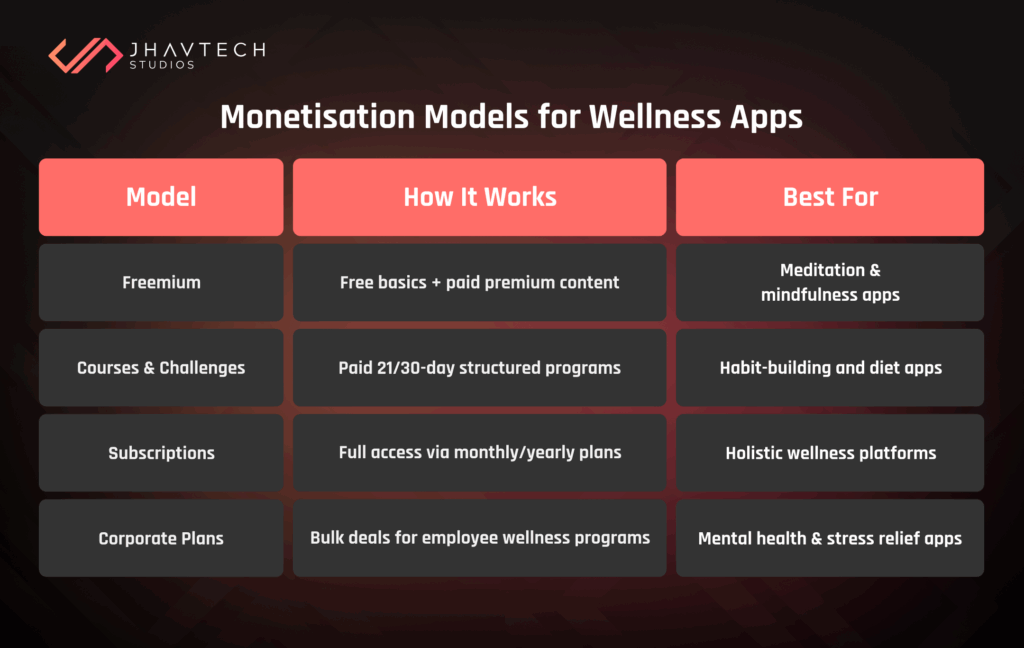
Monetisation Models for Wellness Apps
When it comes to generating revenue, wellness apps have several proven monetisation strategies. The right model depends on your app’s features, audience, and long-term growth plans. Below are some of the most common approaches:
Challenges in Building a Wellness App
While the demand for wellness apps continues to grow, building one that genuinely resonates with users isn’t without obstacles. Developers need to strike a balance between usefulness, engagement, and authenticity — otherwise, the app risks being deleted after just a few sessions.
Notification Fatigue
Push notifications can help build habits, but too many can feel intrusive or annoying. The key is to deliver smart, contextual nudges that align with the user’s goals and daily rhythm, rather than constant interruptions.
Standing Out in a Crowded Market
With thousands of apps competing for attention, differentiation is essential. Wellness products succeed when they focus on a clear niche, offer unique features, or tell a compelling brand story that sets them apart.
Avoiding Wellness Gimmicks
Users are quick to spot shallow features or “feel-good fluff.” To build credibility, apps must prioritise substance, whether that’s through evidence-based practices, expert-backed content, or meaningful progress tracking.
Real-World Example: How Jhavtech Studios Built a Custom Habit-Tracking App
A client approached Jhavtech Studios to create a self-care companion app designed for individuals struggling with burnout and emotional fatigue. Drawing on our experience in building health, education, and lifestyle platforms, we focused on delivering a solution that blended practicality with empathy.
What We Built
- Smart habit reminders tailored to the user’s energy levels, encouraging balance rather than pressure. These reminders worked in harmony with daily rhythms, making healthy habits feel natural instead of forced.
- Guided journaling with audio prompts to make self-reflection more approachable and engaging. By turning a solitary task into an interactive experience, users felt supported in building a sustainable journaling routine.
- A mood tracker that mapped weekly emotional patterns, giving users valuable insights into their mental wellbeing. Over time, this empowered users to spot triggers, celebrate progress, and make informed lifestyle changes.
Results
- Achieved a 4.8-star average rating on app stores.
- Maintained a 40%+ daily active user rate, well above industry averages for engagement.
- Featured in a leading wellness magazine for its thoughtful design and impact.
This project highlights the real benefits of a custom wellness app when built with empathy, strong UI/UX design, and a deep understanding of user needs. At Jhavtech, we don’t just build apps — we create digital companions that improve lives.
Emerging Tech in the Wellness Space
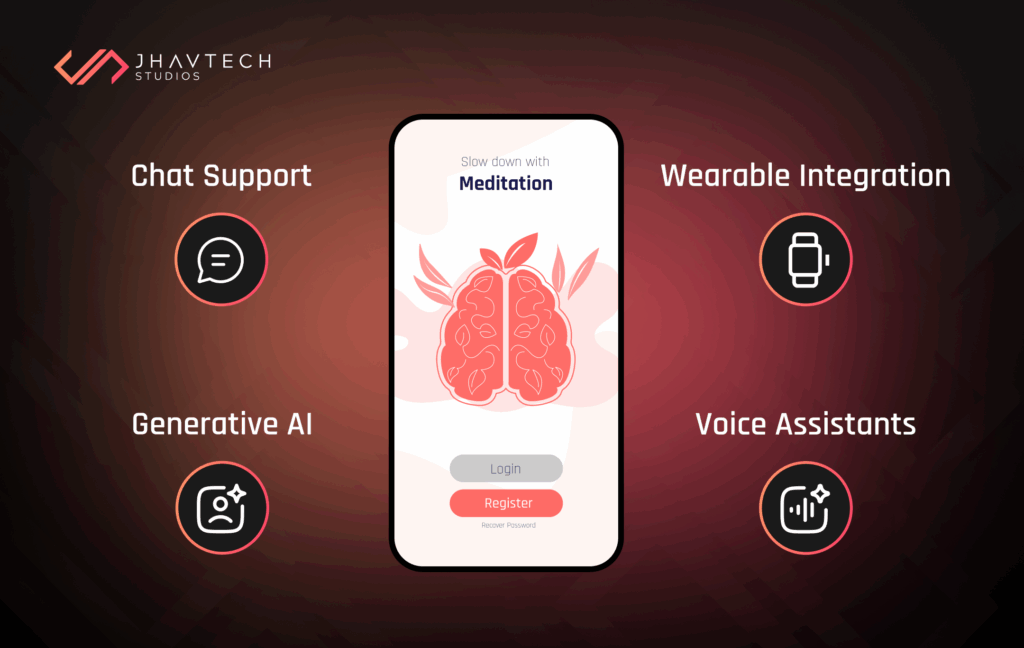
The wellness app landscape is evolving quickly, with new technologies making experiences more personalised, accessible, and impactful. Here are some innovations shaping the next wave of wellness solutions:
Wearable Integration
Syncing with devices like Apple Watch, Fitbit, or Oura provides richer health data such as heart rate variability, sleep cycles, and activity trends. This allows apps to offer tailored insights and timely nudges based on real-time metrics.
Voice Assistants
Alexa, Google Home, and other smart speakers give users hands-free access to meditations, affirmations, or breathing sessions. This seamless integration makes wellness practices easier to incorporate into daily routines.
Generative AI
Beyond static content, AI can design personalised wellness routines, create custom breathing exercises, or generate journaling prompts. This adaptability keeps users engaged with fresh, relevant experiences.
Chat-Based Support
AI-powered chat tools can provide 24/7 emotional support and, when necessary, connect users directly to licensed professionals. This hybrid approach increases accessibility while maintaining a human safety net.
Steps to Build a High-Impact Wellness App
Building a successful wellness app goes beyond functionality—it requires empathy, intentional design, and user validation. Here are the key steps:
1. Define Your Niche
Pinpoint the exact audience you’re serving. For example, are you targeting fitness tracking apps for beginners, stress relief for remote workers, or mindfulness tools for teens? A clear niche ensures your features and messaging resonate deeply.
2. Map the User Journey
Chart the path from sign-up to daily use. Prioritise smooth onboarding, make progress tracking simple, and reward users for consistency. A well-designed journey keeps motivation high and drop-offs low.
3. Design Micro-Interactions
Every small detail matters. Subtle animations, calming tones, and encouraging notifications can reinforce positive emotions and make users feel supported with every interaction.
4. Test with Real Users
Go beyond technical testing by observing emotional responses. Run pilot programs, gather honest feedback, and refine based on real-world use. This ensures the app feels not just usable, but genuinely helpful.
Why Choose Jhavtech Studios to Build Your Wellness App
Building a wellness app takes more than just code — it requires an understanding of user psychology, design thinking, and the right technical expertise. With our expertise in mobile app development, we help wellness brands transform ideas into apps that scale and truly connect with users. Here’s how we do it:
Wellness-Focused Thinking
Our team understands the unique needs of this space. We’ve built fitness trackers, mindfulness tools, and mental health platforms that people return to daily because they feel personal, supportive, and engaging.
UX-Led Development
Functionality alone isn’t enough. We design apps that are soothing, intuitive, and enjoyable to use—whether that’s through calming visuals, seamless navigation, or micro-interactions that reinforce positive behaviour.
Scalable & Secure Solutions
From end-to-end encryption to wearable integration and cloud scalability, we engineer your app to handle growth without compromising on privacy or performance.
You can check our portfolio here to see how we’ve helped clients create impactful digital experiences.
Final Thoughts...
Wellness apps are no longer just “nice-to-have” — they’re lifelines. Whether it’s managing anxiety, improving sleep, or building healthier eating habits, people now rely on them daily.
If you’ve got an idea that could improve even one person’s life, now is the perfect time to explore it. Get in touch and let Jhavtech Studios help you craft a product that’s secure, calming, and truly impactful.
Frequently Asked Questions
1. How long does it take to build a wellness app?
Typically 3–6 months for an MVP. Longer if wearables or AI are integrated.
2. What are the best tools for habit tracking?
Dashboards, streak counters, reminders, and mood logs — gamified gently for motivation.
3. Can I integrate my wellness app with Apple Health or Google Fit?
Yes — and it’s highly recommended for a more holistic user experience.
4. How do I protect sensitive wellness data?
Encryption, minimal third-party tracking, and full user control are key.
5. How do wellness apps make money?
Freemium features, course sales, subscriptions, and corporate partnerships are the most common models.

.png)
.png)
.png)
.png)
.png)
.png)
.png)
.png)
.png)
.png)
.png)
.png)
.png)
.png)
.png)
.png)
.png)
.png)
.png)
.png)
.png)
.png)
.png)
.png)
.png)
.png)
.png)
.png)
.png)
.png)
.png)
.png)
.png)
.png)
.png)
.png)

.png)
.png)
.png)
.png)
.png)
.png)
.png)
.png)
.png)
.png)


.png)


.png)

.png)

.png)


.png)
.png)
.png)
.png)