.svg)
.svg)


iOS or Android: Which Platform Reigns Supreme?
.png)
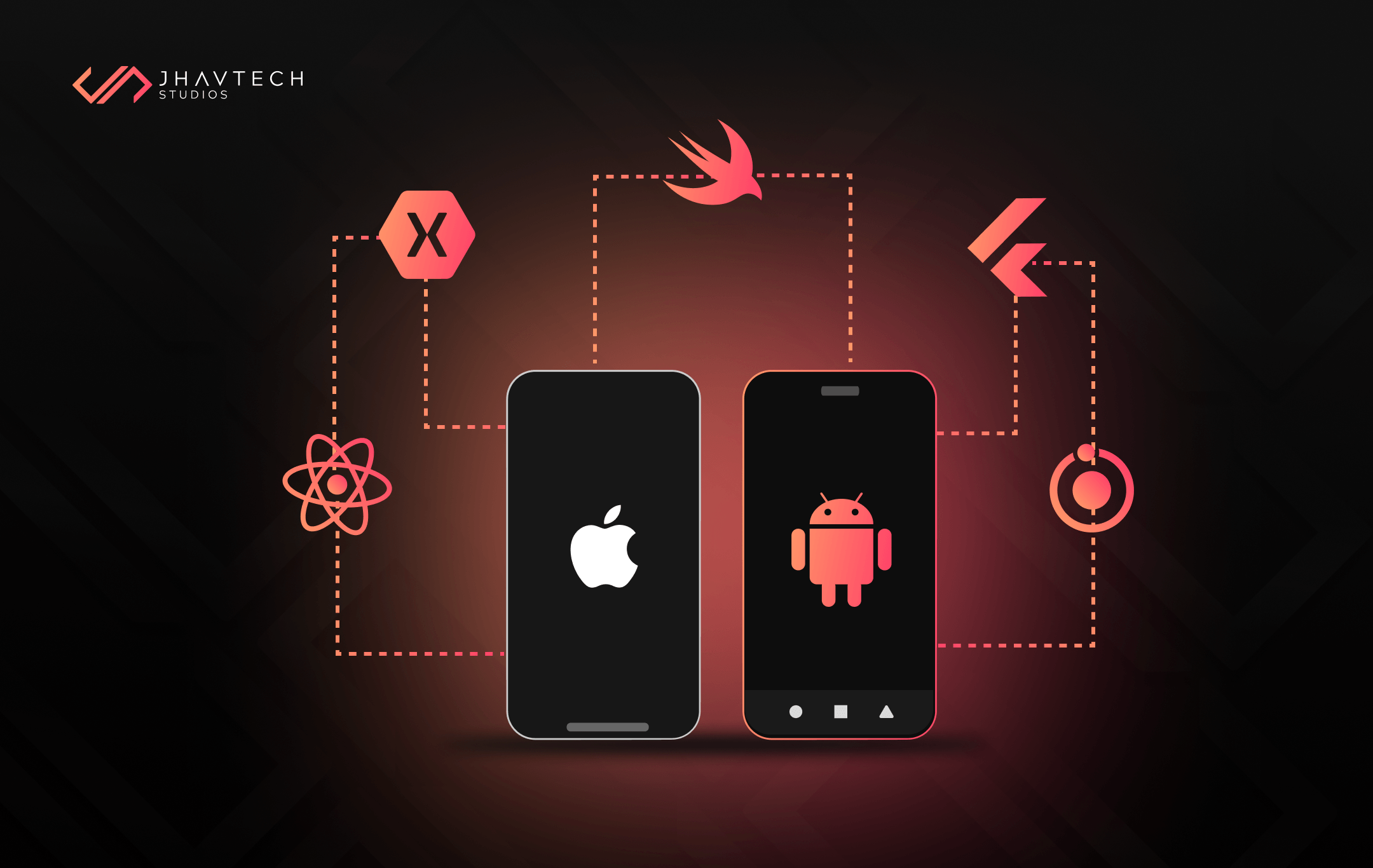
When diving into the world of mobile app development, one of the first and most crucial decisions you'll face is: iOS vs Android—where should you start? This choice can significantly influence your app’s success, user base, and revenue potential. Both platforms offer unique advantages and challenges, and the right choice depends on your specific goals, target audience, and budget.
Let’s explore the iOS vs Android debate in-depth to help you make an informed decision.
Who’s Your Target Audience?
Understanding your audience is fundamental when deciding between iOS vs Android. Each platform attracts different demographics, behaviors, and geographic distributions.
iOS Users
iOS boasts a dedicated and affluent user base, particularly in North America, Western Europe, and Australia. According to Statista, as of 2024, iOS holds approximately 27% of the global smartphone market share, but in the United States, it commands about 60%. These users are often more willing to spend on apps, in-app purchases, and subscriptions. For instance, a 2023 report by App Annie revealed that iOS users generate 80% of total app revenue globally. If your app is premium, focuses on productivity, or targets professionals, iOS could be the ideal platform.
Android Users
Android dominates globally with around 73% of the smartphone market. It’s particularly strong in regions like Asia, Africa, and Latin America, where affordability and variety are key. Android’s open ecosystem appeals to a broader audience, including younger users and those in developing economies. So, if your app aims for a global reach, diverse user base, or targets emerging markets, Android’s extensive reach makes it a compelling choice.
Development Costs and Timelines
Budget considerations play a significant role in the iOS vs Android decision. Let’s break down the cost considerations and development timelines for each platform.
iOS Development
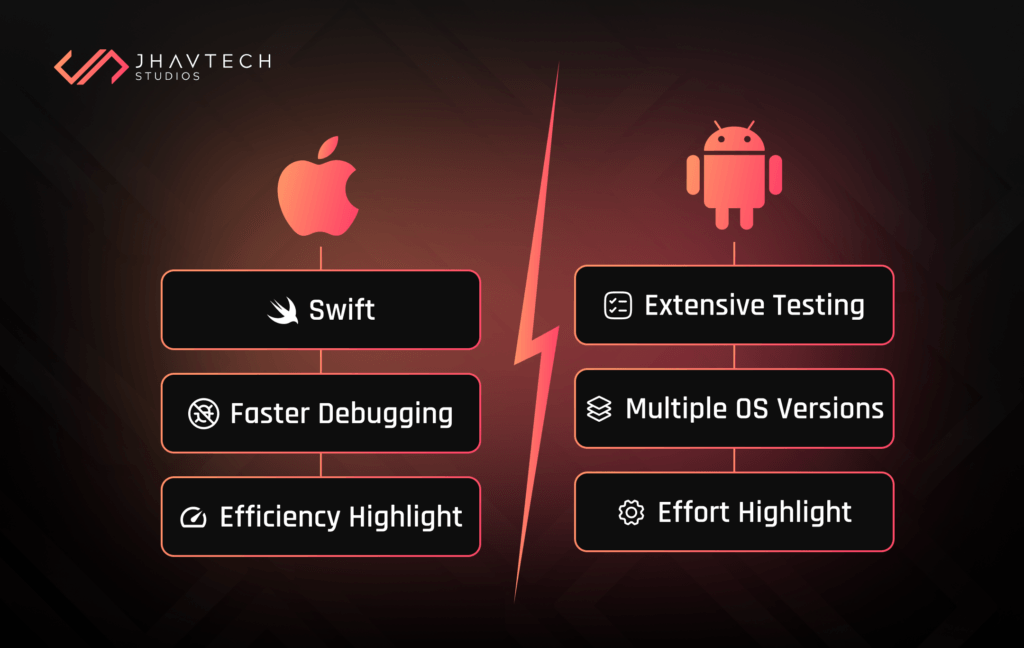
iOS app development can be more streamlined due to Apple’s controlled ecosystem. With fewer device types and operating system versions to support, development and testing are generally faster and more cost-effective. According to a 2023 survey by Stack Overflow, iOS developers spend about 20% less time debugging compared to their Android counterparts. However, Apple’s stringent App Store guidelines mean that your app must meet high standards, potentially increasing initial development time to ensure compliance. The use of Swift, Apple's programming language, is advantageous due to its efficiency and performance, further reducing development time.
Android Development
Android development tends to be more complex and costly due to the platform’s fragmentation. There are thousands of devices with varying screen sizes, resolutions, and hardware capabilities, not to mention multiple versions of the Android OS still in use. This diversity necessitates extensive testing and optimisation, increasing both development cost and time. A 2023 JetBrains report suggests Android projects need 30% more testing than iOS. Moreover, while Kotlin is popular for Android, it has a learning curve that can slow development, especially for teams transitioning from other languages.
Revenue Potential: App Monetisation
Monetisation strategies and revenue potential vary significantly between iOS vs Android. Understanding these differences can help you maximise your app’s profitability.
iOS Earning Ability
iOS users are known for their higher spending power and willingness to pay for quality apps. In 2023, the App Store generated over $200 billion in revenue, with a significant portion coming from in-app purchases and subscriptions. This makes iOS an excellent platform for apps that rely on direct monetisation methods, such as premium apps, subscription services, or in-app purchases. Additionally, Apple’s payment system is highly secure and user-friendly, encouraging users to make purchases more frequently.
Android Earning Ability
Android’s vast user base offers substantial opportunities for ad-based revenue models. With Google Play holding around 73% of the global market share, apps can tap into a large audience for advertising. In 2023, Google Play generated approximately $100 billion in revenue, with a significant share coming from ad revenues and freemium models. If your app relies on advertising or offers a free version with optional paid upgrades, Android’s extensive reach can translate into significant ad impressions and higher overall revenue.
Design and User Experience
Design and user experience (UX) are pivotal in the iOS vs Android comparison. Each platform has distinct UI/UX design philosophies and user expectations.
iOS Design
Apple places a strong emphasis on consistency and simplicity. The Human Interface Guidelines (HIG) provide comprehensive standards for app design, ensuring a uniform look and feel across all iOS apps. This results in a seamless and intuitive user experience. iOS apps typically prioritise clean layouts, smooth animations, and minimalistic design elements. According to a 2023 UX study by Nielsen Norman Group, users rated iOS apps higher in usability and aesthetic appeal compared to Android apps. If your app focuses on delivering a polished, elegant experience with intuitive navigation, iOS design principles can help you achieve that.
Android Design
Android embraces flexibility and customisation through Material Design, which allows for more diverse and innovative UI elements. This framework supports vibrant colors, bold typography, and responsive animations, enabling developers to create unique and engaging experiences. A 2023 survey by Google revealed that 65% of Android users appreciate the platform’s customisable interface options, which allow them to tailor the app experience to their preferences. If your app aims to offer a highly customisable or feature-rich experience, Android’s design flexibility provides ample opportunities for creativity and differentiation.
Maintenance and Updates
Maintaining and updating your app is an ongoing process that differs between iOS vs Android, impacting long-term sustainability and user satisfaction.
iOS Maintenance
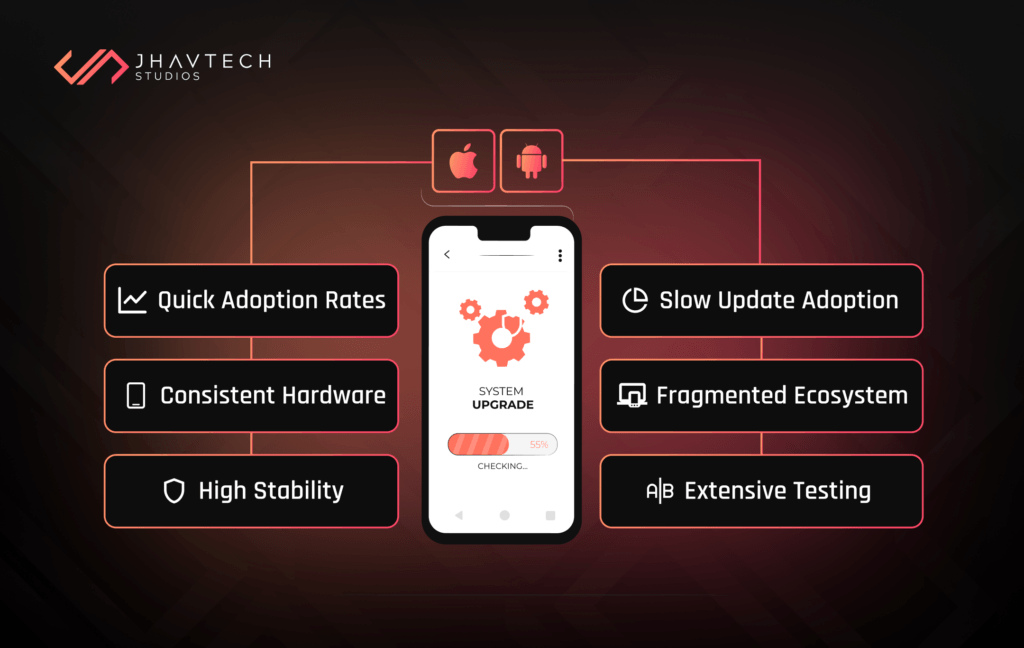
Apple users are quick to adopt the latest iOS updates, with adoption rates often exceeding 80% within the first year of release. This means developers can focus on supporting the latest OS version without worrying extensively about backward compatibility. Additionally, Apple’s consistent hardware updates simplify the testing process, as there are fewer device variations to consider. According to a 2023 report by Mixpanel, iOS apps experience fewer crashes and higher stability post-update, leading to better user retention and satisfaction.
Android Maintenance
Android’s fragmented ecosystem poses challenges for app maintenance. Users tend to adopt new OS versions more slowly, with many still using versions that are several years old. For example, as of early 2024, only about 40% of Android devices run the latest OS, while the remaining 60% are on older versions. This requires developers to support multiple OS versions and device configurations, increasing the complexity and cost of updates. Furthermore, the variety of hardware specifications means more extensive testing is necessary to ensure compatibility and performance across different devices. However, Google’s efforts to streamline the update process through initiatives like Project Treble are gradually improving the situation, making maintenance slightly easier over time.
Developer Tools and Support
The tools and support available to developers can significantly impact the efficiency and quality of your mobile app development process in the iOS vs Android landscape.
iOS Development Tools
Apple’s Xcode is the official Integrated Development Environment (IDE) for iOS development, offering a robust set of tools for designing, coding, and testing apps. Xcode provides seamless integration with other Apple services, such as TestFlight for beta testing and App Store Connect for app submission and analytics. Additionally, Swift, Apple’s programming language, is designed for performance and safety, making it easier to write clean and efficient code.
Android Development Tools
Android Studio is Google’s official IDE for Android development, renowned for its versatility and support for multiple programming languages, including Java, Kotlin, and C++. Android Studio offers a powerful emulator, extensive debugging tools, and seamless integration with Google’s suite of developer services, such as Firebase for backend support and Google Play Console for app management. Kotlin, in particular, has gained popularity for its modern features and interoperability with existing Java code, making Android development more efficient and enjoyable.
So, iOS vs Android: What’s the Verdict?
After weighing the pros and cons, the final decision in the iOS vs Android debate boils down to your app’s specific needs and strategic goals. Here’s a quick summary to guide your choice:
Choose iOS if:
Target High-Income Users:
If your app is aimed at users in developed markets with higher disposable incomes, iOS is ideal.
Monetisation
Through Purchases or Subscriptions: iOS users are more likely to spend money on apps and in-app purchases.
Faster Development and Consistent Updates
Apple’s controlled ecosystem allows for quicker development cycles and easier maintenance.
Choose Android if:
Aim for a Global Audience
With its dominant market share, Android is perfect for reaching users worldwide, especially in emerging markets.
Ad Revenue or Freemium Models
Android’s extensive user base is advantageous for ad-based monetisation and freemium models.
Customisation and Creativity
Android’s flexible design options allow for highly customisable and unique app experiences.
However, it’s important to note that many successful and viral apps eventually expand to both platforms to maximise their reach and revenue potential. Starting with one platform based on your initial priorities and then expanding to the other as your app grows can be a strategic approach, balancing cost, development time, and market reach.
Ready to take the plunge? Whether you decide on iOS, Android, or a combination of both, our team at Jhavtech Studios is here to help you bring your app idea to life. Contact us today…let’s navigate the iOS vs Android landscape together and build something amazing!

.png)
.png)
.png)
.png)
.png)
.png)
.png)
.png)
.png)
.png)
.png)
.png)
.png)
.png)
.png)
.png)
.png)
.png)
.png)
.png)
.png)
.png)
.png)
.png)
.png)
.png)
.png)
.png)
.png)
.png)
.png)
.png)
.png)
.png)
.png)
.png)
.png)
.png)
.png)
.png)
.png)
.png)
.png)
.png)
.png)
.png)

.png)

.png)



.png)

.png)
.png)
.png)
.png)
.png)