.svg)
.svg)


How a Free Code Review Saved a Startup’s App from Total Failure
.png)
When Ambition Meets a Broken Codebase
Every startup dreams of launching the next big app. But the moment users start complaining about crashes, slow performance, and bugs, that dream can unravel fast.
That’s exactly what happened to WellTrack, a health-tech startup with a brilliant idea—an app that helps users monitor their wellness in real time. Within weeks of launch, the app was crashing constantly and drawing negative reviews.
Their lifeline came in the form of a Free Code Review from Jhavtech Studios.
That review didn’t just uncover hidden problems; it completely turned the project around.
This is the story of how a single, expert review saved a startup from failure and set them up for long-term success.
The Background: A Promising Idea with Hidden Problems
WellTrack’s goal was simple: help people track stress, activity, and mood levels in one place. The Australian wellness app market is growing quickly, with revenue projected to rise by more than 8% annually through 2025. The founders wanted to capture that opportunity before competitors did.
To move fast, they hired a low-cost overseas developer. The prototype looked great, but after release, users started noticing serious issues:
- Frequent app crashes on Android devices
- Slow responses when loading data
- Memory leaks draining battery life
- A bloated, hard-to-maintain codebase
As complaints increased, WellTrack’s Google Play rating dropped below 3 stars. Investor confidence wavered, and the founders knew they had to act. That’s when they contacted Jhavtech for a Free Code Review for startups in Australia.
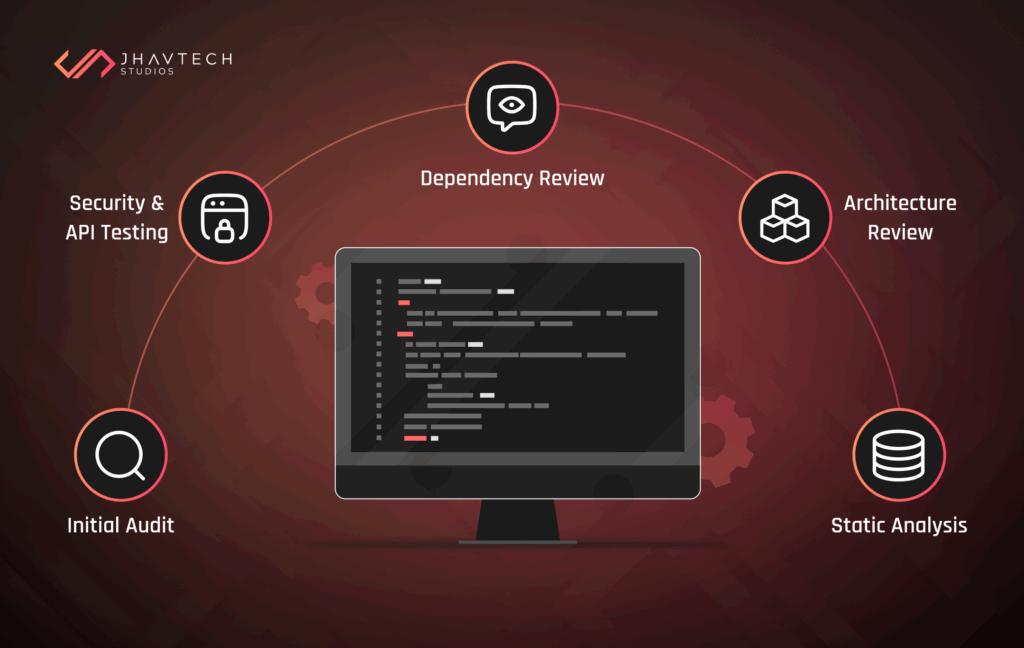
The Code Review Process: Diagnosing the Core Issues
At Jhavtech Studios, a code review isn’t just a quick glance at your files — it’s a structured audit aimed at identifying what’s really slowing your app down. Every review follows a clear, step-by-step approach to uncover hidden performance, security, and scalability issues.
Step 1: Initial Audit and Setup
We start the free code review by cloning the repository, setting up a mirrored build environment, and running the app across various devices and OS versions. This helps us reproduce real-world bugs and performance bottlenecks, ensuring our review reflects actual user experiences, not just what’s visible in the code editor.
Step 2: Static Code Analysis
Next, we run static analysis using tools like SonarQube, Lint, and Android Studio Profiler. These tools help us detect code smells, unused variables, and risky syntax patterns. According to research, teams using static analysis can eliminate up to 70% of defects before testing, marking a major win for app stability and release efficiency.
Step 3: Dependency and Library Review
Outdated dependencies are silent killers in app projects. We audit every library for version compatibility, performance impact, and security risks. In WellTrack’s case, several old libraries were responsible for long build times and frequent crashes — issues easily preventable with proper maintenance.
Step 4: Architecture Review
We assess whether the project follows a robust architectural pattern (like MVC, MVP, or MVVM). A poor or inconsistent structure makes scaling and testing extremely difficult. By recommending a cleaner architecture, we pave the way for faster feature rollouts and easier long-term maintenance.
Step 5: Security and API Testing
Finally, we evaluate how securely the app communicates with external services. We check for proper authentication, encryption, and error handling. In the wellness app for WellTrack, missing security protocols could have exposed user data — a critical issue we flagged for immediate fix before scaling.
What We Found: The Hidden Culprits
After completing the review, several underlying issues became clear — most of which weren’t immediately visible on the surface. These findings explained why WellTrack’s app was struggling with speed, stability, and scalability.
1. Redundant and Inefficient Code Blocks
Multiple functions were doing the same tasks across different modules, increasing load time and complicating updates. Refactoring these into reusable components helped reduce overall code volume and improved performance by over 30%.
2. Outdated Dependencies
Several third-party libraries were no longer supported, creating compatibility issues with the latest Android versions. Updating and replacing them not only improved build stability but also reduced app size and enhanced runtime efficiency.
3. Weak Security Practices
APIs lacked proper token-based authentication, leaving user data vulnerable. We also discovered unencrypted data storage in local caches, which is a critical compliance concern for any wellness app. Our report included step-by-step recommendations to secure user information and meet privacy standards.
4. Poor Architectural Consistency
The app mixed multiple patterns (MVC and MVVM), which made the codebase harder to maintain. Standardising the architecture improved testability and laid a solid foundation for future feature development.
5. Missed Optimisation Opportunities
Memory leaks, unnecessary background tasks, and inefficient image handling all contributed to lag and battery drain. Once optimised, the app became noticeably faster and smoother on mid-range devices — a key improvement for user retention.
By the end of the review, WellTrack finally had a full picture of what was holding their app back — and a clear roadmap for recovery. Every issue we uncovered pointed toward one goal: making the app faster, more secure, and ready to scale. With the findings in hand, our team moved on to refactoring the codebase and turning insights into measurable results.
The Fix: Refactoring for Performance and Stability
Instead of rebuilding the app from scratch, which would have taken months, we worked alongside WellTrack’s developers to refactor the existing code efficiently.
Key Improvements Implemented
- Migrated to MVVM architecture for easier maintenance and scalability.
- Reduced app size by 32% by cleaning assets and removing unused libraries.
- Enabled lazy loading, letting key features load only when needed.
- Added JWT-based authentication to secure APIs and protect user data.
- Upgraded to Flutter 3.16, improving performance across Android and iOS.
- Enhanced UI responsiveness through smoother animations and better state management.
These changes helped the startup regain control of their product—without wasting their limited funding.
The Results: From 3-Star App to 4.8-Star Success
Once the fixes were rolled out, the impact was immediate. The app that once struggled to stay open for more than a few minutes without crashing was now running smoothly on both Android and iOS devices. User reviews started to shift from frustration to praise, and retention numbers began climbing week after week.
In less than two months, WellTrack went from firefighting technical issues to confidently scaling its user base. Performance metrics improved across every category: speed, stability, and engagement. Investors who had previously hesitated were now taking a second look, impressed by how quickly the team had turned things around.
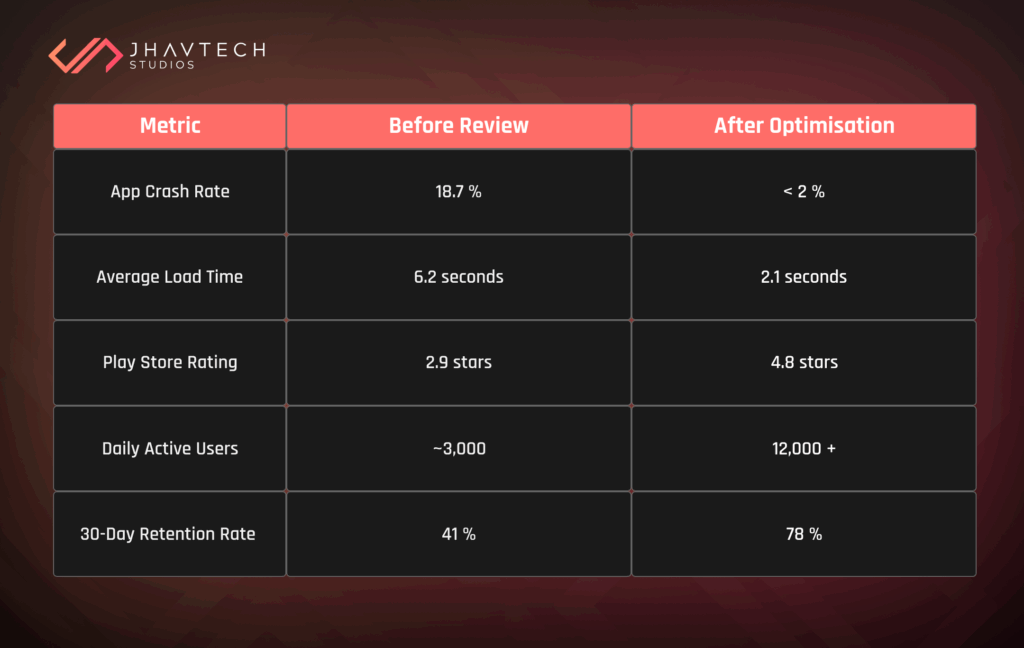
WellTrack’s improved stability and user experience not only boosted downloads but also revived investor interest.
In Australia’s competitive startup scene, where more than 60% of early-stage apps fail due to poor technical execution, WellTrack became an example of how proactive problem-solving can turn things around.
Lessons Learned: Why Every Startup Needs a Code Review
Even the smartest product idea can collapse if the code isn’t solid. Understanding the benefits of code review helps startups see how regular audits can prevent hidden issues from turning into costly failures. For WellTrack, the biggest lesson wasn’t just about fixing code, it was about building a sustainable technical foundation.
A free code review helps ensure your app is:
- Secure – protected against data leaks and breaches
- Scalable – built to grow as your user base expands
- Stable – less likely to crash under real-world usage
- Efficient – faster load times and lower energy consumption
Small inefficiencies can add up quickly. A lag here, a crash there, and suddenly your brand reputation takes a hit. According to the Ponemon Institute, the average cost of a data breach in Australia reached AU $3.2 million in 2024, a number that highlights the real cost of ignoring code quality.
That’s why Jhavtech Studios offers a Free Code Review—to help founders spot problems early before they spiral into expensive reworks.
The Jhavtech Advantage: More Than Just a Code Check
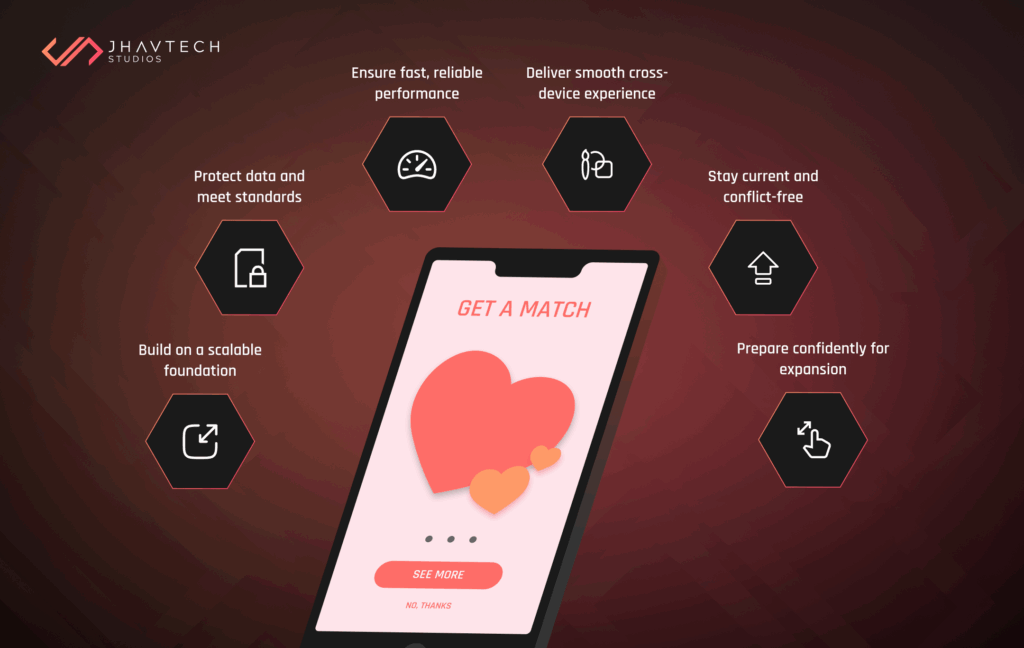
A free code review shouldn’t stop at finding bugs. It should help you build a stronger, smarter foundation for your app’s future. At Jhavtech Studios, we take a holistic approach that looks beyond technical errors to focus on scalability, security, and user experience. Our goal is to help startups not only fix what’s broken but also prepare their apps for long-term growth and success.
Here’s what makes our process stand out:
Architecture Evaluation – We assess your app’s structural integrity, design patterns, and maintainability to ensure it can grow as your user base expands.
Security and Compliance Testing – We identify potential vulnerabilities, check data privacy measures, and help you meet key compliance standards that are crucial in industries like health, finance, and education.
API Load and Performance Testing – We measure server response times and efficiency under real-world conditions, ensuring your app performs well even as traffic scales.
UI/UX Consistency Checks – We review how the UI/UX design of your app looks and feels across devices, making sure animations, layouts, and interactions deliver a smooth and consistent experience for every user.
Versioning and Dependency Review – We keep your SDKs and libraries up to date, resolving conflicts and removing outdated packages that slow down performance.
Scalability Recommendations – We provide actionable steps and technical guidance so your development team can prepare for growth confidently.
After every free code review, clients receive a detailed technical report outlining issues, risk levels, and “quick-win” improvements that can be implemented right away, helping you strengthen your app’s performance and reliability from day one.
Real-World Takeaway: Don’t Wait for Users to Complain
WellTrack’s story proves that small, expert interventions can prevent major business losses. If your app feels slow, crashes often, or isn’t scaling well, now is the best time to act.
A Free Code Review from Jhavtech Studios can uncover the real causes of your app’s problems and give you a clear, actionable path forward.
👉 Contact us today, request your Free Code Review and set your app back on track for success!
Frequently Asked Questions
1. What exactly is a code review?
A code review is a professional audit of your app’s codebase that identifies issues related to performance, security, and scalability.
2. How long does a free code review take?
Typically between 3 and 5 business days, depending on the project’s size and complexity.
3. What will I receive after the review?
A comprehensive report detailing technical issues, risk levels, and suggested solutions for your development team.
4. Is it safe to share my code?
Absolutely. Jhavtech signs NDAs and guarantees complete confidentiality during the review process.

.png)


.png)
.png)
.png)
.png)
.png)
.png)
.png)
.png)
.png)
.png)
.png)
.png)


.png)
.png)
.png)
.png)
.png)
.png)
.png)
.png)
.png)

.png)
.png)
.png)
.png)
.png)
.png)
.png)
.png)
.png)
.png)
.png)
.png)
.png)
.png)
.png)
.png)
.png)

.png)
.png)
.png)


.png)
.png)
.png)
.png)

.png)


.png)

.png)





.png)



.png)




.png)

.png)


.png)

.png)

.png)