.svg)
.svg)


Best PHP Frameworks in 2024
.png)
When you think of web development, PHP is often one of the first languages that come to mind. Although it may not be as trendy as Python or JavaScript, PHP is still widely used and incredibly powerful. Major platforms like Facebook and Wikipedia rely on PHP, and it powers approximately 78.9% of all websites with a known server-side programming language, according to recent statistics.
PHP’s ease of use and ability to build web applications rapidly make it a favorite among developers. It simplifies the process of combining software components through partial automation of code writing. PHP frameworks take this further, providing robust foundations for building secure, efficient, and scalable web applications.
As the complexity of software development grows, the use of PHP frameworks becomes essential. These frameworks support the modularity and design patterns necessary to create reliable applications in a reasonable timeframe. In this post, we'll explore the best PHP frameworks in 2024, helping you choose the right one for your web development needs.
Laravel
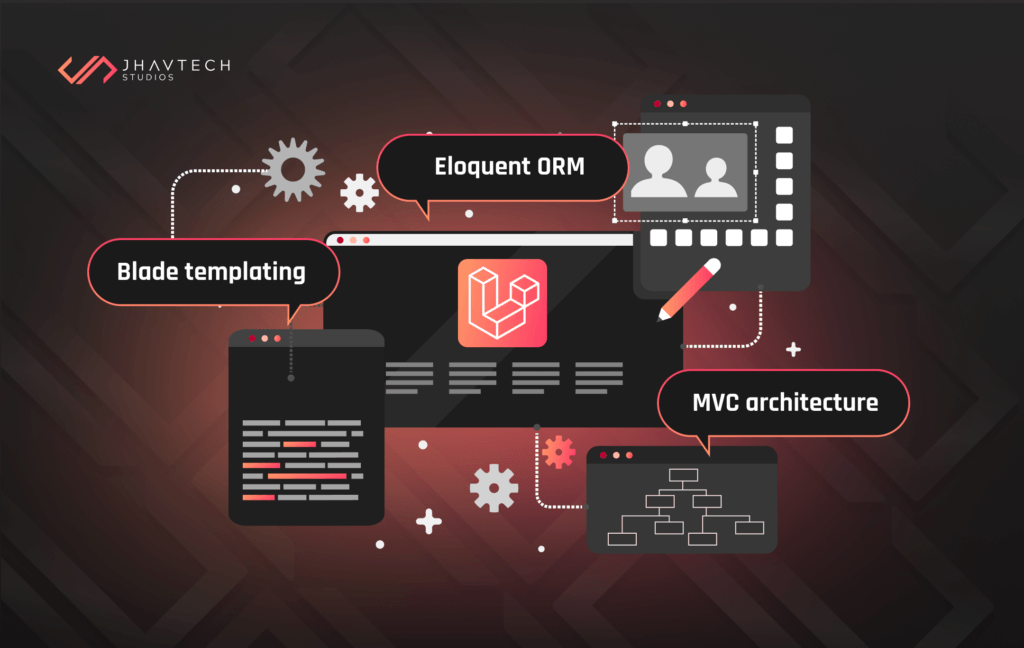
Initially released by Taylor Otwell in 2011, Laravel remains the most popular PHP framework. Dubbed the “PHP framework for web artisans,” Laravel boasts hundreds of contributors and millions of installations. It uses the Model-View-Controller (MVC) architecture and features its templating language, Blade, allowing for easy HTML layout creation. Laravel’s Eloquent ORM facilitates database interaction, making development faster and more intuitive.
Key Features
Caching
Laravel includes built-in support for various caching backends like Memcached and Redis, which helps optimise application performance by reducing the time needed to retrieve frequently accessed data.
Modularity
The framework supports modular packaging with Composer, allowing developers to easily add or remove functionalities as needed. This modular approach simplifies code management and enhances the scalability of applications.
Routing
Laravel’s routing system is highly flexible and expressive, enabling developers to easily manage and define routes for their applications, including support for RESTful resource controllers.
Automatic Pagination
Laravel’s pagination feature automates the process of paginating data sets, making it simple to display large amounts of data in a user-friendly manner.
Database Query Builder
Laravel’s query builder provides a fluent interface for building and executing database queries, making complex queries easier to write and read.
Secure Migration System
Laravel’s migration system allows developers to manage and version their database schema changes in a secure and controlled manner, reducing the risk of data loss during updates.
CodeIgniter
CodeIgniter, an MVC framework, is known for its simplicity, making it suitable for both small and large organisations aiming to build APIs and lightweight web applications quickly. Unlike many PHP frameworks, CodeIgniter does not enforce the MVC approach, offering flexibility in application design.
Key Features
Lightweight
CodeIgniter’s minimal built-in features result in a lightweight framework, which reduces bloat and improves performance. Developers can add only the components they need, keeping the application lean.
Caching and Routing
CodeIgniter includes built-in caching mechanisms and a flexible routing system, which enhance performance by reducing server load and managing URLs effectively.
Multiple Database Support
CodeIgniter supports various database systems, including MySQL, PostgreSQL, and SQLite, providing flexibility in choosing the right database for your application.
Quality Error Handling
The framework offers robust error handling features, including error logging and reporting, which simplify the debugging process and improve application stability.
Comprehensive Documentation
CodeIgniter’s extensive documentation provides clear and detailed information, making it easier for developers to learn and troubleshoot.
Symfony
Launched in 2005, Symfony is a robust PHP framework maintained by SensioLabs, offering both a framework and reusable PHP components. It supports multiple databases, including Drizzle, Oracle, MySQL, PostgreSQL, SAP Sybase SQL Anywhere, SQLite, and SQLServer, and integrates seamlessly with top JavaScript frameworks.
Key Features
Scalability
Symfony’s architecture and modular components make it ideal for building large, complex web and mobile apps that require scalability. Its flexibility allows developers to create applications that can grow with increasing user demand.
Enterprise-Level Support
Symfony offers professional support through SensioLabs, providing businesses with access to expert advice and assistance for their projects.
Database Integration
Symfony’s Doctrine ORM supports a wide range of databases and provides powerful database abstraction and query capabilities, making it easier to work with different database systems.
Reusable Components
Symfony’s extensive library of reusable components can be integrated into any project, reducing development cost, time, and effort by leveraging pre-built, tested modules.
Laminas Project
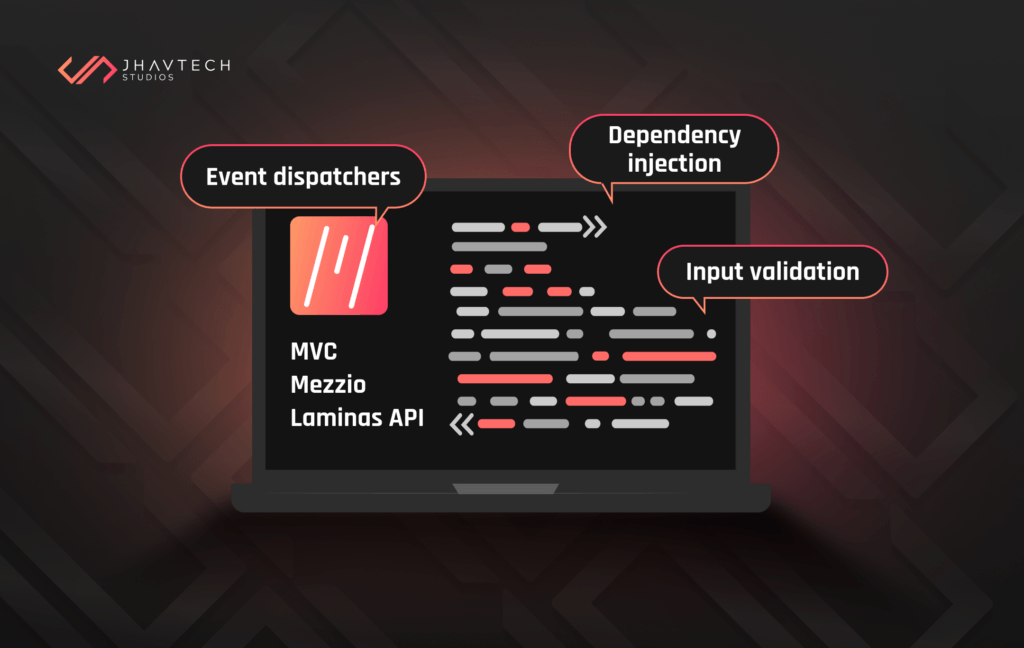
Zend, now known as the Laminas Project, is a component-based framework comprising Laminas Components and MVC, Mezzio, and Laminas API tools. It follows the MVC software pattern and includes enterprise-ready PHP components such as input validation, dependency injection, and event dispatchers.
Key Features
Enterprise-Ready
Laminas is widely used by large enterprises due to its robustness and extensive feature set. It is designed to handle complex, large-scale applications with ease.
Interoperability
Laminas adheres to PHP Framework Interop Group (PSR) standards, ensuring that its code can be easily integrated with other frameworks and libraries, enhancing interoperability and flexibility.
Middleware
Mezzio, a part of Laminas, allows developers to build PHP middleware applications that can act as intermediaries between hardware and software components, facilitating more complex interactions.
API Tools
Laminas API tools provide a set of features for building RESTful APIs, including routing, validation, and documentation generation, simplifying the creation of API-driven applications.
CakePHP
CakePHP, inspired by Ruby on Rails, was officially launched in 2005. Its convention-based setup allows for quick PHP app development with minimal configuration. CakePHP features its own ORM and a flexible database access layer, simplifying business logic implementation.
Key Features
Authentication and Localisation
CakePHP includes built-in tools for user authentication and application localisation, streamlining the development process for secure and global applications.
Validation
The framework offers powerful validation features, allowing developers to easily define and enforce data validation rules, ensuring data integrity.
Themes as Plugins
CakePHP’s ability to convert themes into plugins enhances the flexibility and functionality of themes, making it easier to create and manage customisable themes.
Phalcon
Phalcon is a full-stack framework delivered as compiled C(++) binaries, making it extremely fast. It can handle more requests per second than other PHP frameworks, thanks to its unique compilation method.
Key Features
High Performance
Phalcon’s C-based architecture allows it to execute code faster than frameworks written purely in PHP, making it ideal for high-traffic web, mobile, and desktop applications.
Caching and ORM
Phalcon includes robust caching mechanisms and an ORM that supports efficient database interactions, improving overall application performance.
Security Protections
The framework offers built-in security features, including SQL injection prevention, XSS protection, and CSRF protection, ensuring secure application development.
Memory Management
Phalcon’s optimised memory management reduces resource usage and enhances performance, making it suitable for resource-intensive applications.
Fuel PHP
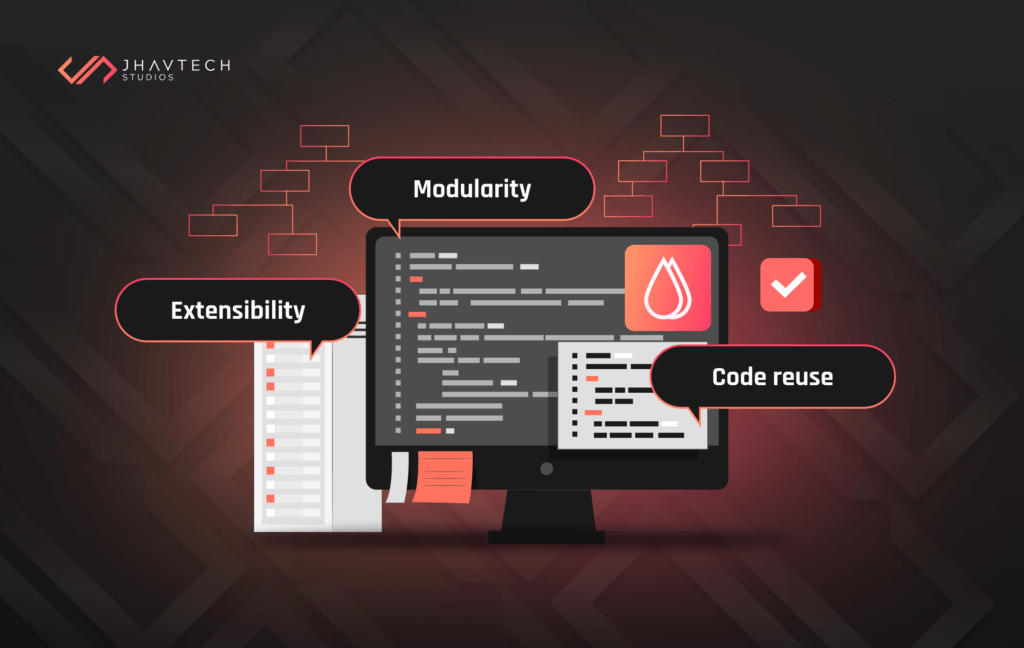
FuelPHP is an open-source web application framework utilising a hierarchical MVC variation for improved content structure. Its unique design increases extensibility and modularity, encouraging code reuse.
Key Features
Command-Line Utility (OIL)
FuelPHP’s command-line utility, OIL, assists developers in debugging code, running tasks, and generating common components, streamlining the development process.
Security
FuelPHP offers comprehensive security features, including output encoding, CSRF protection, and XSS filtering, ensuring secure application development.
Extensibility and Modularity
The framework’s design encourages the use of modules and packages, making it easy to extend and reuse code across different projects.
Fat-Free
Fat-Free stands out for its simplicity and small size (50-65 kilobytes). It offers multilingualism, URL routing, and caching tools, modeled after Symfony for high performance and efficiency.
Key Features
Compactness
Fat-Free’s small footprint makes it an attractive option for developers seeking a lightweight framework without sacrificing performance or functionality.
Database Support
The framework supports multiple databases, including MySQL, SQLite, PostgreSQL, and MongoDB, providing flexibility in choosing the right database for your application.
Extensive Plugins
Fat-Free offers a wide range of plugins that extend its functionality, allowing developers to add features such as authentication, data validation, and more.
Slim
Slim, another micro-framework, is ideal for creating simple yet powerful APIs and web apps. It supports URL routing, middleware, advanced request handling, and session and cookie encryption.
Key Features
Fast Loading Time
Slim’s minimalistic design results in fast loading times, making it capable of handling multiple requests per second efficiently.
Flexibility
The framework provides developers with a lot of freedom in designing applications, supporting various architectures and development practices.
RESTful API Development
Slim is commonly used for building web services and RESTful APIs, thanks to its powerful routing capabilities and ease of integration with other systems.
Yii
Yii is an open-source, component-based framework for building PHP applications. Known for its performance and efficiency, Yii supports OOP and MVC patterns, focusing on core functionality to minimise overhead.
Key Features
Error Handling and Logging
Yii’s comprehensive error handling and logging features make it easier to identify and resolve issues during development and production.
Layered Caching System
The framework’s caching system supports data caching, page caching, fragment caching, and dynamic content caching, improving application performance.
Security Measures
Yii includes built-in security features such as CSRF protection, XSS prevention, and input validation, ensuring secure and reliable applications.
Parting Words…
Using a PHP framework is a smart choice to reduce development time and build robust applications. The right framework for you depends on your specific needs and project requirements. Each framework discussed here offers unique features and advantages, ensuring there’s a perfect fit for every developer.
Ready to bring your web application idea to life? Let Jhavtech Studios help you choose and implement the best PHP framework for your project. Our expert team is experienced in all the leading frameworks and can guide you from concept to deployment. Contact us today to discuss your web development needs and see how we can turn your vision into reality.
We hope this post helps you select the best PHP framework for your web development endeavors in 2024.


.png)
.png)
.png)
.png)
.png)
.png)
.png)
.png)
.png)
.png)
.png)

.png)
.png)
.png)
.png)
.png)
.png)
.png)
.png)
.png)

.png)
.png)
.png)
.png)
.png)
.png)
.png)
.png)
.png)
.png)
.png)
.png)
.png)
.png)
.png)
.png)
.png)

.png)
.png)
.png)

.png)
.png)
.png)
.png)



.png)


.png)



.png)



.png)



.png)

.png)
.png)

.png)

.png)
.png)