.svg)
.svg)


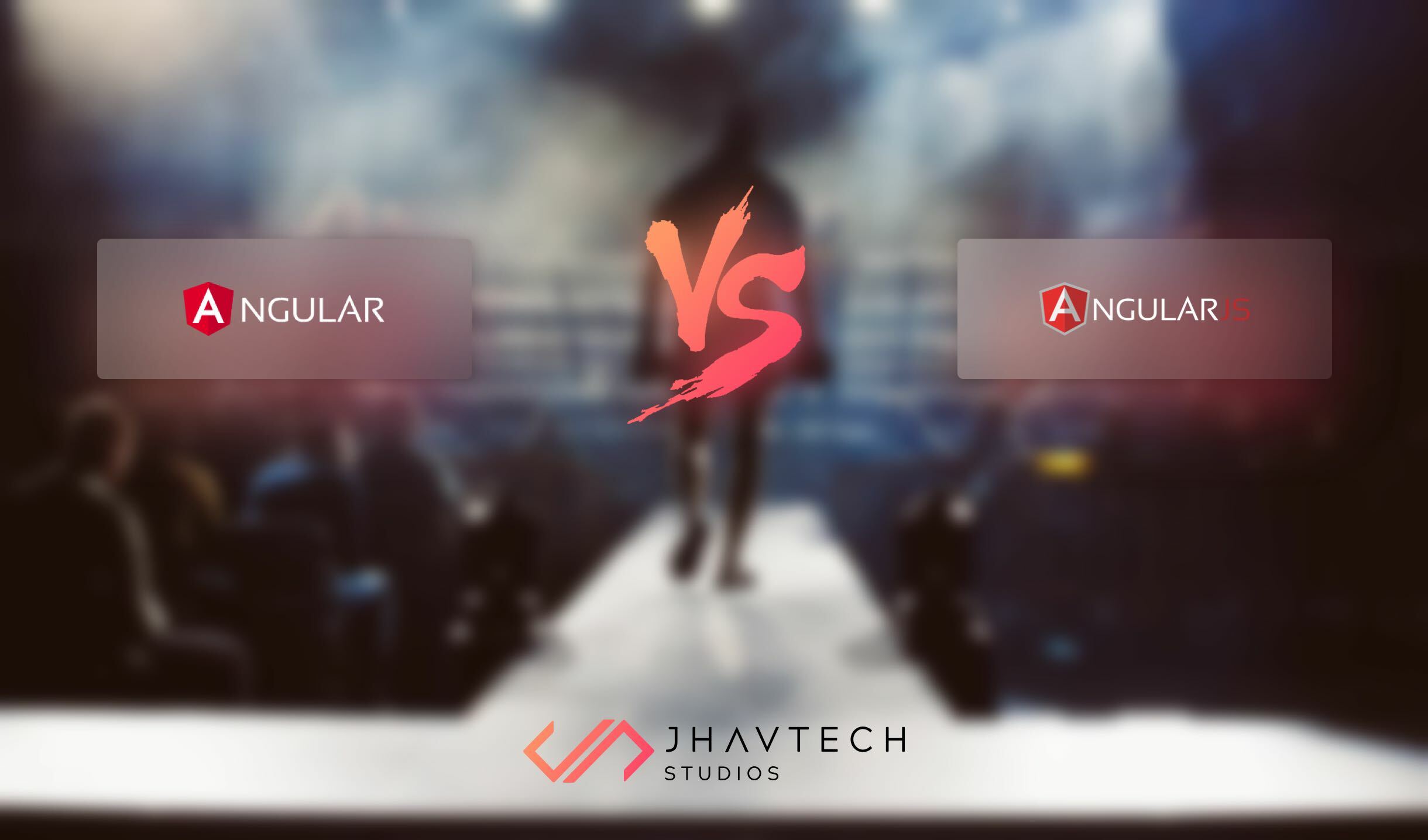
Angular vs. AngularJS: Which One is Better for Your Project?
In today’s digital world, businesses are continuously exploring strategies that can help them stand out from the competition. Both web and mobile apps have become indispensable for any company. But in order to design and develop successful apps, frameworks are used.
A quick look at the market will show that Angular and AngularJS are the best and most popular frameworks used for front-end web development. Here, we’ll take a closer look at both to help determine the right one for your project.
AngularJS and Its Features
AngularJS is a JavaScript-based open-source front-end web framework used for building single-page applications. It’s a structural platform that expands the HTML DOM (Document Object Model) with added features and helps in developing responsive apps.
This framework offers the best simplifications and enhancements to the whole approach of JavaScript coding. AngularJS renders the application for model-view-controller (MVC) which is a design pattern utilised in all contemporary web apps. MVC splits the business logic layer, the data layer, and presentation layer into distinct sections so each one can be managed more easily.
Other features of AngularJS include the following:
- DOM foundations (i.e. data, elements, CSS, etc.) are marked with Directives. You can use these in creating unique HTML tags as new widgets.
- Writing less code for DOM manipulation
- Built-in directives (i.e. NgBind and NgModel) that extend the functionality of HTML. Directives define the attributes of DOM elements and this provides for the development of more powerful applications.
- Ability to change static HTML to dynamic HTML
- Two-way data binding or the automatic synchronization of data between model and view components. This will allow you to show the effects of your code changes in real-time.
- The use of plain old JavaScript objects (POJO) which makes it easy to write, test, and deploy code, even across all types of browsers.
- Unit testing ready – The team at Google developed a testing framework known as “Karma” which helps in devising unit tests for AngularJS applications. The code is split into the smallest testable units, which is great for detecting flaws in each line of code.
Angular and Its Features
Angular is a TypeScript-based open-source web application framework used for building dynamic mobile and desktop web apps. It’s a complete rewrite from the same team from Google that created AngularJS. Angular 1 and 2, along with the other versions, are highly preferable as robust front end-tools that provide components that help developers to write and re-write, readable, foolproof, and maintainable code.
Angular is an umbrella term used for all 12 versions, with Angular 1 and 2 setting the tone for the succeeding iterations. Angular 1 is at the heart of the DOM compiler. You can write HTML and then Angular compiler will be responsible for converting it to an application. Angular 2 is an open-source JavaScript framework used for building web apps from scratch in HTML and JavaScript.
Angular 4 is backward compatible with Angular 2 and is used for developing applications in HTML, JavaScript, and TypeScript. Angular 5 was released in 2017, with key improvements including a build optimizer, support for progressive web apps, and enhancements related to Material Design.
Angular 6 focused on toolchain and making it easier to move swiftly with Angular in the future. Angular 7 was released in 2018 and came with updates for Application Performance, Virtual Scrolling, Angular Material & CDK, support for Content Projection, and dependency updates for Typescript 3.1, RxJS 6.3, and Node 10.
Angular 8 features differential loading for all application code, TypeScript 3.4 support Dynamic imports for lazy routes, and Angular Ivy as an opt-in preview. Angular 9 was designed to work with TypeScript 3.6 and 3.7.
Since version 9, the Angular team moved all new applications to employ the Ivy compiler and runtime. Work on Ivy will continue to improve development speeds and output bundle sizes.
Features of Angular:
- The use of TypeScript as the preeminent programming language. As an upgrade to legacy JavaScript, it offers improved static typing and better code organization.
- Angular builds native web apps with approaches from Cordova, Ionic, or Native Script. It supports native mobile development that allows cross-platform development. Moreover, it provides for the development of Progressive Web Apps (PWAs).
- Command Line Interface (CLI) – a tool that helps in integrating tests, components, among others, then promptly deploys them.
- Component-based architecture - Angular relies heavily on components. Every component has its own HTML template that indicates what renders on the page, a CSS selector that specifies how the component is utilised in a template, and a Typescript class that defines behavior.
- Angular quickly generates UI views with simple yet powerful template syntax value. It also creates complex, high-geared animations timeline and documentation with less code adoption through the built-in API.
Angular vs. AngularJS – The Key Differences
In spite of their identical names and origins, Angular and AngularJS have very different features, and it’s their differences that will determine the better between the two…
Language
Angular - The programming language is perhaps the most notable difference when it comes to comparing Angular vs. AngularJS. As aforementioned, the former is based on TypeScript which is an object-oriented language based on JavaScript. As the more contemporary programming language, you will be able to hire TypeScript developers to take on bigger projects more efficiently.
AngularJS - As its name implies, AngularJS is built on legacy JavaScript, which is ubiquitous and ranked as one of the top three programming languages to date. JavaScript runs on any browser and unlike TypeScript, its code doesn’t require compilation, making it easier and quicker to deploy apps.
Architecture
Angular - Angular has what is known as component-based architecture, which is so-named because of the independence of components. Each one comes with a unique structure and can be reused individually. This makes a significant difference between Angular and AngularJS in terms of performance
AngularJS - AngularJS has a model-view-controller (MVC) which serves as the central component as it oversees data, logic, rules, and expresses how apps behave. MVC architecture is a very early standard for developing web apps. It divides the code into sections but Angular’s Component Based Architecture defines every aspect by components, so every section of the code practically has its own ‘MVC’
Structure
Angular – It is known for its use of two-way data binding so you can instantaneously display the effects of your code on the application interface. However, in stark contrast to AngularJS, there’s no direct implementation of two-way data binding. It occurs with a combination of property binding and event binding.
AngularJS - It also employs two-way data binding, although its performance is not that impressive due to the digest cycle concept. There’s no definitive authority on data binding between the model of the MVC structure and the DOM. This means that without a concurrence before both, a loop is set off which somehow leads to an error code.
Other Considerations:
Speed and Performance - AngularJS’ separate two-way binding feature translates to less time and effort needed; however, Angular comes with a better structure which proves crucial in improving the speed and performance of its functions.
Management – Using Angular for the project is generally the way to go. Angular projects are easier to manage because of how structured they are. This is particularly true when it comes to larger and more complex applications.
Routing - AngularJS uses $routeProvider to define routing information. On the other hand, Angular uses a URL to copy a directive in order to get to the client-view. Angular has an edge in this regard.
Angular vs. AngularJS Final Thoughts
It is important to note that the best choice for your needs will be determined largely by your goals and expectations for a particular project. Here are some thoughts to consider…
Despite the differences between the two frameworks, they each have their own set of pros and cons. Both are maintained by Google so they have excellent community support. Perhaps, it’s safe to say that a larger number of developers prefer Angular because it creates dynamic apps for both web and mobile. It offers several benefits to front-end developers, which explains why popular brands and companies use Angular for their projects.
There are also those considering to migrate from AngularJS to Angular to future proof their businesses since AngularJS is nearing its end of support, reportedly on December 31, 2021. Migration also means improvement in code efficiency so you can make the development process more productive. You can also spend less while getting better results.
Contact us for migrating AngularJS to Angular applications. We can also help in building dynamic and robust mobile and web apps with the framework that perfectly suits your business.





.png)
.png)
.png)
.png)
.png)
.png)
.png)
.png)
.png)
.png)
.png)


.png)
.png)
.png)
.png)
.png)
.png)
.png)
.png)
.png)

.png)
.png)
.png)
.png)
.png)
.png)
.png)
.png)
.png)
.png)
.png)
.png)
.png)

.png)
.png)
.png)
.png)

.png)
.png)
.png)

.png)
.png)
.png)
.png)

.png)


.png)


.png)





.png)




.png)




.png)

.png)

.png)

.png)


.png)
.png)