.svg)
.svg)



The decision between building a native app or opting for a cross-platform framework is no longer just a technical debate; it is a high-stakes business pivot. For Australian enterprises and startups, this choice dictates your speed to market, your long-term maintenance overhead, and your ability to scale within a highly competitive digital economy.
As we move further into 2026, the lines between these two methodologies are blurring, but the financial and performance implications remain distinct. In this post, we break down the performance benchmarks and cost realities of both paths to help you determine which architecture aligns with your specific goals.
The “Which is Better?” Snapshot
There is no universal winner. Native development remains the gold standard for high-performance, hardware-intensive applications like augmented reality (AR) or real-time data processing. However, cross-platform development (using frameworks like Flutter or React Native) has become the optimal choice for roughly 90% of business applications. It offers up to a 40% reduction in development time and costs without sacrificing the fluid user experience that modern consumers demand.
This efficiency stems from a single codebase architecture that eliminates the need for separate iOS and Android engineering cycles, allowing businesses to pivot faster based on user feedback. By leveraging these shared frameworks, companies can allocate more of their budget toward high-impact features and user acquisition rather than redundant backend plumbing. Ultimately, the decision hinges on whether your product requires specialised hardware access or if market speed and cost-effectiveness are your primary drivers for success.
Performance: The Gap is Closing, But It Still Exists
In the early days of mobile development, hybrid or cross-platform was often synonymous with “sluggish.” In 2026, that is no longer the case, but the technical nuances still matter for specific use cases.
Modern cross-platform engines now utilise advanced ahead-of-time (AOT) compilation and direct rendering to hardware, which minimises the communication overhead that previously hampered response times. Despite these strides, native apps still hold a marginal advantage in thread management and power consumption during sustained, heavy-duty processing tasks. For standard enterprise tools and consumer interfaces, however, the latency difference has reached a point of diminishing returns, making the choice more about business strategy than technical limitations.
The Raw Power of Native Code
Native apps are written in languages native to the operating system: Swift or Objective-C for iOS, and Kotlin or Java for Android. Because these apps speak the “mother tongue” of the device, they have unmediated access to the GPU and CPU. Recent technical audits indicate that native applications still maintain a 15–20% edge in CPU efficiency during heavy computation tasks because there is no abstraction layer between the code and the hardware.
The Efficiency of Modern Cross-Platform
Frameworks like Flutter have revolutionised expectations by bypassing the JavaScript bridge that used to slow down older hybrid apps. Flutter, for instance, renders its own UI components using the Skia engine, allowing for a consistent 60 to 120 FPS (frames per second) across both platforms.
For the vast majority of applications such as social media platforms, e-commerce stores, and enterprise resource tools, the performance difference is imperceptible to the human eye. According to the 2024 Stack Overflow Developer Survey, cross-platform tools have seen a massive surge in professional adoption precisely because they have solved the jank issues of the past.
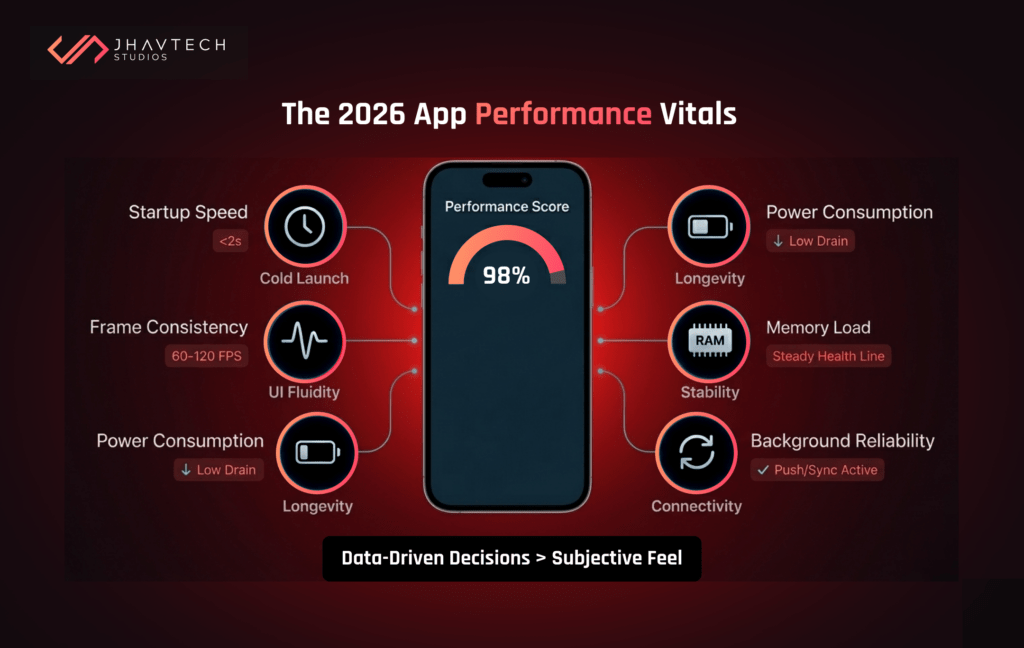
Performance Metrics You Can Measure
Before committing to a specific architecture, it is vital to establish a baseline of what success looks like for your user base. Relying on subjective feel is risky; instead, we recommend a data-driven approach by benchmarking these five critical key performance indicators (KPIs).
- App Startup Time (Cold Launch): Measures the duration from icon tap to full interactivity.
- Frame Drops Per Minute: Tracks the consistency of UI animations to ensure a butter-smooth experience.
- Average Battery Drain: Analyses power consumption per hour to ensure device longevity.
- Memory Usage Under Load: Ensures stability and prevents the OS from killing the app in the background.
- Background Task Reliability: Assesses the consistency of push notifications and data syncing.
The Cost Reality: A Tale of Two Budgets
In the Australian market, specifically across the tech-heavy corridors of Melbourne and Sydney, labor costs and talent availability are the primary drivers of your project’s bottom line.
Navigating the local landscape requires a keen understanding of how developer salary benchmarks in Victoria and New South Wales impact your long-term burn rate. As Australian organisations increasingly compete for top-tier engineering talent, the choice of architecture becomes a deciding factor in whether a project remains financially sustainable or exceeds its projected capital expenditure. By aligning your technical stack with the available regional talent pool, you can mitigate the risk of expensive recruitment delays and ensure a more predictable development roadmap.
The “Double-Build” Penalty of Native
With native development, you are essentially funding two separate projects simultaneously.
This necessitates the recruitment of two distinct engineering squads: one specialising in Swift for iOS and another in Kotlin for Android. This effectively doubles your overhead for payroll and project management. Beyond the initial build, this split architecture forces your business to maintain two separate codebases for the entire lifecycle of the app, meaning every minor bug fix or feature update requires twice the effort to deploy. For many local enterprises, this duplication of resources can create significant bottlenecks, slowing down the pace of innovation while inflating the total cost of ownership.
- The Talent Gap: You need specialised Swift developers for iOS and Kotlin experts for Android. Finding high-level talent for both stacks in Australia can be a logistical and financial challenge.
- Maintenance Overload: Every time Apple or Google releases an OS update, both versions of your app must be updated, tested, and deployed independently.
- QA Complexity: Ensuring feature parity (i.e. making sure the Checkout button works exactly the same on a Samsung S24 as it does on an iPhone 17) requires double the Quality Assurance (QA) hours.
The “Write Once, Run Everywhere” Advantage
Cross-platform allows a single team of developers to manage one codebase that serves both iOS and Android. This doesn’t just cut the initial build cost; it streamlines your entire business operation.
By centralising the logic and design into a unified repository, your business or organisation eliminates the friction of coordinating two disparate development cycles, ensuring that every user receives an identical experience regardless of their device. This architectural cohesion significantly reduces the time spent on redundant documentation and communication, allowing your leadership team to focus on strategic growth rather than micro-managing technical inconsistencies. Ultimately, this streamlined workflow acts as a force multiplier for your digital presence, enabling you to deploy critical updates and market-responsive features at a pace that native-only competitors simply cannot match.
- Unified Launch: You don’t have to worry about one version of the app lagging behind the other.
- Single Source of Truth: Bug fixes and feature updates are applied once and reflected everywhere.
- Leaner Teams: You can focus your budget on a smaller, highly skilled team rather than splitting resources across two different technical silos.
Ready to Build?
Stop guessing and start growing. Whether you’re starting from scratch or need to transform a struggling codebase into a market leader, our team at Jhavtech Studios is here to help.
Strategic Market Trends in 2026
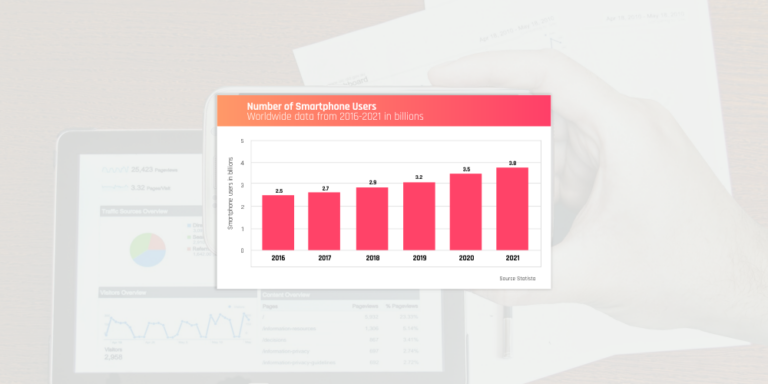
The mobile landscape has reached a point of extreme saturation. According to recent data from Statista, the number of global smartphone users has exceeded 7.1 billion, driving a massive demand for polished mobile experiences.
Developer ecosystem trends from the 2024 Stack Overflow Developer Survey show that over 42% of professional developers now utilise cross-platform tools for their versatility. Modern users now expect instant load times, platform parity, and seamless biometric integration as baseline features.
Users today expect:
- Instant Gratification: Data from Google indicates that 53% of mobile users will abandon a site or app if it takes longer than 3 seconds to load.
- Platform Parity: A user who starts a task on their Android work phone expects to finish it seamlessly on their personal iPad.
- Biometric Integration: Seamless use of FaceID, Fingerprint scanning, and secure payments (Apple/Google Pay) is now a baseline expectation.
Comparative Analysis: Navigating the Technical Trade-offs
Choosing the right development path requires a balanced look at how technical characteristics translate into business outcomes. While performance is a primary concern, factors such as delivery speed, feature parity, and long-term maintenance costs play an equally vital role in your software’s commercial viability. To help you weigh these variables, the following table provides a direct comparison of the most critical metrics influencing modern application development.

Case Studies: Jhavtech in Action
Real-world execution is the ultimate litmus test for any development strategy. By analysing how different architectural choices were applied to diverse Australian industries, you can better visualise the path for your own project. Below are three examples of how we have helped local partners transform complex requirements into high-performing digital assets.
- MedicineWise: Jhavtech developed this comprehensive health management app for the Australian market, helping users track medicines and health info securely. This project required a meticulous focus on data encryption and secure API integrations to manage sensitive medical records while maintaining a streamlined interface for a diverse demographic. By prioritising a high-security architecture, we ensured that the platform met stringent Australian health data standards without compromising on the speed and reliability users expect from a modern healthcare tool.
- Lines App: Designed for the Australian nightlife scene, this app provides real-time wait times for bars and clubs using GPS and map integration. The success of this platform hinged on low-latency data processing and real-time geolocation updates, allowing users to make split-second decisions based on live crowd data. Our engineering team focused on optimising background location services and high-concurrency server communication, ensuring the app remains responsive even during peak hours in busy CBD corridors like Melbourne and Sydney.
- Make It Fit: A health and fitness platform where Jhavtech delivered cross-platform applications for both iPhone and Android, featuring subscription management and calorie tracking. To maximise the reach of this fitness startup, we utilized a cross-platform framework that allowed for rapid deployment and synchronised feature updates across both major app stores. The implementation included complex subscription logic and a robust database architecture to handle personalised user profiles, demonstrating how a unified codebase can deliver a premium, high-engagement experience at a fraction of the cost of native-only builds.
When Your Vision Meets Reality
The choice between native and cross-platform shouldn’t be made in a vacuum. It requires a deep dive into your business roadmap and the current state of your technology.
This decision-making process must account for your long-term scaling strategy and the specific demographic expectations of your target audience, guaranteeing that the infrastructure can support future feature sets without requiring a total architectural rebuild. By conducting a thorough audit of your existing technical debt and projected growth milestones, you can select a development path that not only fits your current budget but also secures your competitive advantage in the years to come. Such a strategic alignment transforms your technology stack from a mere operational cost into a robust engine for sustainable business expansion.
Bringing New Ideas to Life
If you are currently in the ideation phase, you need a partner who understands the nuances of the Australian digital landscape. From initial wireframes to the final deployment on the App Store, a high-velocity mobile engineering team can ensure your product is built for scale from day one, choosing the stack that maximises your ROI.
Partnering with a team that prioritises lean development and rapid prototyping allows you to test market assumptions quickly while avoiding the common pitfalls of over-engineering. This proactive approach transforms a raw concept into a commercially viable asset, providing a clear path from a creative vision to a dominant market presence.
Turning the Tide on Failing Tech
We often see businesses struggling with legacy code, spaghetti architecture, or projects that were abandoned mid-way by previous developers. If your current software is draining your budget without delivering results, it might be time for a specialised technical recovery and code overhaul to get your roadmap back on track and protect your initial investment.
A targeted intervention can breathe new life into stalled applications by identifying critical bottlenecks and implementing modern architectural standards that restore system stability and performance. By stabilising your current foundation, you stop the cycle of technical debt and regain the momentum necessary to deliver meaningful value to your users once again.

Common Pitfalls & How to Avoid Them
Selecting the right development path is only half the battle; the success of your application depends heavily on how you navigate the execution phase. Even with a world-class team, failing to account for platform-specific nuances or long-term maintenance can lead to significant technical debt and inflated budgets. To ensure your project remains on track and delivers a premium experience to your Australian user base, it is essential to proactively address the following industry traps.
- Avoid the “One-Size-Fits-All” Assumption: Map your features to framework capabilities, not just popularity.
- Don’t Underestimate Cross-Platform QA: Test across a diverse range of physical iOS and Android devices.
- Plan for Native Modules Early: Identify bridging needs during discovery to avoid budget blowouts.
- Factor in Long-Term Lifecycle Costs: Budget for OS updates and security standards beyond launch.
Final Thoughts: Building for the Future
As we look toward the remainder of 2026, the Native vs. Cross-Platform debate is less about which technology is better and more about which one serves your specific commercial context. For most Australian SMEs and startups, a pragmatic, phased approach—validating fast with cross-platform and investing in native modules only where performance is critical—usually delivers the highest return on investment.
The goal of your mobile strategy should be to eliminate friction for your users while maintaining a lean, responsive development cycle. Whether you are launching a brand-new concept or rescuing a stalled project, your choice of architecture will be the foundation upon which your digital success is built.
Don’t Let Your App Fall Behind
The 2026 market is moving fast. Whether you’re looking for world-class mobile development services or need an expert team to bring a failing software project back to life, Jhavtech Studios has the expertise to deliver.
Frequently Asked Questions
Which approach gives the best battery life?
Native implementations generally yield better battery efficiency for continuous background work and high CPU/GPU tasks. For typical user flows, modern cross-platform apps are comparable if optimised.
How much cheaper is cross-platform in Australia?
Initial savings can range from 20–50% versus two full native builds, depending on complexity and required native bridging. Long-term savings depend heavily on maintenance choices.
Can cross-platform handle advanced native features?
Yes, via native modules or plugins. However, complex features may require platform-specific code, which can add to the overall cost and maintenance complexity.
What if I need to switch from cross-platform to native later?
While you cannot simply conver code, a hybrid strategy is very practical. You can start with a cross-platform MVP and later implement performance-critical features natively as your user base grows.
How does Jhavtech help us choose?
We provide a technical audit to evaluate your performance needs, cost projections, and a realistic timeline. We offer a fixed-price proposal so you have complete transparency before the first line of code is written.