.svg)
.svg)


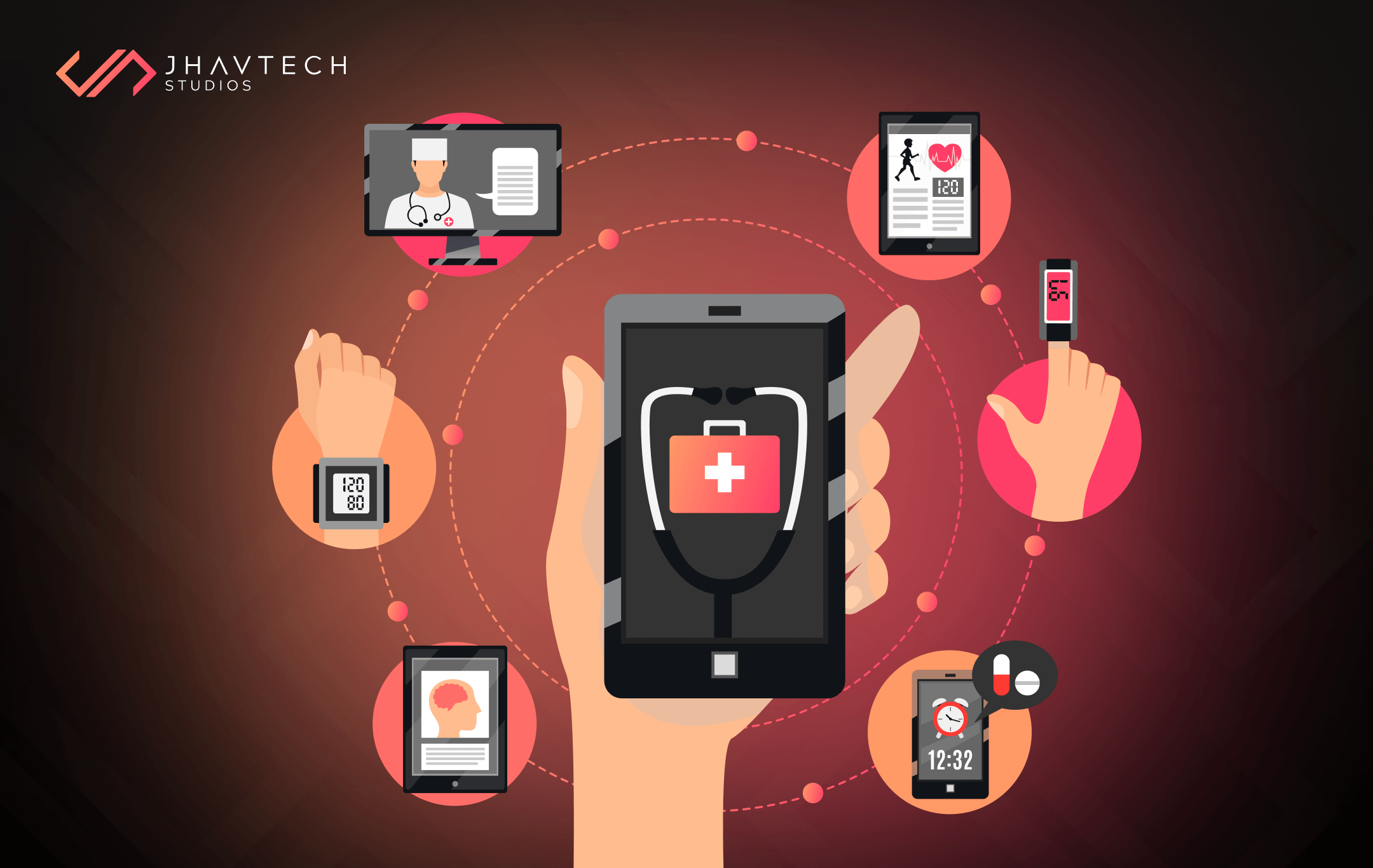
The healthcare industry isn’t just about doctors, nurses, and stethoscopes anymore. Today, it’s as much about data, automation, and digital experiences. With patients expecting the same convenience from their healthcare providers as they do from food delivery apps or e-commerce platforms, the industry is undergoing a full-blown digital transformation.
If you’re a hospital executive, health startup founder, or clinic manager still stuck with legacy systems, it’s time to ask yourself—are your technology and tools delivering the experiences your patients expect?
Let’s explore how custom software solutions tailored for healthcare are changing the game in 2025.
Understanding the Challenges in Healthcare
Inefficiencies in Legacy Systems
Old-school hospital management software was never built for today’s fast-moving, patient-centric world. From clunky UIs to siloed data, legacy systems often lead to wasted staff hours, delayed diagnoses, poor patient experiences—and skyrocketing operational costs. That’s where personalised platforms shine: whether through a fresh build or a targeted software project rescue, they replace the generic with the specific, rewiring workflows to meet real-world needs.
Rising Patient Expectations
Today’s patients expect real-time access to services: online appointment booking, mobile test results, virtual doctor appointments. If your platform can’t support that, you’re already behind. Custom-built software lets you craft these features natively—no forcing square pegs into round holes.
Compliance and Data Privacy Hurdles
With healthcare data breaches becoming more frequent, protecting sensitive information is absolutely critical. In Australia, providers must comply with the Privacy Act 1988, the Australian Privacy Principles (APPs), and the My Health Records Act—all of which demand strict data governance and transparency. Off-the-shelf solutions often don’t meet these local compliance standards. That’s why custom software solutions are ideal—they can be designed from the ground up to align with Australian regulations, ensuring patient data is handled securely and legally.
What Is Healthcare Software Development?
Defining Custom Healthcare Software
A tailored healthcare software solution is purpose-built tech, designed to meet the unique needs of medical institutions, health-tech startups, or solo practitioners. These custom software solutions differ from off-the-shelf options by being precisely aligned with operational workflows and patient needs.
Types of Custom Healthcare Software
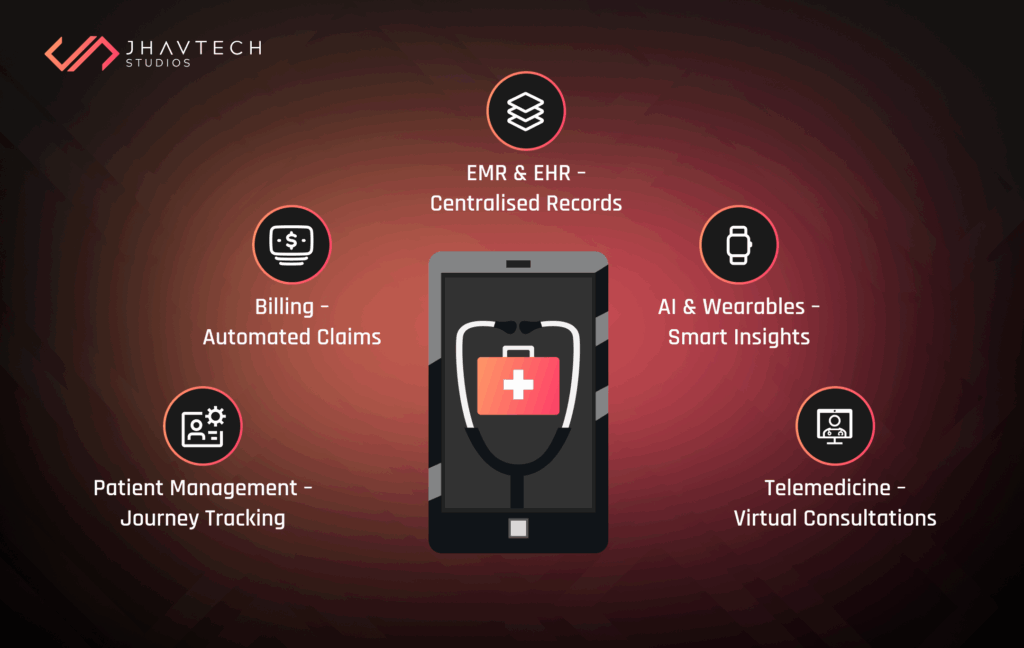
- EMR & EHR Systems: Digitise and centralise patient records for secure, real-time access.
- Telemedicine Platforms: Offer virtual care with secure chat, video, and remote diagnostics.
- Patient Management Systems: From admissions to discharge, streamline the patient journey.
- Medical Billing Software: Automate insurance claims, invoicing, and payment tracking.
- AI Diagnostics & Wearable Tech: Leverage data from smart devices to support diagnosis.
Key Benefits of Healthcare Software Development
Improved Patient Care
Instant access to patient history, AI-powered insights, and remote monitoring lead to faster, more accurate care. This is precisely what tailored technology enables—functionality designed around patient needs through custom software solutions.
Enhanced Data Management
Say goodbye to paperwork chaos. Cloud-based solutions secure and centralise everything, making data accessible on-demand.
Better Workflow Automation
Repeating tasks like reminders, record updates, and prescription refills? Automation frees your staff for more meaningful work.
Cost Savings and Operational Efficiency
Efficient systems mean fewer errors, fewer manual processes, and lower costs. The return on investment—and quality of care—speaks volumes.
Top Features to Include in Healthcare Software
- HIPAA/GDPR Compliance – Not an afterthought, but a foundational feature.
- Data Encryption & Access Control – Only authorised users see patient data.
- Real-Time Communication – Secure chat, alerts, and in-app messaging.
- Appointment Scheduling & Reminders – Let patients self-serve and stay informed.
- Integration with IoT & Wearables – Sync data from trackers to medical records.
Smart custom software solutions incorporate these features as standard, making them future-proof and patient-centric.
Emerging Trends in Healthcare Tech (2025+)
- AI & Predictive Analytics: Flagging health patterns before symptoms emerge.
- Blockchain for Medical Records: Immutable, shareable, and secure.
- Virtual Reality in Therapy: From mental health to surgical training.
- Remote Patient Monitoring (RPM): 24/7 vitals tracking for chronic care—enabled by tailored digital tools and custom software solutions.
How to Choose the Right Software Development Partner
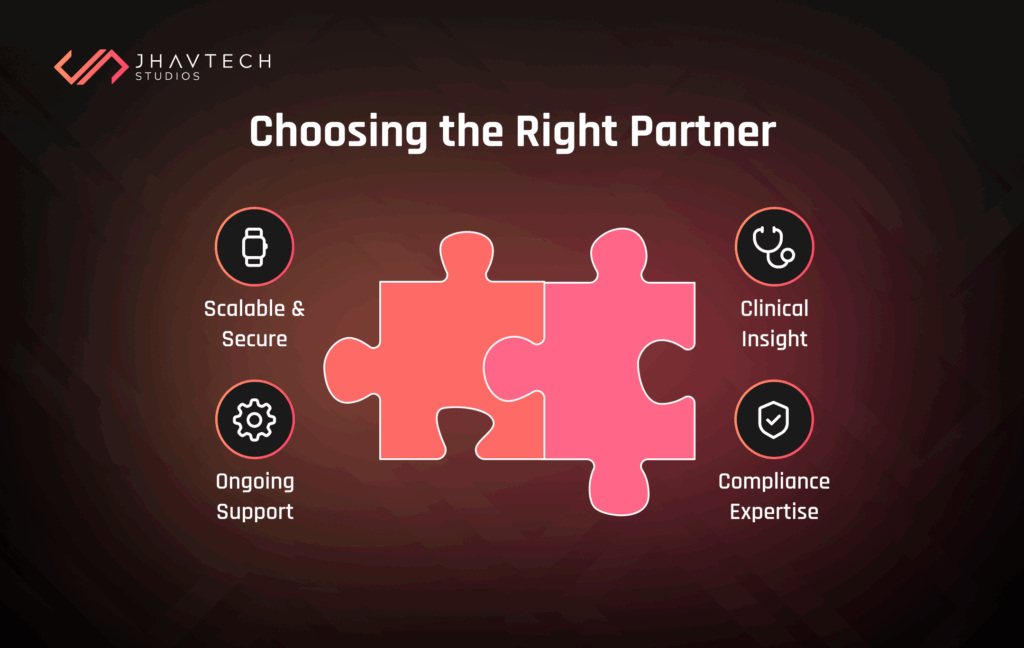
- Experience in Healthcare: Not just coders—they need clinical insight.
- Deep Understanding of Compliance Laws: HIPAA, GDPR, PIPEDA—you name it.
- Scalable, Secure Tech Stack: Ready to grow with your institution.
- Support & Maintenance Plans: Your software evolves—your partnership should too.
You ought to choose a development partner that specialises in delivering custom software solutions built around your healthcare operations.
Case Study: How We Helped a Healthcare Client Digitally Transform
Project Overview
In early 2024, a regional healthcare clinic approached us with a common but critical problem: their day-to-day operations were being dragged down by outdated technology. Patient records were still managed manually, appointment scheduling was inconsistent, and staff were drowning in administrative tasks. As patient volume grew, the cracks in their system became impossible to ignore.
The clinic needed a digital transformation—one that wouldn’t just patch things up but would prepare them for scalable, future-ready care delivery. That’s where our custom software solution came in.
The Challenges
The clinic was facing multiple operational hurdles that directly impacted patient satisfaction and staff efficiency:
- Manual Paperwork: Patient records were stored in physical folders, leading to lost documents, slow retrieval times, and increased administrative workload.
- Inaccurate Billing: Insurance claims and patient invoices were processed manually, resulting in frequent errors and delayed reimbursements.
- Poor Appointment Flow: Staff relied on phone calls and spreadsheets for scheduling, leading to double-bookings and long waiting times for patients.
Each of these issues not only frustrated staff but also put the clinic at risk of losing patients to more tech-savvy competitors.
Solutions We Implemented
We worked closely with their medical and administrative teams to develop a fully customised digital ecosystem:
- Built a Tailored EHR System: We replaced physical records with a secure, cloud-based Electronic Health Record (EHR) platform, giving staff real-time access to patient histories, medications, allergies, and lab results—anytime, anywhere.
- Integrated Online Booking and Automated Reminders: Patients can now book appointments online, receive confirmation emails, and get SMS reminders—reducing friction and freeing up front-desk staff.
- Developed a Patient Feedback Dashboard: To continuously improve service, we built a dashboard that collected real-time feedback on wait times, doctor interactions, and overall experience—giving clinic managers actionable insights.
Results and Impact
The transformation delivered immediate and measurable outcomes:
- 40% Reduction in No-Shows: Automated appointment reminders significantly improved attendance rates and reduced last-minute cancellations.
- 60% Faster Patient Registration: With digital intake forms and centralised data, patient check-in time was slashed from several minutes to under 60 seconds.
- Significant Boost in Patient Satisfaction: Surveys conducted post-implementation revealed a 30% increase in patient satisfaction scores—especially in areas of convenience and communication.
This project is a strong example of how custom software solutions—when built around real user needs—can drastically improve operational efficiency, patient care, and overall user experience in a clinical setting.
Custom vs. Off-the-Shelf Healthcare Software
Choosing between custom and off-the-shelf healthcare software is one of the most important decisions your organisation will make. While off-the-shelf platforms offer a faster setup and lower upfront costs, they often fall short in flexibility, integration, and long-term value. Custom software solutions, on the other hand, are built to match your specific workflows, compliance requirements, and user experience goals. Here’s a side-by-side comparison to help you weigh the pros and cons:
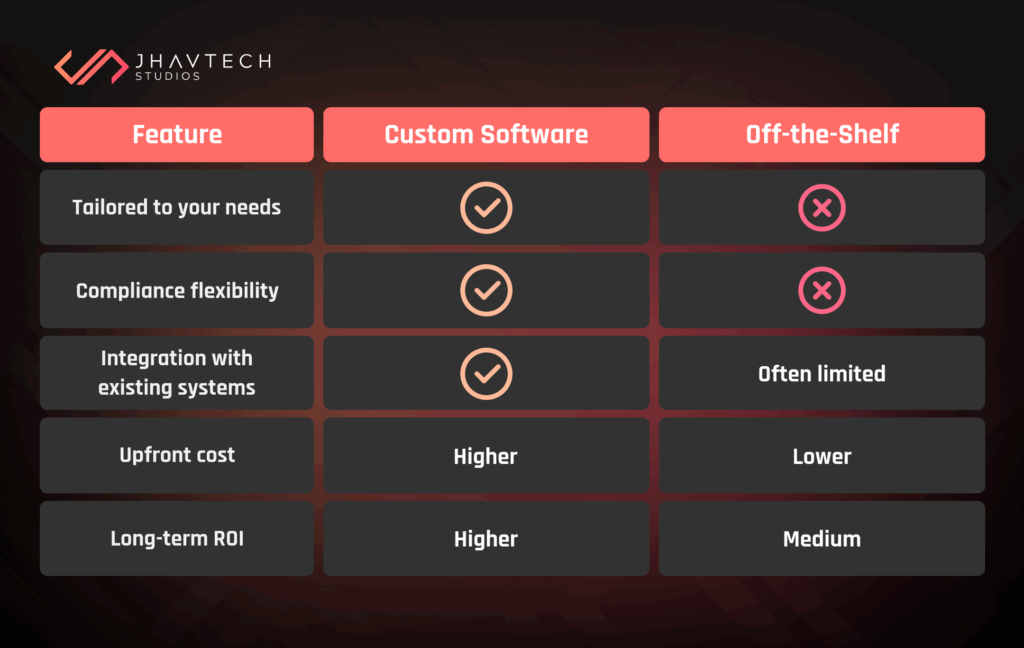
Bottom line? A tailored approach using custom software solutions may cost more upfront, but it delivers much higher long-term value.
Budgeting for a Healthcare Software Project
Key Cost Factors
- Desired Features
The more complex your feature set—such as AI diagnostics, patient portals, or EHR integrations—the higher the development costs. Prioritise mission-critical features first.
- Compliance Complexity
Building for HIPAA, GDPR, or local Australian privacy laws like the Privacy Act (1988) adds layers of encryption, user access control, and documentation—all of which impact your budget.
- Platforms (mobile/web/cloud)
A responsive web app costs less than developing separate native mobile apps. Cloud-based systems often require additional security and hosting fees but offer greater scalability.
- Number of Users
A system designed for 50 users differs significantly in scale, infrastructure, and cost from one built for 5,000. User load impacts server requirements, licensing, and support.
Avoiding Budget Pitfalls
- Invest in Discovery and Planning Phases
Skipping this step is the fast track to missed requirements, scope creep, and ballooning costs. Define clear goals and user stories up front.
- Always Include Buffer for Ongoing Maintenance
Software isn’t set-and-forget. Plan for regular updates, bug fixes, and security patches to avoid expensive emergency interventions later.
- Choose Partners Who Promise and Deliver Clear Milestones
Your development partner should map out timelines, deliverables, and payment schedules. This keeps the project on track and avoids scope surprises.
Funding Options
- Government Grants
Programs such as Australia’s Medical Research Future Fund (MRFF) and state-level digital health grants can help offset development costs.
- Healthcare Innovation Funds
Many healthcare accelerators and innovation hubs offer funding to projects that improve patient outcomes or operational efficiency through tech.
- Angel or VC Investment
For startups, private investors and venture capitalists are potential sources of funding—especially when your software has scale-up potential.
Common Mistakes to Avoid
- Skipping the Discovery Phase
This is where strategic alignment begins. Without it, you risk building the wrong tool for your users.
- Ignoring Clinician Feedback
Doctors, nurses, and admins are the real users. Their input is crucial for ensuring the system works in real-world conditions.
- Overcomplicating the UX
In fast-paced medical environments, overly complex UI/UX design slow down tasks. Prioritise clean, intuitive design.
- Celebrating MVPs as Final Products
An MVP is a starting point. The most effective healthcare systems are continuously improved based on real usage and feedback.
Why Jhavtech Studios Is the Right Choice for Healthcare Software
Our Proven Expertise
At Jhavtech Studios, we’ve spent years developing robust, scalable, and secure systems tailored to the unique needs of healthcare providers. From major hospitals to specialist clinics and agile health-tech startups, we’ve delivered custom software solutions that streamline workflows, enhance patient engagement, and improve outcomes. Our portfolio includes everything from electronic health record systems to telemedicine platforms—and it’s all built with precision and purpose.
Commitment to Quality & Privacy
When lives—and sensitive patient data—are on the line, shortcuts aren’t an option. That’s why every system we build is engineered with HIPAA and GDPR compliance in mind from the start. Our team integrates advanced encryption, role-based access, and audit trails into every product, ensuring your organisation not only meets but exceeds regulatory expectations. Whether you’re operating under Australian privacy laws or global frameworks, we embed privacy into every layer of your solution.
End-to-End Support
A great idea needs more than great code—it needs guidance, iteration, and long-term support. At Jhavtech Studios, we don’t just deliver a product and walk away. We partner with you through the full lifecycle of your project: from business analysis and user experience design to custom development, testing, deployment, and ongoing maintenance. Our agile approach ensures flexibility, speed, and transparency at every stage.
Ready to transform your healthcare operations?
Get in touch with our team and let’s build something that truly makes a difference.
Final Thoughts…
The future of healthcare is digital—and here’s the kicker: it’s now. Whether you’re modernising EMRs, building telemedicine platforms, or launching health-tech innovations, custom software solutions are no longer a luxury—they’re essential. If outdated systems are holding you back, it’s time to partner with someone who understands both healthcare and tech.
Frequently Asked Questions
1. What is the most in-demand healthcare software in 2025?
Telemedicine platforms and AI diagnostics lead the pack, alongside integrated EMR/EHR systems.
2. Is custom software development HIPAA compliant?
Absolutely—when crafted correctly. At Jhavtech Studios, compliance is a built-in feature.
3. How long does it take to build a healthcare app?
Typically 3–6 months—your timeline scales with features and integrations
4. Can custom software integrate with legacy hospital systems?
Yes! Custom APIs and middleware help bridge the gap.
5. Why choose Jhavtech Studios?
Our blend of technical skill and healthcare insight ensures systems that are compliant, scalable, and user-friendly.