.svg)
.svg)


The sports industry has always thrived on adrenaline and immediacy. But in 2025, fans expect far more than watching games on television or refreshing a browser tab. They want the full stadium experience in their pocket: instant live scores, mobile sports analytics, personalised updates, and even predictive insights.
This is where sports app development takes centre stage. Backed by expert mobile app development, a well-designed app can turn casual viewers into loyal fans by delivering seamless, real-time experiences. But here’s the catch—when millions of people log in simultaneously during a major event, will your app hold up? Or will it crash just when your users need it most?
In this blog, we’ll break down how to design sports apps that scale effectively, focusing on live scores, analytics, and real-time updates. Whether you’re building a fantasy league platform, a live score tracker, or a multi-featured sports hub, these insights will help you engage fans while keeping performance rock solid.
Why Scalability is Critical in Sports Apps
Scalability isn’t just about preparing for future growth. It’s about surviving the present. Imagine the FIFA World Cup Final, the AFL Grand Final, or the NBA Playoffs. A single goal, try, or buzzer-beater can trigger millions of fans to flood an app in seconds.
If your app isn’t scalable, here’s what happens:
- Sluggish load times
- Delayed notifications
- Crashed servers
- Frustrated fans leaving negative reviews
On the other hand, scalable sports app development ensures:
- Consistent performance no matter the traffic surge
- Reliable uptime during peak loads
- Higher user retention in sports apps by keeping fans engaged and satisfied
- Monetisation opportunities as advertisers and sponsors trust a platform with stability
👉 Explore our Sports Application Development Service to see how we help businesses build robust sports solutions.
Core Features That Drive Scalability
1. Real-Time Live Scores
Live score apps are often the first download for sports fans. But here’s the challenge: even a two-second delay can push users to uninstall your app. To avoid this, leading platforms integrate:
- WebSockets or Firebase Realtime Database for near-instant synchronisation
- Failover servers to ensure continuous updates even if one system crashes
- Smart push notifications for instant alerts
Example: Cricket Pulse Live, ESPN and Cricbuzz have mastered push notifications for instant score alerts.
And for developers wondering how to fix live score app delays, the key lies in combining low-latency architecture with caching and real-time monitoring tools.
2. In-Depth Analytics
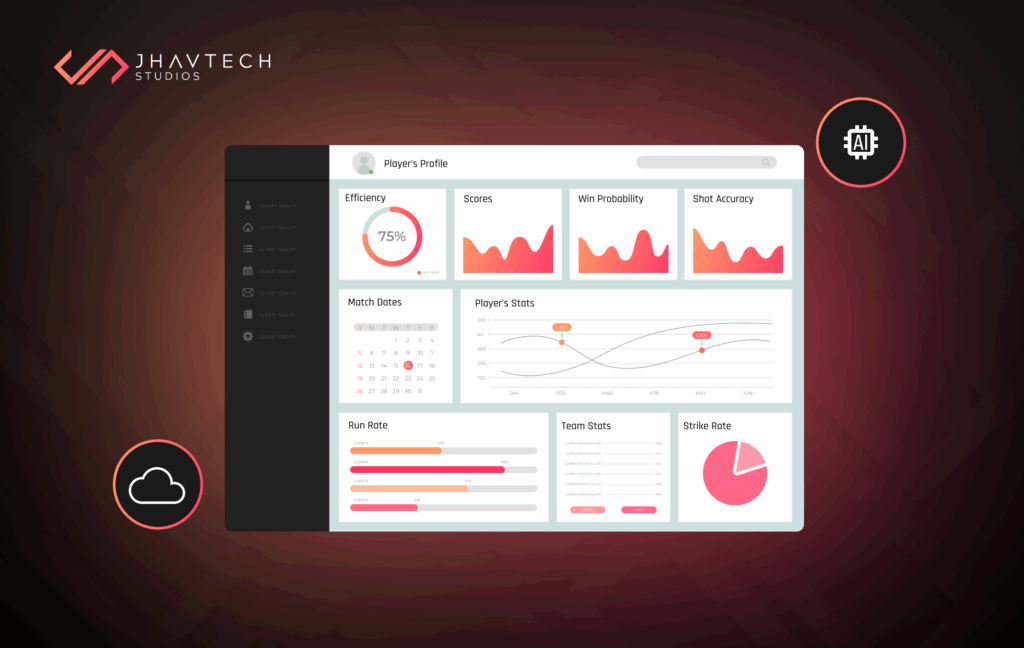
Modern fans want more than scores—they crave insights. They’re no longer satisfied with just knowing what happened; they want to understand ‘why’ it happened and ‘what could happen next’. Today’s mobile sports analytics bring matches to life with:
- Player dashboards tracking goals, runs, rebounds, and efficiency
- Heatmaps showing team performance across the field
- AI-driven predictions for betting, fantasy leagues, and fan discussions
Behind the scenes, this requires a big data infrastructure capable of processing thousands of data points per second. For instance, Cricket Australia has integrated predictive analytics to enhance both fan engagement and coaching insights.
3. Real-Time Updates & Notifications
Push notifications are one of the most powerful tools in sports app development, acting as the bridge between the excitement of the game and the user’s daily life. A well-timed update can pull fans back into the app, spark conversations, and even drive revenue opportunities. They keep fans engaged even when they’re not actively using the app.
Best practices include:
- Instant alerts for milestones like wickets, goals, or penalties
- Customised notifications (e.g., “Notify me only when the Sydney Swans score”)
- Integration with APNs (Apple Push Notification Service) or FCM (Firebase Cloud Messaging)
Done right, these notifications boost user retention in sports apps, but done poorly, they risk annoying fans with irrelevant spam. The difference between success and failure lies in personalisation and timing. Get these right, and notifications can transform casual users into loyal, lifelong fans.
4. Scalable Cloud Infrastructure
The backbone of scalability is the cloud, and in sports app development, it is the difference between apps that crash under pressure and those that deliver seamless performance when fans need it most. Services like AWS, Google Cloud, and Azure provide elastic infrastructure that scales up during peak demand and scales down during downtime.
Essential cloud strategies include:
- Load balancing to spread traffic
- CDNs (Content Delivery Networks) to reduce latency worldwide
- Serverless computing for on-demand performance
For Australian businesses, local data centres also improve compliance with privacy laws and deliver smoother experiences for regional users. By leveraging these cloud capabilities, sports apps can guarantee reliability and responsiveness even during the most unpredictable surges in fan activity.
5. User Engagement Features
Keeping fans engaged between matches is as important as the live action itself, and this is where creative engagement features, driven by thoughtful UI/UX design, can turn a simple sports app into a vibrant digital community. Scalable sports apps often include:
- Live chat rooms and fan communities
- Fantasy sports leagues for deeper involvement
- AR/VR integrations (e.g., viewing player stats through AR overlays)
- Seamless social sharing to amplify app reach
These features not only retain users but also open doors for sports app monetisation models such as in-app purchases, premium subscriptions, and sponsored experiences. When designed thoughtfully, engagement tools transform fleeting interactions into long-term loyalty, ensuring fans keep coming back long after the final whistle.
Technology Stack for Scalable Sports Apps
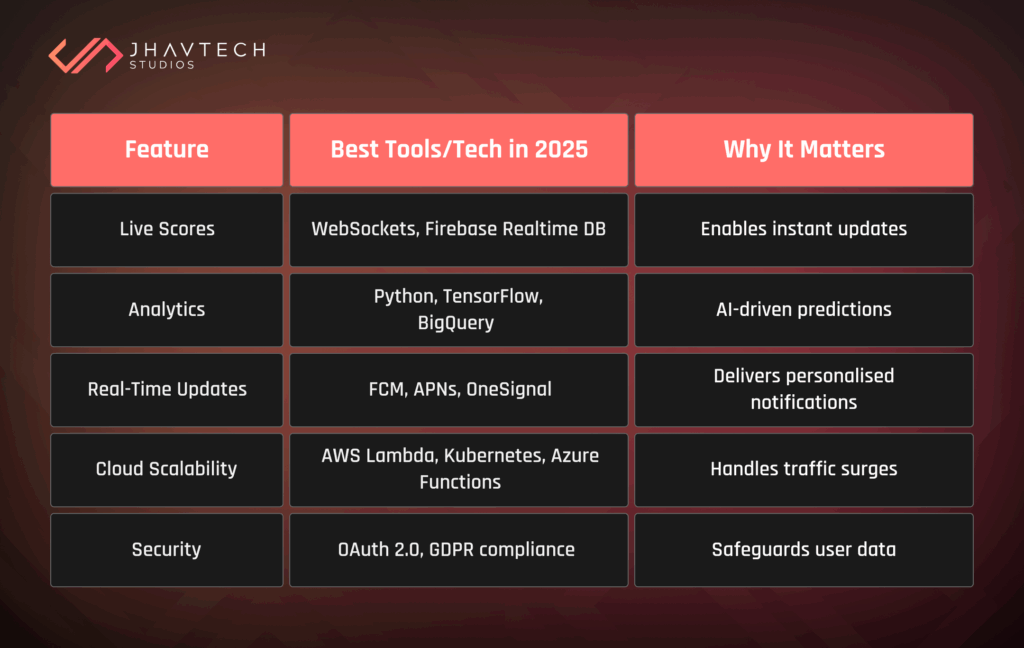
Building a scalable sports app isn’t just about great design—it’s about choosing the right technology foundation. The tech stack behind your app determines how well it can handle live updates, real-time analytics, and millions of concurrent users without breaking down. Below are the key tools and technologies that power scalable sports app development in 2025.
Challenges in Designing Scalable Sports Apps
Every innovation comes with hurdles, and in sports app development, the ability to anticipate and address these obstacles often determines whether an app becomes a fan favourite or fades into obscurity. Common challenges include:
- Traffic spikes – unexpected surges during crucial moments
- Latency issues – even slight delays frustrate users
- Cross-platform consistency – ensuring smooth performance on iOS, Android, and web
- Data accuracy – live updates must be reliable and sourced from verified feeds
When latency issues or poor cross-platform performance go unaddressed, sports platforms risk frustrating fans at critical moments. In cases where apps hit a wall, software project rescue can help organisations stabilise and optimise existing systems before scaling further.
Overcoming these challenges requires both technical excellence and best practices for sports app scaling, ensuring that applications not only survive high-pressure events but also deliver the kind of flawless experience that keeps fans coming back.
Best Practices to Ensure Scalability
Building a sports app that can handle peak demand isn’t just about adding more servers—it requires smart design choices that make the platform resilient, flexible, and efficient. Some of the most effective strategies in sports app development include:
- Adopt Microservices Architecture: Break the app into smaller, independent services for easier scaling.
- Use Caching: Tools like Redis minimise repeated server requests.
- Run Load Testing: Simulate traffic spikes before major events.
- Optimise APIs: Lean APIs (REST or GraphQL) reduce delays.
- Monitor in Real-Time: Platforms like Datadog provide alerts before issues impact fans.
These practices make apps resilient enough to handle millions of concurrent users without breaking a sweat. More importantly, they allow developers to future-proof their platforms, ensuring that fans always get a smooth and reliable experience—whether it’s the AFL Grand Final, the FIFA World Cup, or a local league game.
Future of Sports Apps: What’s Next in 2025 and Beyond
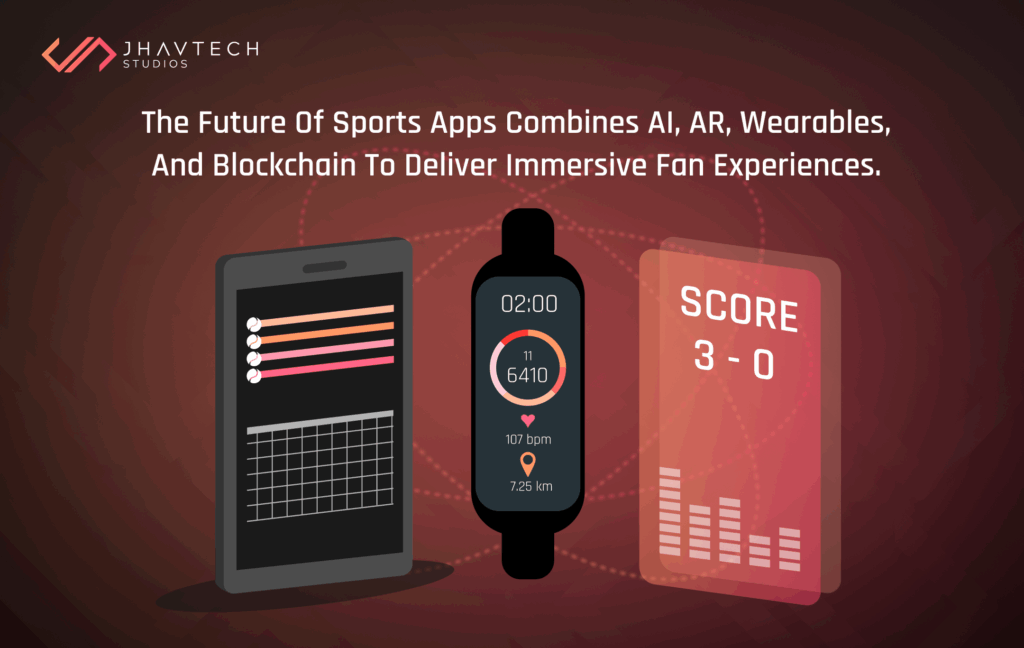
Sports technology is evolving at lightning speed, and sports app development must innovate continuously to keep fans engaged in an increasingly competitive digital landscape. The next wave of apps will blur the lines between watching, participating, and interacting, creating experiences that feel as exciting as being in the stadium itself. Key trends include:
- AI-powered predictions and commentary for fans and broadcasters
- Augmented reality for immersive live experiences
- Wearable integration to sync real-time athlete biometrics
- Blockchain-based engagement such as NFTs, secure ticketing, and decentralised fantasy leagues
Looking ahead, sports apps won’t just inform fans—they’ll connect, entertain, and even empower them. The platforms that embrace these innovations early will set the standard for how millions of fans consume and experience sports in the years to come.
Final Thoughts…
In today’s digital-first sports industry, scalability is no longer optional. Whether you’re delivering live scores, deep analytics, or immersive fan experiences, your app must handle peak traffic without missing a beat.
By following best practices and leveraging cloud infrastructure, sports app development can unlock stronger fan loyalty, monetisation opportunities, and long-term growth.
If you’re ready to build or upgrade a sports app that scales, Jhavtech Studios can help. With proven experience delivering real-time, high-performance apps, we specialise in turning concepts into reliable digital platforms. For many businesses, outsourcing sports app development to experts like our team is the smartest way to save time, reduce risk, and ensure the final product is built for both performance and growth.
👉 Discover Jhavtech Studios’ Sports Application Development Service and let’s create the future of fan engagement together.
Frequently Asked Questions
1. Why is scalability important in sports apps?
Because traffic can spike dramatically during big matches, and only scalable apps can deliver smooth, real-time experiences without crashing.
2. How do sports apps deliver real-time updates?
They use WebSockets, Firebase, and push notification services for instant data synchronisation.
3. Can sports app development integrate AI analytics?
Yes, AI enables predictive analytics, performance tracking, and personalised fan experiences.
4. What’s the best cloud solution for sports apps?
AWS, Azure, and Google Cloud are widely trusted for elastic scalability and global coverage.
5. How can Jhavtech Studios help?
We design and develop scalable sports applications with features like live scores, analytics, and real-time engagement tools.