.svg)
.svg)


As seasoned veterans in the Australian technology landscape, we have seen this scenario play out countless times: a once-promising application begins to groan under its own weight, deadlines slip, and budgets bloat. The project, which was meant to be an engine for growth, has turned into a liability. It is a slow, silent descent into a technical crisis.
In the fast-paced world of enterprise technology, the decision to seek software project rescue is often the last-resort measure taken when internal teams are overwhelmed, and the system is nearing operational failure. However, waiting until the point of total collapse is the most expensive mistake a business can make. The critical move is recognising the early warning signals and understanding the financial gravity of the situation before it spirals out of control.
This is not just about a few minor bugs. This is about structural deterioration, the kind that costs businesses millions in lost productivity and compromised competitive standing. If you are a CTO, an IT manager, or a product owner grappling with an unstable application, this is your wake-up call. We are experts in app development and will guide you through the definitive signs of code failure and outline the strategic steps necessary for a successful intervention.
The Cost of Shortcuts: Technical Debt and the Productivity Drain
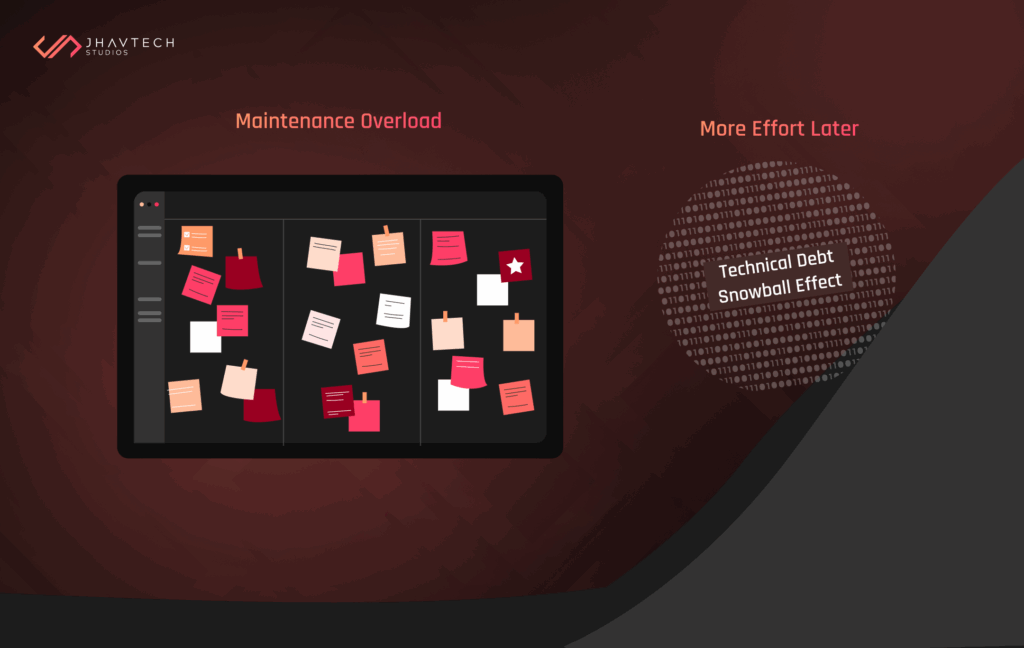
The root cause of most failing software projects is accumulating technical debt. Coined in 1992 by Ward Cunningham, this concept refers to the future costs incurred when developers choose faster, less sustainable solutions over robust architectural approaches, often performed under pressure to meet aggressive deadlines. Just like financial debt accrues interest over time, code quality issues compound over time, demanding disproportionately greater resources to fix later.
For enterprise platforms, ignoring technical debt is fundamentally counterproductive. It causes significant system clutter, complicates future feature development, and can lead to platform-specific limitations being hit, such as governor limits or object limits, causing organisational confusion as teams struggle to manage the unwieldy codebase.
The sheer scale of this problem is staggering. Studies paint a sobering picture of the resources drained by this invisible liability. Research indicates that engineers across various industries spend a massive portion of their working week on maintenance rather than innovation. Specifically, some analyses suggest that developers are losing anywhere from 25% to a worrying 42% of their total capacity to debt-related issues, effectively choking innovation and slowing down delivery cycles. What might have started as a necessary compromise has become a measurable barrier to growth.
To put this in perspective, businesses and organisations that are proactive and invest consistently in managing this liability are shown to fare better. One study suggests that allocating the “just right” amount, about 15% of the IT budget, toward continuous refactoring and debt remediation is crucial, with companies that maintain lower-than-average technical debt expecting higher revenue growth than their peers over the next three years. Strategic technical debt management is not a luxury; it is an economic necessity that dictates long-term business resilience and financial health.
Statistics of Crisis: Why Projects Need Immediate Intervention
The internal strife caused by technical debt translates directly into catastrophic external failure rates. If you believe your project is an outlier, the data suggests otherwise. According to the Standish Group’s CHAOS Report, only a mere 16.2% of IT projects are considered successful, meaning they were completed on time, on budget, and delivered all promised functionality. That leaves the vast majority: 52.7% are “challenged” (over budget, over time, or lacking features), and a massive 31.1% are classified as outright failures, meaning they were abandoned or canceled.
The financial exposure in the Australian market alone demonstrates why a strong software project rescue strategy is vital. Globally, large IT projects often run almost 50% over budget, delivering less than half of their intended goals. We have seen massive Australian IT projects, particularly in the government sector, incur over a billion dollars in cost overruns and delays. When momentum compounds mistakes and the underlying foundations are unstable, the project can quickly become costly, if not impossible, to fix internally.
These statistics underscore a crucial point: IT failure is the norm, not the exception. The most critical decision a leadership team can make is not whether to fix a failing project, but how soon to engage expert third-party help for a targeted software project rescue.
The S.O.S. Signals: Undeniable Signs Your Code is Failing
The internal struggles of bad code manifest as undeniable external symptoms that affect user experience and, ultimately, the bottom line. Recognising these symptoms is the first step toward effective remediation.
1. Performance and Stability Issues are Chronic
Nothing drives away users faster than a buggy, unreliable application. Frequent app crashes are instant deal-breakers, often rooted in serious underlying problems like memory leaks, excessive resource consumption, or unhandled exceptions such as null pointer references. Even if the app does not crash, sluggish performance is a major abandonment factor, typically stemming from inefficient code or delays in fetching large data sets. Addressing the application’s UI/UX design is often essential for resolving performance issues and enhancing user acceptance.
For businesses dealing with complex, decades-old systems, the long-tail search query signs my legacy mobile app code is failing becomes highly relevant. Older, unsupported applications have usually accrued the maximum amount of technical debt. This limited support results in persistent, known issues that internal teams cannot easily resolve, such as incompatibility with new operating systems or known data display errors. When your support log is dominated by recurring, fundamental stability issues, it signals a deeper, structural problem only a comprehensive software project rescue can fix.
2. Development Has Slowed to a Crawl
Have feature releases ground to a halt? Does every minor bug fix introduce three new problems? This is a classic sign of code entropy. When the codebase is fragile, developers become hesitant to make changes, fearing they will destabilise the entire system. What should be a one-day task turns into a one-week ordeal because the code is tightly coupled, poorly documented, and riddled with spaghetti logic. This friction drastically increases the cost and time required for new development, turning the entire process into a high-stakes gamble.
3. Maintenance Costs are Becoming Financially Burdensome
This is where the crisis moves from the technical department to the boardroom. Ongoing application maintenance is a major operational expense, often estimated to be between 15% and 20% of the original build cost annually, and sometimes as high as 33% for complex products. If this percentage is rising exponentially, you are paying compound interest on your technical debt.
The key question leadership must ask is: how to reduce high application maintenance costs effectively? The answer is not simply to cut the maintenance budget, which only accelerates decay. The real solution lies in strategic, targeted refactoring and modernisation to improve code efficiency, reduce bug-hunt time, and streamline processes. Addressing the financial pain of high maintenance costs is a high-intent, commercially focused driver for initiating a software project rescue.
The Strategic Path to Software Project Rescue
Phase 1: The Diagnostic Imperative (The Audit)
Before any code is changed, you need objective, third-party validation of the problem’s scope. This starts with a thorough code review. This is where an independent software code audit is invaluable.
The audit is a non-negotiable first step, particularly for large proprietary companies that require compliance and risk management oversight. This process provides an objective assessment of the codebase health, uncovering risks, irregularities, and compliance concerns that influence business operations. An audit is critical for several commercial scenarios:
- Codebase Health Check: Assessing code quality, maintainability, and adherence to industry best practices.
- M&A Due Diligence: Providing an accurate picture of the stability and security of software systems during an acquisition or merger.
- Budget Justification: Providing the necessary evidence to stakeholders and the finance department to justify the expenditure for a full-scale rescue operation.
By isolating the defects and validating the structural issues with a detailed, actionable report, the independent audit transforms an abstract technical problem into a quantifiable business risk, enabling confident decision-making.
Phase 2: The Remediation and Refactoring Process
Once the diagnosis is complete, the software project rescue team steps in to perform surgical and systemic fixes. This is far more than simple bug-fixing; it is a full intervention designed to stabilise, optimise, and future-proof the application.
A comprehensive rescue typically involves:
- Critical Bug Correction: Isolating and correcting major defects that disrupt daily operations first, ensuring immediate stability.
- Systems Analysis and Modernisation: Optimising poorly designed software and database applications and modernising old systems with current integrations and features.
- Targeted Refactoring: Improving the internal structure of the code for stability, performance, and security without altering its external functionality. This reduces the long-term cost of maintaining and updating the software.
- Strategic Roadmap: The process concludes with clear documentation and an actionable roadmap, ensuring the client’s internal team has a reliable, stable system ready for regular, managed growth.
Choosing the right partner for this critical intervention means selecting a team with deep commercial experience that understands both the technical execution and the business necessity of the operation.
Futureproofing Your Investment
A successful software project rescue is not an endpoint; it is the establishment of a new, sustainable beginning. Cutting back technical debt is the key to becoming “tech forward” — a company where technology is an engine for continual growth and productivity.
By strategically investing in remediation, businesses and organisations can free up engineers to spend as much as 50% more of their time working on value-generating products and services. The immediate and ongoing ROI comes from:
- Accelerated Delivery: Faster development cycles and reduced time-to-market for new features.
- Reduced Complexity: Cutting back on the time needed to manage unnecessarily complex systems.
- Enhanced Stability: Improving application uptime and overall system resiliency.
If the signs of code failure are present in your organisation, the time for strategic action is now. Delaying a professional software project rescue only allows the interest on your technical debt to compound, making the eventual fix more expensive and the business risk greater. Choosing the right IT consulting partner for this critical intervention means selecting a team with deep commercial experience that understands both the technical execution and the business necessity of the operation. Do not let technical neglect compromise your market position.
Stop the Bleeding: Take the First Step Now
Do not let years of technical debt compromise your competitive edge.
The cost of inaction far outweighs the investment in a strategic solution. Our team at Jhavtech Studios specialises in high-stakes software project rescue and enterprise-grade code auditing, transforming liabilities into engines of growth.
Contact us and schedule your confidential code review today. We will provide you with a detailed, objective report that turns abstract technical issues into a clear, financially justifiable roadmap for recovery. It is the only way to stop the spiral and guarantee the future stability of your application.
Frequently Asked Questions (FAQ)
Q: What is the primary difference between a “bug fix” and a “software project rescue”?
A: A bug fix is a temporary patch for a single issue. A software project rescue is a deep, systemic intervention. It identifies and fixes the root cause, and the goal is to improve the entire code architecture for stability.
Q: How long does a typical code audit and rescue operation take?
A: The audit phase takes about a week or so. This produces a detailed, actionable report. The remediation phase varies widely by project size. It often takes between 3 to 6 months or more. Critical fixes are prioritised for immediate stability.
Q: What is the ROI on investing in technical debt remediation?
A: The ROI is primarily increased developer productivity. Removing debt means engineers spend up to 50% more time on new features. This reduces operational costs. It speeds up development cycles and boosts market competitiveness.
Q: We are in the middle of a merger (M&A). Why do we need an independent code audit now?
A: An audit is essential due diligence. It objectively assesses the software’s true health. It quantifies hidden liabilities like security flaws or severe technical debt. This prevents the buyer from inheriting huge, unbudgeted problems. It ensures the technology assets are valued accurately.