.svg)
.svg)


You’ve likely seen the pitch. A sleek presentation, a fixed-fee quote that fits comfortably in your Series A or internal budget, and a timeline that promises a launch in under six months. In the Australian tech sector, where the push for digital transformation is at an all-time high, the lure of a “packaged” app price is incredibly strong.
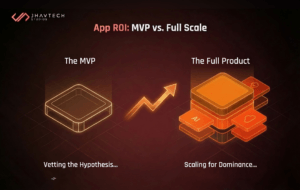
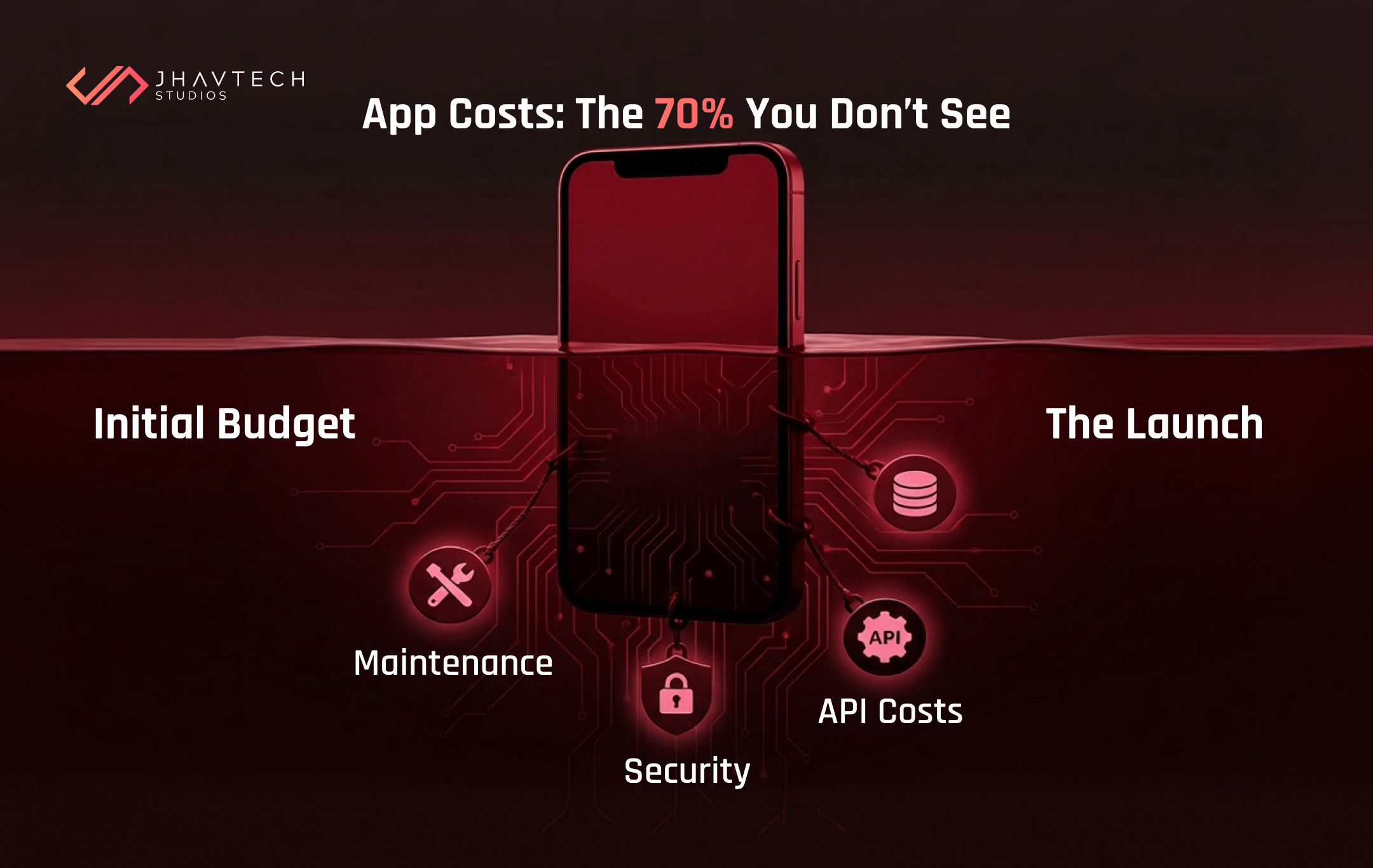
But here is the reality: The initial build is only about 35% to 45% of the total cost of ownership over the first three years. Understanding the distinction between your initial MVP vs. a full-scale product is the first step in avoiding these budget pitfalls.
At Jhavtech Studios, we believe in a Human-in-the-Loop (HITL) approach that prioritises architectural resilience over the “vibe coding” that leads to massive technical debt. To help you plan for a sustainable product, we’re pulling back the curtain on the expenses that often stay hidden in the fine print.
The Jhavtech “Rule of 20”
Budgeting for Longevity: To ensure your startup’s runway isn’t cut short, always allocate 20% of your initial development cost for annual maintenance. If your MVP costs $100,000 AUD, your operational “Keep-the-Lights-On” budget is $20,000 AUD per year.
Why the Initial Quote is Just the Beginning
The most common shock for founders is the realisation that a mobile app is not a set and forget asset. It is a living piece of infrastructure. According to 2026 industry benchmarks from Gartner’s 2026 IT Spending Forecast and local Australian research, you must budget for the Subscription of Ownership. This isn’t for new features… this is simply to stop the app from breaking.
Why the Maintenance Gap Exists
Many founders assume that once an app is live, the code remains static. In reality, the digital environment your app lives in is shifting beneath it every single day. Maintaining an app in 2026 isn’t about fixing things that were built incorrectly; it’s about adapting to an external ecosystem that is constantly evolving.
There are two primary drivers behind this “Maintenance Gap” that consistently impact our Australian clients:
- OS Version Drift: Every year, Apple (iOS) and Google (Android) release major updates. With the rollout of iOS 19 and Android 17, architectural shifts in privacy manifests and background processing mean that code written just 12 months ago may now be deprecated.
- The 2026 API Economy: Most modern apps are “Lego sets” of third-party services such as Stripe for payments, Twilio for SMS, or OpenAI for generative features. When these providers update their APIs, your app requires immediate corrective maintenance to avoid service outages.
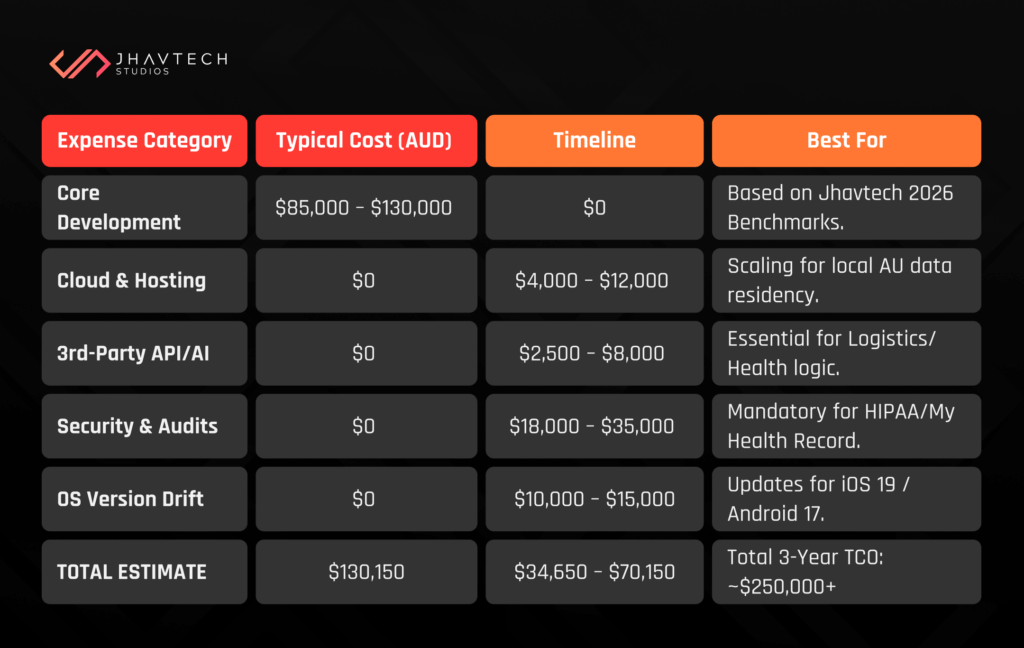
The Shadow Budget: 2026 App Ownership Breakdown
To help you plan your roadmap, we’ve synthesised the current 2026 market data into the following breakdown. For a more exhaustive look at line-item pricing, refer to our comprehensive Mobile App Cost Australia 2026 Guide.
Interactive Cost Comparison (AUD – 2026)
Wondering how these 2026 benchmarks apply to your specific app idea? Let’s build a transparent budget together.
The Trust Tax: Security and Compliance in Australia
For companies in the health or logistics sectors, security isn’t just a feature; it’s a legal mandate. In 2026, the Australian Government’s focus on data residency and cybersecurity has pushed the cost of entry significantly higher.
HIPAA, GDPR, and My Health Record Integration
If you are building a digital health agent, for example, one providing the hidden costs of compliance can be staggering. You aren’t just paying for encryption; you are paying for:
- Algorithmic Accountability: Ensuring AI-driven advice doesn’t provide “off-label” medical suggestions.
- Data Sovereignty: Storing sensitive Australian patient data on local servers to meet 2026 standards.
- Penetration Testing: Specialised audits that can range from $15,000 to $30,000 AUD annually for high-stakes healthcare apps.
Logistics and “Decision Integrity”
In the logistics space, such as an app managing heavy fleet operations, the hidden cost lies in data accuracy. If your app uses automated decision-making to calculate “tip fees vs. travel time,” the cost of maintaining the integrity of those external data feeds is critical. One bad API integration or a legacy bug can result in thousands of dollars in operational losses.
The Hidden Cost of Vibe Coding and AI Velocity
In early 2026, many agencies have pivoted to AI-First” development, claiming they can build apps 10x faster. While AI tools like Lovable or V0 are excellent for rapid prototyping, over-relying on them without human oversight leads to hostile codebases.
The Senior Moat
This is what we call the “Senior Moat” at Jhavtech.
An AI can write a function, but it doesn’t understand the Principle of Least Astonishment (POLA). It doesn’t know how your logistics app will scale when you move from 10 trucks to 500.
- The Hidden Cost: Using low-cost, AI-generated code often results in a refactoring tax in Year 2.
- The Solution: Investing in senior architectural oversight during the build phase can reduce your long-term maintenance costs by up to 30%.
How to Protect Your App Runway
Knowing the aforementioned costs is only half the battle. How do you mitigate them without sacrificing quality?
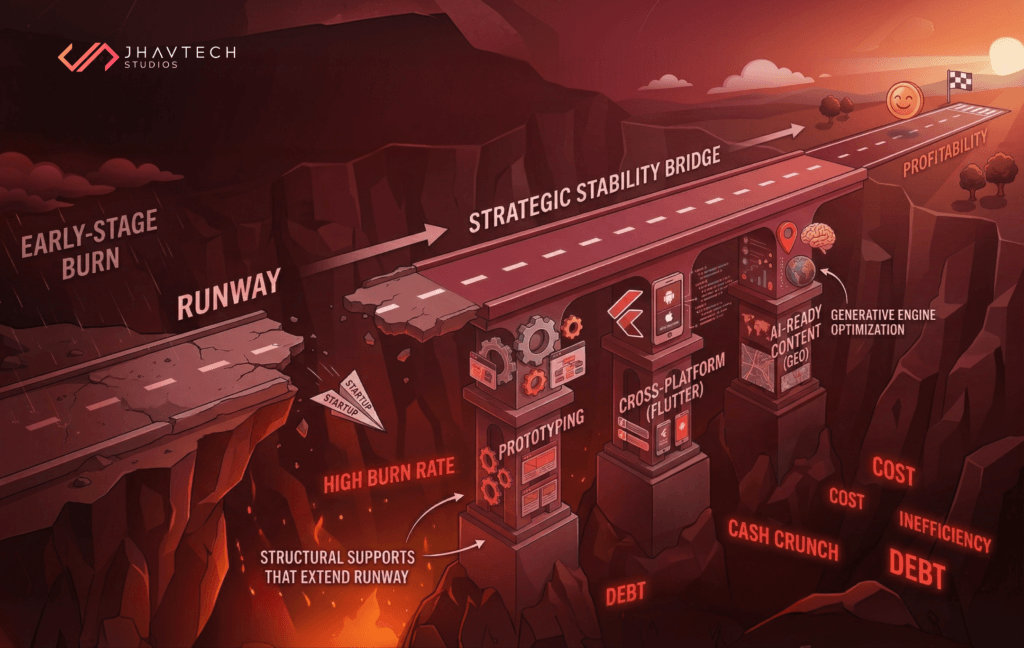
1. Start with a “Clickable Prototype”
Before you commit to a line of production code, validate the user journey. At Jhavtech, we often recommend winners of our Startup App Bundle focus on a clickable prototype first. This allows you to test the “Lead Intelligence” of your app without incurring the $20k+ annual maintenance cost of a live product.
2. Leverage Cross-Platform Frameworks (Flutter)
Unless you are building a high-end mobile game, native development (Swift for iOS, Kotlin for Android) effectively doubles your maintenance costs. Using Flutter allows for a single codebase, which Gartner reports can reduce ongoing maintenance labor costs by 40%.
3. Prioritise Information Gain for SEO/GEO
In 2026, search engines (Google) and AI researchers (Gemini/Perplexity) prioritise content that provides unique data. Ensure your app includes a Technical Summary Block or a factual FAQ that AI agents can easily parse. This lowers your User Acquisition Cost (CAC), which is another hidden cost of any app launch.
Final Thoughts… Build for the Lifecycle, Not the Launch
The most successful founders in Australia aren’t the ones who get to market the fastest; they are the ones who stay in the market the longest. By accounting for the Trust Tax, Version Drift, and the Refactoring Tax upfront, you ensure your app is a business asset rather than a liability.
At Jhavtech Studios, we don’t just build apps; we build resilient digital ecosystems. We’ll tell you the costs no one else will because your long-term success is the only metric that matters to us.
Key Takeaways: The 2026 App Cost Cheat Sheet
- Primary Australian Cost Driver: Security Compliance & 3rd-Party AI API Integration.
- Maintenance Benchmark: 15%–20% of Initial CapEx (The Jhavtech “Rule of 20”).
- Infrastructure Strategy: Cloud-native (AWS/Azure) with Australian data residency.
- Framework Recommendation: Flutter for 2026 cross-platform efficiency.
Frequently Asked Questions
“What is the average cost of app maintenance in Australia for 2026?”
For most medium-complexity apps, expect to pay between $25,000 and $55,000 AUD annually. This covers hosting, security, OS updates, and API management.
“Why is mobile app security so expensive in 2026?”
Increased Australian regulations regarding data sovereignty and the rise of AI-driven cyber threats have made end-to-end encryption and annual penetration testing a non-negotiable (and costly) requirement for Health and FinTech apps in particular.
“Does Flutter reduce the cost of mobile app development?”
Yes. By maintaining a single codebase for both iOS and Android, businesses can typically save 30% to 45% on initial build costs and ongoing maintenance labor.
Stop guessing your app’s runway. Let our senior architects provide a transparent breakdown of your project’s true total cost of ownership.