.svg)
.svg)


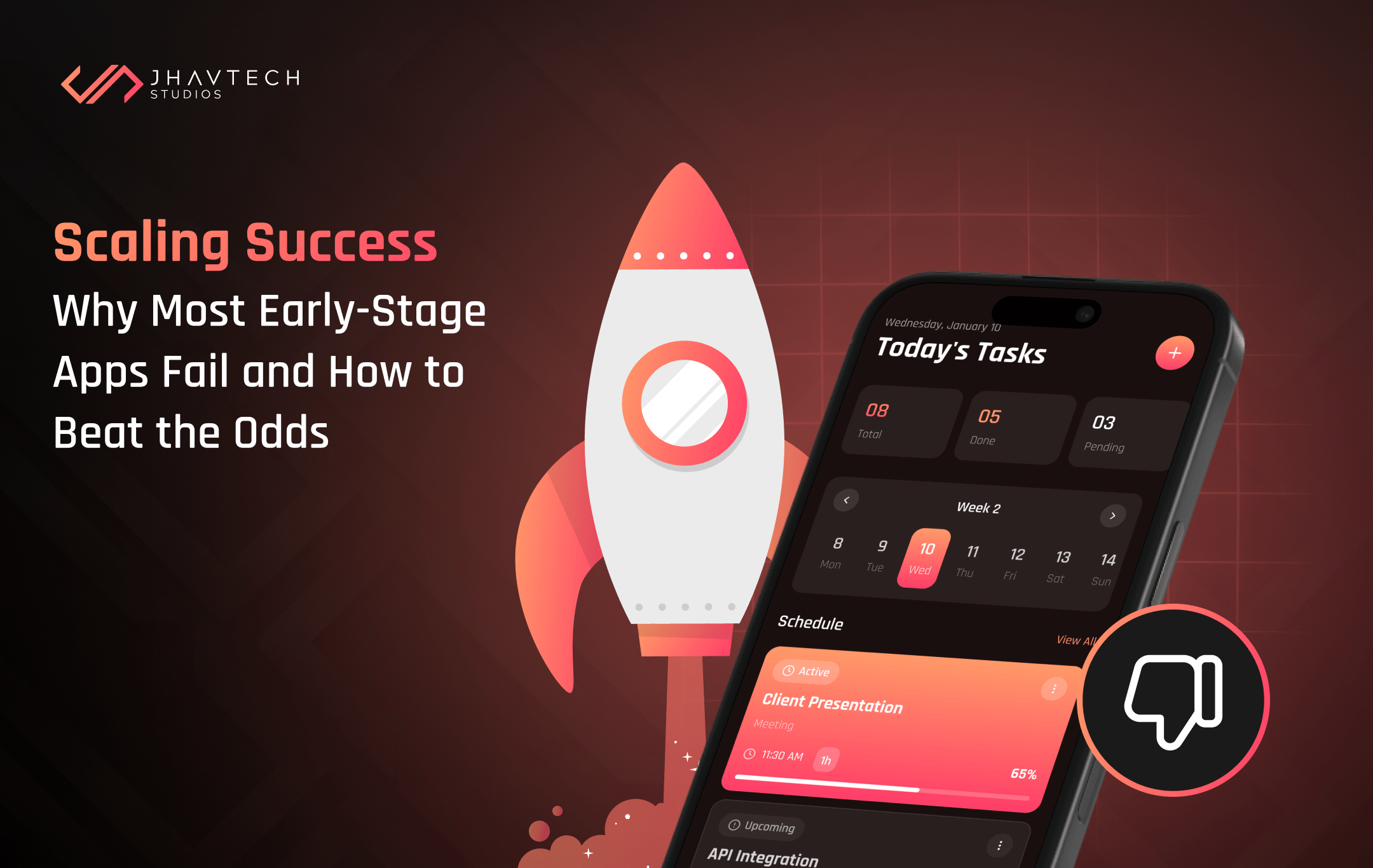
Building a startup is often a race against time and capital. You have a vision, a target audience, and a burning desire to disrupt the market. But the road to a successful product is littered with the remains of ambitious ideas that never made it past the initial release. According to 2025 industry data, approximately 90% of startups fail, and a staggering 42% of those collapses are due to a simple, painful reality: there was no market need for what they built.
Many founders believe that the “build it and they will come” philosophy still works. In reality, the most critical phase of your journey is the development of your Minimum Viable Product. When executed correctly, an MVP is your greatest tool for validation. When done poorly, it becomes a sinkhole for your resources.
At Jhavtech Studios, we have seen how the right approach to MVP development services can spell the difference between a global success story and a quiet exit. To help you navigate these choppy waters, we have identified the five most common MVP mistakes that kill startup apps before they even get a chance to grow.
1. Over-Engineering the “Minimum”
The most common trap founders fall into is “feature bloat.” It is tempting to think that more features equal more value, but in the MVP stage, the opposite is usually true. Research indicates that 45% of features in software projects are never actually used by the end consumer.
When you pack your initial release with every “nice to have” idea, you dilute your core value proposition. This is where lean MVP development becomes essential. By focusing strictly on the one or two features that solve your user’s primary pain point, you reduce complexity and get to market faster.
Over-engineering doesn’t just waste time; it creates technical debt that will haunt you later. Every unnecessary line of code is something you have to maintain, test, and eventually pivot away from when users tell you they don’t need it. High-quality MVP development services focus on the “Viable” part of the acronym, ensuring the core functionality is polished while leaving the bells and whistles for version 2.0.
2. Ignoring the Importance of Lean MVP Development
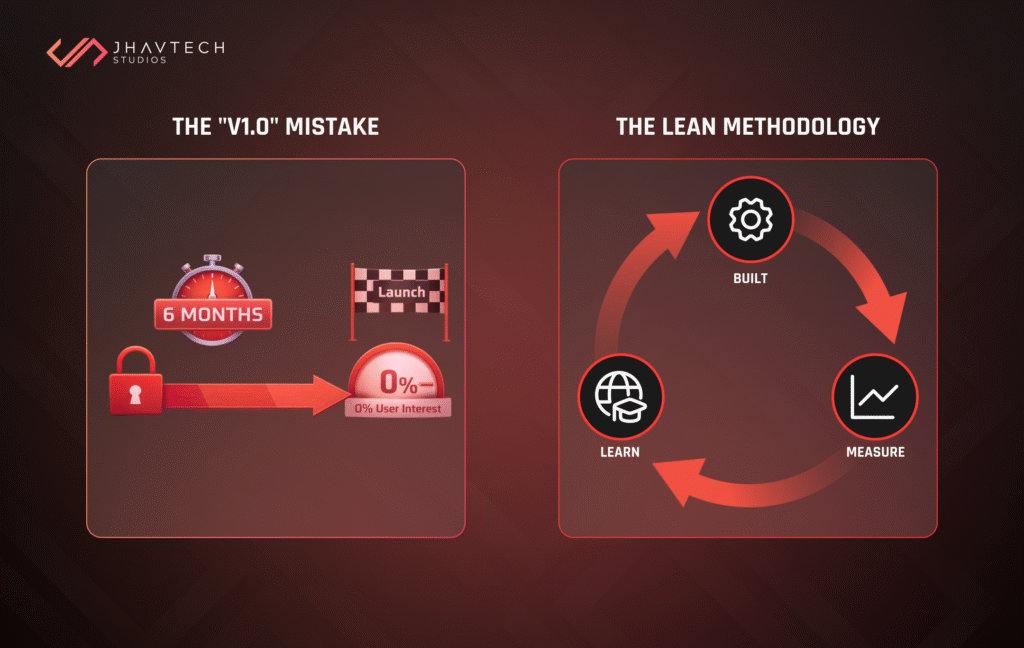
Many startups treat their MVP as a “v1.0” instead of a learning experiment. They spend six months behind closed doors, only to launch a product that nobody wants. This is the antithesis of the lean methodology.
A recent research into lean startups shows that companies using this model reported significantly lower running costs, and nearly half were able to launch their MVPs up to 50% faster. By skipping the validation phase, you are essentially gambling with your budget. If you find yourself stuck in a cycle of endless tweaks before anyone has even seen the app, you might need IT consulting to help refocus your strategy.
If you find yourself stuck in a cycle of endless tweaks before anyone has even seen the app, you might need IT consulting to help refocus your strategy. The goal is to build, measure, and learn. If you aren’t measuring user behaviour from day one, you aren’t building a startup; you are building a hobby. Our team at Jhavtech Studios emphasises this iterative approach in our MVP development services to ensure our clients aren’t just shipping code, but are actually building a business.
3. Failing to Understand Common Mistakes in MVP Development for Startups
One of the most frequent common mistakes in MVP development for startups is misjudging the technical foundation. Founders often think they can “hack” things together and fix them later. While speed is important, building on a shaky foundation can lead to a total collapse when you try to scale.
For instance, if you are focusing on mobile app development, choosing the wrong framework or neglecting security protocols early on can make your app unusable once you hit your first 1,000 users. It is a delicate balance. You want to be fast, but you also need DevOps solutions that allow for continuous integration and deployment so that your app remains stable as you add new features.
Another common pitfall is ignoring the user experience. A “minimum” product shouldn’t mean a “broken” or “ugly” product. If the interface is so clunky that users can’t find the core feature, they won’t stick around to give you the feedback you so desperately need.
4. Poor Feature Prioritisation
Do you know which feature is actually going to make your users’ lives easier? Most founders think they do, but data shows that startups need 2 to 3 times longer to validate their market than they originally expect.
Learning how to prioritise features for MVP launch is a skill that saves thousands of dollars. You must categorise your ideas into “Must-Haves,” “Should-Haves,” and “Could-Haves.” If a feature doesn’t directly contribute to solving the “Must-Have” problem, it should be cut from the initial scope.
This is particularly relevant in web app development, where it is very easy to add “just one more button” or an extra dashboard. Every addition increases the testing surface and the potential for bugs. Our MVP development services involve a rigorous discovery phase where we help you strip away the noise and focus on what will actually drive user retention.
5. Neglecting the Post-Launch Pivot
The final mistake happens after the app is in the store. Many founders are so married to their original vision that they refuse to listen to what the data is telling them.
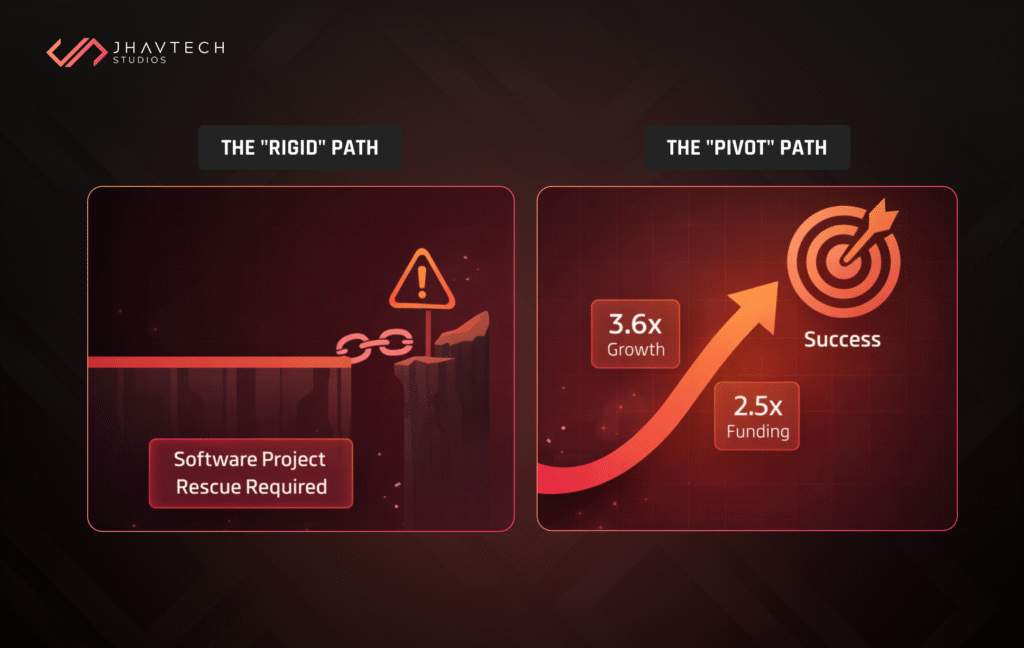
Statistics from the Startup Genome Project show that startups that pivot once or twice see 3.6x better user growth and raise 2.5x more money. If your MVP launch shows that users are gravitating toward a secondary feature rather than your “main” one, you must be prepared to change direction.
If your initial development team didn’t build with flexibility in mind, you might find yourself needing a software project rescue later on. This usually happens when the original code is too rigid to allow for a pivot, forcing a complete and expensive rebuild. When you choose a professional MVP software development company, you are investing in a partner that builds for change. We ensure that the architecture we provide in our MVP development services is modular and ready for whatever direction your users take you.
Why Choosing the Right Partner Matters
Avoiding these mistakes is easier said than done when you are in the thick of a launch. This is why many successful founders look for an MVP software development company that acts as a strategic partner rather than just a coding shop.
At Jhavtech Studios, we don’t just write code; we help you navigate the entire lifecycle of your product. Our MVP development services are designed to help you avoid the “90% failure” statistic by focusing on real-world validation and technical excellence.
Whether you are looking for a team to handle your entire development or you need a specific set of MVP development services to get your idea off the ground, we are here to help. We have seen how a well-planned MVP can transform a simple idea into a market leader. Don’t let your app become another “what if” story because of preventable errors.
Final Thoughts…
The path to a successful app launch is narrow, but it is well-defined. By avoiding these five mistakes—over-engineering, ignoring lean principles, neglecting technical foundations, poor prioritisation, and resisting the pivot—you put your startup in the best possible position to succeed.
If you are ready to turn your vision into a viable product, our team at Jhavtech Studios is ready to guide you. Our comprehensive MVP development services ensure that your app is built to learn, built to scale, and, most importantly, built to last.
Visit Jhavtech Studios today to learn more about how we can help you build an MVP that doesn’t just launch, but thrives. Let’s make sure your startup is part of the 10% that changes the world.