.svg)
.svg)


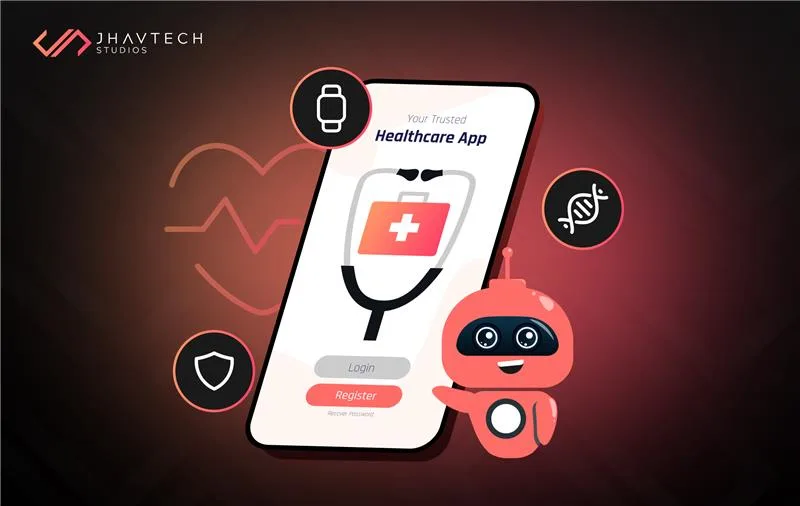
In a world where smartphones are constant companions, the next frontier is health in your pocket. The rise of healthcare app ideas is reshaping how patients and providers interact, especially in Australia where digital health is rapidly gaining traction. If you’re thinking of diving into healthcare app development, now is the time to spot the most promising niches, verify your concept, and build something meaningful.
Let’s explore ten top healthcare app ideas—and the strategies to validate and monetize them successfully.
Market Outlook: Why Build Healthcare Apps in Australia?
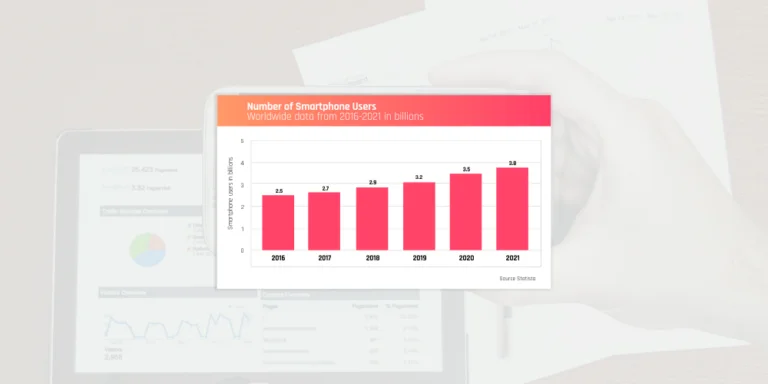
Before we dive in, here’s a quick reality check: the mHealth apps market globally is projected to hit around USD 82.45 billion in 2025, up from USD 67.4 billion in 2024 (CAGR ~22.3 percent). In Australia, the mobile health market was valued at about USD 2.20 billion in 2024 and is expected to reach USD 11.03 billion by 2033 (CAGR ~19.6 percent). Meanwhile, within Australia’s mHealth segment, medical and monitoring apps dominate growth.
Those numbers tell a compelling story: Australians are embracing mobile health solutions. What this means for you building healthcare app ideas is that the demand is real and rising. Given that, let’s jump into ten promising use cases.
1. AI-Powered Diagnosis Apps
Imagine users uploading a photo of a skin lesion, and your app flags whether it could be malignant, or take a scan of a retina and detect diabetic retinopathy. These AI healthcare solutions can crunch imaging data, patient history, and population models to deliver early alerts.
Pros: You lower the barrier for early detection, reduce diagnostic bottlenecks, and help clinicians focus on high-risk cases.
Challenges: You’ll need massive training data sets, regulatory validation and clinical trials, and strong interpretability of AI decisions. Don’t oversell, tell users clearly this is a screening aid, not a definitive diagnosis.
2. Virtual Care & Telemedicine Platforms
Virtual care has become the new normal, allowing patients to connect with healthcare professionals anytime, anywhere. Apps offering on-demand consultations, secure video calls, and e-prescriptions are dominating the telehealth space.
In 2026, the trend is shifting toward AI-driven triage assistants that analyse symptoms before connecting patients to doctors, making healthcare faster and more accessible worldwide. Focus on intuitive UI/UX design to simplify video consultations, appointment scheduling, and in-app navigation so users can get the help they need effortlessly.
Adding multilingual support and integrating wearables can also help your telemedicine app reach a broader global audience while delivering personalised care experiences. This is one of the most common healthcare app ideas you’ll see, but the winners will differentiate via user experience, integration, and automation.
3. Remote Patient Monitoring Apps
This is where the magic happens when you bring IoT, sensors, and remote patient monitoring app use together. Imagine devices measuring heart rate variability, glucose, blood pressure, oxygen saturation—all feeding into a centralised dashboard. Alerts trigger when metrics breach safe ranges.
Why it’s critical: chronic disease is a huge cost driver. RPM helps prevent hospital readmission, smooth post-discharge care, and deliver just-in-time interventions.
One good idea: hybrid mode to allow offline caching of data for users in low connectivity areas.
4. Chronic Disease Management Platforms
Think of an app that helps people with diabetes, COPD, hypertension, or kidney diseases manage their daily life. It can deliver medication reminders, diet logs, activity tracking, integrated device data, and built-in coaching.
By syncing with the remote patient monitoring app workflows, you give both patient and clinician a holistic view. One of the strongest healthcare app ideas for long-term user retention.
5. Mental Health & Emotional Support Apps
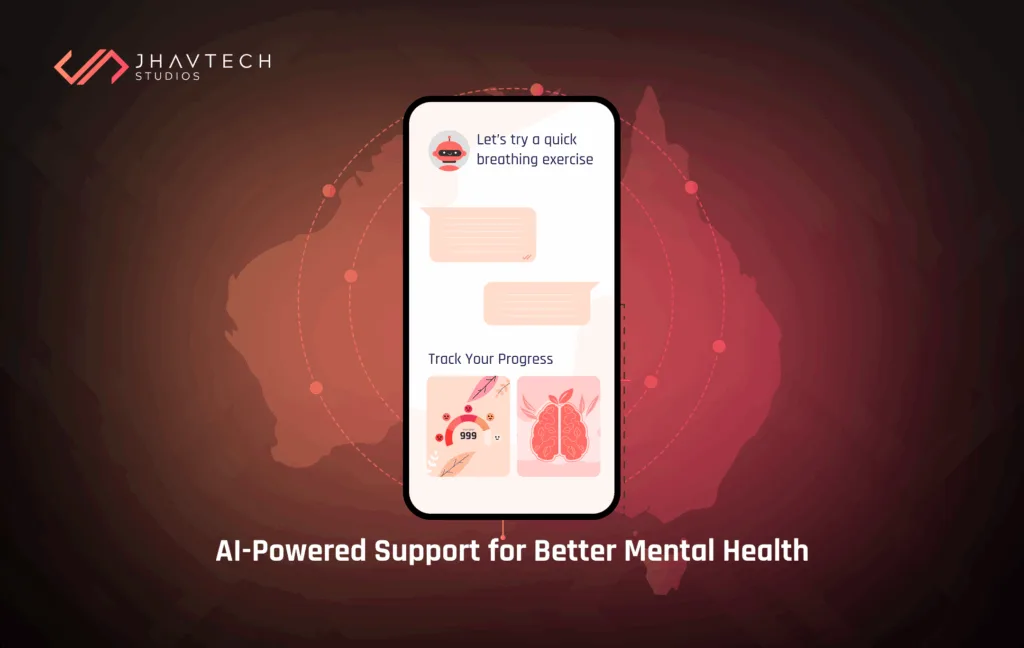
In Australia, mental health is a major public concern. Apps that deliver guided CBT modules, mood journals, AI chat support, and therapist matching are gaining traction.
According to a Statista report, mental health app usage globally rose +90% from 2021 to 2024. (Your users are already primed.) Add localisation (Australian terms, mental health hotlines, cultural context) and you’ve got a compelling offering.
This fits squarely into the broader trend of AI healthcare solutions, where conversational agents support emotional health continuously.
6. Gamified Wellness & Health Challenge Apps
Who said health can’t be fun? Gamification keeps users engaged. Leaderboards, badges, health challenges, competition, social sharing, and insurance incentives can all drive stickiness.
One compelling healthcare app idea: partner with insurers or wellness programs to reward real healthy behaviours like walking, hydration, and sleep consistency.
You get engagement, user retention, and data. They get healthier habits.
7. Prescription Management & Refill Reminder Apps
Missed doses and prescription errors remain huge culprits in patient noncompliance. An app that scans prescriptions, schedules reminders, orders refills, and flags potential drug interactions is very useful.
Add voice support or large fonts for older Australians. Integrate pharmacy APIs to auto-order refills. It’s a simple but high-impact healthcare app idea.
8. Wearable-Integrated Health Apps
Wearables are no longer just step counters, they can track ECG, SpO₂, stress, sleep cycles. An app that deeply integrates with Apple Watch, Garmin, Fitbit, or others lets users and clinicians make sense of that data.
This kind of app often pairs with remote patient monitoring app logic, feeding in data streams and enabling interventions. It’s also a strong candidate for AI healthcare solutions, applying analytics on top of continuous data.
9. Elderly Care & Assisted Living Apps
Australia, like many nations, has a growing aging population. Healthcare app ideas that cater specifically to seniors have strong potential. Think fall detection (using accelerometers and AI), emergency alerts, medication prompts, caregiver dashboards, and easy video calling.
You might also include “family view” features so distant relatives can check in. Add voice-first UX for less tech-savvy users.
10. Blockchain-Based Medical Record Apps
Privacy and data ownership are big issues. A blockchain-based medical record platform gives patients control over who accesses their data. It can be decentralised, tamper-resistant, and auditable.
You can position this as a value add to existing clinical systems, or an identity layer overlay. This idea rounds out your list of healthcare app ideas by addressing infrastructure and trust.
Validating Your Healthcare App Idea
Before you invest heavily in app development, you need to validate, test, and refine. Here’s how:
- Surveys and interviews with clinicians and patients
- Build a lightweight prototype or MVP
- Check regulatory and compliance constraints (HIPAA, GDPR, Australian privacy law, Therapeutic Goods Administration)
- Conduct security and performance testing
- Pilot in one region or hospital to gather real feedback
If your app involves AI (for diagnosis or monitoring), you’ll also need clinical study metrics: sensitivity, specificity, false positives, model drift monitoring, audit trails.
Once validated, you move into full healthcare app development.
Monetisation & Mobile App ROI: What You Should Know
When someone asks “Calculating mobile app ROI formula”, the standard formula is:
ROI (%) = (Net Profit ÷ Total Investment) × 100
Net profit = total revenue – all expenses (development, marketing, maintenance)
A more advanced approach uses net present value (NPV) and discounted costs and revenues to project long-term returns.
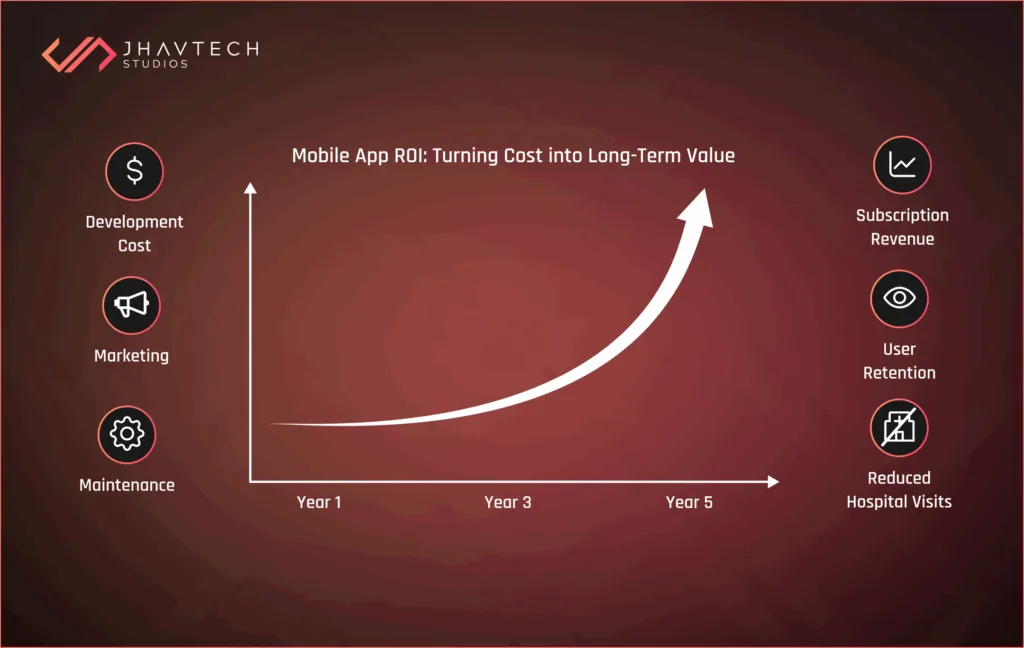
For example, if you spent $200,000 building and launching an app, plus $50,000/year in maintenance, and it generated $180,000/year in subscriptions, your first year might show a negative ROI. But over three to five years, it may become positive.
That leads directly into your next question: “Is it worth it to build a mobile app in 2026?” The answer: yes if you pick the right niche, validate carefully, control costs, measure ROI, and iterate fast.
In fact, one of the biggest myths is that mobile app development is just a sunk cost. A well-designed healthcare app can reduce overhead, reduce hospital visits, improve retention, and open revenue streams (subscriptions, licensing, B2B SaaS). When you look at mobile app development cost vs return 2026, many health apps will outperform traditional investments.
One more thing: track more than just revenue. Also measure engagement, retention, cost saved (hospital costs avoided, time saved by clinicians), and user lifetime value (LTV). Those metrics feed into ROI calculations.
How to Estimate Cost & Timeline
A typical healthcare app with moderate complexity might cost AUD 60,000 to AUD 250,000 or more in Australia, depending on features, compliance requirements, and integrations. Add 15-20% of that annually for updates, maintenance, and infrastructure.
Because these apps often deal with sensitive data, you’ll spend more on encryption, audits, verification, logging, and compliance than in a “normal” consumer app. You’ll also incur costs for clinical validation, possibly regulatory submission to TGA, and partnerships with healthcare providers.
Plan for at least 6–12 months before meaningful ROI kicks in. Many successful apps take that much time or more. Thus, always build with modularity, analytics, and flexibility so you can pivot or scale once you see what works.
From Idea to Impact: Execution Tips
Here are a few tips to increase your chances of success:
- Use cross-platform frameworks (Flutter, React Native) to reduce cost
- Apply microservices and modular design so components like AI modules, billing engines, or monitoring pipelines can be replaced or upgraded
- Start with core features; then expand
- Use A/B testing and analytics from day one
- Partner with clinics or health systems for pilot adoption
- Always enforce security by design: encryption, role-based access, audit logs
- Choose a partner with healthcare experience
At Jhavtech Studios, we specialise in secure healthcare app development, compliant with HIPAA, GDPR, and Australian privacy law. Our team helps clients go from concept to scalable MVPs to full deployments.
Conclusion: Which Healthcare App Idea is Right for You?
The world of healthcare app ideas is vast: from diagnosis AI to chronic disease platforms, RPM, wellness games, mental health, elderly care, blockchain records, prescription managers, and telehealth. What ties them together is user value, regulatory discipline, and smart monetisation.
Whether you’re a startup in Melbourne or a hospital network in Sydney, building one of these apps can transform experiences for patients, clinicians, and payers alike.
If you’re ready to bring your idea to life, measure ROI with clarity, and navigate the complexities of healthcare app development, Jhavtech Studios is ready to partner with you. Contact us today and let’s make 2026 the year your solution changes lives.
FAQs & Key Phrases Summary
1. What are the most profitable healthcare app niches right now?
Telemedicine, AI diagnostics, and remote patient monitoring tend to yield good returns because of scale, recurring revenue, and structural value. These are among the top healthcare app ideas.
2. How do you calculate mobile app ROI?
Use ROI = (Net Profit ÷ Total Investment) × 100. You also can apply NPV methods that consider long-term costs and revenues when calculating mobile app ROI formula.
3. Is it worth it to build a mobile app in 2026?
If you choose the right niche, validate early, and monitor metrics, yes. The market demand for digital health continues to grow, especially for remote care and monitoring. The key is discipline and iteration.
4. How do I compare mobile app development cost vs return in 2026?
Factor in development, maintenance, compliance, and marketing costs on one side, then revenue, value-saves (hospital visits avoided), engagement metrics, and user lifetime value on the other. If net profit exceeds input in a timeframe, ROI is positive.